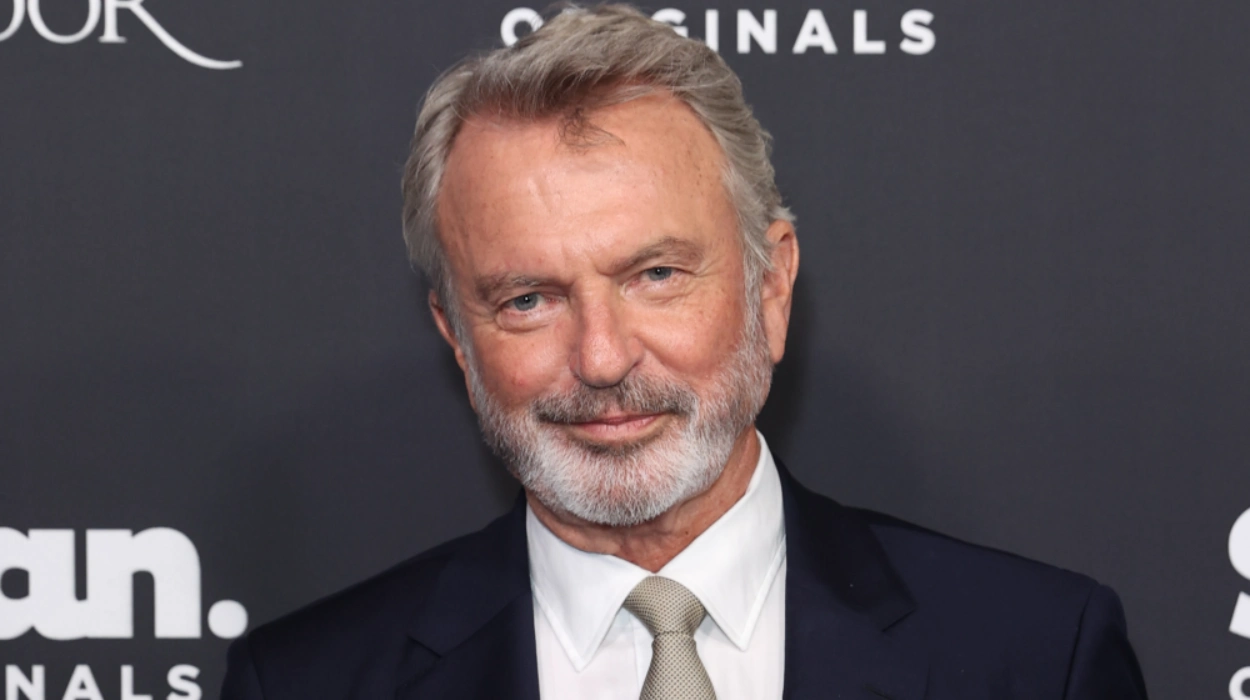
Who Was Sam Neill?
Sam Neill was a New Zealand actor born Nigel John Dermot Neill on September 14, 1947, in Omagh, County Tyrone, Northern Ireland, known globally for playing Dr. Alan Grant in the “Jurassic Park” film franchise. He died on July 13, 2026, in Sydney, Australia, at age 78. His career spanned more than five decades across film, television, and theater in New Zealand, Australia, the United Kingdom, and the United States.
- Who Was Sam Neill?
- What Is Sam Neill Best Known For?
- What Were Sam Neill’s Most Important Films and TV Roles?
- What Was Sam Neill’s Career Timeline?
- What Awards Did Sam Neill Receive?
- What Health Battle Did Sam Neill Face Before His Death?
- When and How Did Sam Neill Die?
- How Did the Film Industry React to Sam Neill’s Death?
- What Was Sam Neill’s Personal Life Like?
- What Is Sam Neill’s Legacy in Film and Television?
Neill’s family relocated to Christchurch, on New Zealand’s South Island, when he was seven years old. His father served in the British Army, and the family settled permanently in New Zealand after his father’s military service ended. Neill grew up with a severe stutter that persisted through his childhood and early adolescence. He has stated that the condition eased around age 14 or 15, coinciding with a rise in personal confidence. He studied English at the University of Canterbury, where he first performed on stage, though acting was not his original career plan.
Neill adopted the professional name “Sam” during his early theater and film work in New Zealand. He began his screen career in short films and television productions before his breakthrough role in the 1977 New Zealand crime drama “Sleeping Dogs,” directed by Roger Donaldson. This film is widely credited as the first New Zealand feature released theatrically in the United States, and it established Neill as a leading man in the New Zealand film industry.
What Is Sam Neill Best Known For?
Sam Neill is best known for portraying paleontologist Dr. Alan Grant in Steven Spielberg’s 1993 film “Jurassic Park,” a role he reprised in “Jurassic Park III” (2001) and “Jurassic World Dominion” (2022). This role introduced him to global mainstream audiences and remained the defining credit of his career.
“Jurassic Park,” based on Michael Crichton’s 1990 novel of the same name, became one of the highest-grossing films in history at the time of its release, earning over $1 billion worldwide across its theatrical runs. Neill’s portrayal of Dr. Grant, a paleontologist who develops a paternal bond with two children during a dinosaur park disaster, became a defining performance of 1990s blockbuster cinema. He returned to the role nearly three decades later in “Jurassic World Dominion,” alongside original co-stars Laura Dern and Jeff Goldblum, closing out the six-film “Jurassic” series’ first narrative arc.
Beyond the “Jurassic Park” franchise, Neill built a career defined by range rather than repetition. He moved fluidly between big-budget studio productions and smaller, character-driven independent films, a pattern critics frequently highlighted throughout his career.
What Were Sam Neill’s Most Important Films and TV Roles?
Sam Neill’s most significant screen credits include “The Piano” (1993), “Dead Calm” (1989), “The Hunt for Red October” (1990), “Peaky Blinders” (2013–2022), and “Hunt for the Wilderpeople” (2016), spanning drama, thriller, and comedy genres across a 50-year span.
In “The Piano,” directed by Jane Campion and set in 19th-century New Zealand, Neill played Alisdair Stewart, a settler husband in a story centered on a mute pianist played by Holly Hunter. The film won three Academy Awards, including Best Actress for Hunter and Best Original Screenplay for Campion, and remains one of New Zealand cinema’s most internationally recognized works.
In “Dead Calm,” a 1989 psychological thriller directed by Phillip Noyce, Neill starred opposite Nicole Kidman in one of her earliest major film roles. The production helped launch Kidman’s international career and reinforced Neill’s standing as a leading dramatic actor outside Hollywood’s studio system.
In “The Hunt for Red October” (1990), based on Tom Clancy’s novel, Neill played a Soviet submarine officer opposite Sean Connery. The film was a commercial success and introduced Neill to a wider American audience ahead of “Jurassic Park.”
On television, Neill portrayed Chief Inspector Chester Campbell in the BBC crime drama “Peaky Blinders,” appearing across multiple seasons between 2013 and 2022 alongside Cillian Murphy. He also played King Henry VIII in the Showtime series “The Tudors” (2007–2010), a role that earned him a Golden Globe nomination.
In comedy, Neill appeared in “Hunt for the Wilderpeople” (2016), directed by Taika Waititi, playing Uncle Hec, a gruff bushman who forms a bond with a delinquent foster child. The film became one of the highest-grossing New Zealand films at the domestic box office and expanded Neill’s audience among younger viewers internationally.
Other notable credits include “My Brilliant Career” (1979), “A Cry in the Dark” (1988), “Bicentennial Man” (1999), “In the Mouth of Madness” (1994), “Event Horizon” (1997), “Dirty Deeds” (2002), and “Rams” (2020). This body of work reflects three broad categories: Hollywood blockbusters, British and Australian television drama, and independent art-house cinema.
What Was Sam Neill’s Career Timeline?
Sam Neill’s career progressed from New Zealand television and short films in the early 1970s to international stardom by 1993, followed by four decades of sustained work across film, television, and voice acting until his death in 2026.
Below is a summary timeline of key career milestones.
| Year | Milestone |
|---|---|
| 1975–1976 | Worked for the New Zealand National Film Unit, directing and producing short documentaries |
| 1977 | Breakthrough role in “Sleeping Dogs,” directed by Roger Donaldson |
| 1979 | Starred in “My Brilliant Career” opposite Judy Davis |
| 1989 | Starred in “Dead Calm” opposite Nicole Kidman |
| 1990 | Appeared in “The Hunt for Red October” opposite Sean Connery |
| 1991 | Named Officer of the Order of the British Empire (OBE) |
| 1993 | Starred in “Jurassic Park” and “The Piano” in the same year |
| 2001 | Reprised his role in “Jurassic Park III” |
| 2007–2010 | Played King Henry VIII in “The Tudors” |
| 2013–2022 | Played Chief Inspector Chester Campbell in “Peaky Blinders” |
| 2016 | Starred in “Hunt for the Wilderpeople” |
| 2022 | Reprised his role in “Jurassic World Dominion”; diagnosed with blood cancer following filming |
| 2022 | Knighted by New Zealand, becoming Sir Sam Neill |
| 2025 | Received the Screen Legend Award at the New Zealand Screen Awards |
| 2026 | Confirmed cancer-free in April; died on July 13 in Sydney, Australia |
This timeline shows a career built on consistent output rather than isolated peaks, with major roles distributed across every decade from the 1970s through the 2020s.
What Awards Did Sam Neill Receive?
Sam Neill received the Officer of the Order of the British Empire in 1991, a knighthood from New Zealand in 2022, a Golden Globe nomination for “The Tudors,” and the Screen Legend Award at the 2025 New Zealand Screen Awards.
The Order of the British Empire recognized his contributions to the film industry early in his international career. His 2022 knighthood, awarded by the New Zealand government, elevated him to the formal title “Sir Sam Neill” and recognized his decades of service to New Zealand’s film and screen industry, both as an actor and as an advocate for local production.
At the 2025 New Zealand Screen Awards, Neill accepted the Screen Legend Award, a lifetime-achievement-style honor. In his acceptance remarks, he described his longevity in the industry with characteristic understatement, noting that persistence over time contributed to the recognition. He also received nominations from major bodies including the Golden Globes for his television work, alongside numerous New Zealand and Australian screen industry honors accumulated across his career.
What Health Battle Did Sam Neill Face Before His Death?
Sam Neill was diagnosed with stage 3 angioimmunoblastic T-cell lymphoma, a rare and aggressive form of blood cancer, shortly after completing filming for “Jurassic World Dominion” in 2022, requiring ongoing chemotherapy treatment.
Angioimmunoblastic T-cell lymphoma is a rare subtype of non-Hodgkin lymphoma that originates in T-cells, a type of white blood cell responsible for immune response. It typically affects older adults and is known for aggressive progression, requiring intensive treatment protocols. Following his diagnosis, Neill underwent chemotherapy that he stated would likely continue for the remainder of his life to manage the condition.
Neill spoke publicly about his diagnosis and treatment in interviews and in his 2023 memoir, discussing the physical and emotional toll of cancer treatment alongside his continued acting work during recovery periods. In April 2026, he announced that he was cancer-free, a development he and his family described as a significant relief after several years of treatment.
Despite the cancer-free status, Neill’s family confirmed that his death on July 13, 2026, was sudden and unexpected, and did not specify a separate cause of death in their public statement. He died at St. Vincent’s Private Hospital in Sydney, Australia, surrounded by family.
When and How Did Sam Neill Die?
Sam Neill died on Monday, July 13, 2026, in Sydney, Australia, at age 78, with his family describing the death as sudden and unexpected despite his cancer-free status.
His family’s statement, posted to his official Instagram account, used the Māori word “whānau,” meaning extended family or community, to describe those announcing his passing. The statement emphasized that Neill “passed with the dignity that has characterized his whole life” and thanked the medical staff at St. Vincent’s Private Hospital for their care. The family did not disclose additional medical details and requested privacy following the announcement.
Neill’s death occurred roughly three months after he had publicly confirmed he was free of the blood cancer that had affected him since 2022. No further cause of death had been disclosed by the family beyond the initial statement at the time of the announcement.
How Did the Film Industry React to Sam Neill’s Death?
Tributes to Sam Neill following his death came from government leaders, longtime collaborators, and fellow actors, including Australian Prime Minister Anthony Albanese and New Zealand actor Karl Urban, who both publicly honored his career and character.
Australian Prime Minister Anthony Albanese stated that Neill had earned a special place in Australian hearts, describing him as facing illness with the same dignity, humor, and conviction that defined his performances. Karl Urban, a fellow New Zealand actor known for roles in “The Boys” and “The Lord of the Rings,” called Neill “truly brilliant” and an inspiration to actors who followed his career path, describing him as a national treasure.
Toni Collette, who co-starred with Neill in “Dirty Deeds” (2002) and “A Long Way Down” (2014), shared tributes and photographs from their collaborations. Screen Producers Australia CEO Matthew Deaner issued a statement describing Neill as one of the defining figures of Australian and New Zealand screen production, crediting his professionalism and talent with enriching numerous film and television projects across his career.
Industry publications, including Variety and major broadcast news organizations, published career retrospectives following his death, highlighting his range across blockbuster and independent film work as a defining feature of his professional legacy.
What Was Sam Neill’s Personal Life Like?
Sam Neill had four children, was a longtime environmental advocate in New Zealand, and founded Two Paddocks, an organic winery in Central Otago, in 1993, the same year “Jurassic Park” was released.
Neill’s family life included four children: Tim, his son with former wife Lisa Harrow; Elena, his daughter with former wife Noriko Watanabe; Maiko, Watanabe’s daughter from a previous marriage whom Neill adopted; and Andrew, a son who had been adopted by other parents in early life and later reconnected with Neill. He also had several grandchildren.
Neill described his family arrangement as unconventional due to the demands of an international acting career that kept him traveling between New Zealand, Australia, the United Kingdom, and the United States for extended production periods.
Outside acting, Neill maintained a working farm in New Zealand’s Central Otago region, where he founded the Two Paddocks winery in 1993. The winery specialized in pinot noir production. Neill often referenced the winery’s founding in interviews with self-deprecating humor about his winemaking ambitions.
Neill was also a vocal environmental activist. In early 2026, months before his death, he released a short documentary opposing a proposed fast-track industrial goldmine project in New Zealand’s Central Otago region, an area close to his farm and winery. He frequently used social media to document rural life on his farm, including humorous posts about farm animals he had named after Hollywood colleagues.
Explore More about Entertainment:
Katie Price Breaks Silence in Nothing to Hide: What the Documentary Reveals
How Did Lauren Bennett Die? Cause of Death Not Revealed
What Is Sam Neill’s Legacy in Film and Television?
Sam Neill’s legacy rests on a five-decade career that bridged Hollywood blockbusters and independent art-house cinema, anchored by his role as Dr. Alan Grant in “Jurassic Park” and reinforced by critically acclaimed work in “The Piano” and “Peaky Blinders.”
Film critic David Thomson, writing in “The New Biographical Dictionary of Film,” described Neill as an actor whose steady, intelligent presence anchored major productions while allowing him to remain a watchful, wry performer beneath the surface of star-driven films. This assessment reflects a broader critical consensus that Neill’s value lay in versatility rather than a single defining screen persona.
Neill’s career demonstrated three distinct professional patterns that industry commentators frequently cited. First, sustained franchise loyalty, shown through his three “Jurassic Park” appearances spanning 1993 to 2022. Second, consistent movement between blockbuster and independent productions, exemplified by his simultaneous 1993 releases of “Jurassic Park” and “The Piano.” Third, longevity in television drama, demonstrated by multi-season roles in both “The Tudors” and “Peaky Blinders.”
His death in July 2026 prompted renewed international attention to his full filmography, with streaming platforms and broadcasters highlighting his catalog of work across genres. His contributions to New Zealand and Australian film production, alongside his environmental advocacy and winemaking work in Central Otago, are expected to remain part of his recognized legacy alongside his acting career.
Neill’s combination of commercial success, critical respect, and public affection across multiple countries positions him among the most significant actors to emerge from New Zealand’s film industry in the late 20th and early 21st centuries.