Key Points
- Celebrated British comic performer Dame Penelope Keith, best known for her definitive upper-crust roles in The Good Life and To the Manor Born, has passed away at the age of 86.
- Her family confirmed on Monday that the legendary actress died peacefully at her long-term home in Surrey following a courageous battle with cancer.
- Keith rose to nationwide prominence in the 1970s playing the fiercely snobbish yet secretly vulnerable Margo Leadbetter in BBC’s The Good Life, earning a BAFTA Award for her performance in 1977.
- She followed her initial success with another massive television hit, To the Manor Born, playing the aristocratic widow Audrey fforbes-Hamilton alongside Peter Bowles from 1979 to 1981.
- Beginning her career with the Royal Shakespeare Company in 1963, she remained a prolific force in West End theatre, winning a prestigious Olivier Award in 1976.
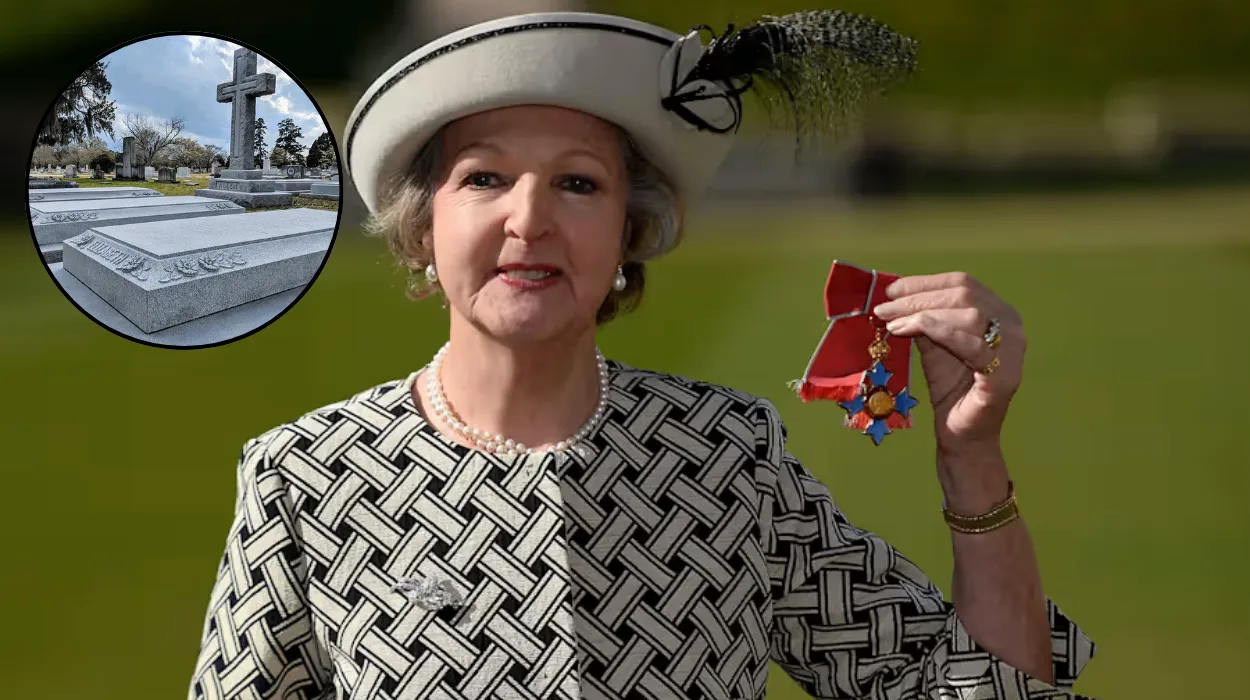
- She was appointed Dame Commander of the Order of the British Empire (DBE) in the 2014 New Year Honours list for her extensive services to the arts and charity.
- Co-star Felicity Kendal described her as a “comic genius,” while London’s historic West End theatres have announced they will dim their lights on Wednesday evening in a coordinated tribute.
- She is survived by her devoted husband of nearly 50 years, Rodney Timson, and their two adopted sons.
Surrey (Britain Today News) June 29, 2026 – Dame Penelope Keith, the foundational pillar of classic British television comedy who captured the hearts of millions as the flinty, imperious, yet fundamentally lovable matriarch of suburban and aristocratic satire, has passed away at the age of 86. The iconic star, whose distinctively velvet voice and immaculate deadpan delivery came to define the golden age of BBC situational comedy, died peacefully at her family home in Surrey on Monday morning following a private battle with cancer. Her family released a formal statement confirming that she was surrounded by loved ones at the residence where she had happily lived for more than five decades, bringing to a close a magnificent multi-decade career that spanned the heights of the classical stage, historic West End triumphs, and legendary television broadcasts.
- Key Points
- How Did Dame Penelope Keith’s Family Announce Her Passing?
- What Tributes Have Her Classic Co-Stars Paid?
- Why Was Margo Leadbetter Such an Iconic Character?
- How Did To the Manor Born Solidify Her Status as a TV Legend?
- What Were Her Major Successes on the West End Stage?
- How Will London Theatres Honour Her Incredible Legacy?
- What Charitable and Public Service Roles Did She Hold?
- What Other Notable Media Projects Did She Enrich With Her Voice?
- Who Comprises Dame Penelope Keith’s Surviving Family?
As reported by media correspondents across the United Kingdom, the passing of Dame Penelope has triggered a massive wave of national mourning from fans, cultural institutions, and former colleagues who viewed her as one of the finest comedic minds of her generation. Her definitive portrayal of the ultra-conservative, socially anxious suburbanite Margo Leadbetter in The Good Life during the mid-1970s transformed her from a respected repertory theatre actress into an enduring household name. Alongside co-stars Richard Briers, Felicity Kendal, and Paul Eddington, Keith anchored a cultural phenomenon that regularly drew audiences upwards of 15 million viewers, capturing a unique socio-economic friction in British life with peerless grace and sharp timing.
How Did Dame Penelope Keith’s Family Announce Her Passing?
In an official press statement issued on Monday on behalf of the family, representatives shared the deeply somber news of the actress’s death, highlighting her quiet resilience during her final months. As reported by Katie Chambers of The Stage, the family stated:
“We are deeply saddened to announce that Dame Penelope Keith died peacefully whilst living with cancer at her home in Surrey where she had lived for more than 50 years. The family is grateful for the care and support she received throughout her treatments, and ask that their privacy be respected at this time.”
The announcement confirmed that the actress had chosen to spend her final days in the tranquil surroundings of her long-time country home in Milford, Surrey. For decades, Keith had been an active, beloved member of the local southern English community, balancing the bright lights of London’s entertainment industry with a quiet, deeply rooted rural life. Her passing marks the end of an era for British broadcasting, prompting an immediate outpouring of respect from major theatrical companies and broadcast networks across the globe.
What Tributes Have Her Classic Co-Stars Paid?
The news of Keith’s death has reverberated deeply through the British acting community, particularly among those who shared the screen with her during the peak of 1970s and 1980s television. Her sole surviving co-star from the core quadrant of The Good Life, Felicity Kendal, led the emotional tributes with an affectionate public reflection on Keith’s extraordinary natural abilities and generous personal character.
As reported by regional entertainment editors tracking the industry’s reaction, Felicity Kendal openly praised her former on-screen foil, stating directly that Keith was a true “comic genius” who possessed an innate understanding of performance. In her moving public statement, Kendal remarked:
“She was a joy to know and work with, and she will be much missed.”
The creative chemistry between Kendal’s character, the down-to-earth, self-sufficient Barbara Good, and Keith’s high-society, easily appalled Margo Leadbetter formed the comedic engine of the series. Off-screen, the two actresses maintained a deep, lifelong mutual respect that defied the competitive nature of the entertainment business.
Why Was Margo Leadbetter Such an Iconic Character?
To understand the profound impact of Dame Penelope Keith’s career, cultural critics point directly to the sociological masterclass that was Margo Leadbetter. In The Good Life, which ran on the BBC from 1975 to 1978, Keith took a character who, on paper, could have been a thoroughly unlikable, pretentious snob and transformed her into something profoundly human, sympathetic, and enduringly hilarious. Margo was a staunch traditionalist, desperately trying to maintain suburban decorum while her next-door neighbors, Tom and Barbara Good, abandoned the corporate rat race to turn their suburban Surbiton garden into a self-sufficient farm complete with pigs, goats, and fertilizer piles.
As noted by contemporary television historian and author Lissa Evans in a commemorative reflection, the true brilliance of Keith’s approach lay in her ability to reveal the fragile humanity underneath the upper-middle-class armor. Evans summarized the performance by stating:
“Margo Leadbetter was snobbish, humourless and entitled, and Penelope Keith managed to make her into one of the most adored (and oddly vulnerable) characters ever seen on a sitcom.”
Keith’s immaculate comedic timing, marked by her ability to freeze an opponent with a single icy glance or drop her voice into a majestic register of sheer disbelief, earned her the 1977 BAFTA TV Award for Best Light Entertainment Performance. The show’s cultural footprint was so significant that in 1978, Queen Elizabeth II herself attended a live taping of a special Royal Command Performance, cementing the series into the foundational fabric of British pop culture history.
How Did To the Manor Born Solidify Her Status as a TV Legend?
Following the massive success of The Good Life, Keith immediately stepped into another legendary role that would further cement her status as the absolute queen of the British sitcom. Broadcast between 1979 and 1981, BBC’s To the Manor Born cast Keith as Audrey fforbes-Hamilton, an aristocratic, cash-strapped widow forced to sell her beloved ancestral country estate to a self-made, multimillionaire supermarket tycoon named Richard DeVere.
The series focused heavily on the class tensions and love-hate relationship between the displaced noblewoman and the nouveau riche businessman, who was brilliantly played by the late Peter Bowles. The show achieved astronomical success, with its final episode in 1979 attracting more than 23 million viewers—one of the highest recorded audiences in the history of British television.
As reported by regional television archivists, the enduring popularity of the characters was so profound that Keith and Bowles reunited more than two decades later for a highly anticipated, one-off Christmas special in 2007, drawing millions of nostalgic viewers back to the fictional estate of Grantleigh. The role proved that Keith had a unique, unchallenged monopoly on playing haughty yet deeply sympathetic women navigating a rapidly changing British class system.
What Were Her Major Successes on the West End Stage?
While television brought her global fame, Dame Penelope Keith’s artistic heart belonged firmly to the live theatre. Her training was classical, and she entered the competitive world of professional acting through grueling work in traditional repertory theatre across the UK. In 1963, her exceptional vocal control and imposing physical presence caught the attention of directors at the prestigious Royal Shakespeare Company (RSC), where she performed in several landmark productions, including the celebrated historical cycle The Wars of the Roses.
Her theatrical triumphs extended far beyond classical drama into high-end West End comedies and farces. In 1976, she won the coveted Laurence Olivier Award for Best Comedy Performance for her brilliant turn in Michael Frayn’s acclaimed play Donkeys’ Years.
Throughout her long career, she took on iconic theatrical roles, earning widespread critical acclaim for her definitive portrayals of Lady Bracknell in Oscar Wilde’s The Importance of Being Earnest, Madame Arcati in Noël Coward’s Blithe Spirit, and Mrs. Malaprop in Richard Brinsley Sheridan’s The Rivals. Even as she entered her 80s, Keith refused to fully step away from the stage, continuing to perform in challenging roles and mentoring younger generations of theatrical talent.
How Will London Theatres Honour Her Incredible Legacy?
The theatrical establishment has moved swiftly to organize a formal, unified tribute to honor one of its most dedicated and successful alumni. The Society of London Theatre confirmed that venues across the capital will participate in a traditional, highly respected industry ritual to mark her passing.
As reported by Katie Chambers of The Stage, West End theatres will officially dim their exterior lights on Wednesday evening in a coordinated, solemn tribute to Keith’s immense contributions to the British stage. This rare honor is reserved exclusively for individuals who have had a profound, generational impact on the theatrical arts in the United Kingdom.
In regional theatre, where Keith spent decades supporting local playhouses, the grief was equally tangible. Representatives from the Chichester Festival Theatre—a venue where Keith performed numerous times, including a famous 2006 production of Entertaining Angels—released a poignant statement praising her unique artistic gifts. As reported by the theater’s archival press release, the venue declared her:
“…rightly acclaimed as a consummate player of comedy, with immaculate timing and mastery of witty repartee. Dame Penelope could also summon great emotional depth. She will be hugely missed, and our thoughts and sympathies are with her family and friends.”
What Charitable and Public Service Roles Did She Hold?
Beyond the applause of the theater and television studios, Keith was a woman deeply committed to public duty, philanthropy, and the welfare of her fellow actors. Following the death of theater titan Lord Laurence Olivier in 1989, Keith stepped into the prestigious role of President of the Actors’ Benevolent Fund. She held this vital position for over thirty years, from 1990 until 2022, working tirelessly to support actors and stage managers facing severe financial hardship or illness.
Her philanthropic work extended into heritage preservation and regional leadership. She served with great pride as the President of the South West Surrey chapter of the National Trust and was a long-term trustee of the historic Brooklands Museum.
In recognition of her extraordinary, lifelong contributions to the performing arts and her expansive charitable endeavors, she was appointed a Dame Commander of the Order of the British Empire (DBE) by Queen Elizabeth II during the 2014 New Year Honours. Characteristically, Keith accepted the high honor with immense humility, viewing it as a recognition of the collective joy that British comedy brought to the public.
Explore More about Entertainment:
Universal Reveals Name and Logo for New UK Theme Park in £7.3bn Mega Investment
Johannes Radebe Announces Solo Tour for 2027
What Other Notable Media Projects Did She Enrich With Her Voice?
In her later years, Keith transitioned beautifully into the role of a beloved cultural presenter, using her instantly recognizable, authoritative voice to guide viewers through the idyllic landscapes of rural Britain. She hosted several incredibly popular, cozy documentary series for television, including Penelope Keith’s Hidden Villages and the 2026 broadcast Saving Country Houses with Penelope Keith, which explored the architectural history and preservation struggles of Britain’s finest ancestral homes.
Her rich, distinctively clear vocal tones were also familiar to entirely different generations of viewers. She lent her voice to narrative segments of the globally famous children’s television phenomenon Teletubbies, and was the premier voice talent for high-profile television and radio advertising campaigns ranging from Pimm’s luxury liqueurs to iconic Parker Pens.
Furthermore, her extensive portfolio of television sitcom work included starring roles in Executive Stress (alongside Geoffrey Palmer and Peter Bowles) from 1986 to 1988, No Job for a Lady (where she played a newly elected Member of Parliament navigating the chauvinistic halls of Westminster) from 1990 to 1992, and the family comedy Next of Kin alongside William Gaunt from 1995 to 1997.
Who Comprises Dame Penelope Keith’s Surviving Family?
While Dame Penelope Keith maintained a highly visible public profile throughout her celebrated professional career, she kept her personal and family life remarkably private, grounded, and far removed from typical celebrity gossip. In 1978, the exact same year that The Good Life broadcast its final regular episodes, she married Rodney Timson, a dedicated police officer. The couple had met under delightfully ordinary circumstances while Timson was on official duty at the Chichester Festival Theatre, where Keith happened to be performing on stage.
Their enduring marriage lasted nearly fifty years, a rare and beautiful testament to stability within the volatile entertainment industry. In 1988, ten years after celebrating their wedding, the couple expanded their family by adopting two young boys who were biological brothers, raising them within the peaceful community of Milford, Surrey.
Dame Penelope was an avid, passionate gardener throughout her life—an interest that was beautifully recognized in 1984 when a brand-new variety of rose was officially named in her honor. She leaves behind an unparalleled artistic legacy, a nation deeply grateful for decades of genuine laughter, and a devoted family including her husband Rodney and their two sons, who request peace and privacy as they mourn the loss of a magnificent wife, mother, and national treasure.