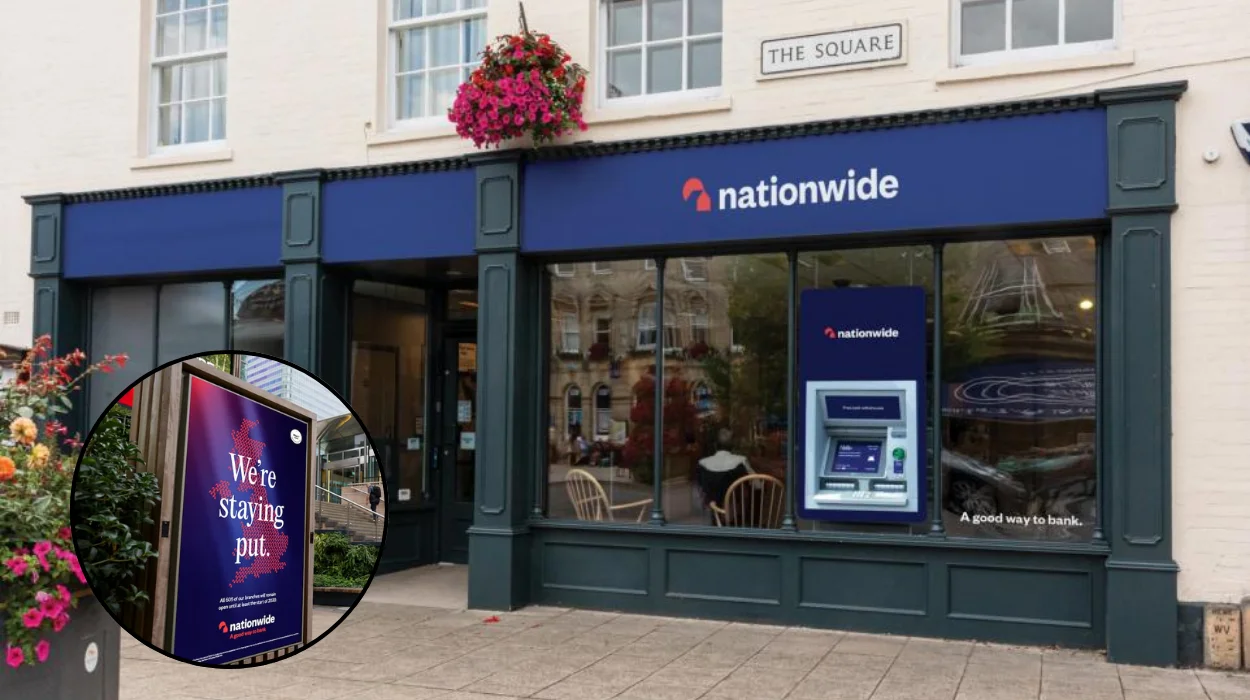
Key Points
- Nationwide Building Society has committed to keeping all 605 of its branches open until at least the start of 2030
- This pledge stands in stark contrast to the wave of bank branch closures sweeping across the UK banking sector
- The announcement comes as the Government launches a major independent review into access to in-person banking services
- Nationwide operates 148 branches that are the last bank branch remaining in their respective towns
- More than 200 Nationwide branches offer Dementia UK clinics providing specialized support
- Nationwide won Which? Banking Brand of the Year 2025 and Moneyfacts’ 2026 Branch Network of the Year awards
- Treasury minister Lucy Rigby commissioned the independent Access to Banking Review to investigate communities hardest hit by branch closures
- Age UK warned that older people are finding it increasingly difficult to manage money after losing local branch access
- The Money and Mental Health Policy Institute stated in-person banking is critical for people with mental health problems
- Cash Access UK has opened 237 banking hubs and more than 140 cash deposit services nationwide
- Nationwide branches provide mortgage advice, bereavement support, Power of Attorney help, and scam prevention services
- The society has branches in Bradford city centre and Keighley among its UK-wide network
Bradford (Britain Today News) May 16, 2026 – Nationwide Building Society, which maintains prominent presence in Bradford city centre and Keighley, has made a groundbreaking commitment to keep all 605 of its branches open until at least the start of 2030, a decision that directly contradicts the industry-wide trend of physical bank branch closures across the United Kingdom .
Why Is Nationwide Keeping Its Branches Open Until 2030?
Nationwide Building Society explicitly states that its branches remain a “valued part of the UK’s high streets” and insists that customers should still have the choice of banking in person, online, or over the phone . This philosophical stance on customer choice represents a fundamental departure from competitors who are increasingly abandoning physical locations in favour of digital-only services.
Nationwide emphasizes that its branch network provided the foundation for securing the prestigious title of Which? Banking Brand of the Year 2025, alongside being named Moneyfacts’ 2026 Branch Network of the Year . These accolades demonstrate that maintaining a robust physical presence can coexist with banking excellence and customer satisfaction.
The society currently operates an extensive network comprising 605 branches across the UK, with 148 of these branches serving as the last bank branch remaining in their respective towns . This statistic highlights Nationwide’s crucial role in preventing complete banking deserts in communities that have already experienced significant financial service withdrawals.
What Services Do Nationwide Branches Provide Beyond Banking?
Nationwide branches provide support extending far beyond day-to-day banking transactions, including specialized mortgage advice, bereavement support, Power of Attorney help, and scam prevention services . These comprehensive services demonstrate that physical branches serve as community hubs addressing critical life events and vulnerabilities that digital platforms cannot adequately address.
More than 200 Nationwide branches offer Dementia UK clinics, providing essential support for customers living with dementia and their families . This specialized service underscores the building society’s commitment to vulnerable populations who often struggle with technology-based banking solutions.
The lender’s branch network serves customers who require face-to-face interaction for complex financial decisions, emotional support during difficult life transitions, and protection against increasingly sophisticated financial scams that often target older and vulnerable consumers through digital channels.
Who Is Hardest Hit by Bank Branch Closures?
Treasury minister Lucy Rigby has commissioned an independent Access to Banking Review to investigate who is being hardest hit by the loss of local branches and whether further legislation may be needed . This government intervention acknowledges the growing crisis in banking access affecting vulnerable communities across the country.
“While banking hubs are helping, we need a clear picture of where communities are still losing out,”
Rigby said, emphasizing the government’s recognition that current mitigation efforts remain insufficient . The review aims to produce a comprehensive map of banking deserts and identify populations most severely impacted by branch closures.
Consumer groups, charities, and industry leaders consistently maintain that physical banking services remain essential for many people, particularly older customers, vulnerable consumers, small businesses, and those struggling with digital banking . These stakeholder groups represent the primary constituencies benefiting from Nationwide’s commitment to preserve physical access.
Age UK warned that many older people are finding it increasingly difficult to manage their money after losing access to local branches . This organisation’s warning highlights the demographic most dependent on in-person banking services and the severe consequences they face when those services disappear.
The Money and Mental Health Policy Institute stated that in-person banking can be critical for people with mental health problems who struggle with online or telephone services . This crucial insight reveals that banking accessibility intersects directly with mental health outcomes, making physical branches a matter of wellbeing rather than mere convenience.
Explore More about Business:
Inverness fashion business to close as owner set to retire 2026
UK Faces Multi-Billion Pound Bill for Nationalising British Steel 2026
How Are Banking Hubs Filling the Gap Left by Closures?
Cash Access UK reports that it has already opened 237 banking hubs and more than 140 cash deposit services nationwide . These shared facilities represent the banking industry’s primary response to closure pressures, attempting to maintain minimum access standards while reducing operational costs.
Shared banking hubs and Post Office services have helped fill some gaps left by traditional branch closures, but campaigners argue they do not fully replace dedicated local branches . Critics of the hub model point to limitations including reduced staffing, limited service offerings, shorter opening hours, and the psychological impact of shared rather than dedicated banking spaces.
The banking industry maintains that digital banking demand continues to grow rapidly but says it remains committed to preserving access for customers who still rely on branches . This positioning attempt to reconcile opposing pressures: increasing digital adoption among younger demographics while maintaining services for OLDER populations resistant to or incapable of digital transition.
However, Nationwide’s decision to guarantee its network until 2030 sets it apart at a time when many rivals are continuing to scale back their physical presence . This differentiation Strategy positions Nationwide as a customer-service leader willing to invest in physical infrastructure despite industry pressure to digitise.
What Does This Mean for Communities Losing Bank Branches?
For communities that have already watched banks vanish from their high streets, the promise could prove increasingly significant over the next decade . Towns and cities experiencing banking desertification face compounded challenges including reduced foot traffic for local businesses, diminished community cohesion, and increased travel burdens for essential financial services.
The announcement lands as ministers prepare to examine the impact of widespread bank closures on communities across the country . This timing suggests Nationwide’s commitment may influence the government review’s recommendations and potentially shape future banking access legislation.
Nationwide operates branches in Bradford city centre and Keighley among its network, meaning these West Yorkshire communities will benefit directly from the 2030 guarantee . Local residents in these towns can now plan with certainty that dedicated banking facilities will remain available throughout the current decade.
The building society’s pledge represents more than operational continuity; itsymbolises a commitment to financial inclusion, intergenerational equity, and the recognition that banking is not merely a commercial service but a community essential. As digital transformation accelerates across all sectors, Nationwide’s stance asks a fundamental question: should convenience for some override access for all?
The coming years will test whether Nationwide’s commitment proves sustainable as digital banking pressures intensify and whether other institutions will follow this lead or continue abandoning physical presence. For now, 605 branch doors across the UK will remain open, serving millions of customers who still value face-to-face banking in an increasingly digital world .