Key Points
- Lloyds Banking Group is retiring the 173-year-old Halifax brand, folding existing accounts into the Lloyds name.
- No new accounts will be opened under the Halifax name going forward.
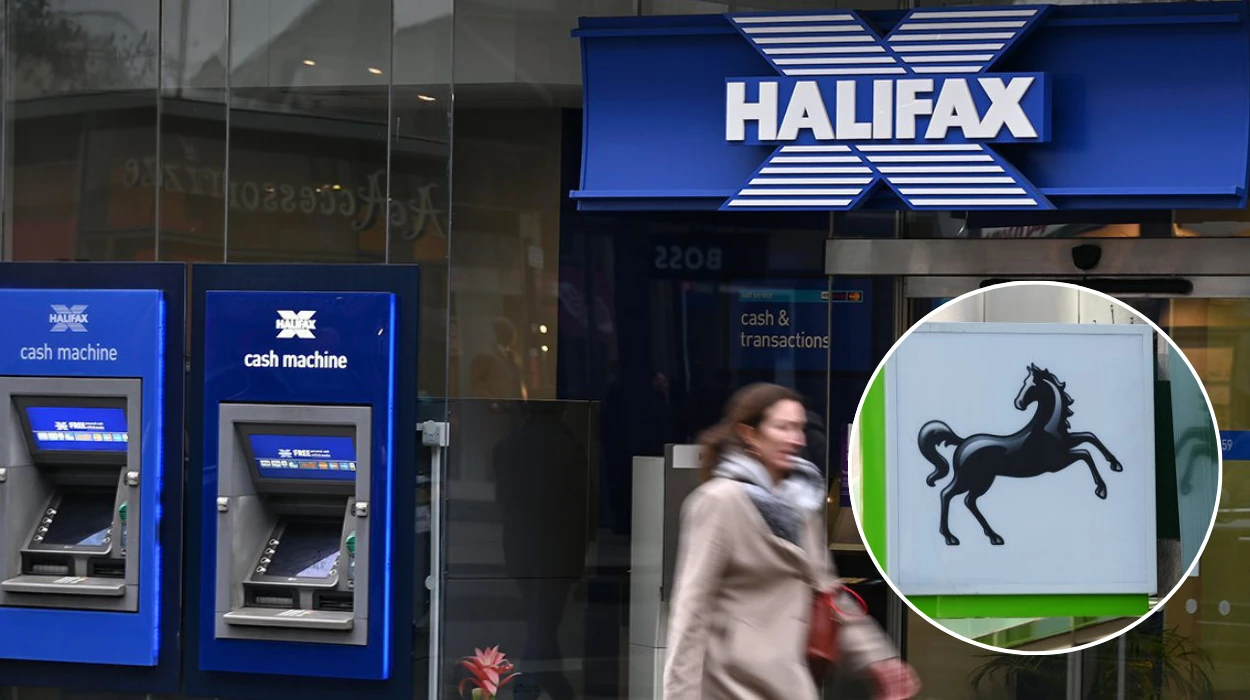
- Halifax signage will start coming down at 190 of the group’s 531 branches from early 2027.
- The group has confirmed that no branches will shut as a result of the rebrand.
- The move was first reported in May and has sparked strong reaction among loyal customers and residents of Halifax.
- Lloyds has run three separate brands – Lloyds, Halifax and Bank of Scotland – since the 2009 financial crisis rescue.
- From next year, Lloyds becomes the group’s only brand in England, Wales and Northern Ireland.
- Bank of Scotland will continue to operate for customers north of the border.
- Sort codes and account numbers will remain unchanged for affected customers.
- Lloyds’ consumer relations boss Jas Singh has sought to reassure Halifax customers that familiar services will carry over.
London (Britain Today News) July 01, 2026 – Halifax, one of the most recognisable names on Britain’s high streets for nearly two centuries, is being wound down as a standalone brand by its parent, Lloyds Banking Group, in a decision that marks the end of an era for one of the country’s best-known former building societies.
- Key Points
- Why Is Lloyds Banking Group Retiring the Halifax Brand?
- When Will Halifax Branding Actually Disappear from the High Street?
- What Is the History Behind the Halifax Name?
- Why Does Lloyds Currently Operate Three Separate Brands?
- What Will Change for England, Wales and Northern Ireland?
- Will Bank of Scotland Also Disappear?
- Will Sort Codes and Account Numbers Change for Halifax Customers?
- What Has Lloyds Said About the Customer Experience Going Forward?
- What Happens Next for Halifax Customers?
- Why Does Brand Consolidation Matter for a Banking Group of This Size?
- What Does This Mean for the Wider UK Banking Landscape?
- What Should Customers Do Between Now and the Full Rollout?
Why Is Lloyds Banking Group Retiring the Halifax Brand?
Lloyds Banking Group has confirmed it will stop opening new accounts under the Halifax name and will begin the process of migrating existing Halifax accounts across to the Lloyds brand over the coming days. The decision follows an internal review of the group’s overall branding strategy, which concluded that consolidating around a single, unified identity in England, Wales and Northern Ireland would better serve the business going forward. While the group has not set out every detail of its commercial reasoning publicly, the shift signals a clear strategic preference for simplifying its customer-facing presence after years of running parallel brands with overlapping products and services.
When Will Halifax Branding Actually Disappear from the High Street?
The physical rollout of the change will not happen overnight. Lloyds has confirmed that Halifax signage will begin coming down at 190 of the group’s 531 branches from early 2027, with the remainder expected to follow as part of a phased transition. Customers will therefore not see an immediate transformation on their local high street, but the direction of travel is unambiguous: the Halifax name is being retired as a visible presence on Britain’s banking landscape.
Will Any Halifax Branches Be Closed as Part of the Changeover?
Importantly, Lloyds has been explicit that the rebranding exercise will not result in branch closures. The bank has stressed that this is a change of name and identity rather than a reduction in physical footprint, meaning customers who currently use a Halifax branch should still be able to access in-person banking services at the same location, simply operating under the Lloyds name once the transition is complete in their area.
How Did the Announcement Come About?
The decision to axe the Halifax brand was first reported in May, ahead of this week’s formal confirmation from the group. Since then, the prospect of losing the Halifax name has proved highly controversial, particularly among long-standing customers who have banked with Halifax for decades, as well as residents of the West Yorkshire town of Halifax itself, where the institution’s roots run deep. For many, the brand is not simply a financial product but a piece of local and national heritage.
What Is the History Behind the Halifax Name?
Halifax’s origins stretch back to the mid-1800s, a period marked by acute housing shortages and overcrowding in industrial Britain. It was against this backdrop that the Halifax Permanent Benefit Building Society was founded, established to allow members to earn interest on their savings while also providing a route for ordinary people to borrow the funds needed to buy or build their own homes. Over the following century and a half, Halifax grew into one of the largest and most trusted names in UK personal finance, eventually demutualising and becoming a fully fledged bank.
Why Does Lloyds Currently Operate Three Separate Brands?
The answer lies in the turmoil of the 2008 financial crisis. Lloyds Banking Group has operated under three distinct brands – Lloyds, Halifax and Bank of Scotland – since January 2009, when a combination of the global financial crisis and a series of poor business decisions brought the then-combined Halifax-Bank of Scotland (HBOS) group to its knees. The subsequent rescue takeover by Lloyds created a sprawling banking group with multiple legacy brands, each carrying its own customer base, regional identity and institutional history. Halifax and Bank of Scotland were retained rather than immediately absorbed, in part because of the strength of their respective brand loyalty and regional significance.
What Will Change for England, Wales and Northern Ireland?
Under the new structure, Lloyds will become the group’s sole brand across England, Wales and Northern Ireland from next year. This effectively draws a line under Halifax’s separate identity in those nations, consolidating the group’s retail banking operations under a single, unified name for the vast majority of its customer base.
Will Bank of Scotland Also Disappear?
Not for now. Unlike Halifax, Bank of Scotland will be retained for customers in Scotland, where the brand carries particular historical and cultural resonance. This suggests Lloyds is taking a more calculated, market-by-market approach to its brand consolidation, rather than pursuing a single uniform identity across the entire United Kingdom.
Will Sort Codes and Account Numbers Change for Halifax Customers?
One of the key reassurances offered by the bank concerns the practicalities of everyday banking. Lloyds has confirmed that sort codes and account numbers will not be affected by the brand migration, meaning that direct debits, standing orders, salary payments and other regular transactions should continue to function without disruption as accounts move across to the Lloyds name.
What Has Lloyds Said About the Customer Experience Going Forward?
Addressing customer concerns directly, Lloyds’ consumer relations boss Jas Singh said:
“As Halifax changes to Lloyds, our Halifax customers will keep everything they know and love today – the same fantastic app design, the same friendly faces in our branches – even the same sort code and account number. But as Lloyds customers, they’ll get the best innovation and experiences we offer.”
Singh went on to highlight the investment the group has already made in its core Lloyds proposition, adding:
“Our Lloyds customers are already benefiting from a significant investment into propositions like Club Lloyds, Lloyds Premier, Lloyds Ultra and Lloyds Rewards – and now we’re really excited that Halifax customers can bank on Lloyds for more.”
The comments frame the rebrand not simply as the loss of a heritage name, but as an opportunity for former Halifax customers to gain access to a wider suite of products and perks currently reserved for those already banking under the Lloyds name.
How Have Customers and Halifax Residents Reacted?
Reaction to the news has been mixed, and at times strongly negative, since the plan was first reported in May. For many long-standing Halifax customers, the brand represents continuity and trust built up over years, if not generations, of banking relationships. Residents of the town of Halifax, where the building society’s story began, have also voiced disappointment at seeing a name so closely tied to their local identity phased out of everyday use on the high street, even though the underlying banking services and jobs are expected to remain in place.
What Happens Next for Halifax Customers?
For existing Halifax customers, the coming days will mark the start of a gradual transition as their accounts begin moving across to Lloyds branding. New customers will no longer have the option to open accounts under the Halifax name at all, effective immediately. Meanwhile, the physical high street transformation will take longer to materialise, with signage changes beginning at a subset of branches in early 2027 before extending further across the network. Throughout the process, Lloyds has sought to emphasise stability and continuity on the practical side of banking – same branches, same account details, same staff – even as the branding above the door changes for good.
Customers are likely to notice the shift gradually rather than all at once. Digital banking, including mobile apps and online account access, is expected to be among the first areas to reflect the new Lloyds identity, given how central these platforms have become to everyday banking. Paperwork, correspondence and in-branch materials are also expected to be updated in stages as part of the wider migration, rather than in a single, disruptive switch. For those unsure about what the change means for their specific account, the group has indicated that customers will be kept informed as their individual migration date approaches, allowing time to get used to any changes to app design or online interfaces before the Halifax name is formally retired for their account.
Explore More about Business:
BT and Verizon Agree Global Telecoms Merger to Create Connectivity Giant
Kilwinning Butcher David Bicket Wins Best Apprentice Award at UK Competition
Why Does Brand Consolidation Matter for a Banking Group of This Size?
Running multiple retail banking brands under one corporate umbrella is not unusual in the UK financial sector, but it does carry ongoing costs. Separate branding typically means separate marketing budgets, distinct app ecosystems, duplicated customer service processes and, in some cases, different product ranges for what is ultimately the same underlying institution. By consolidating around the Lloyds name in England, Wales and Northern Ireland, the group is likely to be aiming for greater operational simplicity, a more consistent customer experience, and the ability to direct future investment into a single core platform rather than spreading resources across three brands. The retention of Bank of Scotland north of the border suggests this is not a blanket policy but a targeted one, reflecting the particular strength of that brand’s identity in Scotland.
What Does This Mean for the Wider UK Banking Landscape?
The disappearance of Halifax as an independent high street name is a reminder of how consolidated Britain’s banking sector has become since the 2008 financial crisis, when a wave of mergers and rescues reshaped the industry almost overnight. Names that once stood as fierce competitors on the high street, each with their own branch networks, savings products and customer loyalty, increasingly sit within a small number of large banking groups. For customers, this often means little practical difference in day-to-day banking, but for local communities and long-time account holders, the loss of a familiar brand can carry real symbolic weight, particularly when that brand’s history is tied to a specific town or region, as is the case with Halifax.
What Should Customers Do Between Now and the Full Rollout?
In the immediate term, Lloyds has indicated that customers do not need to take any action themselves. Existing account features, sort codes, account numbers and access to branches are expected to continue functioning as normal throughout the transition period. Those who prefer to open new accounts, however, will need to do so under the Lloyds brand from now on, as the option to open new Halifax accounts has already come to an end. As with any large-scale rebranding of financial services, customers who are uncertain about how the change affects their specific products or benefits are likely to be able to seek clarification directly through their bank’s official channels as the migration progresses.
The retirement of the Halifax name brings to a close a distinctive chapter in British banking history, one that began with a mutual building society built to help ordinary families onto the property ladder in Victorian England and ends with its absorption into the country’s largest retail bank, nearly two centuries later. While the Halifax name may vanish from shopfronts and signage over the coming months and years, the institution’s long legacy as a pioneer of home ownership finance remains a significant part of the story of modern British banking.