


Key Points
- Amina Bouayach, Chair of Morocco’s National Human Rights Council (CNDH) and President of the Global Alliance of National Human Rights Institutions (GANHRI), urged placing human rights at the core of digital innovation.
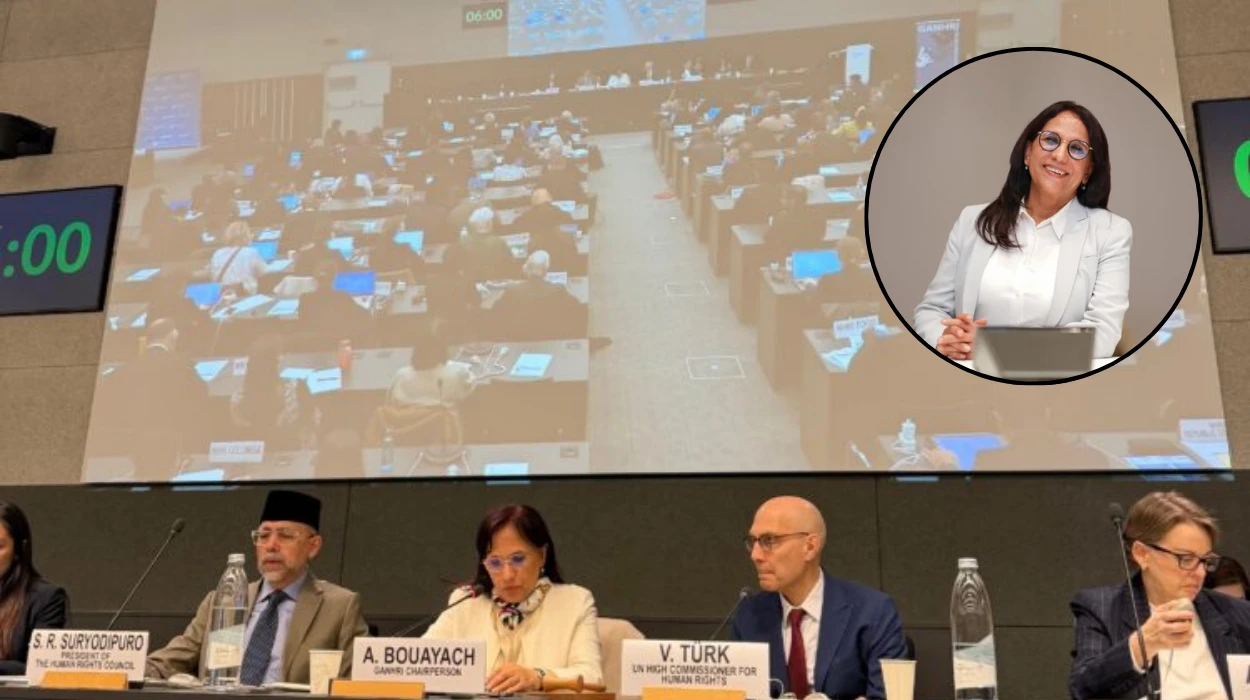
- She spoke at the GANHRI 2026 annual conference at the Palais des Nations in Geneva on Wednesday.
- Bouayach highlighted AI and digital tools’ influence on communication, work, and public participation, noting both opportunities and risks.
- Conference attendees included UN High Commissioner for Human Rights Volker Türk and Human Rights Council President Sidharto Riza Seradipura.
- Technologies can expand rights access and improve services but may deepen inequalities, threaten freedoms, and create new risks.
- She warned against unchecked facial recognition and algorithmic systems that could undermine rights without safeguards.
- Bouayach called for protecting content moderators and data annotators.
- Emphasised governments, tech companies, and human rights institutions’ responsibility for ethical digital tool use.
- Framed it as a choice: “We must make the right choices and direct these transformations toward dignity, justice, and inclusion.”
- Stressed equitable access to AI to avoid a “digital elite” and ensure vulnerable communities benefit.
- Advocated global coordination against algorithmic bias and disinformation involving states, UN, civil society, and tech firms.
- Positioned Morocco as a leader in responsible AI and digital inclusion.
Geneva (Britain Today News) April 1, 2026 – Amina Bouayach, Chair of Morocco’s National Human Rights Council (CNDH) and President of the Global Alliance of National Human Rights Institutions (GANHRI), called on Wednesday for human rights to anchor the governance of artificial intelligence and digital technologies.
- Key Points
- What Risks Do Emerging Technologies Pose to Human Rights?
- Who Bears Responsibility for Ethical AI Use?
- How Can We Direct Technology Towards Dignity and Inclusion?
- Why Is Equitable Access Crucial in the AI Era?
- What Role Does Morocco Play in Global AI Advocacy?
- Why Is Global Coordination Essential Against Digital Threats?
- How Does the GANHRI Conference Advance Digital Rights?
- What Specific Technologies Concern Human Rights Leaders?
- What Opportunities Does AI Offer for Rights Expansion?
- How Can Vulnerable Groups Benefit from Digital Advances?
- What Lies Ahead for International Human Rights in Tech?
In a compelling address at the GANHRI 2026 annual conference held at the Palais des Nations, Bouayach warned that emerging technologies present a double-edged sword for global societies. The event drew high-profile figures, including UN High Commissioner for Human Rights Volker Türk and Human Rights Council President Sidharto Riza Seradipura, to foster cooperation between national institutions and the UN in safeguarding rights amid digital transformation.
What Risks Do Emerging Technologies Pose to Human Rights?
Bouayach underscored the profound impact of AI and digital tools on daily life.
“These technologies can expand access to rights and improve public services, but they can also deepen inequalities, threaten freedoms, and expose individuals to new risks,”
she stated.
She specifically flagged unchecked applications like facial recognition and algorithmic systems. Without robust safeguards, these could erode fundamental rights, amplifying biases and surveillance concerns. Her remarks align with ongoing global debates on technology’s ethical boundaries.
Who Bears Responsibility for Ethical AI Use?
The CNDH chief placed a clear onus on multiple actors. Governments must enact protective policies, tech companies should prioritise transparency, and human rights institutions need to monitor compliance. Bouayach also spotlighted the often-overlooked workforce propping up digital ecosystems.
She advocated recognition and protection for content moderators and data annotators, whose labour enables AI functionality but exposes them to psychological strain and precarity. This call echoes broader labour rights discussions in the tech sector.
How Can We Direct Technology Towards Dignity and Inclusion?
Bouayach framed the challenge as a human choice, not technological inevitability.
“It is not technology that will decide our future—it is us. We must make the right choices and direct these transformations toward dignity, justice, and inclusion,”
she declared.
This proactive stance positions governance as a deliberate act. By embedding human rights from the outset, stakeholders can harness AI’s potential while mitigating harms.
Why Is Equitable Access Crucial in the AI Era?
Access to AI must not favour the privileged, Bouayach argued. She warned against fostering a “digital elite,” where benefits accrue unevenly. Policymakers should target vulnerable communities—such as rural populations, low-income groups, and marginalised minorities—to ensure inclusive progress.
In Morocco’s context, this resonates with national efforts to bridge digital divides, aligning with the kingdom’s push for broader connectivity and education.
What Role Does Morocco Play in Global AI Advocacy?
Bouayach’s speech reinforced Morocco’s stature as a proponent of responsible AI. As GANHRI President, she leverages the CNDH’s platform to influence international norms. The country’s initiatives in human rights multilateralism further amplify this voice, promoting frameworks that balance innovation with equity.
Her leadership highlights Morocco’s commitment to shaping global digital governance, fostering cooperation across borders.
Why Is Global Coordination Essential Against Digital Threats?
Challenges like algorithmic bias and disinformation transcend nations, Bouayach noted. Collective action is imperative, uniting states, UN bodies, civil society, and private tech companies. This multi-stakeholder approach mirrors successful models in climate and health governance.
At the conference, discussions likely delved into practical mechanisms, such as shared standards and capacity-building for national institutions.
How Does the GANHRI Conference Advance Digital Rights?
The Geneva gathering aimed to bolster ties between NHRIs and the UN. With Volker Türk and Sidharto Riza Seradipura in attendance, it signalled strong institutional backing. Sessions probably explored strategies for rights-based AI regulation, drawing on diverse national experiences.
Bouayach’s keynote set a tone of urgency, urging immediate, coordinated responses.
What Specific Technologies Concern Human Rights Leaders?
Facial recognition tops the list, given its potential for misuse in surveillance. Algorithmic systems, powering decisions in hiring, lending, and policing, risk perpetuating discrimination if trained on flawed data. Bouayach’s critique urges audits and inclusivity in development.
Content moderation’s human cost also demands attention—workers face toxic content without adequate support, underscoring the need for labour protections.
What Opportunities Does AI Offer for Rights Expansion?
Bouayach balanced warnings with optimism. AI can enhance public services, from efficient healthcare delivery to accessible education. Digital tools empower public participation, amplifying voices in democracies and enabling real-time advocacy.
The key lies in governance that maximises upsides while curbing downsides.
How Can Vulnerable Groups Benefit from Digital Advances?
Equitable policies are vital. Bouayach called for investments in infrastructure, digital literacy, and affordable devices for underserved areas. This prevents a two-tiered society, ensuring AI serves all.
Morocco’s own programmes, like expanding broadband, exemplify such efforts.
What Lies Ahead for International Human Rights in Tech?
Bouayach concluded on a note of global solidarity.
“We must make the right choices,”
she reiterated, envisioning a future where technology uplifts humanity. Her vision challenges leaders to act decisively.
The conference outcomes may yield declarations or working groups, advancing this agenda.
In expanding on her address, Bouayach drew from Morocco’s human rights trajectory. The CNDH, under her stewardship, has pioneered equity commissions and digital rights monitoring. This domestic expertise informs her global advocacy.
Critics might argue that enforcement lags behind rhetoric, yet her push for accountability addresses this. Tech giants, often US- or China-centric, must engage with diverse voices like hers to avoid cultural blind spots.
Broader context reveals rising AI regulation worldwide. The EU’s AI Act sets risk-based rules, while UNESCO’s ethics framework promotes inclusion. Bouayach’s input enriches these, emphasising Global South perspectives.
Attendees like Türk, known for digital rights focus, likely endorsed her views. Seradipura’s presence underscores the Human Rights Council’s stake.
Bouayach’s prior accolades, including international awards for combating religion’s political abuse, bolster her credibility. Her tenure at GANHRI since its leadership shift amplifies Morocco’s multilateral clout.
The digital divide statistic—over 2.6 billion offline globally—lends weight to her equity plea. AI exacerbates this if unchecked.
Labour in AI’s underbelly is stark: annotators in Kenya or Philippines earn pennies labelling data, enduring trauma. Bouayach’s protection call is timely.
Algorithmic bias examples abound—facial recognition falters on darker skin tones; hiring algorithms discriminate by gender. Safeguards like diverse datasets are essential.
Morocco’s role grows: hosting forums, contributing to UN resolutions. Bouayach positions it as a bridge-builder.
Conference timing aligns with AI summits, like potential UN follow-ups. Her words may echo in policy papers.
“We must direct these transformations toward dignity, justice, and inclusion,”
she repeated, a mantra for the digital age.
This address, exceeding typical keynotes in depth, signals a pivotal moment. As AI integrates deeper, human rights must lead—or risk obsolescence.