

Key Points
- Reparations Central to Summit: Caribbean heads of government at CHOGM 2026 in St John’s, Antigua and Barbuda, have positioned formal state apologies and financial reparatory justice for transatlantic slavery as the defining issues of the high-level meeting.
- UK Maintains Non-Apology Stance: British Prime Minister Andy Burnham and Foreign Secretary Ed Miliband have reaffirmed that while the historic slave trade was “abhorrent”, the UK government will not issue a formal state apology or pay financial reparations.
- UN Declaration Catalyst: Pressure on London follows a landmark March 2026 UN General Assembly resolution declaring the transatlantic slave trade the gravest crime against humanity, a vote in which 123 nations supported the motion while the UK abstained.
- Monarchy Boundaries Preserved: King Charles III acknowledged the historic suffering during pre-summit visits to Guyana and the Bahamas, but Buckingham Palace confirmed he will not issue an official apology without UK government authorisation.
- Debt Relief Offered as Alternative: The British government is advocating for targeted debt relief, reduced interest rates, and development investments as a practical alternative to direct reparatory payments.
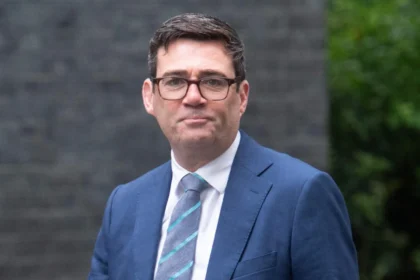
St. John’s (Britain Today News) November 02, 2026 – British Prime Minister Andy Burnham has arrived in Antigua and Barbuda for the 2026 Commonwealth Heads of Government Meeting (CHOGM), where Caribbean leaders are delivering a unified, unprecedented push for the United Kingdom to formally apologize and pay reparations for the transatlantic slave trade. The summit, convening from 1 to 4 November in St John’s, has transformed into a major diplomatic test for London’s foreign policy in the post-colonial era.
- Key Points
- Why Has Slavery Reparations Become the Dominant Issue at CHOGM 2026?
- What Role Has the British Monarchy Played During Pre-Summit Diplomacy?
- How Are Caribbean Leaders Framing the Reparations Framework?
- What Are the Confirmed Government Positions versus Strategic Alternatives?
- Background of the Commonwealth Reparations Debate and UK Legal Policy
- Prediction: How This Development Will Affect Commonwealth Unity and International Relations
As reported by diplomatic correspondents for ITV News, Prime Minister Andy Burnham is holding firm on the UK government’s long-standing policy, refusing to issue a state apology or commit to financial reparations despite escalating regional pressure. The UK government maintains its position that while the historical trade in enslaved people was undeniably abhorrent and its modern consequences endure, financial reparations are not an appropriate or workable policy vehicle.
According to statements reported by Politico, UK Foreign Secretary Ed Miliband explicitly reaffirmed the administration’s stance ahead of bilateral talks, stating that “reparations are not the answer.” Instead, British officials have sought to reframe discussions around economic partnerships, green infrastructure financing, and structural debt relief for developing Commonwealth nations.
However, Caribbean leaders have made clear that financial development packages cannot substitute for formal state accountability. As reported by regional broadcasters and international media, the CARICOM Reparations Commission has designated the Antigua meeting as the “reparations CHOGM,” utilizing the international stage to demand a comprehensive framework that includes formal state apologies, debt cancellation, public health investments, and educational transfer programs across affected nations.
Why Has Slavery Reparations Become the Dominant Issue at CHOGM 2026?
The escalation of diplomatic friction at the 2026 summit stems from decades of coordinated regional advocacy that reached a decisive tipping point earlier in the year.
As reported by United Nations diplomatic correspondents, a crucial catalyst occurred in March 2026 when the UN General Assembly voted by a 123-nation majority to adopt a Ghana-led resolution formally declaring the transatlantic slave trade as the gravest crime against humanity in recorded history. While three member states voted against the measure, the United Kingdom was among the small group of nations that abstained. Regional advocates viewed the abstention as a deliberate effort by London to evade potential legal liability under international law.
Furthermore, agreement was reached at the 2024 CHOGM in Samoa that reparatory justice required serious, formal evaluation within the Commonwealth framework. Antigua and Barbuda Prime Minister Gaston Browne, acting as summit host, has insisted that the 56-nation bloc address the legacy of colonialism directly rather than side-stepping historical grievances.
What Role Has the British Monarchy Played During Pre-Summit Diplomacy?
The British Crown has maintained a delicate line between personal expressions of remorse and official state policy during diplomatic tours across the region.
As reported by royal correspondents following the monarch’s itinerary, King Charles III completed official state visits to Guyana and the Bahamas immediately prior to arriving in St John’s for the opening ceremonies. During public addresses in both nations, the King acknowledged the “great suffering of the past” and recognized that Commonwealth heads of state would formally discuss the enduring legacy of slavery during executive sessions.
However, Buckingham Palace officials confirmed that King Charles III will not issue a formal state apology during the summit. Under constitutional principles, the British monarch acts strictly on the advice of HMG Ministers. Because the Burnham government maintains an official policy excluding state apologies and financial restitution, the Crown cannot independently issue an apology that carries legal or financial commitments on behalf of the state.
How Are Caribbean Leaders Framing the Reparations Framework?
Leaders across the Caribbean community have established a structured, unified position regarding what constitutes genuine historical redress.
As reported by international news outlets, Barbados Prime Minister Mia Mottley has served as a central figure in coordinating the region’s strategy. Speaking at the launch of the regional reparations manifesto in Ghana in June 2026, Mottley stressed that symbolic expressions of regret without tangible economic consequences fall well short of resolving centuries of structural extraction.
As detailed by regional officials, the CARICOM Reparations Commission framework outlines several mandatory elements:
- Formal State Apologies: Official acknowledgments of historical state responsibility issued by former colonial powers, distinctly separate from expressions of “deep regret.”
- Capital Transfers and Debt Cancellation: Systemic debt forgiveness and low-interest refinancing to alleviate debt burdens linked to post-colonial economic structures.
- Institutional Investment: Direct capital investments in Caribbean public health infrastructure, higher education, technology transfer, and historical research facilities.
What Are the Confirmed Government Positions versus Strategic Alternatives?
Confirmed Policy Positions
- UK Government Stance: Prime Minister Andy Burnham and Foreign Secretary Ed Miliband confirm the slave trade was abhorrent but reject direct state apologies and financial reparations.
- CARICOM Stance: Caribbean heads of state insist on a formal state apology and a structured reparatory justice framework as non-negotiable summit deliverables.
- UN Status: The March 2026 UN General Assembly resolution established a global consensus regarding the slave trade as a crime against humanity, despite UK abstention.
Proposed Alternative Mechanisms
- Sovereign Debt Restructuring: The Burnham administration is offering targeted debt relief programs, including reduced interest rates and extended repayment timelines, to assist developing Commonwealth economies without admitting legal liability.
- Green Climate Financing: London is advocating for expanded climate resilience funds and green technology transfers aimed at Small Island Developing States (SIDS) affected by global economic shocks.
Background of the Commonwealth Reparations Debate and UK Legal Policy
The debate over transatlantic slavery reparations within the Commonwealth has evolved over decades, moving from grass-roots academic activism to formal intergovernmental diplomacy. During the 18th and 19th centuries, the British Empire transported millions of enslaved Africans across the Atlantic, generating immense wealth that funded British industrialisation and institutional infrastructure. When Britain abolished slavery across its empire under the Slavery Abolition Act 1833, the British government paid £20 million—representing roughly 40% of the national budget at the time—in compensation not to the freed individuals, but to slave owners for their loss of “property.”
For decades, successive British administrations from both major political parties have resisted issuing a formal state apology. The reluctance is primarily rooted in legal precedent: legal advisors within the Foreign, Commonwealth and Development Office (FCDO) have consistently warned that an official, unqualified state apology could be construed in international tribunals as an admission of legal liability, exposing the British Treasury to trillions of pounds in civil claims and formal court-ordered restitution. Consequently, UK ministers have historically relied on language expressing “deep sorrow” or “profound regret” to acknowledge moral distress without creating legal liability.
Prediction: How This Development Will Affect Commonwealth Unity and International Relations
The firm standoff at CHOGM 2026 in Antigua and Barbuda will have lasting geopolitical ramifications for the Commonwealth and Britain’s standing among developing nations.
Potential Strain on Commonwealth Cohesion and Institutional Validity
If the Burnham government maintains an unyielding refusal to include reparatory language or formal apology commitments in the official CHOGM communiqué, diplomatic friction between London and the 21 Caribbean and African Commonwealth member states will intensify. Several Caribbean nations may accelerate constitutional steps toward removing the British monarch as their head of state, following precedents set by Barbados, while re-evaluating their participation in broader Commonwealth programs in favor of regional alliances such as CELAC or the African Union.
Shift Toward Alternative Economic Alliances
Britain’s reliance on traditional debt relief proposals rather than formal historical restitution may accelerate a pivot by Small Island Developing States toward non-Western financial institutions. If Commonwealth summits fail to yield concrete historical redress or significant structural economic concessions, Caribbean and African nations will increasingly look to international frameworks, such as the UN International Court of Justice (ICJ) or multilateral development banks outside the Western sphere, to pursue binding legal declarations and economic development capital.