

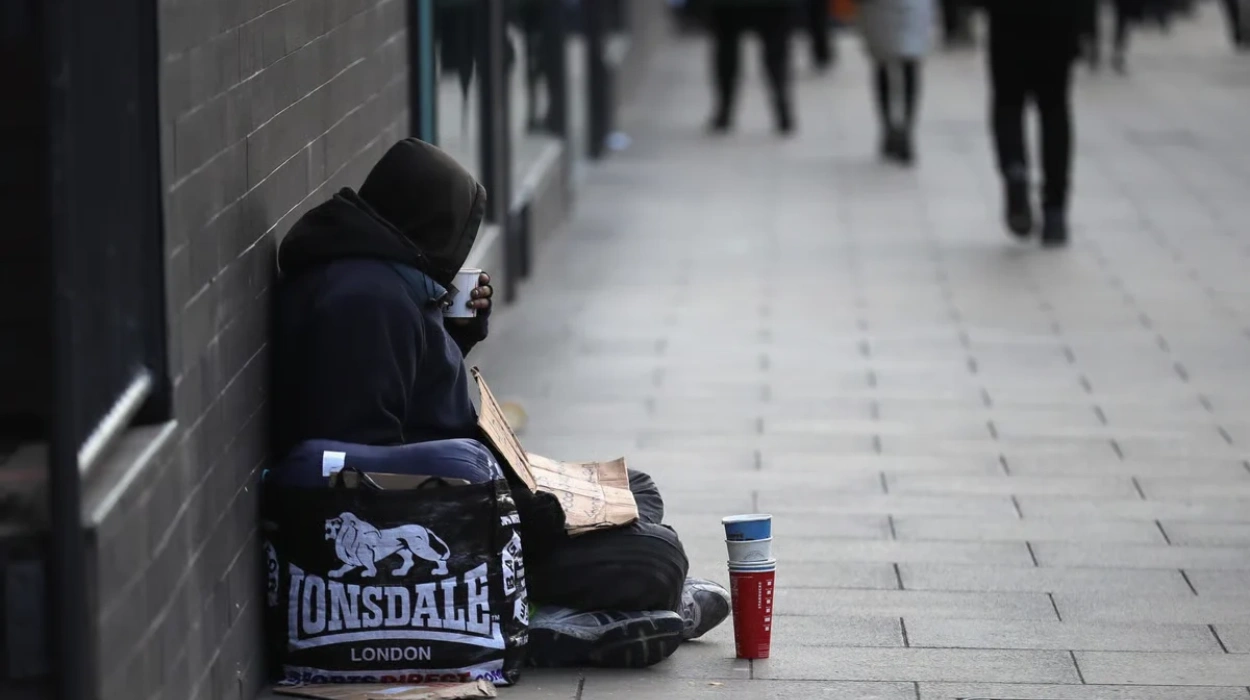
As the city prepares for another winter, London’s homelessness crisis continues to expose a painful contradiction at the heart of one of the world’s wealthiest capitals: while millions go about their daily lives, thousands of people are struggling to find somewhere safe to sleep. For some, homelessness means spending the night in a doorway or on a park bench. For others, it means living for months or years in temporary accommodation, uncertain when they will be able to return to a stable home. Families with children, people losing private rented homes and individuals facing multiple disadvantages are among those affected.
The scale of the crisis is reflected in official figures. According to the Greater London Authority’s Housing in London 2025 report, 73,310 homeless households were living in temporary accommodation in London at the end of March 2025, accounting for 56 per cent of the total in England. More than half of London’s homeless households in temporary accommodation had been there for at least two years.
The figures highlight a crisis that extends far beyond rough sleeping. Temporary accommodation can include hostels, hotels and other housing arranged by councils for households that have nowhere suitable to live. Although it can provide an essential safety net, prolonged stays can leave families facing uncertainty and disruption to work, education and everyday life.
Rough sleeping remains a major concern
People sleeping on London’s streets represent only one part of the wider homelessness picture, but the latest data shows the continuing scale of the challenge. The Greater London Authority’s Combined Homelessness and Information Network (CHAIN) recorded 12,938 people sleeping rough in London during 2025–26, according to a 2026 City Hall report. The figure demonstrates the continuing demand for outreach services and support to help people move into secure accommodation.
National figures also underline the pressure. The government’s Rough Sleeping Data Framework estimated that 8,748 people slept rough across England during June 2026. London continued to record the highest levels, although the capital saw a decrease compared with the same period a year earlier.
The distinction matters: a person sleeping rough may be counted more than once across different encounters, while official statistics on people seen sleeping rough do not capture everyone experiencing homelessness. Those staying temporarily with friends or relatives, for example, may remain outside rough-sleeping counts.
The housing affordability trap
Housing costs and the shortage of affordable homes remain central to London’s homelessness emergency. When rent becomes unaffordable or a private tenancy ends, households with limited savings can find themselves with few realistic alternatives. City Hall’s housing report identifies the pressures of rising private-sector rents and the long-standing shortage of affordable housing as important factors behind London’s heavy reliance on temporary accommodation.
For families, the consequences can stretch well beyond finding a bed. Uncertainty over where they will live can make it harder for children to maintain routines, attend school consistently and build lasting friendships. Adults may struggle to remain close to their workplaces or support networks when accommodation is located far from their previous neighbourhood.
The crisis also places significant pressure on local authorities, which must arrange emergency housing while managing increasingly stretched budgets.
What are the authorities doing?
Mayor of London Sadiq Khan has pledged to end rough sleeping by 2030 through the Mayor’s Rough Sleeping Plan of Action, published in May 2025. The plan includes preventing people from reaching crisis point, improving coordination between services and creating clearer routes from the streets into lasting accommodation.
London Councils has also called for sustained investment in homelessness prevention and the supply of genuinely affordable homes. In a statement published on 20 August 2026, its housing and homelessness spokesperson welcomed additional support for boroughs but warned that more than 100,000 children in London were growing up in temporary accommodation. The organisation also highlighted the financial burden that emergency housing places on councils.
These initiatives reflect an important distinction between responding to homelessness and preventing it. Emergency accommodation can protect people from immediate danger, but it cannot resolve the underlying problem if households continue to lose their homes faster than secure, affordable alternatives become available.
Beyond the statistics
London’s homelessness emergency is not simply a question of how many people are sleeping outside. It is also about how long families remain in temporary housing, how quickly people can access support and whether those at risk can receive help before losing their homes.
As winter approaches, the challenge for policymakers is to turn commitments into lasting results: more affordable housing, earlier intervention, better access to support and reliable routes into secure accommodation.
For a city built on opportunity and ambition, the measure of progress will not be the number of emergency beds available alone. It will be whether fewer people are forced to need them in the first place.