Key Points
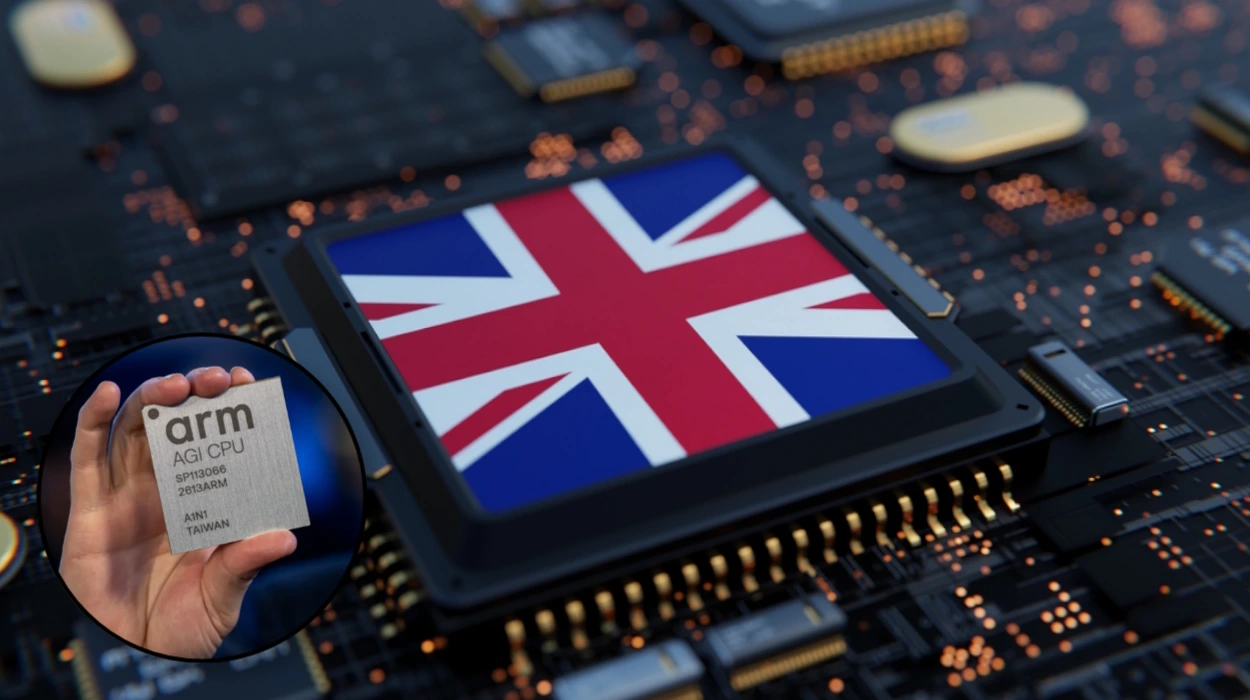
- The UK government has introduced a new £1.1 billion AI Hardware Plan to develop the UK’s own AI chip industry and cut its dependence on overseas suppliers.
- A £500 million Sovereign AI Fund, launched in April 2026, is making direct equity investments in promising UK AI startups, including chip designers.
- The Sovereign AI venture fund has announced it has invested in British AI chip startup OLIX in a nine-figure funding round, which makes it the fifth company to get equity funding from the programme.
- The Sovereign AI Fund made its first direct equity investment in AI infrastructure startup Callosum, which is based in Cambridge, raising $100 million (£73.5 million) in seed funding.
- The AI Hardware Plan includes spending £750m on a national AI supercomputer, £400m on the development of next-generation AI chips and a £150m advance purchase commitment of inference chips from UK companies.
- The government’s target for the market share of AI chips in the global market is to obtain a 5% share by the early 2030s as part of sovereign AI.
- The Sovereign AI initiative brings together public investment, venture capital and other forms of support, such as access to the Isambard-AI supercomputer, cloud credits, fast-tracked visas and government procurement assistance.
- In total, 11 startups have now been supported by the Sovereign AI programme, including by equity investment and through access to high-performance computing resources.
London (Britain Today News) August 21, 2026: The UK government’s push to back booming chip newcomers for its sovereign AI strategy took a decisive turn in 2026, with ministers unveiling a £1.1 billion AI Hardware Plan and deploying the £500 million Sovereign AI Fund to secure a domestic foothold in the industry. Announced during London Tech Week on 8 June 2026, the plan is designed to turn promising British chip startups into globally competitive semiconductor companies before they are acquired by foreign buyers or relocate abroad, addressing a long-standing weakness in the UK’s technology ecosystem. As reported by multiple outlets, the strategy combines direct equity investment, advance purchase commitments, and access to national compute infrastructure to create a sustainable pipeline of homegrown AI hardware capability.
- Key Points
- What is the UK’s £1.1 billion AI Hardware Plan?
- How is the Sovereign AI Fund structured and what does it offer?
- Which chip startups have received Sovereign AI backing so far?
- Why did the government invest in OLIX and what will the funding be used for?
- What is Callosum and why is its $100 million raise significant?
- How does the UK plan to prevent AI startups from relocating abroad?
- What role does national compute infrastructure play in the strategy?
- What are the broader economic and security implications of the strategy?
- How does the UK’s approach compare to other countries’ AI industrial policies?
- What challenges remain for the UK’s sovereign AI ambitions?
What is the UK’s £1.1 billion AI Hardware Plan?
The centrepiece of the government’s hardware ambitions is the £1.1 billion AI Hardware Plan, which allocates £750 million for a new national AI supercomputer and £400 million for developing next-generation AI chips and semiconductor technologies. Within this framework, £150 million is committed as an advance purchase of inference chips from emerging UK firms, acting as a “first customer” signal to generate immediate commercial demand and keep domestic companies from scaling abroad. The plan also sets an explicit target of capturing 5% of the global AI chips market by the early 2030s, a goal that ministers say is essential for national security, economic resilience, and technological sovereignty.
How is the Sovereign AI Fund structured and what does it offer?
Launched in April 2026 under Prime Minister Keir Starmer’s ambition to make Britain an “AI maker, not an AI taker”, the £500 million Sovereign AI Fund is structured as a venture vehicle rather than a grant scheme. According to reporting by Kevin Ampeh on LinkedIn, the fund invests on commercial terms, offering up to £20 million in equity per startup alongside non-financial support such as one million GPU-hours on the Isambard-AI supercomputer, cloud credits, fast-tracked visas for key hires, and assistance with government procurement. James Wise, who chairs the fund, has emphasised that the compute programme has received hundreds of applications, with demand far exceeding the available capacity for the year.
Which chip startups have received Sovereign AI backing so far?
The Sovereign AI Fund has moved quickly to back high-potential firms, with British semiconductor startup OLIX becoming the fifth company to receive direct equity investment from the programme. As reported by Innovation News Network, OLIX, which is headquartered in London with offices in Bristol, is designing the next generation of AI chips and has secured backing from Sovereign AI as part of a nine-figure fundraise announced on 30 July 2026. The company, which has already achieved unicorn status with a valuation exceeding $1 billion, is developing specialised processors intended to make AI faster, more affordable and significantly more energy efficient. In addition to OLIX, the government has backed AI lab Ineffable Intelligence and drug developer Isomorphic Labs, among others, bringing the total number of startups receiving Sovereign AI backing – including support accessing compute – to 11.
Why did the government invest in OLIX and what will the funding be used for?
The investment in OLIX reflects the government’s strategic priority of building domestic capability in AI inference chips, which are critical for running AI models efficiently once they are trained. As noted in coverage by Daily Synapse, the deal gives the UK government a stake in a startup designing inference chips intended to make AI cheaper and less energy-intensive, aligning with broader goals of reducing the carbon footprint and cost of AI deployment. The nine-figure fundraising round, which includes the Sovereign AI equity stake, is aimed at accelerating OLIX’s development of next-generation AI chips and scaling its operations while remaining headquartered in the UK.
What is Callosum and why is its $100 million raise significant?
Cambridge-founded AI infrastructure startup Callosum has raised $100 million (£73.5 million) in seed funding, marking the first-ever direct equity investment from the UK government’s £500 million Sovereign AI Fund. As reported by UK Tech News, the round was led by Atomico, with participation from Plural and deep-tech investor DCVC, and includes the Sovereign AI Fund taking what it confirmed is its very first direct equity stake in any company. Callosum’s technology focuses on AI chip orchestration, enabling enterprise AI workloads to run across Nvidia, AMD, Cerebras, and specialist chips simultaneously without code changes, a capability that could help bypass the “Nvidia monoculture” and diversify the hardware base for AI.
How does the UK plan to prevent AI startups from relocating abroad?
A central motivation behind both the AI Hardware Plan and the Sovereign AI Fund is to anchor high-value semiconductor design and AI hardware scaleups in the UK rather than seeing them migrate to Silicon Valley. As highlighted by Signalpoint UK, the government created the Sovereign AI Fund specifically to prevent promising deep-tech firms from relocating, combining capital with practical support such as supercomputer access and fast-tracked visas. The £150 million advance purchase commitment for inference chips is another deliberate “first customer” move, designed to create immediate commercial demand so that startups can generate revenue domestically before needing to look abroad.
What role does national compute infrastructure play in the strategy?
Access to high-performance compute is a critical enabler of the UK’s sovereign AI ambitions, with the £750 million allocation for a national AI supercomputer forming a key pillar of the hardware plan. The Isambard-AI system, described as the UK’s most powerful supercomputer, is being made available to Sovereign AI-backed companies as part of their support package, alongside cloud credits for those whose workloads are better suited to cloud environments. According to James Wise’s quarterly update, the compute programme has attracted hundreds of applications, indicating strong demand from the startup community for access to national-scale AI training and inference resources.
What are the broader economic and security implications of the strategy?
Ministers argue that building a domestic AI chip sector is essential not only for economic growth but also for national security and technological sovereignty. By reducing reliance on foreign suppliers for critical AI hardware, the UK aims to mitigate supply chain risks and ensure that sensitive AI applications can be run on infrastructure under domestic control. The target of capturing 5% of the global AI chips market by the early 2030s is intended to position Britain as a meaningful player in a strategically important industry, creating high-skilled jobs and driving long-term productivity gains.
Explore More about Technology:
UK and Irish Payroll AI Adoption Survey
Meta Smart Glasses Face UK Cinema Piracy Ban Calls
How does the UK’s approach compare to other countries’ AI industrial policies?
The UK’s combination of a dedicated sovereign fund, advance purchase commitments, and national compute infrastructure places it among a growing group of nations pursuing explicit AI industrial policies. As noted in analysis by Yahoo Finance, AI is dominating the UK’s venture market in 2026, with more than 70% of deal value directed to AI startups in the first half of the year, reflecting a broader global trend of capital concentration in the sector. However, commentators such as Kevin Ampeh have cautioned that the £500 million Sovereign AI Fund, while significant, does not close the gap with the United States, where private and public investment in AI is orders of magnitude larger.
What challenges remain for the UK’s sovereign AI ambitions?
Despite the momentum, significant challenges remain in translating policy ambition into a globally competitive domestic AI chip industry. The UK has historically struggled to scale deep-tech hardware companies without them being acquired by foreign buyers or relocating to jurisdictions with larger markets and deeper capital pools. Sustaining the pipeline of talent, ensuring continued access to advanced manufacturing, and maintaining long-term funding commitments will be critical if the government is to meet its target of 5% global market share by the early 2030s.