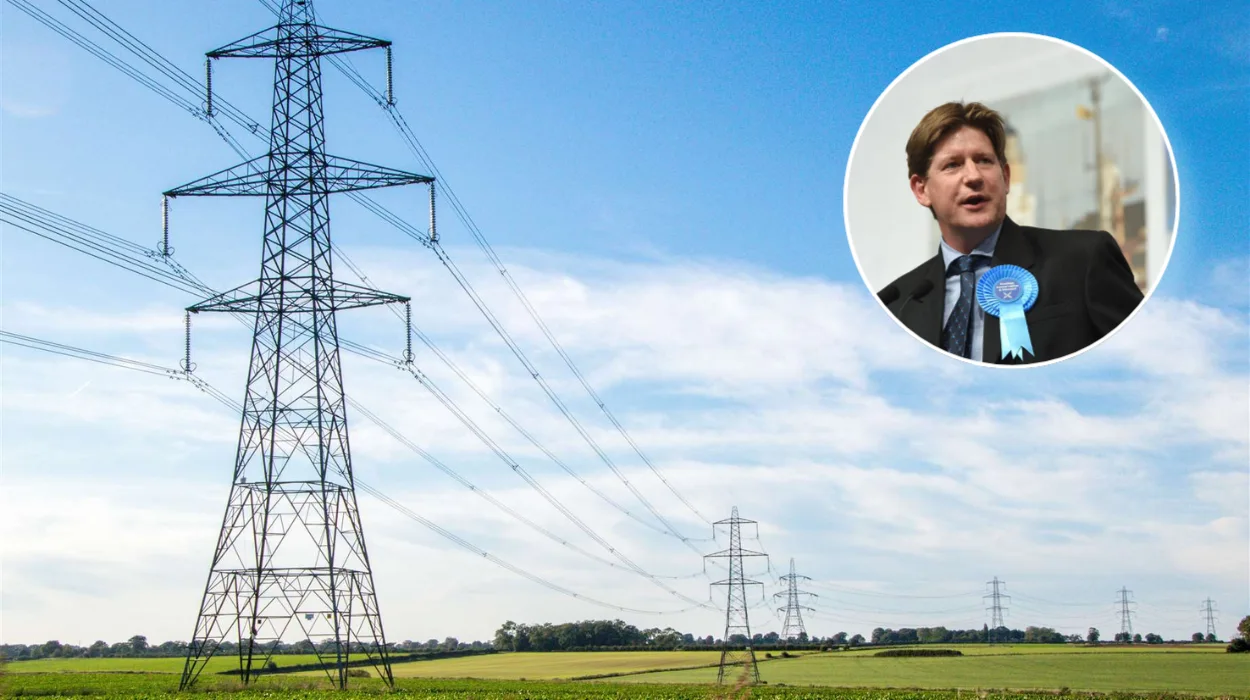
Key Points
- Households within 1,600ft (500m) of 43 electricity transmission projects throughout Britain will be eligible for annual discounts on their bills.
- A new UK Government energy infrastructure scheme offers eligible households up to £250 help per year for up to 10 years.
- The first round of payments is for sites on SSEN’s 66-mile Kintore- to Tealing overhead line project.
- Other projects in the north-east and Angus area are the Tealing–Westfield project, Emmock substation and Kincardine North–Tealing project.
- Securing energy supplies from home and growth are vital and depend on upgrading the grid, said UK Energy Minister Michael Shanks.
- Scottish Conservative MSP Alexander Burnett has called the money allocated for “a bribe”.
- The scheme would not pay compensation to residents for the “profound emotional toll” of having pylons in their homes, Mr Burnett said.
- Some of the properties had already fallen in value by 20%, he said, and some were already facing up to 25% less than they originally had paid.
- Thousands of objections have to come from the people, and the MSP should listen to them, the Labour Government and the SNP, he said.
- Mr Burnett invited the community to decide on key infrastructure developments in their area.
Angus (Britain Today News) August 13, 2026: Households living close to several major electricity transmission projects will be eligible for payments of £250 a year for as long as 10 years, under the first round of a UK Government bill-discount scheme.
- Key Points
- What is the UK Government’s pylon payment scheme?
- Which Scottish projects are included?
- Why does the Government support the payments?
- Why has Alexander Burnett criticised the scheme?
- What has Mr Burnett said about affected homeowners?
- How much could households receive?
- What is the Kintore–Tealing project?
- What are the other projects in the area?
- What does the MSP want the Government to do?
- What happens next for residents?
- What is the wider energy argument?
- What should readers know about the figures?
The scheme applies to customers living within 1,600ft, or 500 metres, of 43 transmission projects across Britain. It is intended to provide financial support to communities hosting infrastructure required to distribute renewable electricity and strengthen the country’s energy security.
Among the projects included are sites along SSEN’s 66-mile Kintore–Tealing overhead line route. The development has attracted strong opposition from residents and campaigners, including Mr Burnett, who has been a leading critic of the project.
Although ministers have presented the payments as a direct benefit for communities hosting nationally important infrastructure, opponents have argued that £250 a year is inadequate compensation for the potential impact on homes, landscapes and residents’ wellbeing.
The supplied report does not identify the individual journalist who covered the comments. Statements and project details in this article are attributed to Angus County World and to the named politicians quoted in the supplied report.
What is the UK Government’s pylon payment scheme?
The UK Government’s scheme is designed to provide annual energy-bill discounts to households located close to major electricity transmission projects.
Customers living within 500 metres of eligible infrastructure will be able to claim a £250 reduction on their energy bills each year. The payments may continue for up to 10 years, creating a potential total benefit of £2,500 for households that remain eligible throughout the full period.
The first round includes 43 transmission projects across Britain. These schemes form part of wider plans to improve and expand the electricity grid as the country increases its reliance on renewable energy.
Electricity generated from renewable sources must be transported across the country to reach homes and businesses. This requires new transmission lines, upgraded existing routes and improvements to substations and other parts of the network.
The Government has argued that such work is necessary to distribute renewable power more efficiently, improve energy security and support economic growth. However, residents who live close to proposed pylons have raised concerns over the effect on their homes and communities.
Which Scottish projects are included?
Several projects in the north-east and Angus area have been included in the first round of the scheme.
The most prominent is the Kintore–Tealing overhead line project, which covers a route of approximately 66 miles. The project is associated with SSEN and is intended to support the transmission of electricity between Kintore and Tealing.
The other included projects in the area are:
- Tealing–Westfield, involving improvements to the line between Tealing and Westfield in Fife.
- Emmock substation.
- Kincardine North–Tealing, involving an upgrade project between Tealing and Kincardine in Fife.
The inclusion of these sites means that households situated within the qualifying distance of the projects may be able to receive the annual bill discount.
The scheme is focused on the proximity of homes to the relevant infrastructure. The supplied information states that customers within 1,600ft, or 500 metres, of the projects will be eligible. It does not provide further details on the application process, the precise boundaries for each project or how eligibility will be verified.
Why does the Government support the payments?
UK Energy Minister Michael Shanks said the expansion and modernisation of the electricity grid was essential to the Government’s energy plans.
As reported by Angus County World, Mr Shanks said upgrading the grid was
“a vital part of how we deliver secure, homegrown energy and unlock economic growth across the country”.
The minister also said communities hosting pylons should benefit from the infrastructure being built in their areas.
He added:
“We must build again as a country, and we are determined that those communities which host pylons should benefit, which is why we’re bringing down the energy bills of those hosting this vital national infrastructure.”
The Government’s position is that the payments will provide a direct and practical benefit to households affected by major energy infrastructure.
The bill discount is also intended to recognise the role played by communities in hosting projects that serve a national purpose. While the infrastructure may be located in specific parts of Scotland and other areas of Britain, the electricity network is being developed to support the wider energy system.
Ministers have described the improvements as important for delivering renewable power and maintaining energy security. The Government has also linked the grid upgrades to economic growth, arguing that improved infrastructure is required to support the country’s future energy needs.
Why has Alexander Burnett criticised the scheme?
Scottish Conservative MSP Alexander Burnett has rejected the Government’s argument that the annual discounts offer suitable compensation.
Mr Burnett has been a leading campaigner against the Kintore–Tealing project. He said the payments would not address the wider consequences faced by residents living near the proposed pylons.
As reported by Angus County World, Mr Burnett said the money would not compensate for the “profound emotional toll” associated with projects of this kind.
He said:
“These insulting payments are nothing more than a bribe to railroad pylons across Scotland.”
The MSP’s criticism focuses on the difference between a fixed annual bill reduction and what he believes is the long-term effect of large-scale electricity infrastructure on affected communities.
For residents who own homes near the planned route, the concerns described in the report include possible property devaluation, anxiety about the future appearance of the area and the emotional strain associated with the project.
Mr Burnett argued that the payment scheme could be seen as an attempt to secure acceptance for pylons rather than as a sufficient response to residents’ objections.
What has Mr Burnett said about affected homeowners?
Mr Burnett said residents between Kintore and Tealing were experiencing significant hardship as a result of the plans.
He said:
“For residents living between Kintore and Tealing, I know these plans are causing significant hardship to those who own homes, with some already seeing their properties devalued by 20%. The risk of having these pylons on their doorstep is impacting people’s mental health.”
The statement refers to both financial and personal concerns. The alleged 20% reduction in property values is presented as an effect already experienced by some homeowners, while the reference to mental health highlights the emotional impact claimed by opponents of the project.
The supplied report does not provide an independent valuation study or further details identifying the properties involved in the claimed devaluation. It also does not include a response from SSEN addressing the allegation.
The concerns raised by Mr Burnett reflect the broader debate surrounding electricity transmission projects. Supporters say new infrastructure is needed to connect renewable power to the grid, while opponents argue that local communities carry a disproportionate burden for national energy policies.
For residents whose homes are close to a planned route, the issue is not limited to the value of an annual payment. Their concerns may also involve the location of pylons, the visual effect of overhead lines and the possibility of changes to the character of the surrounding area.
How much could households receive?
Eligible households could receive £250 a year for up to 10 years.
If a household remains eligible for the full period, the total value of the discount could reach £2,500. The benefit is intended to be applied to energy bills rather than paid as a general cash settlement, according to the information supplied.
The value of the payment is the same whether a home is close to a project in Scotland or elsewhere in Britain. Eligibility is based on living within the stated 500-metre distance of one of the 43 included transmission projects.
However, the scheme’s financial value has been questioned by critics. Opponents say the total possible payment does not reflect the potential impact of infrastructure on property values, the surrounding landscape or the wellbeing of residents.
Mr Burnett described the payments as “insulting”, arguing that they would not address the full range of issues associated with the Kintore–Tealing project.
The report does not state whether the annual discount will be adjusted for inflation, whether multiple qualifying properties in one household will receive separate payments or whether the benefit will continue if a property changes ownership.
What is the Kintore–Tealing project?
The Kintore–Tealing project is an overhead electricity transmission development extending across approximately 66 miles.
The route is one of the projects covered by the Government’s first round of bill discounts. The infrastructure is linked to the wider need to improve the electricity grid and move power generated from renewable sources to where it is needed.
The project has become a focus of local opposition. Alexander Burnett has campaigned against it and has called attention to objections from residents living along the route.
The supplied report states that thousands of objections have been made. It does not provide the exact number of objections, the current planning status of the project or a detailed timetable for construction.
The dispute illustrates the challenge facing policymakers as they seek to expand the electricity grid. New infrastructure may be required to support renewable energy and national energy security, but proposed routes can affect homes and communities directly.
For the Government, the bill-discount scheme is a way to ensure that communities hosting the infrastructure receive a measurable benefit. For opponents, the payment is not an adequate substitute for local consent or changes to the proposed route.
What are the other projects in the area?
The Tealing–Westfield project is included in the scheme and involves improvements to the line between Tealing and Westfield in Fife.
Emmock substation is also listed among the projects covered in the north-east and Angus area. Substations form part of the electricity transmission network and help manage the movement of power through the grid.
The Kincardine North–Tealing project is another included development. It involves an upgrade between Tealing and Kincardine in Fife.
The three projects are separate from the Kintore–Tealing overhead line route but form part of the wider group of transmission developments covered by the Government’s plan.
The supplied information does not set out the precise construction work involved at each site. It also does not provide individual maps or details of the number of households expected to qualify near each project.
Nevertheless, their inclusion means residents close to the listed infrastructure may be entitled to the same annual discount of £250 for up to a decade.
What does the MSP want the Government to do?
Mr Burnett has called on both Labour and the SNP to respond to the objections raised by residents.
He said:
“Labour and the SNP should listen to the thousands of objections, ensure the voices of residents are heard and give people the final say on infrastructure in their area.”
His demand goes beyond the question of financial compensation. He is calling for residents to have a decisive role in determining whether major infrastructure should proceed in their communities.
The MSP’s position is that local people should not be expected to accept pylons simply because the projects are considered important to national energy policy.
He also argued that the views of residents should be heard before decisions are finalised. His comments emphasise consultation, local participation and the right of affected communities to influence infrastructure planning.
The supplied report does not include a response from the Labour Government or the SNP to Mr Burnett’s criticism. It also does not state whether either party has committed to giving residents a final vote on the projects.
Could the payments settle the local opposition?
The £250 annual discount may provide some financial assistance to eligible households, but the criticism from Mr Burnett indicates that the payments are unlikely to settle the dispute on their own.
The central disagreement is about what residents believe they are being asked to accept. Government ministers view the projects as essential infrastructure that will help deliver secure, home-grown energy. Critics view the pylons as a direct local cost imposed in pursuit of a national objective.
A bill reduction can provide support with household energy costs, but it does not necessarily resolve concerns about property values, views, land use or mental health.
Mr Burnett’s comments suggest that campaigners want more than compensation. They are also seeking changes to the decision-making process and greater influence for residents affected by the proposed route.
The Government’s announcement therefore places the payment scheme at the centre of a continuing debate. The annual discount may be presented as a benefit for host communities, but opponents argue that it cannot replace consent or fully compensate those who believe their homes and quality of life could be affected.
What happens next for residents?
Residents living close to the eligible projects will need further information about how the discount will be administered and who will qualify.
The supplied report confirms the distance requirement and the maximum payment period but does not provide detailed guidance on applications, deadlines or eligibility checks.
Households affected by the Kintore–Tealing project and the other listed developments are likely to remain focused on the future of the infrastructure plans, as well as on the Government’s compensation arrangements.
The debate is expected to continue between ministers, energy companies, campaigners and local representatives. The Government has made the case that new and upgraded transmission infrastructure is vital for renewable power and energy security.
Mr Burnett, meanwhile, has maintained that the payments are inadequate and has urged Labour and the SNP to listen to residents’ objections.
The immediate issue for communities along the route is whether the £250 annual discount will be regarded as meaningful support or as an insufficient response to the concerns raised about the proposed pylons.
Explore More about Politics:
UK Lawmakers Challenge Banks Over Crypto Access in 2026
King’s Union Secures College Chapel for Weekly Student Debates
What is the wider energy argument?
The dispute over the Kintore–Tealing project reflects a wider national question:
“How can Britain expand renewable energy while protecting the interests of communities that host the required infrastructure?
The Government says the electricity grid must be upgraded to distribute renewable power and improve energy security. It has also linked the work to economic growth, suggesting that a stronger network is necessary for the country’s future development.
That national argument is being tested in areas where new overhead lines, upgraded routes and substations could change the local environment.
For residents, the debate is personal as well as political. Homeowners may be concerned about the effect on their properties, while other residents may object to the appearance and scale of the infrastructure.
The Government’s payment scheme attempts to bridge that divide by offering a direct financial benefit. However, the comments from Alexander Burnett show that opponents believe the decision must also address local consent, property concerns and the emotional impact described by affected households.
The outcome of the debate will depend on how the infrastructure proposals progress, how residents’ objections are considered and whether the Government’s promised benefits are viewed as sufficient by the communities expected to host the projects.
Who made the key statements?
UK Energy Minister Michael Shanks defended the bill-discount scheme and said grid upgrades were vital to delivering secure, home-grown energy and economic growth.
Scottish Conservative MSP Alexander Burnett criticised the payments and called them “nothing more than a bribe”. He also said that residents between Kintore and Tealing were facing hardship, property devaluation and mental-health concerns.
The statements were reported by Angus County World in the supplied news copy. No journalist name was provided.
What should readers know about the figures?
The scheme offers £250 a year for up to 10 years to qualifying households.
Eligibility applies to customers living within 1,600ft, or 500 metres, of 43 transmission projects across Britain.
The Kintore–Tealing overhead line project covers 66 miles. Mr Burnett said some affected properties had been devalued by 20%, although the supplied report does not include supporting valuation evidence or a response from SSEN.