Key Points
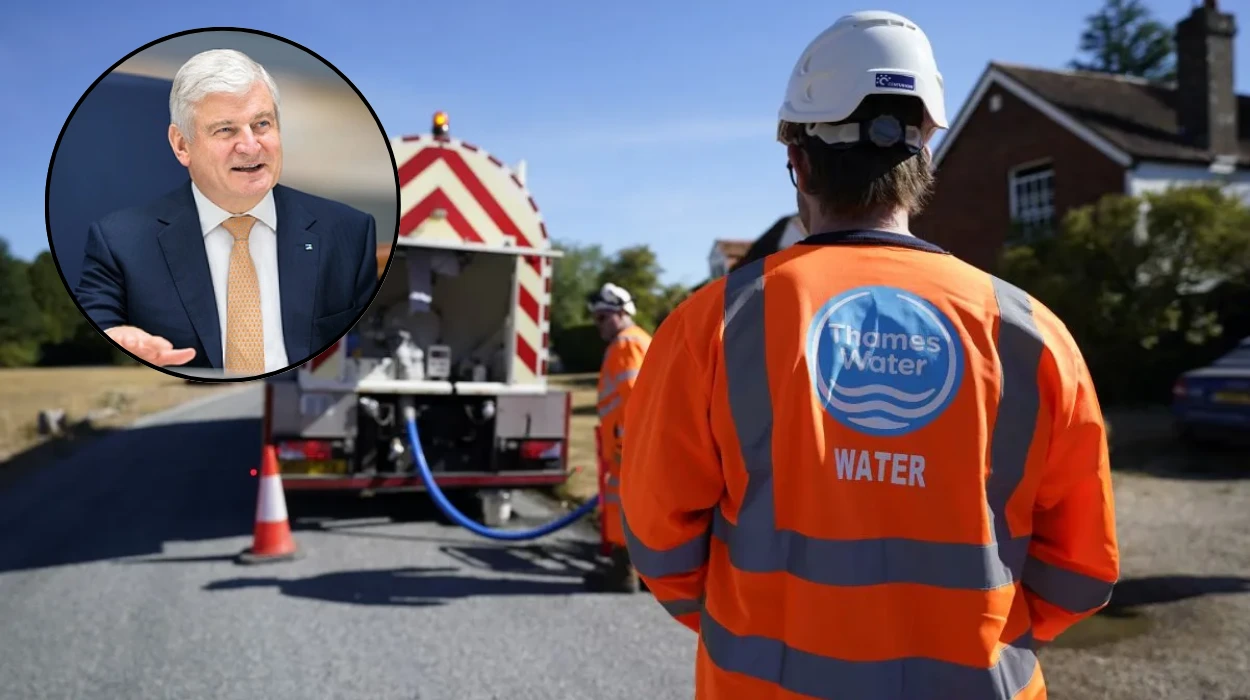
- Chief Financial Officer Steve Buck has been awarded a £1m “golden handshake” from Thames Water, which received an emergency loan from creditors to cover the payments.
- Alistair Carmichael, chairman of the Environment, Food and Rural Affairs (EFRA) Committee, was told of the payment in a letter.
- Chairman Sir Adrian Montague said the amount was a “necessary incentive” for Mr Buck when he joined in April 2025, and had been deferred when broader retention payments were suspended.
- It is assumed that the payment was made in accordance with legal counsel.
- Thames Water has also reached individual retention deals with 14 current and former senior executives despite a public furore last year over similar deals.
- The nature of the disclosures reflects the supplier’s attempt to rescue itself with the backing of creditors, while avoiding temporarily nationalising itself, with debt levels at over £20 billion.
- The payments raise fresh doubts as to whether water companies were avoiding the Water (Special Measures) Act, which stopped water bosses from paying bonuses for performance.
- Downing Street described the payments as “unacceptable” and has stated that companies should comply with the regulations “both in the letter and in the spirit.
- The company, Thames Water, suspended payments of £2.46 million to 21 executives in December 2024 after a backlash.
- Campaign groups River Action and We Own It have criticised the latest payments as “indefensible” and “criminal”.
- Last month’s annual report revealed Thames Water had paid out over £4m in bonuses, with chief executive Chris Weston’s salary reaching £1.2m.
London (Britain Today News) August 10, 2026 – Thames Water has sparked outrage after handing a delayed £1 million “golden handshake” to its chief financial officer and agreeing controversial retention payouts to top bosses as it battles to secure its financial future. Thames Water, Britain’s largest water supplier, has confirmed it made the payment to finance chief Steve Buck at the end of July, drawing the funds from an emergency lending facility extended by its creditors. The disclosure was made in a letter sent last week to the chairman of the Environment, Food and Rural Affairs Committee, Alistair Carmichael, as the stricken utility continues to grapple with a debt pile exceeding £20 billion.
- Key Points
- What Payment Did Thames Water Make to Its Finance Chief?
- Why Was the £1 Million Payment Delayed?
- What Did Thames Water’s Chairman Say About the Payout?
- What Are the Retention Payments Agreed With Senior Executives?
- How Does This Relate to Thames Water’s Financial Crisis?
- What Has the Government Said About the Payouts?
- How Does This Payout Bypass the Water Bonus Ban?
- What Has Thames Water Said in Response?
- How Have Campaign Groups Reacted?
- What Were the Previous Bonus Controversies at Thames Water?
- What Happens Next for Thames Water?
What Payment Did Thames Water Make to Its Finance Chief?
The payment to Mr Buck, described internally as a signing-on payment, was made at the end of July from an emergency lending facility provided by the company’s creditors. Mr Buck was appointed chief financial officer of Thames Water in April 2025, and the payment was designed to secure his services during one of the most turbulent periods in the company’s history.
In the letter to the EFRA Committee, Thames Water chairman Sir Adrian Montague explained that the payment had been treated as a “necessary incentive” to bring Mr Buck into the role. However, the payout was deferred at the time wider retention payments to other senior staff were put on hold amid public criticism. It is understood that the eventual payment to Mr Buck was made only after the company had sought and received legal advice on the matter.
Why Was the £1 Million Payment Delayed?
The payment had originally been due to be made earlier but was held back once Thames Water became embroiled in controversy over a separate, larger set of retention payments to other senior executives. The company opted to delay the signing-on fee for Mr Buck while it worked through the wider issue, before eventually proceeding with the payment once legal advice had been obtained.
Sir Adrian, in his letter to the committee, indicated that the company had carefully weighed the reputational risks of proceeding with the payment against the practical need to retain senior leadership through a critical phase of Thames Water’s turnaround.
What Did Thames Water’s Chairman Say About the Payout?
Sir Adrian Montague used his letter to the EFRA Committee to defend the company’s approach, acknowledging the difficulty of justifying such payments to customers who feel let down by the utility’s performance.
He said:
“I understand that for customers who believe, rightly, that they have not received the service they deserve, it feels unjust that senior leaders of the company receive significant compensation.”
He went on to argue that retaining experienced leadership was essential to the company’s recovery, stating:
“However, we need those senior leaders to remain in post to continue the good progress made on the turnaround.”
On the decision to settle individually with executives rather than risk legal action, Sir Adrian wrote:
“Based on clear legal advice, the company decided that reaching an individual agreement with each participant would be significantly cheaper and less disruptive than being in due course ordered by a court to make payment, with associated costs and damages.”
He added that the approach
“also provided the best opportunity of retaining the relevant employees.”
What Are the Retention Payments Agreed With Senior Executives?
Beyond the payment to Mr Buck, Thames Water’s letter confirmed that the company has now reached individual settlements over so-called retention payments with 14 senior figures – 12 current executives and two who have since left the business. The letter states that these payments will be finalised in the “coming weeks”, having been deferred where possible while legal advice was sought.
Thames Water has declined to disclose the total value of the settlements, though it is understood the sums agreed are lower than those originally proposed. The retention scheme had initially been due to pay out in December 2024 and again in June 2025, before both rounds were delayed amid mounting public and political pressure.
How Does This Relate to Thames Water’s Financial Crisis?
The payments have emerged at a critical juncture for Thames Water, which supplies water and wastewater services to around 16 million customers across London and the Thames Valley. The company is sinking under a debt burden of more than £20 billion and is currently fighting to secure a rescue deal proposed by its senior creditors.
Should that rescue plan fail, Thames Water faces the prospect of being placed into a Special Administration Regime – effectively temporary nationalisation – by the Government. Against this backdrop, the decision to proceed with significant executive payouts has drawn sharp criticism from politicians, campaigners and customers alike, who question why money is being directed towards senior pay rather than infrastructure, leak repairs or environmental protection.
What Has the Government Said About the Payouts?
The Prime Minister’s official spokesman issued a pointed response to the disclosures, criticising Thames Water for its priorities while the company remains under intense financial and operational strain.
The spokesman said:
“It’s unacceptable that one of the worst-performing water companies is handing out huge payments to its executives when it should be focusing on improving performance and rebuilding public trust.”
He continued:
“We’ve banned bonuses for polluting water bosses. We expect companies to follow both the letter and the spirit of the rules.”
The spokesman confirmed that the matter now rests partly with the industry regulator, adding:
“We look forward to the outcome of Ofwat’s review, which will assess if and how these rules should be strengthened.”
How Does This Payout Bypass the Water Bonus Ban?
The payments add to growing evidence that companies within the water sector are finding ways around last year’s Water (Special Measures) Act, which explicitly banned performance-related bonuses for executives at utilities that fail their customers or the environment. By categorising the payments as “retention” payments or a “signing-on” fee rather than performance bonuses, Thames Water has been able to proceed with substantial payouts without technically breaching the legislation.
This distinction has become a central point of contention, with critics arguing that regardless of how the payments are labelled, the effect is the same: senior executives at a company with a poor record on leaks, pollution and customer service are receiving significant sums of money. Ofwat’s ongoing review is expected to examine whether the current rules need to be tightened to close this apparent loophole.
What Has Thames Water Said in Response?
Thames Water has declined to comment further beyond the contents of its letter to the EFRA Committee and has not disclosed the precise value of the settlements reached with the 14 executives. The company has, however, confirmed that the payments are lower than those originally proposed under the earlier retention scheme, and that they have been deferred wherever possible pending legal advice.
The letter to Mr Carmichael represents the company’s most detailed public account yet of how it has handled the retention payments issue since the controversy first erupted in December 2024.
How Have Campaign Groups Reacted?
Campaigners have reacted with anger to the disclosures, arguing that the payments represent a further betrayal of customers who have endured rising bills and poor service.
Amy Fairman, head of campaigns at River Action, said the payments were “indefensible” and called for more radical action to be taken against the company. She said:
“Put Thames Water into special administration and rebuild it to serve its customers, and clean up our rivers, not reward failure.”
Cat Hobbs, director of the public ownership campaign We Own It, was similarly scathing. She said:
“It’s criminal to let this rip-off continue with 16 million households paying the price.”
Both campaign groups have previously called for Thames Water to be brought into public ownership rather than rescued through a creditor-led deal that could see existing lenders take control of the company.
Explore More about Business:
Time Out to Open First UK Food Market in London in 2028
The Teescraft Group Engineers British Manufacturing Future
What Were the Previous Bonus Controversies at Thames Water?
This is not the first time Thames Water’s approach to executive pay has provoked public anger. In December 2024, the company agreed to pause £2.46 million of retention payments that had been due to go to 21 senior executives, following widespread criticism from politicians, campaigners and customers. A similar sum had already been paid out earlier that year despite the company’s deteriorating financial position.
More recently, Thames Water’s annual financial report, published last month, revealed that the company had paid out more than £4 million in bonuses across its senior team. The same report showed that chief executive Chris Weston’s total pay package had risen to £1.2 million, a figure that included a £99,000 retention payment deferred from a previous year.
What Happens Next for Thames Water?
Thames Water’s immediate priority remains securing the rescue deal proposed by its senior creditors, which the company hopes will allow it to refinance its debts and continue operating without falling into Government hands. The EFRA Committee is expected to continue scrutinising the company’s conduct, including its handling of executive pay, as part of its wider oversight of the water industry.
Ofwat’s review into the effectiveness of the Water (Special Measures) Act’s bonus ban is also likely to have significant implications for Thames Water and other suppliers, with campaigners and MPs pushing for tighter rules to prevent companies from using retention payments or signing-on fees to circumvent the spirit of the legislation.
For now, the £1 million payment to Mr Buck and the settlements with 14 other executives stand as the latest flashpoint in a long-running row over pay, performance and accountability at Britain’s most troubled water company.