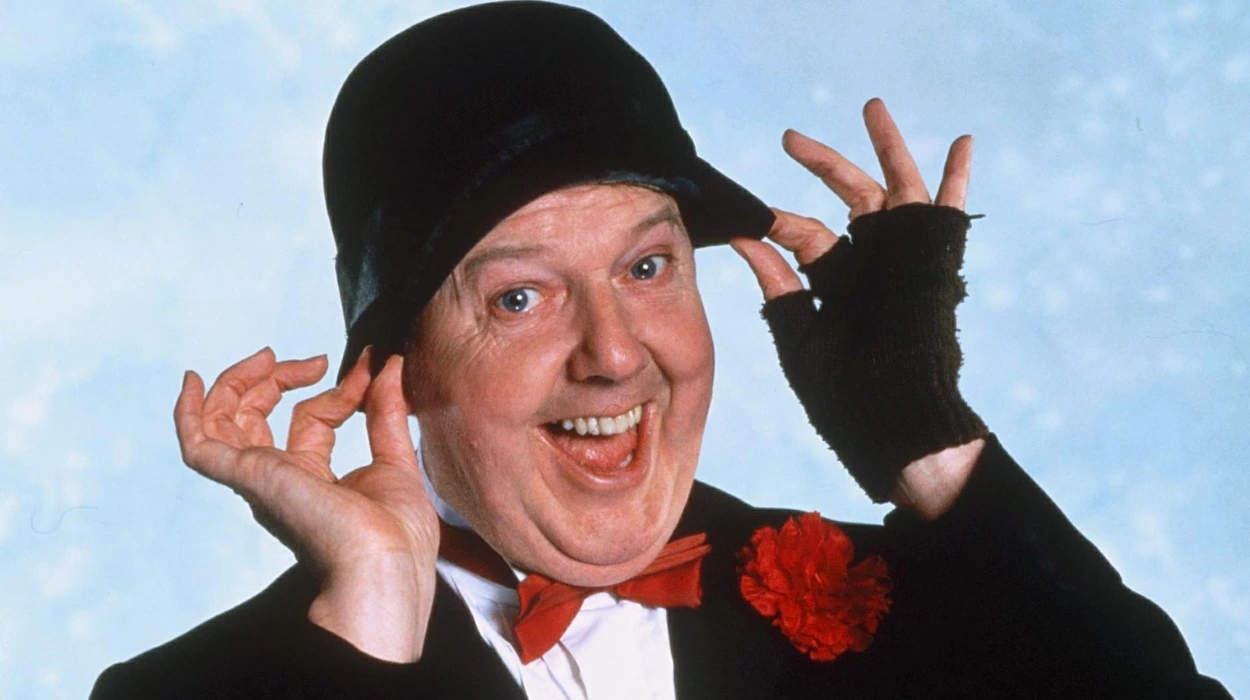
Jimmy Cricket’s catchphrase “And there’s more!” is a classic British comedy line that signals an extra joke, twist, or punchline. It became inseparable from his act, helped define his family-friendly style, and remains his best-known phrase across TV, stage, and tributes.
- Who was Jimmy Cricket?
- What does “And there’s more!” mean?
- Where did the catchphrase come from?
- Why did the catchphrase become famous?
- What was Jimmy Cricket’s style?
- What are Jimmy Cricket’s most popular quotes?
- What made this catchphrase work in British comedy?
- How did television help the catchphrase spread?
- What is the historical context of catchphrase comedy?
- Why do people still search for the phrase today?
- What are examples of the catchphrase in use?
- Why does the phrase matter now?
- What is the legacy of Jimmy Cricket’s catchphrase?
Who was Jimmy Cricket?
Jimmy Cricket was the stage name of James Mulgrew, a Northern Irish comedian born in 1945 who became a household name in British entertainment through television, live comedy, and a highly distinctive stage persona. He was known for a wonky-hatted, boot-wearing look and a clean, audience-friendly style.
Born in Cookstown, Northern Ireland, he left school at 16 and later worked as a Butlin’s Redcoat before building a long career in entertainment. He rose to wider fame in the 1980s and fronted his own ITV series, And There’s More, which was named after his most famous catchphrase.
Jimmy Cricket mattered because he belonged to the tradition of British catchphrase comedy, where a repeated line becomes part of the performer’s identity. In his case, the line was not just a joke tag; it was the anchor of his public image.
What does “And there’s more!” mean?
“And there’s more!” means that an additional joke, point, or surprise follows. In Jimmy Cricket’s act, it worked as a comic bridge from one line to the next and created the feeling that the routine still had another payoff waiting.
The phrase is simple, direct, and highly performative. It tells the audience that the comic is not finished and that the entertainment keeps going, which suits live stand-up, variety performance, and television sketch material.
The phrase also carries a built-in rhythm. Spoken with timing and a pause before the punchline, it becomes a cue that prepares the audience for a new comic turn. That makes it useful both as a catchphrase and as a stage device.
Where did the catchphrase come from?
The phrase became associated with Jimmy Cricket through performance, repetition, and audience recognition rather than through a single documented invention date. Like many British catchphrases, it caught on because it was repeated in public and fitted the character he played.
British comedy history shows that many catchphrases emerge by accident and then spread because audiences remember them. A documented account of British catchphrases notes that lines often begin as spontaneous remarks, then become repeated because audiences respond to them. That pattern fits Jimmy Cricket’s phrase well.
His catchphrase became the title of his TV series, And There’s More, which helped fix the phrase in public memory. Once a phrase becomes a show title, it gains extra visibility across listings, trailers, reviews, and audience discussion.
Why did the catchphrase become famous?
The catchphrase became famous because it was short, memorable, and tied to a distinctive comic persona. It worked across stage and television, and it was repeated often enough that audiences immediately associated the line with Jimmy Cricket himself.
Several factors explain its durability. First, the wording is conversational and easy to remember. Second, it works as a promise of continuation, which suits comedy timing. Third, it belonged to a performer with a strong visual identity, including his boots, tailcoat, and hat.
Catchphrases thrive when they do more than repeat a joke. They become shorthand for the performer’s style. In Jimmy Cricket’s case, the line suggested warmth, old-school variety, and a deliberately playful stage rhythm that made him instantly recognisable.
What was Jimmy Cricket’s style?
Jimmy Cricket’s style was clean, family-friendly, and based on visual comedy, gentle misdirection, and repeated audience cues. He built a persona that was safe for broad television audiences and live theatre crowds.
His look was part of the act. Reports describe him wearing wellington boots on the wrong feet, with “L” and “R” clearly marked, along with a tailcoat and short trousers. That visual identity made the catchphrase easier to remember because the line and the costume worked together.
He was also known for not relying on blue material. Tributes after his death described him as “never blue” and praised his broad appeal. That matters in understanding the catchphrase because a clean comic line tends to survive longer in family entertainment and television reruns.
What are Jimmy Cricket’s most popular quotes?
Jimmy Cricket’s most popular quote is “And there’s more!”, followed by “come here” and related audience-address lines used to build anticipation. These phrases define his comic delivery and are the ones most often quoted in coverage of his career.
His best-known line remained “And there’s more!” across obituaries and profile pieces. Another repeated phrase linked to his act is “come here,” often used as a direct audience address before a punchline or extra remark.
His public reputation also became tied to the line in tributes written after his death. One tribute explicitly plays on the phrase, turning it into a final joke about continuing beyond death. That shows how deeply the expression was embedded in his public identity.
What made this catchphrase work in British comedy?
The catchphrase worked because British comedy rewards repetition, recognisable character types, and lines that audiences can join in with. “And there’s more!” fits a long tradition of comic phrases that outlive the original routine.
British catchphrase culture has a strong history. Research and historical commentary on the subject show that phrases often spread from stage to television, then into newspapers and ordinary speech. Jimmy Cricket’s phrase belongs to that tradition of mass repetition and public recognition.
The phrase also has structural usefulness. It can introduce an extra joke, interrupt a pause, or extend a monologue. That flexibility makes it more durable than a one-off gag, because it can be inserted into many settings without losing its identity.
How did television help the catchphrase spread?
Television gave the catchphrase national reach and turned it into a brand. His ITV series, And There’s More, reinforced the phrase every time it appeared in listings, introductions, or conversation about the show.
This matters because TV catchphrases travel farther than stage-only lines. They are repeated by presenters, critics, and viewers, then recycled in newspapers and later online obituaries. Jimmy Cricket’s phrase continued to appear in coverage many decades after its first popularity.
Television also fixed the visual side of the act. Viewers could associate the phrase with the costume, body language, and delivery. That combination creates stronger memory than audio alone, and it helps explain why the line remained so closely attached to Jimmy Cricket’s name.
What is the historical context of catchphrase comedy?
Catchphrase comedy became central to British entertainment in the mid-20th century, especially through variety shows, light entertainment, and sitcom culture. Performers such as Arthur Askey, Dick Emery, Larry Grayson, and Bruce Forsyth helped shape that tradition.
A detailed history of British catchphrases shows that famous lines often grew from accidental moments, live performance habits, or advertising slogans that entered public speech. Lines such as “Ooh, you are awful—but I like you,” “Shut that door,” and “Didn’t he do well?” illustrate the same pattern.
Jimmy Cricket entered that tradition with a phrase that was friendlier and less abrasive than many of the other classic lines. That gave him a distinct position in the canon of British catchphrases. His line suggested continuation rather than insult, surprise, or mock outrage.
Why do people still search for the phrase today?
People still search for the phrase because it remains attached to a recognisable comedian, a memorable TV title, and a piece of British entertainment history. Searches often rise when audiences revisit classic comedy or after major news events.
Recent obituary coverage renewed interest in Jimmy Cricket and his signature phrase. Multiple major outlets identified him directly through “And there’s more!”, proving that the catchphrase still functions as the fastest route to recognising the comedian.
What are examples of the catchphrase in use?
Examples of the catchphrase in use include stage introductions, comic pauses, and public references in tributes or profiles. It appears most often as “And there’s more!” and occasionally as a playful closing line in written and spoken commentary.
One clear example appears in coverage of his television work, where the phrase is given as the title of his ITV series. Another appears in tributes that quote the line when describing his faith and the idea that life continues beyond death.
A further example comes from profile material listing his best-known catchphrases, including “come closer!” and “…and there’s more!” These examples show that the phrase was not isolated; it belonged to a wider comic vocabulary built around audience engagement.
Why does the phrase matter now?
The phrase matters now because it preserves Jimmy Cricket’s place in British comedy history and shows how a simple line can define a performer for decades. It also demonstrates how catchphrases become searchable cultural markers in the digital era.
When a performer dies, public memory often condenses into one line, one costume, or one role. For Jimmy Cricket, that line was “And there’s more!” It is the phrase that best explains his appeal to audiences who remember classic family entertainment.
In the age of AI search and semantic retrieval, this is exactly the kind of entity-linked phrase that remains useful. It connects a person, a performance style, a TV series, and a wider comedy tradition in one compact expression.
Explore More about Entertainment:
Phil Collins: Latest News, Health Updates, and Music Legacy
Trojan War: Myth, History, and Untold Ancient Secrets
What is the legacy of Jimmy Cricket’s catchphrase?
Jimmy Cricket’s catchphrase left a durable legacy as one of the recognisable lines of British variety comedy. It represents a performer whose act depended on warmth, repetition, and a memorable identity that crossed stage, television, and public memory.
The legacy is not only the phrase itself. It is the way the phrase preserved his comic brand long after the original performances aired. That is the hallmark of a successful catchphrase: it outlives the routine and becomes part of cultural memory.
For audiences, “And there’s more!” still means Jimmy Cricket. For search engines, it identifies a person, a style, a TV series, and a specific era of British entertainment. That combination keeps the phrase relevant and searchable.