Key Points
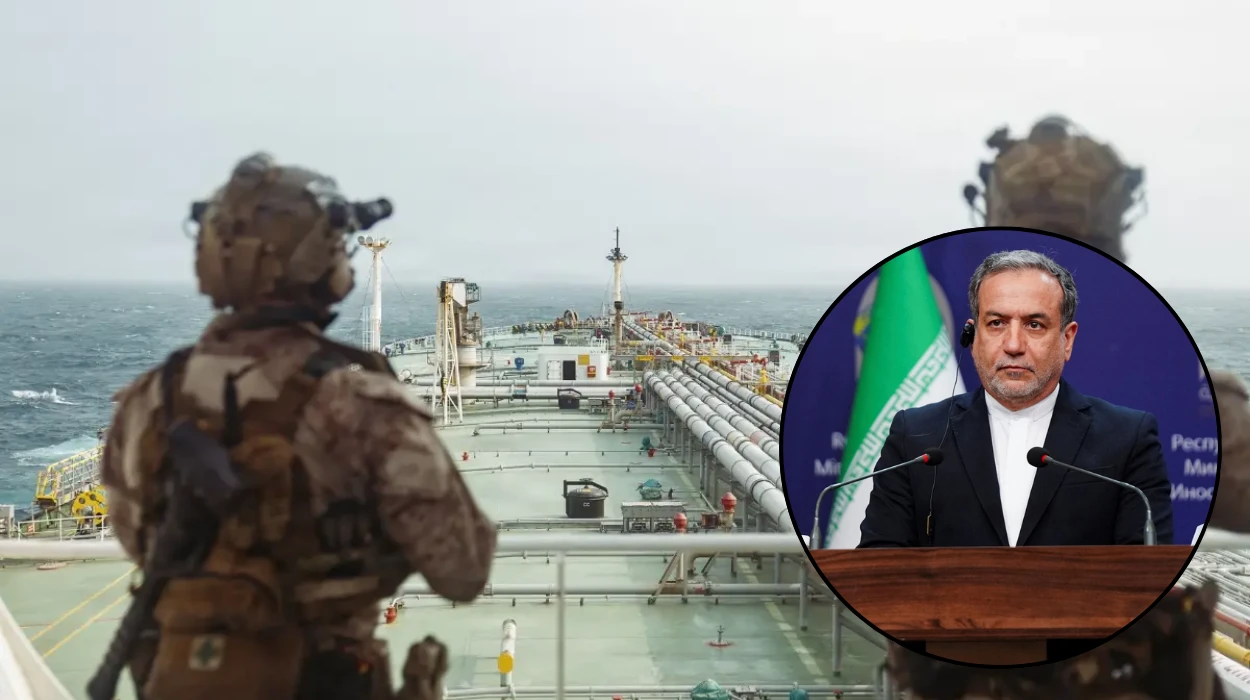
- Iran’s Foreign Minister, Seyyed Abbas Araghchi, has warned Britain against allowing the United States to use British military bases for strikes on Iran.
- Araghchi told his British counterpart, Ed Miliband, that such cooperation would amount to an “unacceptable” act of aggression under international law.
- He cited the international Definition of Aggression resolution, arguing it would entitle Tehran to invoke a right of “self-defence”.
- The exchange took place in a telephone call between the two foreign ministers on Friday.
- Araghchi also criticised Britain’s proscription of the Islamic Revolution Guards Corps (IRGC) and what he called London’s complicity in two previous wars against Iran.
- Miliband responded that the UK “is not part of the war with Iran” and stressed a preference for diplomacy.
- The row follows Prime Minister Andy Burnham’s approval, on 21 July, of continued US use of British bases, extending a policy set under his predecessor, Sir Keir Starmer.
- The bases concerned include Diego Garcia in the Indian Ocean and RAF Fairford in England, which London says support only “defensive” operations.
- Burnham has separately discussed the situation with US President Donald Trump, reaffirming Britain’s commitment to maritime security in the Strait of Hormuz.
Tehran (Britain Today News) August 01, 2026 – Iran has issued a pointed warning to the United Kingdom over its continued cooperation with the United States, cautioning that any use of British military bases to support American strikes against Iranian territory would constitute an act of aggression, entitling Tehran to respond in self-defence. The warning was delivered directly by Iran’s Foreign Minister to his British counterpart, marking one of the sharpest diplomatic exchanges between the two nations in recent months, and comes at a moment when Britain’s newly installed government is being forced to define where it stands in an ongoing regional confrontation.
- Key Points
- Who delivered the warning to Britain, and how?
- Why does Iran consider UK base access an act of aggression?
- What did Araghchi say about Britain’s broader approach to Iran?
- What did the UK Foreign Secretary say in response?
- How did the row over British bases begin?
- Which UK military bases are involved, and what role do they play?
- What is the history behind Iran’s reference to “two previous wars”?
- How has the IRGC’s proscription affected the relationship?
- What role has US President Donald Trump played in the dispute?
- Why does the Strait of Hormuz matter to this dispute?
- What happens next in UK-Iran relations?
Who delivered the warning to Britain, and how?
The warning was issued by Iranian Foreign Minister Seyyed Abbas Araghchi during a telephone conversation with British Foreign Secretary Ed Miliband on Friday. According to the readout of the call, Araghchi used the conversation to set out Tehran’s position in explicit terms, telling Miliband that continued British support for American operations could no longer be treated as a peripheral or technical matter. Araghchi told Miliband that cooperation with what he termed the “aggressors” would be “unacceptable”, even if such cooperation were framed by London as falling under long-standing defence arrangements with Washington.
The call represents a direct, minister-to-minister exchange rather than a public statement issued through intermediaries, underlining the seriousness with which Tehran regards the question of British base access. It also places Miliband, who took up the Foreign Office brief only weeks ago, at the centre of a dispute inherited from his predecessors.
Why does Iran consider UK base access an act of aggression?
Araghchi’s argument rested on a specific legal foundation rather than a general political complaint. He pointed to international law and, in particular, to the Definition of Aggression resolution, arguing that allowing an aggressor state to use another country’s territory and facilities to mount an unlawful attack itself qualifies as an act of aggression under that framework. On this reading, a country that permits its bases to be used in this way does not merely offer passive support; it becomes a party to the aggression, with the consequence that the state under attack, in Tehran’s view, gains an entitlement to invoke a right of “self-defence” against the facilitating country as well as against the original attacker.
This is a significant escalation in legal framing. Rather than confining his criticism to Washington, Araghchi extended Iran’s argument to any third state whose territory or facilities are used to enable strikes, a category into which he explicitly placed the United Kingdom given the arrangements covering British-controlled bases.
What did Araghchi say about Britain’s broader approach to Iran?
Beyond the specific question of base access, Araghchi used the call to voice wider grievances about UK policy. He condemned as “unjustified” what he characterised as Britain’s inappropriate approach towards Iran more generally, citing two specific grievances. The first was the UK’s recent move to proscribe Iran’s Islamic Revolutionary Guard Corps, a step that followed months of domestic political pressure in Britain and was formally announced in mid-July. The second was what Araghchi described as London’s complicity in two previous wars targeting the Islamic Republic, a reference to the succession of confrontations involving Iran, Israel and allied Western states over the past year. He called on the British government to reconsider its posture in light of these grievances, framing the request as an opportunity for London to recalibrate rather than as an ultimatum.
What did the UK Foreign Secretary say in response?
For his part, Miliband pushed back on the characterisation of Britain as a combatant. As reported by Press TV, the Foreign Secretary told Araghchi that his country “is not part of the war with Iran”. Miliband went on to stress that Britain believed in diplomacy as the route to resolving outstanding issues, and underlined the importance of sustaining diplomatic engagement with Tehran as a means of improving bilateral relations and easing tensions across the wider region. The tone of Miliband’s response suggests London is seeking to avoid a rupture in relations even as it maintains the arrangements that have drawn Iranian criticism.
How did the row over British bases begin?
The current dispute traces back to a decision taken shortly after Andy Burnham became Prime Minister. On 21 July, Burnham approved the continued use of British military bases by the United States for operations against Iran, a move that maintained a policy first established under his predecessor, Sir Keir Starmer, who left office on 20 July after resigning as Labour leader. The decision had in fact been discussed before Burnham formally took office, following a meeting of senior ministers and security officials convened in the transition period. Officials at that meeting agreed that the United States could continue using the Diego Garcia base in the Indian Ocean and RAF Fairford in England for operations that the UK has consistently characterised as “defensive” in nature.
Burnham was briefed on the substance of those discussions only after he had formally taken office, and it was on that basis that he chose to endorse the existing policy rather than reverse it. The arrangement means the two British-linked facilities are expected to continue supporting a portion of ongoing American operations, though London maintains that its own role is limited to what it describes as “some” defensive activity rather than direct offensive strikes.
Which UK military bases are involved, and what role do they play?
Two facilities sit at the centre of the dispute. Diego Garcia, in the British Indian Ocean Territory, has long served as a strategic staging post for American forces in the Indian Ocean, while RAF Fairford in Gloucestershire has periodically hosted US aircraft involved in Middle Eastern operations. Britain’s position throughout has been that its permission for American use of these sites is confined to defensive purposes, a distinction that Tehran, through Araghchi’s remarks, has effectively rejected as legally meaningless once the facilities are used to support any strike activity against Iranian territory or forces.
What is the history behind Iran’s reference to “two previous wars”?
Araghchi’s reference to Britain’s complicity in “two previous unprovoked wars” against Iran reflects the accumulation of conflict episodes involving Iran and Western-aligned forces over the past year, during which Iranian and Israeli forces, along with American assets, exchanged direct strikes on multiple occasions, and Gulf shipping lanes came under repeated pressure. Iranian officials have consistently argued that Britain’s logistical and diplomatic support for its allies during these episodes amounted to active participation rather than neutral bystanding, a characterisation British ministers, across successive governments, have rejected.
How has the IRGC’s proscription affected the relationship?
The formal designation of Iran’s Islamic Revolutionary Guard Corps as a proscribed organisation in Britain, confirmed in mid-July, has become a recurring point of friction in the relationship. The measure makes it a criminal offence in the UK to support, assist or benefit from the organisation, and was framed by British officials at the time as a response to a series of security incidents on British soil linked to Iranian state activity. Tehran has consistently rejected the designation as politically motivated, and Araghchi’s decision to raise it again in his call with Miliband indicates that the issue remains unresolved and continues to colour wider diplomatic exchanges between the two capitals.
What role has US President Donald Trump played in the dispute?
Following his appointment as Prime Minister, Burnham held a telephone call with US President Donald Trump to discuss the situation directly. During that conversation, Burnham reaffirmed the UK’s commitment to what the allies have consistently described as “protecting maritime security in the Strait of Hormuz”, a formulation that keeps Britain’s public rationale focused on freedom of navigation rather than on direct participation in offensive operations against Iran. The call signals continuity in the UK-US relationship under the new Prime Minister, even as his government simultaneously faces pressure from Tehran to reconsider that same alignment.
Explore More about UK:
Boy George Pulls Out of Jesus Christ Superstar at London Palladium
Fire Crews Tackle Blaze Affecting Several Properties on Normanton Road, Derby
Why does the Strait of Hormuz matter to this dispute?
The Strait of Hormuz, through which a substantial share of the world’s seaborne oil has historically passed, has repeatedly featured as a flashpoint in the broader confrontation between Iran and Western-aligned states, with disruption to shipping in the waterway cited by British officials as a direct justification for supporting what they describe as defensive operations. Iran, for its part, has argued that foreign military activity in the region, rather than its own conduct, is the primary source of instability. The Strait’s centrality to global energy markets means that any escalation involving British bases carries implications well beyond the immediate bilateral relationship between London and Tehran.
What happens next in UK-Iran relations?
Neither side has signalled an intention to escalate further in the immediate term. Miliband’s emphasis on diplomacy suggests London wishes to keep channels of communication open despite maintaining the base arrangements that Araghchi has criticised, while Araghchi’s call for Britain to “reconsider its approach” leaves room for further diplomatic contact rather than an immediate rupture. However, with Burnham’s government having chosen continuity over change on the question of US base access, and with the IRGC proscription still a live grievance for Tehran, the underlying tensions identified in Friday’s call appear unlikely to be resolved quickly. Further exchanges between the two foreign ministries are expected as both governments navigate the wider regional situation involving Iran, the United States and Gulf security.