Key Points
- President John Mahama is pressing Parliament to speed up the passage of the Public Officers’ Code of Conduct Bill, which is meant to set clear ethical standards for public officers.
- The government says the bill is part of a wider anti-corruption drive and is designed to define obligations and penalties for breaches of public service conduct.
- Legal Counsel to the President, Marietta Brew, delivered the remarks on Mahama’s behalf at the launch of Parliament’s National Integrity Awards.
- Brew said Cabinet has approved the National Anti-Corruption Action Plan, known as NECAP, to replace the National Anti-Corruption Plan that expired in 2024.
- She said the Code of Conduct for Public Office Holders Bill is already before Parliament and will guide the behaviour of public officers and the consequences for misconduct.
- Brew cited estimates from the Ghana Anti-Corruption Coalition that Ghana loses about GH¢3 billion a year to corruption.
- The National Integrity Awards were launched to recognise individuals and institutions that show transparency, accountability and ethical conduct in public service.
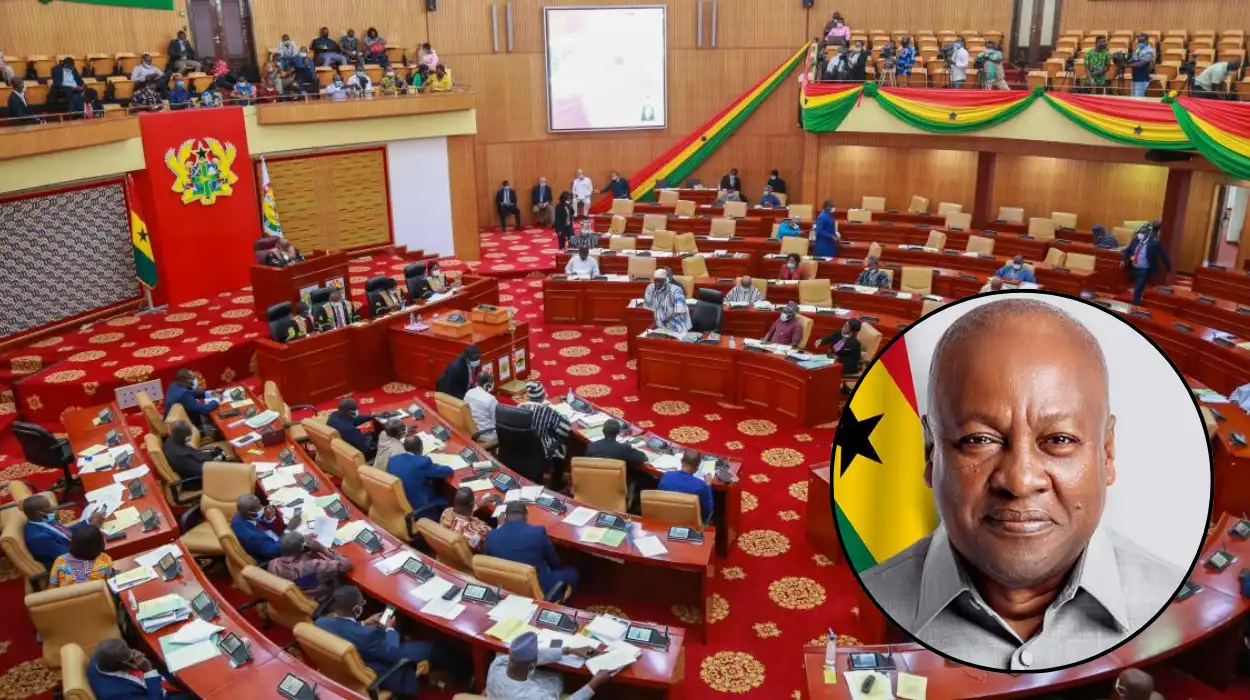
Ghana (Britain Today News) July 27, 2026 – President John Mahama has urged Parliament to fast-track the Public Officers’ Code of Conduct Bill as his government pushes a wider anti-corruption and integrity agenda in public service.
- Key Points
- Why is Mahama pushing the bill?
- What did Marietta Brew say?
- What is NECAP?
- Why does corruption matter here?
- How did the National Integrity Awards fit in?
- What does the bill seek to do?
- Why is Parliament being asked to act quickly?
- What are the political implications?
- How does this affect public service?
- What happens next?
Legal Counsel to the President Marietta Brew delivered the message on Mahama’s behalf at the launch of Parliament’s National Integrity Awards, where the government framed the bill as a major tool for ethical governance. Brew said Cabinet has already approved the National Anti-Corruption Action Plan, NECAP, while the Code of Conduct for Public Office Holders Bill remains before Parliament for consideration.
The central message from the presidency is straightforward: Parliament should move quickly on laws that can reinforce accountability, deter misconduct and give public officers clearer rules to follow. The bill is being presented not as a symbolic reform, but as part of a broader attempt to strengthen institutions that have long faced criticism over weak enforcement and corruption risks.
Why is Mahama pushing the bill?
Mahama’s call is tied to a wider argument that laws alone are not enough unless they are backed by integrity, ethical leadership and consequences for wrongdoing. Brew said the government believes that strengthening public institutions begins with standards of conduct, not just funding or infrastructure. In that framing, the proposed law is meant to set expectations for how public officers behave and what happens when they fail to meet them.
The timing also matters because the bill is being discussed alongside NECAP, the new national anti-corruption framework that Cabinet has approved to replace the previous plan, which expired in 2024. Together, the two initiatives suggest a renewed policy push by the Mahama administration to position corruption prevention as a central part of governance rather than a side issue.
What did Marietta Brew say?
Brew, speaking for the President, said the government remains committed to improving integrity in public office and wants Parliament to act quickly on the bill. She argued that corruption has a real financial cost for Ghana and pointed to estimates that the country loses about GH¢3 billion annually. Her remarks placed the issue in both moral and economic terms, stressing that ethical leadership is essential for national development.
She was quoted as saying:
“What it means is that institutions of state, institutions of government, cannot be strengthened with money alone. What it means is that the first step to strengthening our institutions is integrity and ethical leadership”.
That statement framed the bill as part of a deeper reform agenda, one that seeks to change behaviour within public service rather than relying only on enforcement after misconduct has already occurred.
What is NECAP?
NECAP is the National Anti-Corruption Action Plan that Cabinet has approved to replace the earlier National Anti-Corruption Plan, which expired in 2024. Brew said the new plan has been submitted to Parliament, signalling that the administration wants the anti-corruption agenda to move from policy discussion to legislative and institutional action. The plan is intended to support the state’s broader integrity framework and strengthen prevention efforts.
By linking NECAP to the Code of Conduct Bill, the government appears to be building a two-part response: one part focused on setting standards for public officers, and the other focused on the national anti-corruption strategy itself. That combination suggests an effort to make reforms more coherent, with one instrument guiding behaviour and another coordinating enforcement and prevention.
Why does corruption matter here?
The government’s case rests heavily on the claim that corruption drains resources that could otherwise support development. Brew referenced estimates from the Ghana Anti-Corruption Coalition, which say Ghana loses about GH¢3 billion annually to corruption. The figure has been used repeatedly in public debate as a measure of the scale of the problem and the urgency of reform.
Those losses are often discussed not only as a budgetary problem, but as a barrier to better public services, stronger infrastructure and improved social outcomes. The logic is simple: if corruption consumes public funds, then less money is available for roads, schools, hospitals and jobs. That is why the Mahama administration is presenting integrity reforms as part of economic and social development, not just governance housekeeping.
How did the National Integrity Awards fit in?
The National Integrity Awards were launched by Parliament to recognise individuals and institutions that demonstrate transparency, accountability and ethical conduct in public service. The event provided a public platform for the presidency to reinforce its anti-corruption message and to support the idea that good conduct should be acknowledged, not only wrongdoing punished. In that sense, the awards were used as both a symbolic and practical signal.
By attaching the bill to the awards launch, the government linked recognition of integrity with legislation intended to enforce it. That is important because reform efforts often lose momentum when they are seen as abstract promises rather than concrete actions. Here, the state is trying to show that integrity is being treated as a public priority rather than a background principle.
What does the bill seek to do?
The Public Officers’ Code of Conduct Bill is intended to establish clear ethical standards, obligations and consequences for public officers who breach the expected rules of conduct. Brew said the bill will direct public officers on the kind of leadership the government wants to see in public service and spell out consequences for those who flout the law. That means the legislation is not merely advisory; it is designed to carry disciplinary weight.
The president’s office has presented the bill as a practical governance measure that could help reduce misconduct by making expectations clearer and sanctions more predictable. In public administration terms, that can matter because rules that are vague or unevenly enforced often weaken accountability. The bill therefore sits at the intersection of ethics, enforcement and public trust.
Why is Parliament being asked to act quickly?
The language used by the presidency suggests impatience with delay. Brew said she believed Parliament would “very soon” deal with the two initiatives, referring to NECAP and the Code of Conduct Bill. That comment signals that the executive wants legislative action to match the government’s stated anti-corruption commitments.
Speed matters because long delays can weaken public confidence in reform promises, especially on issues like corruption that already attract scepticism. The government’s push for quick passage also indicates that it wants to present a visible early win on governance, one that can be measured by legislation rather than rhetoric. In political terms, that can help show momentum and seriousness.
What are the political implications?
The bill places public integrity high on the Mahama administration’s agenda and gives Parliament a direct role in shaping the country’s anti-corruption response. If passed, it would provide a formal framework for holding public officers to standards of conduct that may already be expected informally. It would also give the government a legislative milestone to point to in its governance record.
At the same time, the move raises the familiar question of implementation, because public confidence will depend not only on what the law says, but on whether it is enforced consistently. Many anti-corruption initiatives are praised at launch but weaken if institutions lack the capacity or will to apply them fairly. That is why the administration’s emphasis on integrity, ethics and accountability is being watched closely.
Explore More about World:
Florida Pastor Sues OpenAI Over Near-Fatal ChatGPT Health Advice
Ramaphosa Wins Court Bid to Halt Impeachment Inquiry
How does this affect public service?
For civil servants and other public officers, the bill could mean a clearer rulebook on acceptable conduct. That may include standards around honesty, conflicts of interest, accountability and sanctions for breaches, although the exact operational details will depend on the final text approved by Parliament. The government’s view is that clearer standards should help improve discipline in public institutions.
The wider aim is to strengthen trust between citizens and the state. When people believe public officials are accountable, they are more likely to trust institutions and accept their decisions. That is why Brew’s remarks repeatedly returned to the idea that integrity is not a moral extra, but a foundation for effective government.
What happens next?
The immediate next step is for Parliament to consider the Code of Conduct for Public Office Holders Bill and advance work on NECAP. Brew’s remarks indicate that the government expects parliamentary action soon, though no precise timetable was given in the material. The National Integrity Awards also suggest that the issue will remain politically visible as part of the administration’s governance agenda.
If the bill progresses, it could become one of the defining anti-corruption measures of Mahama’s current term. If it stalls, the government may face renewed criticism over whether its integrity agenda is moving quickly enough. Either way, the story places the debate over ethics in public office back at the centre of Ghana’s political conversation.
Marietta Brew said:
“What it means is that institutions of state, institutions of government, cannot be strengthened with money alone. What it means is that the first step to strengthening our institutions is integrity and ethical leadership”.
Brew also said:
“Recently, Cabinet has approved what we call the NECAP, the National Anti-Corruption Action Plan, to replace the National Anti-Corruption Plan which expired in 2024”.
She added:
“Also before Parliament is the Code of Conduct for Public Office Holders Bill, which will direct all public officers on the kind of leadership we want to see in public service, and the consequences for those who flout the law”.