Key Points
- Prof. Nora Ladi Daduut has officially assumed office as Nigeria’s Ambassador to South Korea.
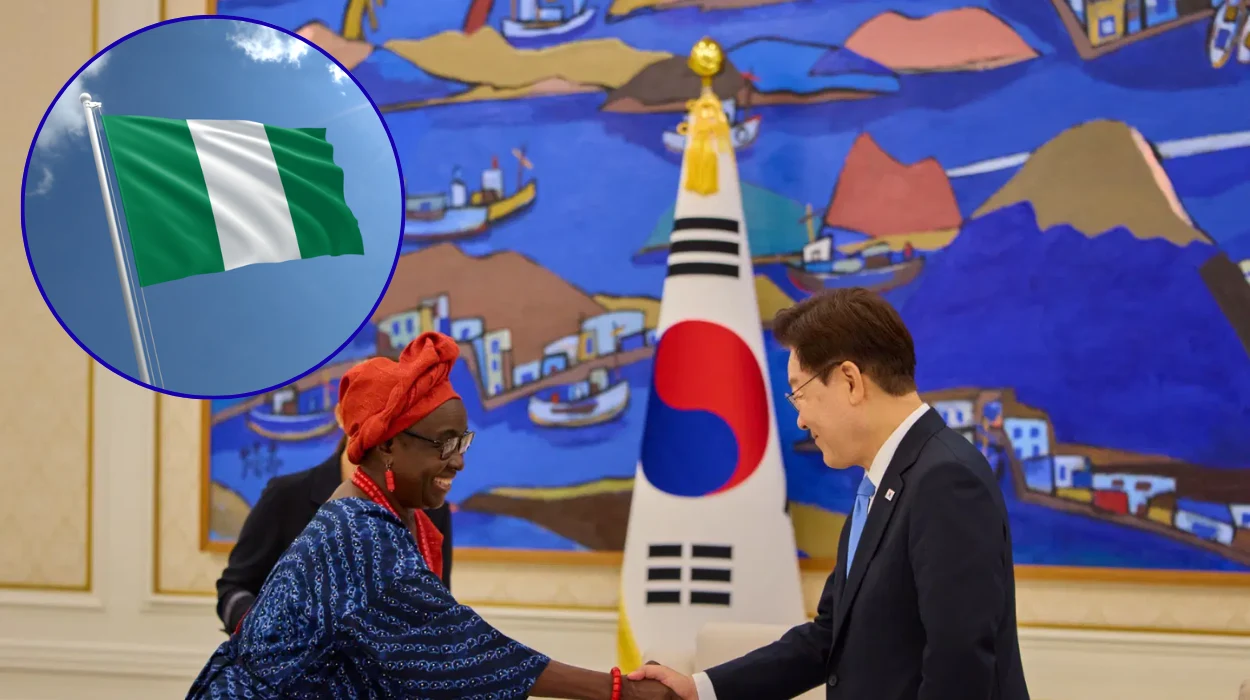
- She presented her Letter of Credence to President Lee Jae Myung at the Blue House in Seoul.
- The ceremony included eight newly appointed ambassadors from various countries.
- Presentation of credentials is a mandatory diplomatic protocol before assuming duties.
- Daduut is now fully accredited as Ambassador Extraordinary and Plenipotentiary.
- Her appointment is expected to boost Nigeria–South Korea relations.
- Key focus areas include trade, investment, technology, education, and cultural exchange.
- President Lee expressed optimism about strengthening bilateral cooperation.
- Daduut pledged to promote Nigeria’s national interests and partnerships.
- She assured Nigerians in South Korea of support and an open-door policy.
- She also engaged with the Korea-Africa Foundation to explore collaboration opportunities.
Seoul (Britain Today News) July 23, 2026 – Prof. Nora Ladi Daduut has formally assumed office as Nigeria’s Ambassador to the Republic of Korea after presenting her Letter of Credence to President Lee Jae Myung at the Blue House in Seoul, marking a significant step in strengthening diplomatic ties between the two nations.
- Key Points
- What happened during the credential presentation ceremony?
- Why is the presentation of credentials important in diplomacy?
- Who is Prof. Nora Ladi Daduut?
- What did President Lee Jae Myung say about the new envoys?
- How will Daduut strengthen Nigeria–South Korea relations?
- What are the key areas of cooperation between Nigeria and South Korea?
- What assurances did Daduut give to Nigerians in South Korea?
- What did Daduut say about her appointment by President Tinubu?
- How does this appointment impact Nigeria’s global diplomacy?
- What role does the Korea-Africa Foundation play in this partnership?
- What opportunities lie ahead for Nigeria–South Korea relations?
- How does this development reflect global diplomatic trends?
What happened during the credential presentation ceremony?
The credential presentation ceremony took place on Wednesday at the Blue House, South Korea’s presidential office, where President Lee Jae Myung officially received Prof. Nora Ladi Daduut alongside eight other newly appointed ambassadors.
The ceremony is a crucial diplomatic event that signifies the formal recognition of ambassadors by the host country. With the presentation of her credentials, Daduut is now authorised to fully represent Nigeria’s interests in South Korea.
Daduut stated that she joined ambassadors from Brazil, El Salvador, Colombia, Laos, Kazakhstan, Kuwait, Tanzania and Nigeria in being formally received by the South Korean leader. The event underscored South Korea’s ongoing diplomatic engagement with multiple nations across continents.
Why is the presentation of credentials important in diplomacy?
Under established diplomatic protocol, ambassadors must present letters of credence issued by their home country’s Head of State to the host nation’s president before commencing official duties.
This formal process:
- Confirms the ambassador’s legitimacy.
- Signals the host country’s acceptance.
- Enables the ambassador to act in an official diplomatic capacity.
With this requirement fulfilled, Daduut now serves as Nigeria’s Ambassador Extraordinary and Plenipotentiary, granting her full authority to represent Nigeria in all diplomatic matters within South Korea.
Who is Prof. Nora Ladi Daduut?
Prof. Nora Ladi Daduut is a distinguished academic and public servant with extensive experience in governance and international relations.
Her appointment reflects Nigeria’s strategy of deploying seasoned professionals to key diplomatic positions. Known for her contributions to public service and leadership, Daduut is expected to bring a pragmatic and strategic approach to Nigeria’s foreign policy objectives in East Asia.
Her new role places her at the forefront of strengthening ties between Africa’s largest economy and one of Asia’s leading technological and industrial powerhouses.
What did President Lee Jae Myung say about the new envoys?
President Lee Jae Myung welcomed the ambassadors during the ceremony and expressed optimism about the future of bilateral relations between South Korea and the represented countries.
He emphasised the importance of international cooperation in addressing global challenges and advancing shared economic and developmental goals.
President Lee noted that the appointment of new envoys presents an opportunity to deepen diplomatic engagement and enhance cooperation across various sectors.
How will Daduut strengthen Nigeria–South Korea relations?
Speaking after the ceremony, Daduut pledged to deepen the longstanding relationship between Nigeria and South Korea.
She stated that her mission would focus on:
- Expanding economic cooperation.
- Promoting Nigeria’s national interests.
- Strengthening bilateral partnerships.
In her remarks, she said her diplomatic agenda would prioritise mutually beneficial initiatives that enhance growth and development in both countries.
She emphasised the importance of collaboration in areas such as infrastructure, innovation, and trade diversification.
What are the key areas of cooperation between Nigeria and South Korea?
Daduut’s appointment is expected to bolster cooperation in several strategic sectors, including:
- Trade and investment: Encouraging bilateral trade and attracting Korean investors to Nigeria.
- Technology transfer: Leveraging South Korea’s technological expertise to support Nigeria’s development.
- Education: Expanding academic exchanges and scholarship opportunities.
- Cultural exchange: Promoting mutual understanding through cultural programmes.
- Industrial development: Supporting Nigeria’s manufacturing and industrial sectors.
These areas align with Nigeria’s broader economic agenda and South Korea’s interest in expanding its partnerships in Africa.
What assurances did Daduut give to Nigerians in South Korea?
Daduut reassured Nigerians living in South Korea that the embassy would maintain an open-door policy.
She pledged to:
- Protect their welfare.
- Address their concerns promptly.
- Foster stronger community engagement.
She also highlighted the importance of people-to-people relations in strengthening diplomatic ties, noting that diaspora communities play a crucial role in bridging cultural and economic gaps between nations.
What did Daduut say about her appointment by President Tinubu?
Daduut expressed gratitude to Nigeria’s President Bola Tinubu for entrusting her with the diplomatic role.
She stated that she would justify the confidence placed in her through dedicated service and proactive diplomacy.
According to her, the focus will be on attracting increased Korean investment, technology, and innovation to support Nigeria’s economic transformation.
She noted that strengthening ties with South Korea aligns with Nigeria’s long-term development goals.
How does this appointment impact Nigeria’s global diplomacy?
Daduut’s appointment represents a broader effort by Nigeria to reinforce its diplomatic presence in key global regions.
South Korea is a significant partner in:
- Technology and innovation.
- Industrial development.
- Global trade networks.
By strengthening ties with South Korea, Nigeria aims to diversify its international partnerships and reduce reliance on traditional allies.
The move also reflects Nigeria’s growing engagement with Asian economies, recognising their importance in the global economic landscape.
What role does the Korea-Africa Foundation play in this partnership?
Prior to formally assuming office, Daduut met with Kim Young Chae, President of the Korea-Africa Foundation.
The meeting focused on exploring opportunities for enhanced collaboration between Nigeria and South Korea.
Key discussion points included:
- Economic partnerships.
- Cultural exchange programmes.
- Development initiatives.
The Korea-Africa Foundation serves as a platform for fostering cooperation between South Korea and African nations, making it a critical partner in advancing Nigeria’s diplomatic and economic objectives.
Explore More about World:
US Conditions Saudi Nuclear Deal on Israel Recognition
India Student Protests Intensify Pressure on Modi Government
What opportunities lie ahead for Nigeria–South Korea relations?
The future of Nigeria–South Korea relations appears promising, with both countries showing strong interest in expanding cooperation.
Potential opportunities include:
- Increased bilateral trade agreements.
- Joint ventures in technology and manufacturing.
- Expanded educational exchange programmes.
- Enhanced cultural diplomacy initiatives.
Daduut’s leadership is expected to play a pivotal role in unlocking these opportunities and ensuring that both nations benefit from strengthened ties.
Her diplomatic efforts will likely focus on creating sustainable partnerships that drive economic growth and innovation.
How does this development reflect global diplomatic trends?
The accreditation of new ambassadors in South Korea reflects broader trends in global diplomacy, where countries are increasingly prioritising multilateral engagement and strategic partnerships.
In a rapidly evolving global landscape, diplomatic missions are no longer limited to political relations but extend to economic, technological, and cultural collaboration.
Nigeria’s engagement with South Korea exemplifies this shift, highlighting the importance of diversified international relationships in achieving national development goals.
Daduut’s appointment underscores the growing significance of Africa–Asia relations in shaping the future of global diplomacy.