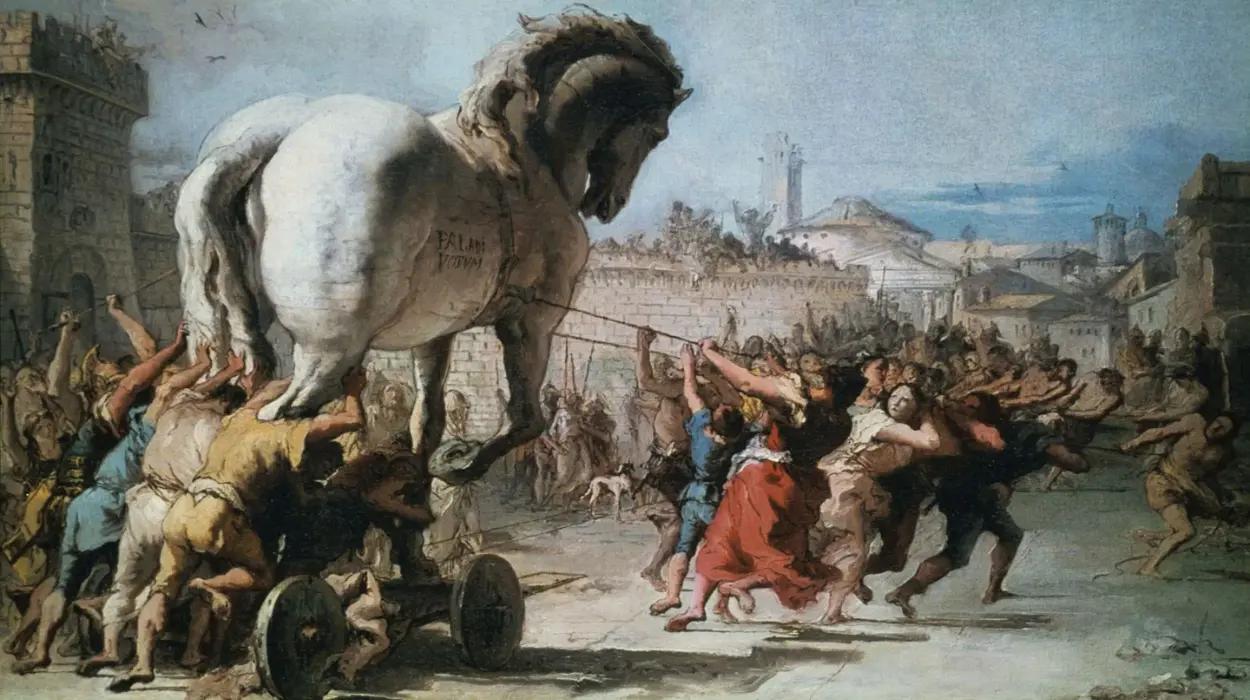
The Trojan War stands as the central conflict of ancient Greek mythology and one of the most studied events in classical history. Ancient poets, historians, and archaeologists have examined this ten-year siege of the city of Troy for over 2,700 years. The war connects literature, religion, and archaeology into one continuous historical debate. This article defines the Trojan War, traces its timeline, identifies its key figures, and examines the physical evidence behind the legend.
- What Was the Trojan War?
- When Did the Trojan War Take Place?
- Where Was Troy Located?
- What Caused the Trojan War?
- Who Were the Key Figures in the Trojan War?
- What Happened During the Trojan War?
- How Did the Trojan War End?
- Is There Archaeological Evidence for Troy?
- What Are the Main Ancient Sources About the Trojan War?
- What Untold Secrets Do Historians Debate About the Trojan War?
- Why Does the Trojan War Still Matter Today?
What Was the Trojan War?
The Trojan War was a legendary ten-year conflict between the Greek city-states and the city of Troy, fought over the abduction of Helen of Sparta by the Trojan prince Paris. Ancient sources place the war in the Late Bronze Age. The conflict forms the narrative foundation of two epic poems attributed to the Greek poet Homer: the Iliad and the Odyssey.
The Iliad covers 51 days during the final year of the siege. The Odyssey covers the ten-year journey of the Greek hero Odysseus after the war ends. Neither poem describes the war’s beginning or its final destruction of Troy in full detail. Those events survive through other ancient texts, including the Epic Cycle, a collection of lost Greek poems known through summaries and fragments.
Troy, also called Ilion or Ilium in ancient sources, sat at the entrance to the Dardanelles strait in northwestern Anatolia, in present-day Turkey. This location controlled trade routes between the Aegean Sea and the Black Sea. Control of this trade route forms one of the leading economic theories behind the historical war.
When Did the Trojan War Take Place?
Ancient Greek chronologists dated the Trojan War to the 12th or 13th century BCE, with the historian Eratosthenes calculating the fall of Troy at 1184 BCE. Modern archaeology places the destruction of the relevant Troy settlement layer between 1230 and 1180 BCE.
Herodotus, writing in the 5th century BCE, dated the war to around 1250 BCE. Eratosthenes, a scholar at the Library of Alexandria in the 3rd century BCE, calculated the date at 1184 BCE using genealogical records. These two estimates fall within the same general period, known as the Late Bronze Age collapse.
Archaeological excavations at the site of Hisarlik in Turkey identified nine major settlement layers, labeled Troy I through Troy IX. Troy VIIa shows evidence of violent destruction by fire around 1180 BCE, along with signs of siege warfare, including scattered weapons and hastily buried human remains. This layer aligns most closely with the timeline described in ancient Greek sources.
Where Was Troy Located?
Troy was located at Hisarlik, a hill in the Troad region of northwestern Turkey, near the modern town of Tevfikiye, 30 kilometers from the entrance to the Dardanelles strait. German archaeologist Heinrich Schliemann began excavations at this site in 1870.
The Troad region sat at a strategic crossing point between Europe and Asia. Ships traveling between the Aegean Sea and the Black Sea depended on favorable winds and currents through the Dardanelles. Troy’s position allowed its rulers to tax or control this maritime traffic, generating wealth documented through excavated gold artifacts, imported pottery, and fortification walls up to 5 meters thick.
The site of Hisarlik has been continuously excavated since 1870, with major expeditions led by Schliemann, Wilhelm Dörpfeld, Carl Blegen, and Manfred Korfmann. The Troy archaeological site was designated a UNESCO World Heritage Site in 1998, recognizing its cultural and historical significance.
What Caused the Trojan War?
Ancient mythology attributes the Trojan War to the abduction of Helen, wife of the Spartan king Menelaus, by the Trojan prince Paris, though modern historians identify trade control and territorial expansion as underlying real-world causes. The mythological account begins with the Judgment of Paris.
According to Greek myth, the goddess Eris threw a golden apple inscribed “to the fairest” among the wedding guests of Peleus and Thetis. Three goddesses claimed the apple: Hera, Athena, and Aphrodite. Paris, a Trojan prince, judged Aphrodite the fairest after she promised him the love of the most beautiful mortal woman, Helen. Paris then traveled to Sparta and took Helen to Troy, prompting Menelaus and his brother Agamemnon, king of Mycenae, to assemble a Greek coalition against Troy.
Modern historians propose economic and political explanations for a historical conflict underlying this myth. Bronze Age Anatolia experienced widespread instability between 1300 and 1200 BCE, a period historians call the Late Bronze Age collapse. Hittite records from this period, including the Tawagalawa Letter, reference conflicts between Hittite vassals and a western power called Ahhiyawa, widely identified by scholars as the Mycenaean Greeks. These records suggest recurring military conflict in the Troy region during the relevant centuries, independent of the Helen narrative.
Who Were the Key Figures in the Trojan War?
The Trojan War involved named leaders on both sides, including the Greek commander Agamemnon and the warrior Achilles, and the Trojan king Priam and his son Hector, each representing distinct military and narrative roles across the ancient sources.
Who Led the Greek Forces?
Agamemnon, king of Mycenae, commanded the combined Greek forces, known as the Achaeans in Homer’s texts. Achilles, king of the Myrmidons and the son of the sea goddess Thetis, served as the Greeks’ most formidable warrior. Odysseus, king of Ithaca, devised the strategy of the Trojan Horse. Other notable Greek leaders included Ajax the Great, king of Salamis, and Nestor, king of Pylos, who served as a senior advisor due to his age and experience.
Who Led the Trojan Forces?
Priam, king of Troy, ruled the city during the siege. Hector, his eldest son, commanded the Trojan army and killed the Greek warrior Patroclus, prompting Achilles to reenter the war. Paris, Priam’s second son, triggered the war through Helen’s abduction and later killed Achilles with an arrow to the heel, according to post-Homeric sources. Aeneas, a Trojan prince and ally of Priam, survived the war’s end and became the legendary founder of the Roman people, according to the Roman poet Virgil’s Aeneid.
What Happened During the Trojan War?
The Trojan War included a ten-year siege of Troy, marked by individual combat between champions, temporary truces, and the deaths of major heroes including Patroclus, Hector, and Achilles, before the war ended through the Trojan Horse stratagem.
The Iliad opens in the tenth year of the siege with a dispute between Agamemnon and Achilles over a captured woman named Briseis. Achilles withdraws from combat, weakening the Greek forces. Patroclus, Achilles’ close companion, borrows his armor and enters battle, where Hector kills him. Achilles returns to combat, kills Hector in single combat outside Troy’s walls, and drags his body around the city.
Post-Homeric sources, summarized in the Epic Cycle, describe later events. The Amazon queen Penthesilea and the Ethiopian king Memnon arrive to support Troy and are killed by Achilles. Paris kills Achilles with an arrow guided by the god Apollo. The Greek forces then acquire the bow of Heracles, held by the archer Philoctetes, and secure the participation of Achilles’ son, Neoptolemus, both prophesied as necessary for victory.
How Did the Trojan War End?
The Trojan War ended when Greek soldiers hid inside a large wooden horse left outside Troy’s gates, entered the city after the Trojans brought the horse inside, and opened the gates for the returning Greek army at night.
Odysseus devised the Trojan Horse strategy, according to the Odyssey and later sources including Virgil’s Aeneid. The Greeks constructed a hollow wooden horse, hid a select group of soldiers inside, and sailed their fleet away from view. The Trojans, believing the war over, brought the horse inside their walls as a victory trophy, despite warnings from the priest Laocoön and the prophetess Cassandra.
During the night, the hidden Greek soldiers exited the horse and opened Troy’s gates. The returning Greek fleet entered the city and destroyed it. Ancient sources describe the deaths of King Priam, the enslavement of Trojan women including Hecuba and Andromache, and the killing of Priam’s infant grandson, Astyanax. Archaeological layer Troy VIIa shows a destruction event consistent with this account, dated to approximately 1180 BCE.
Is There Archaeological Evidence for Troy?
Archaeological excavation at Hisarlik, Turkey, confirmed a fortified Bronze Age city matching Troy’s described location, size, and destruction timeline, though no artifact directly names the site as “Troy” or confirms the specific war events described by Homer.
Heinrich Schliemann began excavating Hisarlik in 1870, uncovering multiple city layers and a gold artifact collection he named “Priam’s Treasure.” Later excavations by Wilhelm Dörpfeld and Carl Blegen identified nine distinct settlement periods, spanning from approximately 3000 BCE to 500 CE.
Excavations led by Manfred Korfmann between 1988 and 2005 identified a lower city outside the citadel walls, expanding the estimated Bronze Age population to between 5,000 and 10,000 residents. This finding supported the description of Troy as a major regional city rather than a small settlement. Troy VI and Troy VIIa layers both show fortification walls, evidence of earthquake damage, and evidence of violent destruction by fire, matching the general timeframe ancient Greek sources assign to the war.
Hittite archives from the city of Hattusa reference a location called Wilusa, believed by most scholars to correspond to Ilios, the alternate Greek name for Troy. These records describe treaties and conflicts involving Wilusa during the 13th century BCE, providing independent, non-Greek documentation of the region’s political importance during the relevant period.
What Are the Main Ancient Sources About the Trojan War?
The primary ancient sources for the Trojan War include Homer’s Iliad and Odyssey, the fragmentary Epic Cycle, Virgil’s Aeneid, and historical accounts by Herodotus, Eratosthenes, and Hittite royal archives.
The Iliad, composed around 750 to 700 BCE, contains 15,693 lines across 24 books and focuses on a limited period during the war’s final year. The Odyssey, composed in the same period, contains 12,110 lines across 24 books and follows Odysseus’s return journey after the war. Both poems were transmitted orally for generations before being written down, a process scholars call the Homeric Question.
The Epic Cycle included additional poems such as the Cypria, the Aethiopis, and the Little Iliad, covering events before and after the Iliad’s narrative. These poems survive only through summaries by later writers, including the 5th century CE scholar Proclus. Virgil’s Aeneid, written between 29 and 19 BCE, provided the Roman account of Troy’s fall and Aeneas’s escape, connecting Trojan mythology to the founding of Rome.
What Untold Secrets Do Historians Debate About the Trojan War?
Historians continue to debate whether the Trojan War represents a single historical event, a composite memory of multiple Bronze Age conflicts, or a purely mythological narrative with no direct historical basis.
One area of debate concerns the identity of the Ahhiyawa, referenced in Hittite records as a powerful western state. Most scholars identify Ahhiyawa with the Mycenaean Greek civilization, based on geographic and political descriptions matching mainland Greece and the Aegean islands. This identification remains debated due to the absence of a direct textual link between “Ahhiyawa” and “Achaean,” the term Homer uses for the Greeks.
A second debate concerns the scale of the historical conflict. The Late Bronze Age collapse affected the entire eastern Mediterranean between 1200 and 1150 BCE, destroying major cities including Ugarit, Hattusa, and Mycenae itself. Some historians argue the Trojan War myth combines memories of several regional conflicts during this collapse into a single narrative centered on Troy, rather than describing one discrete ten-year siege.
A third debate concerns the mismatch between Homer’s Bronze Age setting and details in his poems reflecting later Iron Age practices, such as iron weapons and specific burial customs. This mismatch suggests the Iliad and Odyssey combine genuine Bronze Age memory with cultural details from the centuries between the war’s traditional date and the poems’ composition around 750 BCE.
Explore More about Entertainment:
Piers Morgan: Career, Controversial Comments, and the Debates He Sparks in British Media
Eric Clapton Sandringham Cancellation: Full Details
Why Does the Trojan War Still Matter Today?
The Trojan War remains significant today because it shaped Western literature, established narrative structures used across 2,700 years of storytelling, and continues to generate active archaeological research at the Troy World Heritage Site.
The Iliad and Odyssey influenced Greek tragedy, Roman epic poetry, and modern literature, establishing narrative techniques including the in medias res opening and the epic simile. Writers including Virgil, Dante, and James Joyce directly referenced or restructured Trojan War narratives in major literary works.
Archaeological research at Hisarlik continues under the direction of Turkish and international teams, with the site attracting over 400,000 visitors annually according to recent Turkish Ministry of Culture and Tourism data. The Trojan War narrative also functions as a case study in the relationship between oral tradition, historical memory, and archaeological verification, informing methods used to study other legendary conflicts across world history.