Key Points
- Rights groups have presented a five-point blueprint urging Andy Burnham to take a tougher UK stance on Israel if he becomes prime minister.
- The Council of Arab-British Understanding (CAABU) and the Britain Palestine Project (BPP) unveiled the proposals at a briefing in the House of Lords.
- The blueprint calls for a ban on trade with illegal Israeli settlements and a criminal offence for British nationals who purchase settlement property.
- Campaigners also want the UK to suspend arms exports and military cooperation with Israel and to freeze the UK-Israel Trade Partnership.
- The proposals call for sanctions on Israeli individuals and entities modelled on measures imposed on Russia after its invasion of Ukraine.
- Other demands include restoring funding for UNRWA, guaranteeing access to the occupied Palestinian territories for journalists and investigators, and defending Jordan’s custodianship of Jerusalem’s holy sites.
- Legal adviser Victor Kattan said Britain could go further by sanctioning governments and institutions, not only settlers.
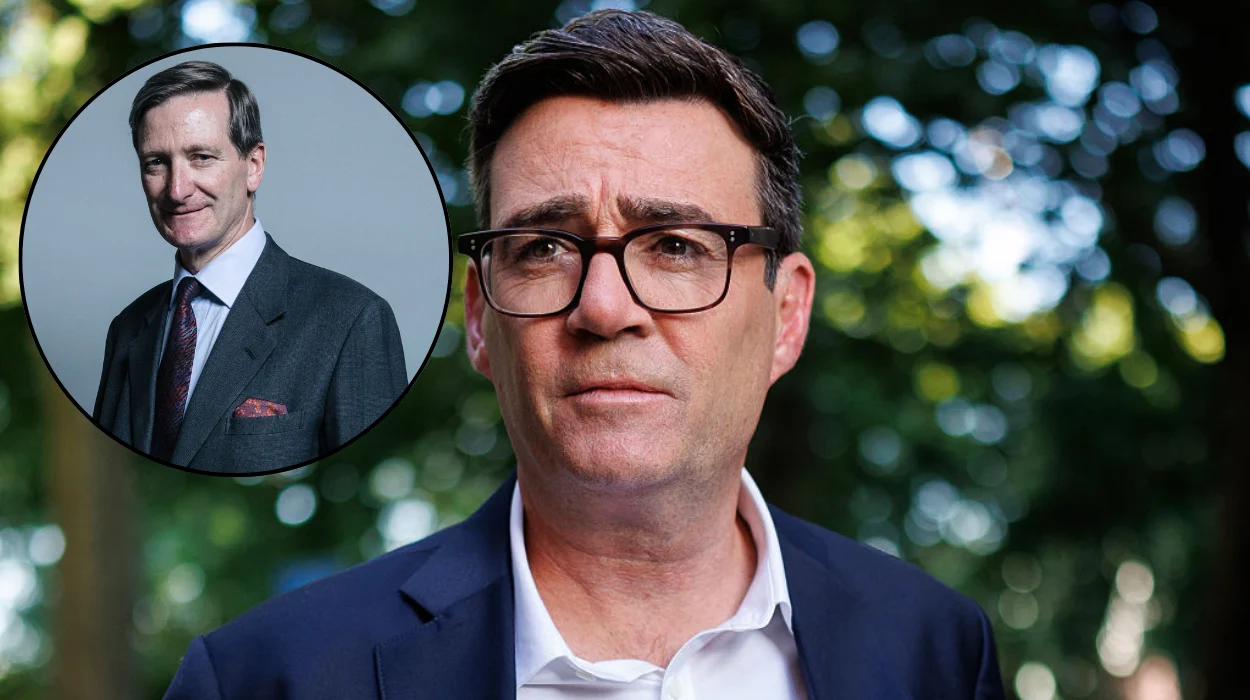
- Former attorney general Dominic Grieve said he detected a shifting attitude within government but urged caution about how much change to expect.
- A representative of Al-Haq said the proposals, while welcome, would still fall short of the UK’s obligations under the International Court of Justice’s advisory opinion.
- Burnham is widely expected to become Labour leader and prime minister later in July, succeeding Sir Keir Starmer.
Westminster (Britain Today News) July 09, 2026 — Rights groups have unveiled a five-point blueprint urging Andy Burnham to adopt a tougher stance on Israel if, as widely expected, he becomes the United Kingdom’s next prime minister later this month. At a briefing in the House of Lords, the Council of Arab-British Understanding and the Britain Palestine Project called on Burnham, who is set to succeed Sir Keir Starmer as Labour leader and prime minister, to adopt a series of measures that would significantly increase pressure on Israel over its policies in Gaza and the occupied West Bank.
- Key Points
- What Have Rights Groups Called On Andy Burnham To Do?
- What Is Andy Burnham’s Political Background?
- What Are The Five Pledges Rights Groups Want Burnham To Adopt?
- Would Burnham Ban Trade With Israeli Settlements?
- What Enforcement Measures Are Rights Groups Demanding?
- Why Do Campaigners Want Reconstruction And Humanitarian Access Guaranteed?
- Why Is Access For Journalists And Investigators Being Demanded?
- What Has Victor Kattan Said About The UK’s Options?
- What Did Dominic Grieve Say About A Possible Shift In Government Attitudes?
- What Concerns Have Been Raised About The Proposals Falling Short?
- What Happens Next As Burnham Prepares To Become Prime Minister?
What Have Rights Groups Called On Andy Burnham To Do?
The proposed pledges include banning trade with illegal Israeli settlements, enforcing international law against Israel, ensuring unrestricted humanitarian access and reconstruction in the occupied Palestinian territories, opening Gaza and the West Bank to journalists, politicians and investigators, and working with allies to end Israel’s unlawful occupations across the region. If adopted, the proposals would mark a significant hardening of UK policy towards Israel at a moment when the country is preparing for a change of leadership. The blueprint was presented jointly by the two organisations as a package they hope an incoming Burnham government would consider adopting in its early weeks in office, rather than as a set of isolated demands to be taken up piecemeal.
What Is Andy Burnham’s Political Background?
Burnham, the outgoing Mayor of Greater Manchester and a former cabinet minister under Labour governments led by Tony Blair and Gordon Brown, returned to Westminster after winning the Makerfield by-election in June. His victory came amid mounting dissatisfaction with Starmer’s leadership following Labour’s poor showing in the May local elections. Starmer announced his resignation as Labour leader and prime minister on 22 June, with the party’s timetable pointing to a new leader being confirmed later in July. Burnham has so far been the only Labour MP to have formally put himself forward, and he has secured the backing of a large number of his parliamentary colleagues, making him the clear frontrunner to enter Downing Street.
Burnham built his political profile over nine years as mayor of Greater Manchester, where he became known for campaigning on homelessness, devolution and regional investment. Supporters within the party describe him as Labour’s most consistently popular senior figure at a time when other frontbenchers have struggled with negative approval ratings. His return to national politics has also been read by some MPs as an opportunity to reset the party’s direction on foreign policy, an area where Starmer’s government faced sustained criticism from rights groups over its handling of Gaza.
What Are The Five Pledges Rights Groups Want Burnham To Adopt?
The blueprint presented in the House of Lords briefing sets out five core commitments. These are: a ban on trade with illegal Israeli settlements; stronger enforcement of international law, including against Israel; unrestricted humanitarian access and reconstruction support for Gaza and the West Bank; guaranteed access to the occupied territories for journalists, politicians and investigators; and coordinated international action, alongside allies, to end what the organisers describe as Israel’s unlawful occupations. Taken together, campaigners argue the package would bring the UK’s position closer in line with its obligations under international law, while also giving the next prime minister a clear early marker of intent on the issue.
Would Burnham Ban Trade With Israeli Settlements?
Among the measures set out in the blueprint is a commitment to ban trade with Israeli settlements in the occupied West Bank and to make it a criminal offence for British nationals to purchase property in those settlements. Campaigners regard this as one of the most concrete and immediately actionable elements of the proposals, since it would not require multilateral agreement and could, in their view, be implemented through domestic legislation. Whether Burnham would take up the pledge remains untested, as he has not yet set out a detailed position on the issue since returning to Parliament.
What Enforcement Measures Are Rights Groups Demanding?
The organisations are also calling for stronger enforcement of international law, including the suspension of arms exports and military cooperation with Israel, the freezing of the UK-Israel Trade Partnership over alleged breaches of its human rights clause, and the imposition of sanctions on Israeli individuals and entities. The sanctions model being proposed is similar to the one adopted against Russia following its invasion of Ukraine, according to the groups behind the blueprint, who argue that a comparable framework could be applied to those they hold responsible for violations connected to the occupation.
Why Do Campaigners Want Reconstruction And Humanitarian Access Guaranteed?
Other proposals in the blueprint include restoring and protecting funding for the United Nations agency for Palestinian refugees, UNRWA, which campaigners say plays a critical role in humanitarian relief. The groups are also pressing for unrestricted humanitarian access and reconstruction support to be guaranteed for Gaza and the West Bank, arguing that without such guarantees, any diplomatic commitments risk being undermined on the ground.
Why Is Access For Journalists And Investigators Being Demanded?
The blueprint further calls for guaranteed access to the occupied Palestinian territories for parliamentarians, journalists and international investigators. Campaigners argue that independent scrutiny is essential to holding all parties accountable and that restrictions on access have made it harder to verify conditions in Gaza and the West Bank. The proposals also include a commitment to defending Jordan’s custodianship of Jerusalem’s holy sites, a longstanding arrangement that campaigners say should be explicitly reaffirmed by the UK.
What Has Victor Kattan Said About The UK’s Options?
Victor Kattan, associate professor of public international law at the University of Nottingham and legal adviser to the Britain Owes Palestine campaign, argued that Britain could go considerably further than the proposals set out in the blueprint.
“They need to go beyond simply sanctioning settlers to sanctioning the governments and government institutions that support what has been going on for decades,”
Kattan said. He argued that the UK should strengthen restrictions on arms sales and military cooperation with Israel while working with international partners to expand sanctions and divestment measures. Kattan said it remained unclear whether Burnham would adopt the proposals, pointing to what he described as the Labour leader-in-waiting’s “conflicting statements” on Palestine.
“I think the key will be when we see the ministerial appointments, who he appoints as foreign minister, attorney general, and so on, but certainly it is a good moment to try and influence policy. We’ll see what happens,”
he said.
Explore More about Politics:
Transport Committee Reacts To Government’s Ports NPS Response
UK Risks Losing AI Sovereignty Without Clear Strategy, MPs Warn
What Did Dominic Grieve Say About A Possible Shift In Government Attitudes?
Former Conservative attorney general Dominic Grieve, who also addressed the briefing, said he believed attitudes within government were shifting.
“I think there is a change in attitude within government, a sense that something more must be done, and I see no reason to think that Burnham, if he becomes Prime Minister, will take a different view from Starmer on that,”
Grieve said.
“I am moderately hopeful that there will be some movement, but I wouldn’t want to exaggerate it. I think it’s quite difficult to read,”
he added. Grieve cautioned, however, that any major policy shift would be complicated by the UK’s relationship with the United States and wider geopolitical considerations, suggesting that Downing Street’s room for manoeuvre may be narrower than campaigners would like.
What Concerns Have Been Raised About The Proposals Falling Short?
Not everyone at the briefing believed the proposals went far enough. A representative of the human rights organisation Al-Haq said that while a ban on settlement trade would be welcome, it would still fall short of Britain’s obligations under the International Court of Justice’s advisory opinion on Israel’s occupation and conduct in Gaza.
“We welcome a ban on settlement trade, especially including services. However, again, that will not bring the UK in line with its commitments,”
the representative said.
“What its commitments actually should involve is a complete ban on all diplomatic and trade relations, that naturally has to include a complete ban on any kind of arms exports or imports, also a duty not to recognise in any diplomatic forum Israel’s presence in Palestine as lawful,”
the representative added.
What Happens Next As Burnham Prepares To Become Prime Minister?
Nominations to succeed Starmer as Labour leader opened this week, with Burnham expected to be confirmed as leader later in July, either after a special conference or, should a contest emerge, following a ballot of party members. Starmer is due to formally stand down as prime minister once a successor is chosen, with the transition expected to be completed by 20 July. Campaigners behind the blueprint say they intend to press the incoming government early, arguing that the make-up of Burnham’s first Cabinet, particularly his choice of foreign secretary and attorney general, will offer the clearest early signal of whether the proposals are likely to be taken up. For now, whether Burnham adopts any part of the five-point plan remains an open question, one that is likely to attract close attention from both supporters and critics of a tougher UK line on Israel in the weeks ahead.