Key Points
- The British Medical Association (BMA) is planning to cut up to a third of its 600 staff in England amid a significant financial deficit.
- The GMB union, which represents most affected staff, accuses the BMA of breaching its own HR rules and trying to silence employees.
- The move comes just days after resident doctors accepted a pay deal raising top salaries to a basic £77,348, following 15 rounds of strikes.
- The BMA has needed £86.8m in subsidies since 2008 from the British Medical Journal to remain financially afloat.
- GMB members passed a 91% vote of no confidence in BMA chief executive Rachel Podolak over the restructuring.
- The union plans to cut industrial relations officer posts from 23.5 to 14 and remove three of seven regional head roles.
- 110 local negotiating committee chairs have condemned the proposed job losses in a formal letter.
- The BMA disputes the scale of cuts reported, telling The Guardian only around 20 redundancies are expected.
- A BMA spokesperson says the restructuring is meant to help the union focus more on campaigning and workplace representation.
- GMB says it is negotiating to avoid compulsory redundancies and minimise financial hardship for staff.
London (Britain Today News) July 04, 2026 — The British Medical Association is threatening to axe up to a third of its entire workforce in England as it grapples with a significant cash crisis, triggering anger and accusations of hypocrisy from its own staff.
- Key Points
- Why Is the BMA Planning Redundancies?
- Why Is the BMA in Financial Difficulty Despite Record Membership?
- What Are BMA Staff Saying Privately About the Cuts?
- Why Did GMB Members Pass a Vote of No Confidence in Rachel Podolak?
- What Is the Wider Strategic Reasoning Behind the Restructuring?
- What Has the BMA Said in Its Official Response?
- What Has GMB Said About Ongoing Negotiations?
Why Is the BMA Planning Redundancies?
The doctors’ union has placed 200 of its 600 staff in England at risk of redundancy as part of a wider restructuring designed to tackle a recurring financial deficit. The British Medical Association is threatening to axe up to a third of its entire workforce to help it tackle a significant cash crisis. The disclosure has triggered anxiety and fury among staff, many of whom have accused the BMA of appalling behaviour and “hypocrisy.”
How Does This Relate to the Recent Doctors’ Pay Deal?
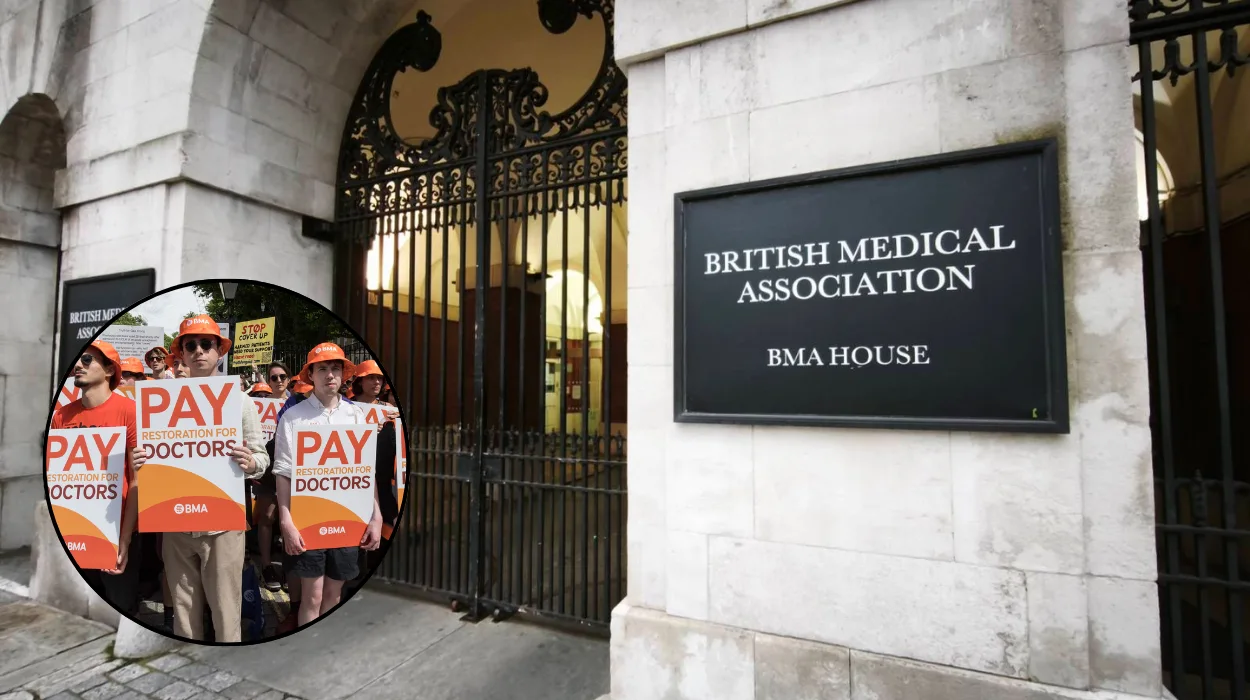
According to Campbell’s, disclosure of the redundancy plan comes just days after resident doctors in England who belong to the BMA voted narrowly to accept a pay deal that will raise the salaries of the best-paid doctors to a basic £77,348. The pay rise followed 15 rounds of strikes that badly disrupted NHS care and cost the health service billions of pounds.
Why Is the BMA in Financial Difficulty Despite Record Membership?
Campbell noted that the BMA is losing millions of pounds every year despite its membership having hit a record 200,000, driven by vigorous campaigns in recent years — including strikes — for better pay. The union has decided to shed up to a third of its staff in England as part of a major restructuring of its operations intended to reduce the recurring deficit.
The scale of the financial strain is stark. The BMA’s finances are so precarious that it has needed a total of £86.8m in subsidies since 2008 from the British Medical Journal, which it owns, in order to stay afloat — an average of £5.1m a year.
What Does the GMB Union Say About the Redundancies?
Most of the 600 staff belong to the GMB trade union, which, claims the BMA has breached its own HR rules over the redundancies and sought to “gag” staff from speaking out about them. The BMA has not informed its membership about the reorganisation or the human cost involved, the report states.
What Are BMA Staff Saying Privately About the Cuts?
The human impact of the process has been laid bare by staff themselves. A BMA source told The Guardian:
“BMA staff are very scared. They all think they’re going to lose their jobs. People are absolutely miserable. They’re paranoid about the threat of redundancy. It’s the worst reorganisation ever.”
Another staff member, speaking to Campbell, said:
“BMA leaders seem to think it’s one rule for them, another for everybody else. If a hospital treated its staff like this, we would come down on them like a ton of bricks, rightly.”
How Many Jobs Does the BMA Actually Say Will Be Cut?
There is a significant discrepancy between the numbers being discussed internally and what the BMA has publicly acknowledged. The BMA told the paper that as few as 20 staff would lose their jobs. It gave that figure even though it had been discussing the possibility of up to ten times that number — 200 — being made redundant in recent talks with GMB representatives.
Why Did GMB Members Pass a Vote of No Confidence in Rachel Podolak?
The scale of internal anger has translated into a formal rebuke of BMA leadership. BMA staff are so incensed that GMB members there last month passed a vote of no confidence in Rachel Podolak, the union’s chief executive, who is leading the restructuring process. On a 72% turnout, 91% said they had no confidence in Podolak.
What Is the Wider Strategic Reasoning Behind the Restructuring?
Campbell’s report explains that the reorganisation is also designed to help the BMA focus more on its role as a trade union campaigning on pay and workplace issues, and less on its other role as a professional association representing most of the UK‘s medics. For example, up to 20 of the 45 staff who help produce reports for the BMA’s respected board of science and board of ethics are likely to lose their jobs.
How Will Frontline Doctor Support Roles Be Affected?
Concerns extend well beyond back-office functions. The union is also cutting the number of industrial relations officer (IRO) posts from 23.5 to 14, even though those personnel help hospital doctors negotiate disputes with NHS management and run campaigns. Senior BMA figures described axing IROs as “madness” and said it was at odds with the three key priorities of the union’s strategy for 2025-30 —
“organising to win, campaigning to influence and enabling our success.”
The plan also involves removing three of the BMA’s seven heads of region.
Who Has Formally Objected to the Job Cuts?
Opposition to the plans has been organised at a local level. The chairs of 110 local negotiating committees — local BMA branches of hospital doctors — condemned the planned loss of IRO and head of region posts in a strongly worded letter last month to Podolak and Dr Emma Runswick, the union’s deputy chair of council.
Internal dissent has also reached committee level. The BMA’s consultants committee is so concerned about those officers being axed that it passed a motion criticising the move. However, the BMA hierarchy stopped it from being debated at the union’s annual conference last week.
Explore More about UK:
FCA Warns Firms Over Older Pension Customer Care
Bristol Professor Gregor McLennan Dies After Snowdonia Hike 2025
What Has the BMA Said in Its Official Response?
A BMA spokesperson, quoted by The Guardian, said the union was making
“important changes in how the BMA works to build on the successes of recent years and support our members [to] organise more and campaign better, especially in the workplace.”
The spokesperson added that while other cost-cutting had reduced the deficit by £4m, inflation had pushed it back up to £5m.
“This means we need to reduce some of our fixed costs and continue to invest in sustaining our excellent membership levels,”
they said.
On the human impact, the spokesperson said:
“Any process which involves people leaving the BMA will always be difficult, but we have been engaging extensively with the GMB as our trade union partner since last year and more recently through a comprehensive process of engaging all affected staff.”
They further stated:
“Final decisions have not yet been made on what changes will be implemented, however the proposals consulted on represented a reduction in the current headcount of the BMA by around 20 full-time equivalent staff. We expect the vast majority of those to be voluntary redundancies, which staff have been able to apply for in recent weeks.”
What Has GMB Said About Ongoing Negotiations?
Gavin Davies, a GMB senior organiser, told:
“GMB is aware of the redundancies currently being proposed within the BMA. Workers are understandably worried and we will work hard to avoid compulsory redundancies and financial hardship they inevitably bring. GMB is hopeful our negotiations with the BMA will find a solution.”