Key Points
- Dana White compared the cruiserweight main event between local favorite Chris Billam-Smith and Canada’s Ryan Rozicki to a real-life “Rocky movie” following an intense, grueling battle at the Bournemouth International Centre.
- The dramatic bout concluded ahead of the eighth round when Rozicki’s corner responsibly withdrew their fighter after seven rounds of relentless, back-and-forth action.
- White implemented immediate post-fight safety measures, bypassing in-ring interviews to transport both fighters straight to the hospital, with standing orders for a medevac to London if serious trauma was detected.
- Highlighting his unblemished 30-year safety record in the UFC, White emphasized his stringent approach to health and safety, noting that boxing carries a significantly higher risk of traumatic brain injuries compared to mixed martial arts.
- The promoter stated his ultimate goal is to rebuild consumer trust in boxing by consistently delivering highly competitive, well-matched fight cards that satisfy live and television audiences.
- White lauded the unique energy and unparalleled passion of sports fans in the United Kingdom, asserting that the atmosphere elevates any sporting event into an incredible experience.
- Zuffa Boxing is expanding its broadcast footprint, securing a pivotal television partnership with Sky Sports in the United Kingdom alongside an expanded dates agreement with Paramount in the United States.
- Promising a series of major structural announcements over the coming month, White urged the combat sports industry and media to evaluate the true impact of Zuffa Boxing by the start of 2027.
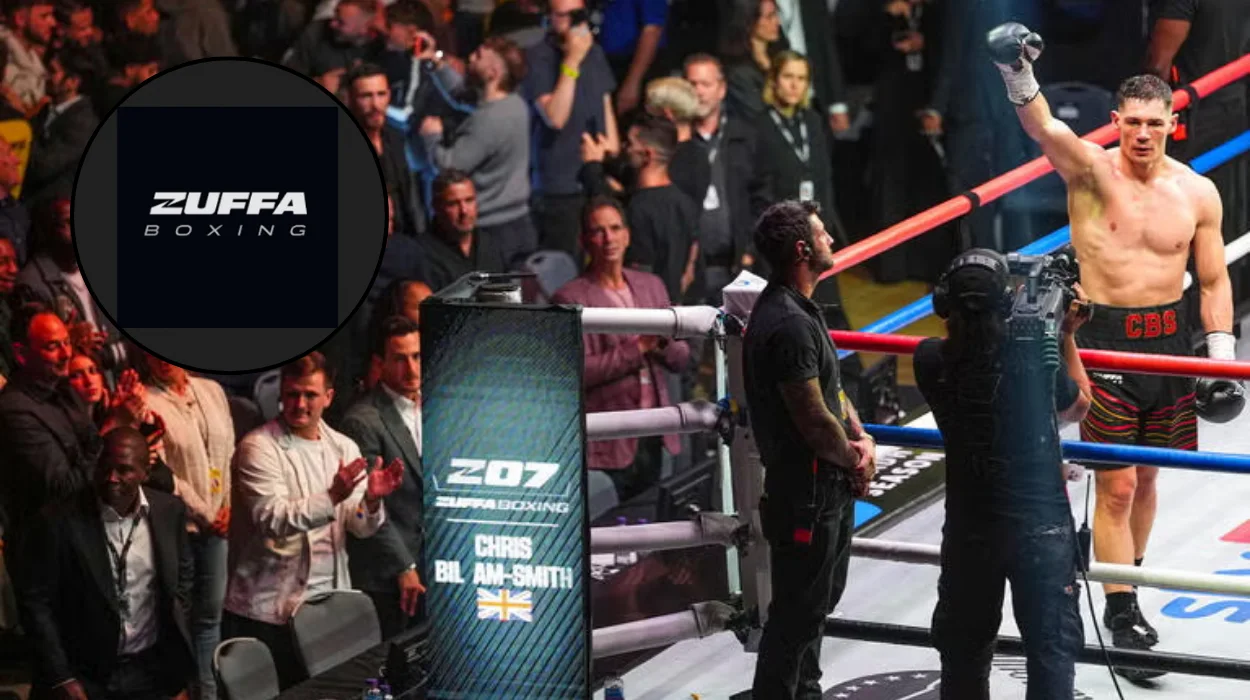
Bournemouth (Britain Today News) June 8, 2026 – Zuffa Boxing secured a landmark victory in its promotional expansion as company chief Dana White oversaw a highly successful international event at the Bournemouth International Centre on the English South Coast. The fight card, headlined by a grueling cruiserweight clash between local hero Chris Billam-Smith and Canadian challenger Ryan Rozicki, marked the organization’s official arrival in the United Kingdom market. Speaking backstage at the post-fight press conference, White addressed a wide range of topics, including immediate fighter hospitalization protocols, long-term television broadcast strategies with Sky Sports and Paramount, and his overarching mission to fundamentally restructure the traditional boxing business model.
- Key Points
- Why Did Dana White Compare Billam-Smith vs Rozicki to a Rocky Movie?
- How Is Zuffa Boxing Revolutionizing Fighter Safety Protocols?
- Why Does White Believe Boxing Needs Stricter Medical Scrutiny Than MMA?
- What Is the Core Philosophy Behind Zuffa’s Matchmaking Strategy?
- What Makes the United Kingdom Boxing Market Distinctly Unique?
- When Will Zuffa Boxing Reveal Its Next Major Announcements?
- How Do Dynamic Fight Cards Generate Long-Term Boxing Storylines?
- What Role Does the Sky Sports Deal Play in Zuffa’s UK Expansion Strategy?
- How Is the Paramount Television Deal Transforming Zuffa’s North American Reach?
The event, designated as Zuffa Boxing 07, demonstrated the promotional muscle and distinct operational philosophy that White has brought over from his three decades helming the Ultimate Fighting Championship. Rather than relying on the traditional, slow-paced building blocks of boxing matchmaking, the card delivered competitive matchups from top to bottom, culminating in a main event that captured the imagination of the raucous regional crowd. For White, the night served as a proof of concept that elite matchmaking combined with premium production values can revitalize boxing culture in regions historically starved of major promotional backing.
Why Did Dana White Compare Billam-Smith vs Rozicki to a Rocky Movie?
The headline bout of the evening delivered a level of sustained theatricality and physical toll that immediately drew comparisons to cinema. Chris Billam-Smith, utilizing his hometown advantage and refined technical skill, engaged in a punishing, pocket-based war against Ryan Rozicki, a fighter known across the Atlantic for his unrelenting pressure and intimidating demeanor. The two cruiserweights traded heavy combinations over seven rounds, creating an atmosphere inside the Bournemouth International Centre that left seasoned observers stunned.
White expressed genuine astonishment at the sheer durability and competitive drive displayed by both athletes. He noted that while internal expectations for the matchup were incredibly high, the actual performance surpassed commercial and critical forecasts. The contest concluded when Rozicki’s coaching staff made the analytical decision to halt the contest before the bell for the eighth round could sound, preventing their fighter from absorbing further unnecessary punishment.
Reflecting on the initial impressions of the Canadian challenger, White recalled meeting him in Las Vegas during an earlier promotional phase, noting that his fearsome reputation was entirely validated by his performance on English soil. The promoter heavily praised the tactical intervention of the corner, framing it as an exemplary display of cornerman responsibility in a sport where corners frequently allow bouts to continue for too long.
According to on-scene media reports, White detailed his evaluation of the main event:
“The first time I ever met Rozicki, I was like, ‘Jesus, this guy’s like the meanest Canadian I think I’ve ever met!’ What a hell of a fight. An incredible fight from top to bottom, but the main event was like a Rocky movie.”
White further expanded on the competitive dynamics that made the bout an instant classic:
“We thought it was going to be a great fight. Obviously, we know how talented CBS is, and we knew going in how tough and mean Rozicki was. So it had all the makings of a great fight… Was I surprised to see him come back out? No. But I was happy to see his corner call the fight? I mean, that’s the right move. Great stoppage. And yeah, listen, Rozicki – we flew him out to Vegas, and I met him at one of the Zuffa Boxing matches. All you gotta do is talk to that kid for like 30 seconds, and you’re like, ‘God damn, this is a tough, mean kid.’ So, yeah, I couldn’t see him quitting.”
How Is Zuffa Boxing Revolutionizing Fighter Safety Protocols?
In the immediate aftermath of the cruiserweight headliner, the celebratory mood shifted toward a strict focus on the physical condition of the main event participants. Given the high volume of significant head strikes absorbed by both Billam-Smith and Rozicki, the standard post-fight celebratory rituals, including televised in-ring interviews and immediate press conference appearances, were completely abandoned under direct orders from corporate leadership.
White instituted an uncompromising medical evacuation protocol designed to mitigate the risks associated with acute head trauma. The executive bypassed localized promotional duties, dispatching his senior operational staff to oversee the direct transit of both fighters to secondary medical care. This operational choice highlighted a stark contrast between Zuffa’s corporate governance and the often fractured, slow-moving medical oversight seen in traditional independent boxing promotions.
Furthermore, White established a contingency plan involving emergency air transport to specialized neurological facilities in the capital city should initial local assessments show any signs of intracranial complications. This proactive approach underscores a broader corporate mandate to implement mixed martial arts levels of medical scrutiny into the professional boxing circuit.
Addressing the critical nature of the situation backstage, White explained his precise instructions to his logistical team:
“I don’t play with that kind of stuff. The fight wasn’t even over yet, and I got my guy, Dave Lewis, and I said, ‘No interviews, no nothing. I want both these guys to go straight to the hospital, and if you know if there’s anything even remotely serious for either guy, I want them both medevac’d back to London.’ No disrespect to Bournemouth, but I’d rather have them in London if there’s anything serious.”
Why Does White Believe Boxing Needs Stricter Medical Scrutiny Than MMA?
The philosophical foundation of White’s stringent approach to fighter health stems from historical data comparing various combat disciplines. The executive drew on his extensive background in regulating full-contact combat sports to highlight the specific, cumulative dangers inherent to the mechanics of professional boxing.
According to industry studies, the combination of larger gloves, ten-count recovery periods, and a singular focus on head and torso strikes creates an environment where athletes sustain repetitive sub-concussive and concussive impacts over extended periods. In contrast, mixed martial arts bouts can be terminated via submissions, ground-and-pound stoppages, or transitions to wrestling, which naturally limits prolonged neurological trauma.
White emphasized that maintaining a pristine safety record over three decades of high-level sports promotion requires constant vigilance and an unwillingness to compromise on medical resources. By acknowledging the unique neurological risks of boxing, Zuffa Boxing aims to set a new standard for regulatory compliance and athlete care worldwide.
Detailing his long-term safety philosophy and his views on boxing’s unique dangers, White stated:
“In 30 years of the UFC, there’s never been a death or serious injury, and it’s important to me to keep that run alive. Especially with boxing, a lot more traumatic brain injury things happen in the sport of boxing than they do in MMA, so I’m crazy about the health and safety side.”
What Is the Core Philosophy Behind Zuffa’s Matchmaking Strategy?
A recurring criticism of contemporary boxing has been the protection of undefeated records at the expense of compelling, fan-driven matchups. Promoters routinely guide elite prospects through uncompetitive bouts to preserve their commercial value, a strategy that White has publicly disdained throughout his promotional career.
The strategy deployed for Zuffa Boxing 07 focused heavily on competitive parity, ensuring that every bout on the card carried genuine sporting stakes. White stated that consumer trust can only be recovered when the ticket-buying and television-viewing public can confidently expect competitive integrity from a promotion.
By implementing an centralized matchmaking model similar to the UFC’s structure, the organization aims to remove the protracted, multi-promoter negotiations that frequently cause major boxing events to collapse. The ultimate goal is to establish a brand identity where the promotional name itself guarantees entertainment value, independent of the individual fighters on the marquee.
Outlining his dedication to shifting fan expectations and establishing corporate integrity, White remarked:
“I want to put on great fights. When we go to a place, and people buy tickets and come in live, and when people watch on TV, I want them to turn their television off or walk out of the arena that night, going, ‘God, I’m glad I came to the fights’ … I want to build trust back up with the fans that, when we roll into town, or we’re on TV on Saturday night, or Sunday, or whenever we’re on, we’re gonna deliver great matchmaking.”
What Makes the United Kingdom Boxing Market Distinctly Unique?
The choice of Bournemouth for Zuffa’s first international foray was a calculated nod to the unique sporting culture of the British Isles. The region has long been recognized as an incredibly passionate and economically vibrant landscape for professional boxing, boasting an arena culture that is difficult to replicate in other global markets.
White expressed continuous admiration for the vocal participation of the British audience, noting that their engagement alters the television product’s overall appeal. The traditions of British fight fans, including synchronized chanting and sustained vocal backing for local competitors, provide a distinct atmospheric layer that enhances the live gate experience.
The corporate strategy emphasizes that the UK market is not merely a destination for occasional international events, but a primary pillar for sustained regional development. The enthusiasm observed at the Bournemouth International Centre confirmed the promotion’s internal projections regarding the long-term viability of regular UK-based fight cards.
Lauding the exceptional passion of the local sports public, White emphasized:
“And obviously the UK is so different. I mean, I tell people all the time, you have to see it live – anything! Live sporting events in the UK – not just our stuff. But the UK fans are different. It’s awesome.”
White expanded further on the dynamic nature of British crowds across all sports:
“I say it all the time, there is nothing like watching a sporting event in the UK. The UK is different. The fans are different over here. It’s so much fun. I always try to tell people, you have to see anything in the UK. You could probably watch ping pong over here, and it would be incredible. It’s fun!”
When Will Zuffa Boxing Reveal Its Next Major Announcements?
While the immediate focus remained on the competitive success of the Bournemouth card, White used the media platform to signal an aggressive operational expansion over the fiscal horizon. The executive cautioned the public against drawing definitive conclusions about the promotion’s final form based solely on its introductory phase, hinting at major structural developments.
The organization’s timeline points to a series of legal and promotional rollouts scheduled over the next thirty days. These announcements are expected to clarify the corporate hierarchy, introduce new weight class rankings, and confirm long-term venue partnerships across multiple continents.
White positioned the current phase as an intentional disruption of the sport’s traditional foundations, with the intention of rebuilding it into a more profitable, streamlined enterprise. The long-term objective remains the creation of an enduring ecosystem where fighters compete regularly and fans are treated to clear, logical paths toward world championship bouts.
Setting a clear benchmark for media and fan evaluation, White stated:
“I’ve been saying to everybody. January 1, judge us on the work that we did this year. We’re going to continue. We’ve got a lot of big announcements coming up over the next month, so you can expect lots of big things coming from us.”
Explore More about Sports:
Epsom Derby shines on Christmas Day as O’Brien makes more history
Britain’s Henry Patten and Harri Heliovaara fall just short in French Open men’s doubles final
How Do Dynamic Fight Cards Generate Long-Term Boxing Storylines?
One of the structural challenges facing traditional boxing is the lack of narrative continuity between events due to the fragmented nature of separate promotional entities. White explained that by centralizing an elite roster under a single promotional banner, individual event outcomes naturally feed into subsequent high-stakes matchups.
The back-and-forth nature of the Billam-Smith and Rozicki bout exemplifies how an immediate in-ring narrative can capture public interest, laying the foundation for lucrative rematches or logical next steps in division rankings. This systemic approach to storytelling mimics the proven formulas of major sports leagues, keeping media outlets and fans consistently engaged.
As the organization continues to stage regular events, these interlocking narratives are projected to generate organic demand for high-profile matchups, lowering the promotional costs typically needed to market stand-alone pay-per-view events.
Explaining how high-level matchmaking fosters organic narrative momentum, White stated:
“What starts to happen is as we rip the sport apart and start to build from the ground up with nights like tonight, it starts to create all these different storylines and starts to line up different fights, and the fans and the media start to talk about what they want to see next.”
What Role Does the Sky Sports Deal Play in Zuffa’s UK Expansion Strategy?
The bedrock of Zuffa Boxing’s European expansion relies directly on its premium broadcast partnership with Sky Sports. The network’s deep penetration into the British sports market gives the promotion an immediate, high-leverage platform to reach millions of households across the United Kingdom and Ireland.
The partnership operates as a mutual development pact, with Sky Sports securing exclusive, high-grade combat sports content while Zuffa gains steady domestic airtime to elevate its UK-based roster. White confirmed that the success of the Bournemouth event will accelerate the scheduling of additional UK dates, securing the promotion’s status as a staple of British sports television.
By integrating its product into Sky’s established digital and linear infrastructure, Zuffa Boxing can effectively compete with domestic promotional rivals, leveraging its global brand equity to secure prime broadcast windows.
Underscoring the strategic weight of the British network partnership, White remarked:
“We have a Sky deal, which is a very big deal to us, so we’ll be in the UK a lot.”
How Is the Paramount Television Deal Transforming Zuffa’s North American Reach?
Simultaneously, the organization is experiencing rapid operational growth across the Atlantic through its broadcast partnership with Paramount. The North American market remains the financial engine of global combat sports, requiring a multi-layered television and streaming distribution approach.
Just five months into the formal implementation of the agreement, consumer demand and strong viewership metrics have prompted executives to expand the initial broadcast calendar. This fast-tracked expansion underscores corporate confidence in White’s ability to successfully migrate his mixed martial arts viewing audience over to the boxing realm.
The dual-engine broadcast strategy—utilizing Sky Sports in Europe and Paramount in the United States—provides Zuffa Boxing with a powerful international presence, positioning the company to challenge the long-standing monopolies held by traditional, single-region promoters.
Detailing the rapid expansion of their domestic television metrics in the United States, White concluded:
“And already this year in the United States, we’re going to be adding more fights to Paramount. We’re five months into this thing, and we’re already adding more shows on our Paramount deal, and I hope the same thing happens with Sky.”