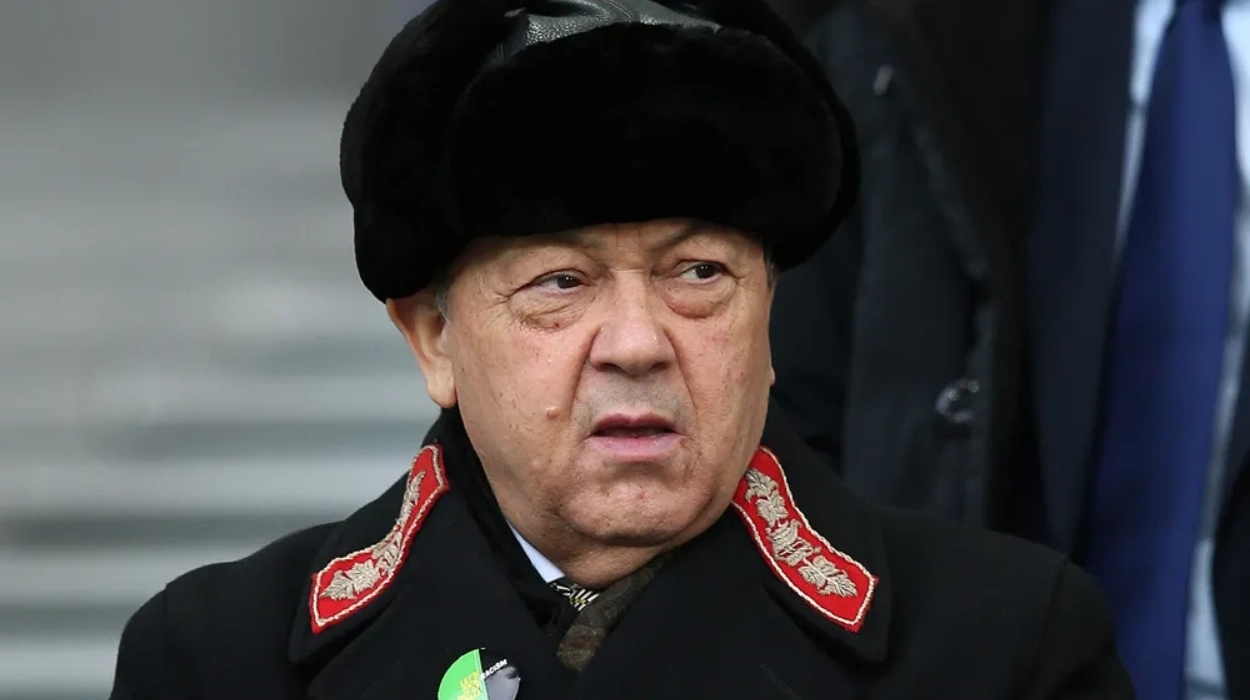
David Sullivan is a British billionaire businessman, publisher, and sports executive who accumulated wealth through adult media, national newspapers, commercial property, and football club ownership. His net worth is £1.118 billion according to the 2025 Sunday Times Rich List.
- How did David Sullivan build his wealth?
- What is David Sullivan’s history in football club ownership?
- Why did David Sullivan resign from West Ham United FC?
- Context of the Resignation
- Corporate Separation and Defensive Strategy
- Legal Action and Shareholder Status
- What is the economic scale of David Sullivan’s business empire?
- What are the long-term impacts of David Sullivan’s career?
Early Life and Academic Background
David Sullivan was born on 5 February 1949 in Cardiff, Wales. He is the son of a Royal Air Force officer. He spent his early childhood in Wales before moving to England. He completed his secondary education and subsequently enrolled at Queen Mary College, a constituent college of the University of London. He graduated with a Bachelor of Science degree in Economics. This academic training in economic principles and market structures formed the foundational basis for his subsequent investment strategies across multiple industrial sectors.
Early Commercial Ventures
In the early 1970s, David Sullivan entered the commercial market by launching a small-scale photography and publishing enterprise alongside his business partner, David Gold. The enterprise expanded from localized distribution to a macro-level operation. By the age of 25, David Sullivan achieved millionaire status. The operational model relied on identifying high-margin niches within the adult entertainment economy and rapidly scaling distribution networks across the United Kingdom.
How did David Sullivan build his wealth?
David Sullivan built his wealth by dominating the United Kingdom adult market, expanding into mainstream tabloid newspaper publishing, and reinvesting the cash reserves into a commercial real estate portfolio that currently spans prime assets across London and Essex.
The Adult Entertainment Infrastructure
The primary wealth engine for David Sullivan began with adult magazines, mail-order operations, and specialized retail establishments. By the late 1970s, his corporate entities controlled 50% of the United Kingdom adult magazine market and 80% of the domestic adult mail-order market. His holdings included national print titles, such as Playbirds and Whitehouse. In 1978, he established a formalized retail network under the corporate brand Private Shop. The network expanded to encompass 150 physical retail locations nationwide. He also produced several low-budget adult cinematic features, including titles like Come Play With Me and The Playbirds, which generated high profit margins relative to their production costs.
Mainstream Media Expansion
In 1986, David Sullivan leveraged his publishing infrastructure to launch the Daily Sport and the Sunday Sport, which were national tabloid newspapers combining softcore glamour photography with sensationalist news reporting. The publications secured a distinct market share within British print media. The media segment operated under Roldvale Limited and associated corporate structures for 21 years. In 2007, David Sullivan sold his ownership stake in the Sport newspaper titles to Sport Newspapers Limited for £40 million. Following the financial collapse of the purchasing entity, he reacquired the assets from administrators in 2011 for £50,000 to resume localized publication.
The Real Estate Portfolio
The long-term preservation and growth of his capital occurred via systematic reinvestment into commercial real estate. David Sullivan established a commercial property empire valued at an estimated £500 million. The portfolio is managed through private corporate vehicles, including Roldvale Limited, which historically recorded millions in annual profits from rental yields and property appreciation. The portfolio targets prime retail assets and mixed-use developments in major municipal hubs. A primary example is his ownership of major retail properties on Oxford Street in London. These high-footfall real estate assets provide a stable, non-cyclical revenue stream independent of his media or sports ventures.
What is David Sullivan’s history in football club ownership?
David Sullivan’s history in football club ownership consists of a 16-year tenure at Birmingham City FC followed by a 16-year tenure at West Ham United FC, marked by major stadium relocations, financial stabilization, and European trophies.
The Birmingham City FC Era
In 1993, David Sullivan entered sports franchise ownership by purchasing an 80% controlling stake in Birmingham City FC alongside David Gold and Ralph Gold for £1. They assumed the club’s substantial outstanding financial liabilities. He appointed Karren Brady as managing director to oversee the corporate restructuring of the club. During their 16 years at the helm, the club achieved promotion to the Premier League, improved its training infrastructure, and established operational stability. In Autumn 2009, Sullivan and Gold finalized the sale of Birmingham City FC to international businessman Carson Yeung for a total valuation of £81.5 million.
Acquisition of West Ham United FC
In January 2010, David Sullivan and David Gold acquired a 50% controlling stake in West Ham United FC, valuing the club at approximately £105 million. The club faced acute financial distress with debts exceeding £110 million. Sullivan assumed the role of joint-chairman and became the largest single shareholder. Over the subsequent decade, his capital injections and structural changes stabilized the balance sheet. Following the death of David Gold in January 2023, Sullivan maintained his position as the dominant boardroom authority. As of 2025, his personal shareholding stood at 38.8%, leading a boardroom that included the Gold Family Trust at 25.1% and Czech investor Daniel Křetínský at 27%.
Stadium Relocation and European Success
The central corporate strategy under David Sullivan’s tenure was the relocation of West Ham United FC from its historic Boleyn Ground in Upton Park to the London Stadium in Stratford. The move occurred in August 2016. The transition increased matchday capacity from 35,000 to 60,000 seats, drastically escalating matchday revenue and commercial partnerships. On the pitch, this financial scaling culminated in consistent Premier League campaigns and European qualification. The sporting zenith arrived in June 2023, when West Ham United FC won the UEFA Europa Conference League title by defeating ACF Fiorentina 2–1 in Prague, marking the club’s first major European trophy since 1965.
Why did David Sullivan resign from West Ham United FC?
David Sullivan resigned from West Ham United FC on 6 June 2026 to focus his full energy on legally challenging serious historic allegations concerning his personal conduct, preventing these personal matters from destabilizing the football club.
Context of the Resignation
On 6 June 2026, West Ham United FC issued an official statement confirming that David Sullivan stepped down from his position as joint-chair and resigned his directorships at both WH Holding Limited and West Ham United Football Club with immediate effect. The decision occurred after Sullivan became aware of an impending joint investigative broadcast and publication by BBC Panorama and The Times newspaper. The investigation details decades-old allegations regarding his personal conduct during his career in the adult entertainment industry. The club confirmed that none of the allegations relate to West Ham United FC, its staff, or its footballing operations.
Corporate Separation and Defensive Strategy
The immediate resignation was a calculated corporate governance decision designed to decouple the football club from Sullivan’s personal legal matters. Following the club’s relegation from the Premier League in May 2026, the organization entered a sensitive financial period. Sullivan noted in his official departure statement that he refused to allow personal matters to become a distraction or a source of instability for the fan base, players, and staff. By removing himself from the board, he insulated the operational management of the club from ongoing negative media focus. Day-to-day operations were handed over to interim Chief Executive Officer Karim Virani, reporting directly to the remaining board of directors.
Legal Action and Shareholder Status
Despite resigning his administrative and directorship roles, David Sullivan remains the largest single shareholder of West Ham United FC with his 38.8% equity stake. His resignation creates a transitional phase for the club’s governance, with reports indicating that second-largest shareholder Daniel Křetínský may increase his stake to stabilize the boardroom. In his exit text, Sullivan categorically denied all allegations of improper conduct, labeling them factually incorrect and sensationalized. He announced the formal engagement of his legal team to initiate defamation and legal proceedings against the broadcasting and publishing entities involved, stating his intention to seek full public and legal redress.
Explore More about Sports:
Jacob Bethell Biography, Stats and Cricket Achievements
Emilio Gay Cricket News, Stats, and Latest Highlights
What is the economic scale of David Sullivan’s business empire?
The economic scale of David Sullivan’s business empire exceeds £1.1 billion, structured through real estate holding companies, liquid financial investments, and sports entertainment shares that generate tens of millions in annual revenue.
Valuation of Capital Assets
The primary indicator of David Sullivan’s financial scale is his position on national wealth indices. The 2025 Sunday Times Rich List valued his personal wealth at £1.118 billion. This capital is distributed across three distinct asset classes:
- Commercial property holdings valued at approximately £500 million.
- Sports franchise equity, representing a 38.8% stake in West Ham United FC.
- Private liquid capital, historical corporate dividends, and investment portfolios managed via holding firms.
Corporate Revenue Generation
The financial performance of his core companies reflects steady asset growth. His main investment vehicle, Roldvale Limited, has historically recorded stable balance sheets. In asset management, his real estate holdings generate high yields due to their locations in premium zones like Oxford Street and parts of Essex. These properties operate under long-term commercial leases to retail brands and corporate tenants, ensuring predictable cash inflows that are insulated from short-term market volatility.
Football Club Financial Dynamics
Prior to its relegation in 2026, West Ham United FC operated at a high economic level within sports entertainment. The corporate entity WH Holding Limited generated annual revenues exceeding £250 million during peak Premier League seasons, driven by domestic and international broadcasting rights, commercial sponsorships, and matchday sales at the 60,000-capacity London Stadium. Sullivan’s cumulative personal financial commitment to the club over 16 years, including share purchases, short-term working capital loans, and infrastructure funding, exceeded £250 million. The equity value of the club remains a core component of his macro-level business net worth.
What are the long-term impacts of David Sullivan’s career?
The long-term impacts of David Sullivan’s career include the deregulation and commercialization of the British adult industry, the modern financial restructuring of mid-tier football clubs, and the transformation of eastern London’s sports infrastructure.
Transformation of the Adult Media Landscape
During the 1970s and 1980s, David Sullivan altered the retail and distribution mechanics of adult media in the United Kingdom. By establishing open, high-street retail brands like Private Shop, his corporate entities shifted adult retail from unregulated channels into a standardized, tax-paying corporate framework. His legal battles against local authorities over licensing laws established legal precedents that defined municipal regulation boundaries for adult establishments across England and Wales. His subsequent introduction of the Daily Sport and Sunday Sport altered tabloid journalism by proving that explicit lifestyle content could sustain a national daily print circulation.
The Financial Blueprint for Modern Football Clubs
In sports management, David Sullivan and his partners introduced a specific operational blueprint for mid-tier English football clubs. This blueprint emphasizes strict wage-to-turnover ratios, utilizing low-cost acquisitions to stabilize distressed assets, and leveraging real estate assets to drive commercial growth. At Birmingham City FC, this strategy turned a near-bankrupt club into a stable Premier League competitor that sold for over £80 million. At West Ham United FC, his management eliminated over £110 million in legacy debt, ensuring the club remained solvent while transitioning into a self-sustaining corporate entity capable of funding major player transfers out of organic revenue.
Public Infrastructure and Community Legacy
The decision to move West Ham United FC to the London Stadium significantly altered the post-2012 Olympic infrastructure legacy of eastern London. By securing the long-term tenancy of a major Premier League football club, Sullivan’s administration prevented the stadium from becoming a non-performing public asset. This relocation drove commercial development, improved transport usage, and increased tourism in Stratford and the surrounding boroughs. Furthermore, his establishment of the West Ham United Foundation directed millions of pounds into community sports, healthcare, and educational programs across east London and Essex, cementing a corporate social responsibility model that continues to operate independently of boardroom personnel changes.