Key Points
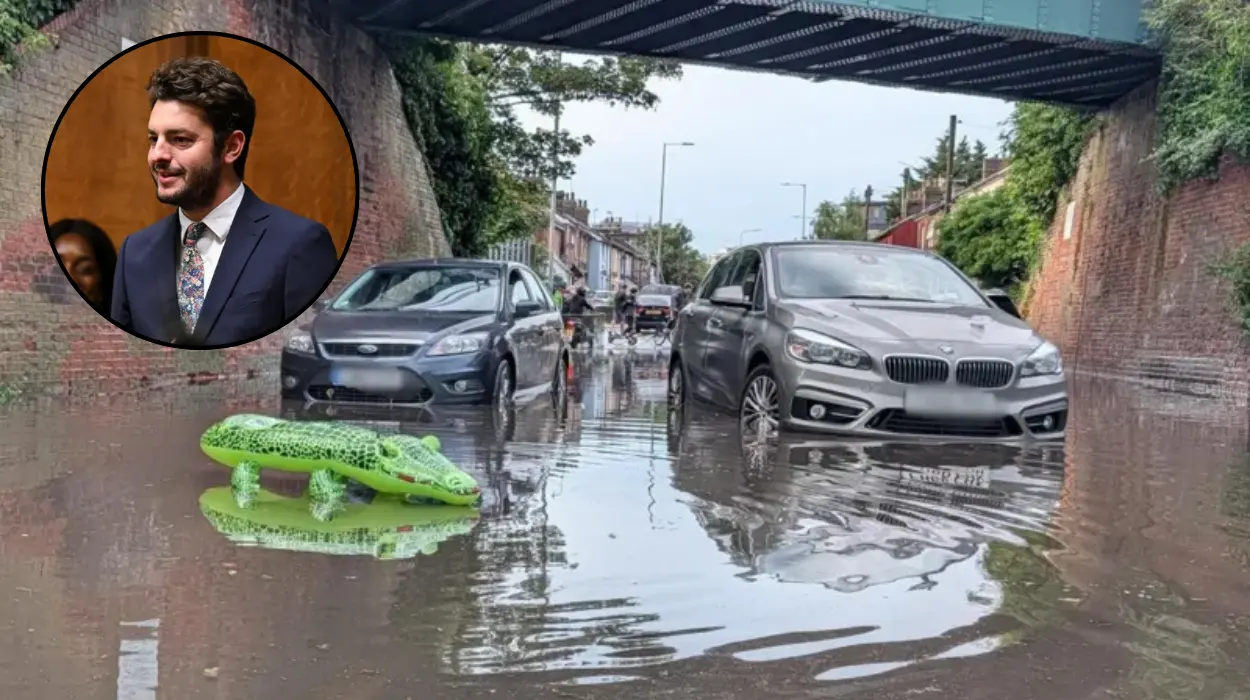
- Ipswich MP Jack Abbott has called for an immediate inspection of the town’s surface drainage infrastructure after flash flooding caused major disruption this week.
- Heavy rainfall on Tuesday brought parts of Ipswich to a standstill, leaving motorists stranded and forcing buses and emergency services to divert.
- Affected roads included Alnesbourne Crescent, Fore Street, Holywells Road, Maidenhall Approach, Nacton Road, Ransomes Way, Rope Walk, Spring Road and Wherstead Road.
- Abbott has urged Anglian Water chief executive Mark Thurston to ensure drainage systems are operating at full capacity to reduce flood risk.
- He wants the company to identify every area affected on Tuesday and review whether drainage worked properly.
- The MP also called for extra capacity in places where drainage systems were functioning but still overwhelmed by the rainfall.
- In a separate letter to new Suffolk County Council leader Michael Hadwen, Abbott said such weather events are likely to become more frequent because of climate change.
- Abbott linked the flooding to the county council’s decision to repeal the previous administration’s climate change emergency declaration.
- He also raised concerns about a significant number of blocked drains, which the council is responsible for maintaining.
- Hadwen has previously described the climate emergency declaration as “political posturing” and suggested reviewing net-zero schemes could save money.
Ipswich (Britain Today News) June 4, 2026 — Anglian Water and Suffolk County Council are under pressure to act after flash flooding caused widespread disruption across the town on Tuesday, with MP Jack Abbott demanding urgent checks on drainage systems and stronger flood protection.
Why has Jack Abbott called for an immediate inspection?
Abbott said it was “crucial” that Ipswich’s drainage infrastructure was “working at full capacity” after intense rainfall left motorists stranded and forced transport and emergency vehicles to change routes. The MP’s intervention follows a day of chaos in which several busy roads across the town were affected. His call places responsibility squarely on the organisations overseeing drainage and surface water management to explain whether the system failed, coped as expected, or simply lacked the capacity to deal with the volume of rain.
The MP’s message to Anglian Water chief executive Mark Thurston was direct. He asked the company to identify every area in Ipswich affected by the flooding and to examine whether drainage in those locations worked properly. He also called for upgrades in places where infrastructure did function as designed but was still overwhelmed by the scale of rainfall. The political message was clear: if climate-linked downpours are becoming more common, then the town’s systems need to be ready before the next severe storm arrives.
What happened in Ipswich on Tuesday?
The flooding brought major parts of the town to a halt as intense rainfall turned roads into waterlogged routes that could not safely carry traffic. Motorists were left stranded, while buses and emergency services vehicles were diverted away from flooded streets. The disruption was not confined to one small area, but spread across several key roads used by commuters, residents and service vehicles alike.
The affected roads named in the report were Alnesbourne Crescent, Fore Street, Holywells Road, Maidenhall Approach, Nacton Road, Ransomes Way, Rope Walk, Spring Road and Wherstead Road. These are not minor side streets, and the scale of the disruption suggests the flooding had a broad impact on local movement, not just isolated inconvenience. For residents and businesses, that kind of flash flooding can mean delayed journeys, missed appointments and emergency access difficulties at the very moment roads are needed most.
Abbott’s response reflects the practical consequences of that disruption. His intervention was not framed as a general political complaint, but as a specific demand for action after a visible failure in the town’s ability to absorb sudden heavy rainfall. In a local context, that matters because drainage performance is often only noticed when it fails, and in this case the failure was severe enough to affect traffic, public transport and emergency response.
What did Abbott tell Anglian Water?
Abbott wrote to Anglian Water chief executive Mark Thurston stressing that it was “crucial” the town’s drainage infrastructure was working “at full capacity” to reduce flood risk. He said the company should identify all areas in Ipswich affected on Tuesday and review whether the drainage in those places worked properly. That request goes beyond simply clearing up after the event; it seeks a technical review of whether the existing network is fit for purpose under current weather conditions.
He also urged Anglian Water to increase capacity in places where systems were working but still became overwhelmed. That point is important because it suggests the issue is not always a complete failure of drainage, but sometimes a mismatch between infrastructure design and the intensity of modern rainfall. In other words, the system may function in ordinary conditions but still fall short during storms that are stronger or more concentrated than before.
Abbott’s letter frames the flooding as a preventable risk that needs active management rather than passive acceptance. The language about working at full capacity implies urgency, and it signals frustration that infrastructure may not be robust enough to cope with the kind of weather Ipswich has just experienced. His intervention also puts Anglian Water in the spotlight over maintenance, planning and investment.
What did he say to Suffolk County Council?
In a separate letter to new county council leader Michael Hadwen, Abbott warned that weather events like Tuesday’s flooding were “predicted to become more frequent” because of climate change. He used that point to criticise the Reform UK-led authority’s decision to scrap the previous administration’s climate change emergency declaration. The MP said it was not lost on him, or on others, that the flooding came on a day when the council announced it would repeal measures intended to combat such incidents.
This is a direct political challenge to the new leadership’s approach. Abbott’s argument is that climate adaptation is not a symbolic issue but a practical one, because more frequent extreme rainfall means local infrastructure needs stronger protection. By connecting the flooding to the council’s policy shift, he is making the case that climate planning should remain a priority regardless of political changes at county hall.
He also raised the issue of what he described as a “significant number” of blocked drains, which fall under the council’s responsibility. Blocked drains are often a basic but critical part of local flood prevention, and the MP’s remarks suggest there may be problems at both strategic and operational levels. If the drains were already blocked before the storm, then the flooding becomes not just a weather event but also a maintenance issue.
Why does climate change matter here?
Abbott’s letter indicates that the flooding should be understood in the context of changing weather patterns, not just a single isolated storm. He said such events were expected to become more frequent due to climate change, which is a view increasingly shared by many local authorities and infrastructure planners. His argument is that councils and water companies should prepare for a future in which heavy rainfall events are more common and more damaging.
That position clashes with Hadwen’s earlier comments on the climate emergency declaration. Hadwen has previously told the BBC that the declaration was “political posturing” and suggested that reviewing net-zero schemes could save money. Abbott’s response implies that treating climate action as optional may leave towns less prepared for practical realities like flash flooding, road closures and overwhelmed drainage.
The wider issue is one of resilience. Even where drainage systems are present and maintained, they may need reinforcement to deal with sudden, intense downpours. For a town like Ipswich, that means decisions about drainage investment, blocked drains, emergency planning and climate policy are all linked, not separate issues.
Explore More about Politics:
Cost of living and high street issues top Makerfield voters’ concerns, poll shows
Former UK political aide and ex-Biden cabinet secretary take early lead in California governor primary vote count
What are the local consequences?
Flooding of this kind affects daily life in several ways. Commuters face delays, buses lose routes, and emergency services may have to take longer or less direct paths to get to incidents. In a town centre or dense residential area, those delays can quickly become serious, especially if flooding happens during peak travel times.
There is also a financial and reputational cost when roads repeatedly become impassable after heavy rain. Businesses lose footfall, deliveries are delayed and residents can lose confidence that infrastructure is being maintained properly. That is why Abbott’s call for an immediate inspection matters: it is not only about what happened on Tuesday, but about whether similar scenes are likely to recur.
The roads listed in the report show that the disruption reached across several parts of Ipswich rather than remaining confined to one flood-prone location. That breadth suggests a wider drainage challenge that may need both targeted repairs and broader system upgrades. It also underlines why the MP is pushing for a review rather than a one-off clean-up operation.
What happens next?
The next step, if Abbott’s letters prompt action, would be inspection of the drainage network in the affected areas and a review of blocked drains under the council’s remit. Anglian Water would also need to determine whether any parts of the system failed, whether capacity was sufficient, and whether investment is needed to strengthen vulnerable points. Suffolk County Council, meanwhile, will face questions about how it plans to respond to repeated flood risks while also pursuing its new political direction.
For residents, the key issue is whether the authorities treat Tuesday’s flooding as an isolated inconvenience or as a warning. Abbott’s intervention suggests he sees it as a warning that Ipswich is not yet adequately protected against increasingly severe rain. If that is the case, the pressure will now be on both the water company and the council to show they are prepared to act.