Key Points
- The European Union could fast-track Britain’s return if the UK chose to rejoin, because of the country’s existing alignment with EU rules and institutions.
- Sandro Gozi, chair of the EU-UK Parliamentary Assembly delegation, said a UK request to rejoin would be seen as a “major victory for the European project” and could be handled more quickly than other accession bids.
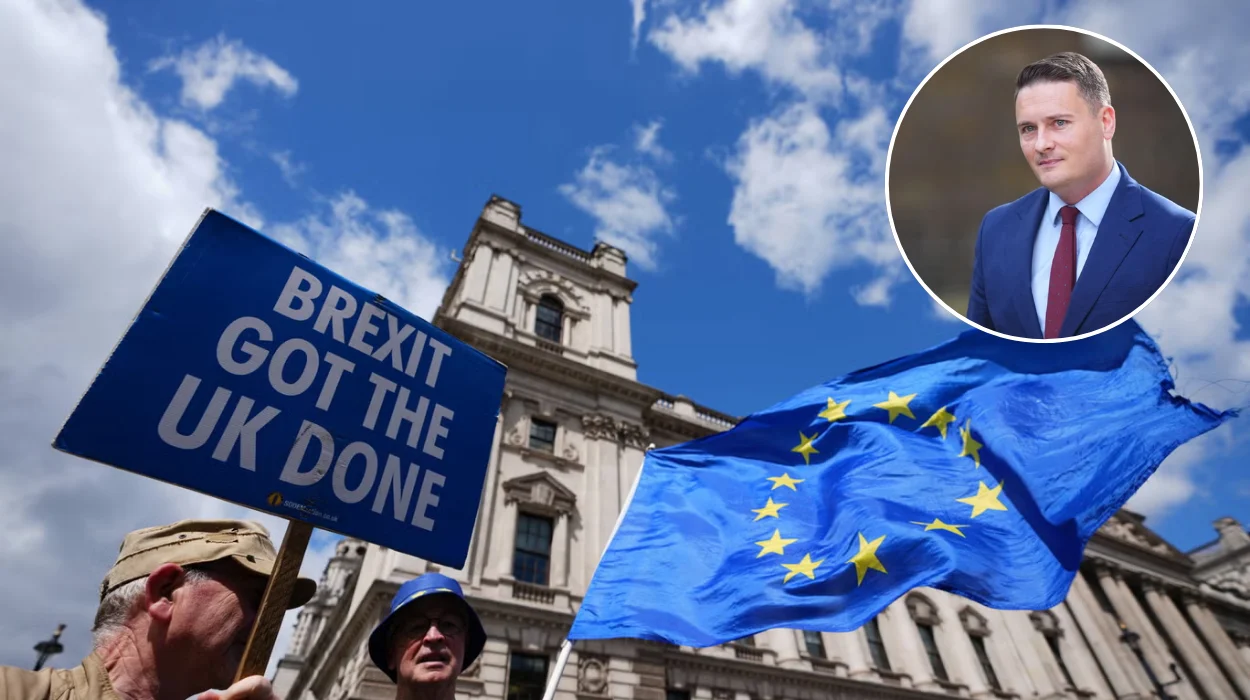
- The debate has resurfaced after Wes Streeting called Brexit a “catastrophic mistake” and argued Britain should rejoin the EU as part of his pitch to lead Labour.
- Brussels sources said the UK’s re-accession could be faster than for many candidate countries because the UK already shares much of the EU’s legal and regulatory framework.
- Joining the euro would likely be raised in any talks, but multiple sources said it was unlikely to become an absolute red line because the UK does not currently meet the entry criteria.
- Mr Gozi said Britain would need to accept the same terms as other candidate countries and should give up its “obsession with carve outs”.
- Some sources suggested there could still be “wiggle room” in negotiations, especially given that several EU states are not in the euro and have no immediate intention of joining.
- A source close to the EU’s ambassador to the UK played down immediate expectations, saying the bloc is focused on existing agreements, including an SPS deal on plant and food trade.
- Ursula von der Leyen previously said the UK was on a clear “direction of travel” towards rejoining, according to the report.
- Polling cited in the report suggested 63 per cent of Britons want closer EU ties and 55 per cent support rejoining.
London (Britain Today News) May 23, 2026 – The European Union could move faster than usual if Britain ever decided to reverse Brexit and seek to rejoin the bloc, with Brussels figures insisting that the UK would not automatically be pushed to the back of the queue.
Would The EU Fast-Track Britain’s Return?
Sandro Gozi, who chairs the European delegation to the EU-UK Parliamentary Assembly, said the UK would be treated differently from many other candidate countries because of its history inside the bloc and its current level of alignment with EU rules. He described a potential UK return as a “major victory for the European project” and said there would be a way to make the process quicker than standard accession talks.
Mr Gozi argued that the EU already has “institutional memory” from Britain’s years as a member, which would reduce some of the technical work normally needed for enlargement talks. He also said the broader geopolitical climate has made many in the EU more open to the idea of welcoming the UK back. That view was reinforced by Brussels sources who said the UK’s legal and regulatory proximity to the bloc sets it apart from other applicants.
Why Has Brexit Debate Returned?
The debate over Britain’s relationship with the EU has intensified after former health secretary Wes Streeting said the country should rejoin the bloc as part of his bid to lead Labour. According to the report, Mr Streeting described Brexit as a “catastrophic mistake” and argued that Britain’s future lies with Europe. He also said Labour must be brave enough to confront major political issues rather than avoid them, if it wants to beat Reform UK.
Mr Streeting’s remarks come at a politically sensitive moment because they reopen one of the most divisive issues in British politics. The Independent reported that his comments were made as part of a wider pitch to present Labour as more decisive and more willing to challenge Reform’s appeal. In that context, EU re-entry has once again become part of a broader argument about Britain’s direction, identity and economic future.
What Terms Would The UK Face?
Mr Gozi said Britain would have to accept the same basic requirements as any other country seeking to join the EU. He stressed that the UK would need to abandon its “obsession with carve outs”, which suggests a tougher negotiating stance than Britain enjoyed before Brexit. One of the most significant issues would be euro membership, which would almost certainly come up in any future discussion.
However, the report says several sources believe euro entry would not necessarily be an immediate or absolute barrier. That is because the euro convergence tests are strict, and the UK does not currently meet them. A former MEP with links to Brussels said the economic benchmarks are demanding and that Britain is still far from meeting the requirement on government debt.
There are also signs of possible flexibility. One source said the EU may start from the position that the UK should eventually join the euro, but pointed out that several member states remain outside the single currency and have no intention of joining. That suggests euro membership might be a negotiating expectation rather than a fixed short-term condition.
Explore More about Politics:
Cost of Living Measures ‘Missed Opportunity’, Says Welsh First Minister 2026
UK Pitched Single Market for Goods with EU in Trade Reset 2026
Could Rejoining Really Be Quick?
The article says several insiders believe Britain could rejoin faster than a typical candidate country because much of its regulatory framework still overlaps with the EU’s. One source compared the UK with countries such as Albania, where accession would require a much deeper and more time-consuming review of domestic law. In Britain’s case, the divergence is already known and documented, which could simplify the technical side of any application.
A source also pointed to Finland as an example of a relatively quick accession process, noting that it took just three years to join because it had already been closely connected to European structures. That comparison was used to support the argument that rejoining could be quicker than many expect. Even so, the report makes clear that this would still depend on political will in both London and Brussels.
What Is Brussels Saying Now?
Not everyone in the EU system is urging a fast-tracked return. A source close to the EU’s ambassador to the UK said the bloc is currently focused on finalising existing agreements with Britain, including an SPS deal covering plants and food. That source described talk about Britain’s future membership as an “internal issue” and said there had been no request from the UK to rejoin.
The same source added that the EU is already managing a large number of current accession applicants, with nearly ten countries seeking membership. In that context, there is little appetite in Brussels to open a new political process with the UK unless London first makes a formal move. So while the EU may not shut the door, it is not actively preparing for a return either.
What Did Brussels Say Before?
The report also points out that the European Commission has long maintained that Britain would be welcome to rejoin if it chose to do so. Ursula von der Leyen said in 2023 that the UK was on a clear “direction of travel” towards rejoining, and she reportedly told her children that it would be for the next generation to “fix” Brexit. That earlier language is being used now to show that Brussels has never formally ruled out a British return.
Taken together, the latest comments suggest a position of openness rather than urgency. Brussels appears willing to consider a rejoining process if the UK ever asks, but the terms would likely be stricter than those Britain once had, especially on euro membership and other exemptions. For now, the issue remains politically charged, technically possible and diplomatically unresolved.