Key Points
- John Swinney has been formally re‑elected First Minister of Scotland at the Scottish Parliament on Tuesday 19 May 2026, following the Holyrood election.
- Swinney described serving as First Minister as the “greatest privilege and the greatest responsibility of my life”, vowing to work every day to “repay the trust that the people of Scotland have placed in me”.
- The SNP secured 58 seats—six fewer than in 2021 and seven short of an overall majority—but remains by far the largest party at Holyrood.
- Swinney pledged to be a “First Minister for all of Scotland” and to work collaboratively across parties, after the electorate produced a “parliament of minorities”.
- He reiterated that Holyrood now has “the largest pro‑independence majority in the history of devolution”, and that he will continue to push for a second independence referendum.
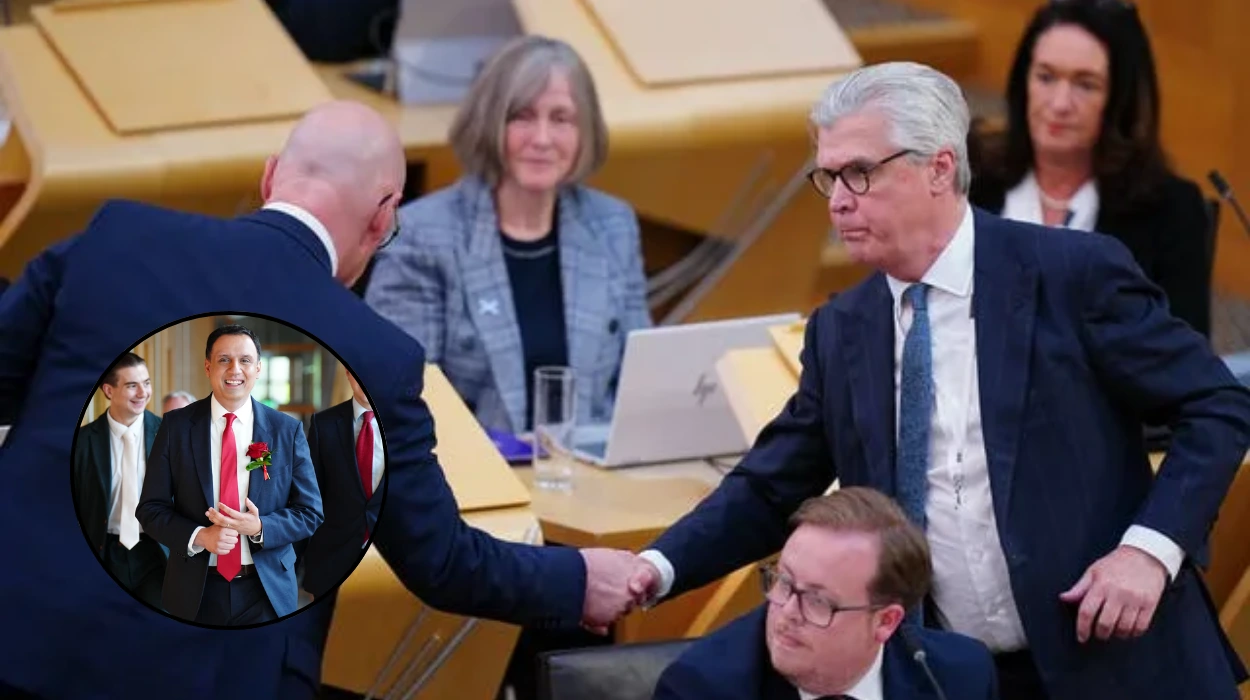
- After the vote, Swinney shook hands with leaders of the other parties, including Reform UK’s Lord Malcolm Offord, whom he had previously declined to invite for post‑election talks.
- Scottish Green co‑leader Gillian Mackay backed calls for a second independence vote, arguing that Westminster has delivered “Brexit, a decade of failure, a merry‑go‑round of prime ministers and ongoing climate breakdown”.
- Scottish Labour leader Anas Sarwar urged cooperation across the political spectrum, warning that losing public faith in politics as a whole could “undermine our democracy”.
- Lord Malcolm Offord, Reform UK’s Scottish leader, insisted that Scotland needs a first minister who will “build opportunity and prosperity for every Scot”, accusing the SNP of “record highs in tax and spend”.
- Leaders of the smaller parties, including Labour, the Greens and the Liberal Democrats, put their names forward for First Minister acknowledging the result would be a “foregone conclusion”, but used the occasion to set out alternative visions for Scotland.
Edinburgh (Britain Today News) May 19, 2026 – John Swinney has been formally re‑elected as Scotland’s First Minister at the Scottish Parliament, describing the role as the
- Key Points
- What did Swinney say about his mandate?
- How did Swinney frame the independence debate?
- How did the Greens respond to calls for a second vote?
- What did opposition leaders say in the chamber?
- How did Reform UK respond to Swinney’s re‑election?
- What did Swinney mean by a ‘parliament of minorities’?
- What are the immediate next steps for Swinney’s government?
“greatest privilege and the greatest responsibility of my life”
and pledging to work every day to
“repay the trust that the people of Scotland have placed in me”.
In a speech to MSPs following his nomination, Swinney said his government would be guided by “ambitious goals” for the next five‑year parliamentary session, including tackling the cost of living, improving the NHS, greening the economy and strengthening community cohesion. Acknowledging that the SNP has returned with 58 seats—its largest tally since 2011 but still short of the 65 needed for an outright majority—he stressed that the people had spoken in favour of a “parliament of minorities” requiring politicians to cooperate.
What did Swinney say about his mandate?
Addressing the chamber, Swinney said:
“I have ambitious goals for this Parliamentary session. I want to ease the cost of living crisis, ensure the NHS is protected and easy to access, ensure cohesion in our communities and protect the environment, and grow the economy and create opportunity across our country.”
He added that he believed he could
“achieve a majority for every ambition I have for this Parliament”
by working with others, even where parties differ on constitutional questions.
Reiterating his long tenure at Holyrood—first elected in 1999 and continuously in government since 2007—Swinney said voters had endorsed his
“reliable, trusted and experienced leadership”.
He concluded:
“I gratefully accept this opportunity to serve as First Minister. It is the greatest privilege and the greatest responsibility of my life. I promise to work every day to repay the trust that the people of Scotland have placed in me.”
How did Swinney frame the independence debate?
Perhaps the most politically charged part of Swinney’s remarks concerned the constitution. He acknowledged that there are “profound differences” between parties at Holyrood on independence, but insisted that the electorate had
“elected the largest pro‑independence majority in the history of devolution”.
He continued:
“The Scottish people have yet again made their wishes known, loud and clear. They want a more secure and a more prosperous independent nation, one where decisions are made not in Westminster but here in Scotland.”
He argued that Holyrood’s composition now gives him a mandate to press Westminster for a second independence referendum, even though the SNP fell short of an outright majority.
Explore More about Politics:
Clacton residents say ‘Stop the boats’ after Reform UK win 2026
London Global Partnerships Conference: UK pushes ‘bold new approach’ to aid as Cooper warns of food crisis 2026
How did the Greens respond to calls for a second vote?
Scottish Green co‑leader Gillian Mackay, whose party’s MSPs are crucial to the pro‑independence bloc, welcomed Swinney’s renewed push for a second vote. In statements before and after the parliamentary vote, she argued that promises of change after the 2014 referendum had instead brought
“Brexit, a decade of Westminster failure, a merry‑go‑round of prime ministers and ongoing climate breakdown”.
She said:
“People’s lives have gotten materially worse and Scotland must have our chance to choose differently.”
Emphasising that
“independence is much bigger than any party”,
she urged cooperation across the pro‑independence spectrum and warned that failing to secure a clear mandate now could see the question
What did opposition leaders say in the chamber?
In the usual rotating format, leaders of the other parties were invited to put their names forward for First Minister, though each acknowledged the outcome was a “foregone conclusion”. Scottish Labour leader Anas Sarwar, speaking from the opposition benches, called for cross‑party cooperation, warning that voters were “frustrated, angry and tired” of arguments that felt disconnected from their daily lives.
Sarwar said:
“People are frustrated, angry and tired, and they are tired of political arguments that seem disconnected from their lives – and that should concern every one of us.”
He added that if the public begin to lose faith in politics as an institution, it not only “undermines our democracy”, but
Meanwhile, Liberal Democrat leader Alex Cole‑Hamilton, who previously confirmed he would stand for the role, used the occasion to underline his party’s gains at the election, pointing out that the Liberal Democrats had returned 10 MSPs, a “mass.flip forward” from previous Holyrood contests.
How did Reform UK respond to Swinney’s re‑election?
Lord Malcolm Offord, Scotland’s leader for Reform UK, also put his name forward for first minister, though he received far fewer votes than Swinney. After the vote, he told MSPs that Scots needed a first minister who would “build opportunity and prosperity for every Scot”, arguing his party was the only one able to deliver on that.
He said:
“All we have seen from the SNP is record highs in tax and spend and grievance stoked against the United Kingdom for cynical political gain.”
He accused the SNP and Greens of enshrining a “politics of envy” at Holyrood, and insisted that Reform offered a different path based on economic growth and national unity within the UK.
What did Swinney mean by a ‘parliament of minorities’?
Swinney’s reference to a “parliament of minorities” underlines the arithmetic behind the 2026 result. With the SNP on 58 seats, the Labour and Conservative parties each on the mid‑40s, and the Greens, Liberal Democrats and Reform UK accounting for the remaining MSPs, no single bloc can command a majority without relying on others’ support on certain issues.
In his speech, Swinney said:
“By electing a parliament of minorities, the people have given us a specific instruction to work together. Voters value cooperation amongst their politicians, they want to see more of it. And in this Parliament I will work to see more of it, too.”
He pledged to be a
“First Minister for all of Scotland—a First Minister that works to bring people together with a strong sense of national purpose”.
What are the immediate next steps for Swinney’s government?
Following the parliamentary vote, Swinney is expected to be formally sworn in before the Court of Session in Edinburgh, after which he will announce a new cabinet. The first minister has indicated that his incoming government will prioritise four areas: easing the cost‑of‑living crisis, stabilising the NHS, greening the economy, and strengthening community services.
In the same remarks, he said he would seek to
“grow the economy and create opportunity across our country”
while also protecting public services from cuts. He reiterated that Holyrood’s enlarged pro‑independence bloc gives him a mandate to intensify pressure on Westminster for a second referendum, even as opponents argue that the result does not amount to a clear majority for independence itself.