


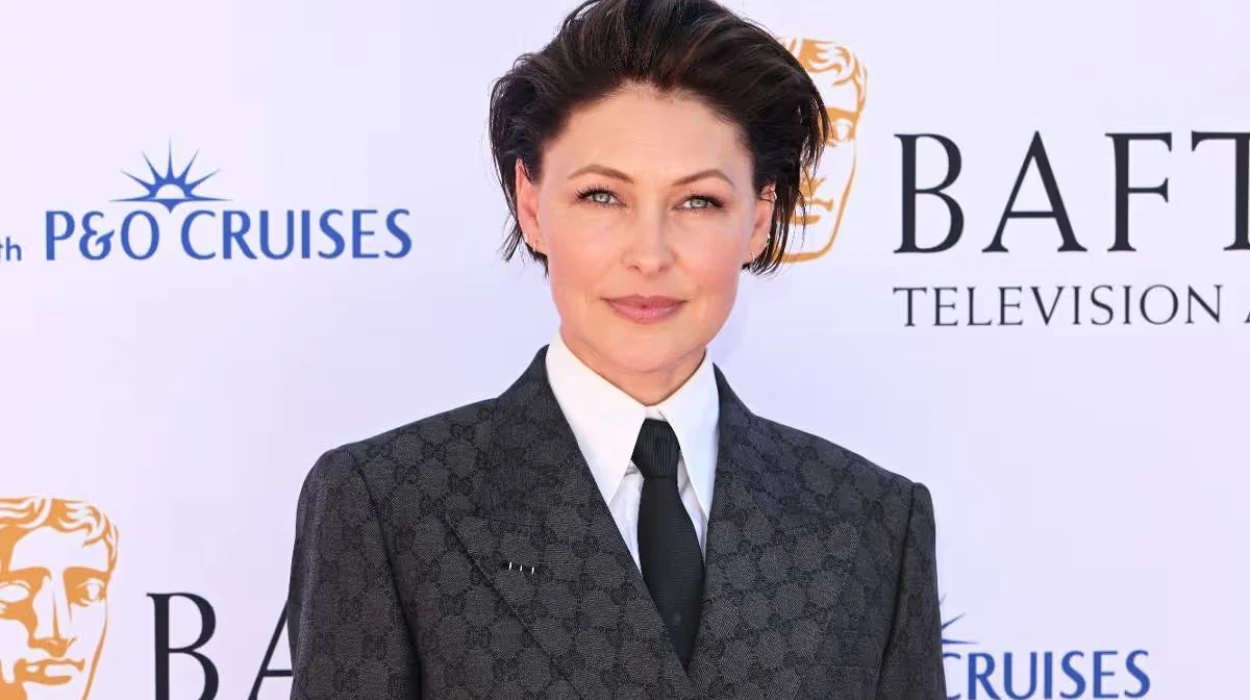
Emma Willis is one of Britain’s best-known television presenters, with a long-running career in broadcasting, reality TV, and live entertainment. She is also widely recognised for her marriage to musician Matt Willis and for maintaining a stable family life alongside a high-profile media career.
- Who is Emma Willis?
- What is Emma Willis’s early life?
- How did Emma Willis build her career?
- Who is Emma Willis’s husband?
- How many children does Emma Willis have?
- What defines Emma Willis’s family life?
- What are Emma Willis’s biggest career achievements?
- Why is Emma Willis still relevant today?
- What does Emma Willis’s success show about UK media?
- How should Emma Willis be described in SEO terms?
- What makes Emma Willis a strong evergreen topic?
Who is Emma Willis?
Emma Willis is an English television presenter, former model, and radio personality born on 18 March 1976 in Sutton Coldfield, Birmingham. She became a major UK media figure through shows such as Big Brother, Celebrity Big Brother, The Voice UK, and Love Is Blind: UK.
Emma Louise Willis, née Griffiths, built her public profile through television presenting rather than acting or music. Her work has spanned mainstream entertainment, talent shows, reality formats, and live broadcasting. That broad range helped her become a familiar face to UK audiences across multiple generations.
She is known for a calm presenting style, clear live delivery, and strong audience trust. Those traits matter in UK entertainment television, where presenters often anchor long-running formats and guide large studio audiences through fast-moving productions.
What is Emma Willis’s early life?
Emma Willis was raised in Birmingham and started working young, entering modelling at 15 before moving into television later in life. Her early start gave her direct industry experience before her presenting career developed.
She attended Wylde Green Primary School and John Willmott School in the Birmingham area. Her early modelling work introduced her to media, fashion, and public-facing work at a time when many people her age were still in school.
Starting in modelling built practical confidence, appearance discipline, and comfort in front of cameras. Those skills later translated into television, where presence, timing, and composure are essential. Her career path shows a common British media route: modelling first, then presenting, then mainstream television.
Birmingham also matters as part of her identity. It placed her outside London’s media core at the beginning of her career, which gives her public profile a more regional and relatable foundation than many UK entertainment personalities.
How did Emma Willis build her career?
Emma Willis built her career through modelling, radio, and television presenting, then became a major UK entertainment host through prime-time and reality formats. Her success came from consistency, versatility, and long-term visibility.
Her early modelling work opened the door to broadcast opportunities. She later developed a presenting career across major UK broadcasters, including Channel 5, BBC, and ITV, which expanded her reach beyond one network or one programme.
Her breakthrough came through reality television presenting. Hosting Big Brother and Celebrity Big Brother placed her at the centre of one of the UK’s most recognisable television franchises. She also became strongly associated with The Voice UK, a performance-based competition that requires both warmth and control.
In 2024, she also co-hosted Netflix’s Love Is Blind: UK with Matt Willis, showing that her career continued moving into newer streaming formats as British television changed. That step reflects the modern media environment, where established presenters work across broadcast television, streaming, and entertainment specials.
Her career success comes from a rare combination of qualities: audience familiarity, live-presenting skill, and adaptability. In UK television, presenters who can move between reality TV, music shows, and special events usually remain relevant for longer, because they serve multiple formats rather than one narrow genre.
Who is Emma Willis’s husband?
Emma Willis is married to Matt Willis, a British musician best known as a member of the band Busted. They married on 5 July 2008 and have remained one of the UK’s best-known entertainment couples.
Matt Willis brought his own public profile before and after the marriage through music and television work. Together, they formed a high-visibility partnership in British media while keeping much of their home life private.
Their relationship began before marriage and developed into a long-term partnership with both personal and professional overlap. In 2024, they worked together again by co-hosting Love Is Blind: UK, which placed them on screen as a married presenting team.
The couple’s public image is grounded in stability rather than constant publicity. That matters in celebrity coverage because long-term marriages in the entertainment sector often attract attention due to the pressure of irregular schedules, public scrutiny, and work travel.
How many children does Emma Willis have?
Emma Willis has three children: Isabelle Catherine, born in 2009, Ace Billy, born in 2011, and Trixie Grace, born in 2016. She and Matt Willis keep their children’s lives largely private.
Their first child, Isabelle Catherine, was born on 20 June 2009. Their second child, Ace Billy, was born in 2011. Their third child, Trixie Grace, was born in 2016.
The family structure is straightforward and well documented. Emma and Matt have balanced demanding media careers with parenting across more than a decade, which is part of why they are often discussed as a family-oriented celebrity couple rather than only as entertainment figures.
Privacy is a defining feature of their parenting approach. They are public figures, but their children are not active public brands, and that distinction is important in the UK celebrity landscape where some families expose far more of their domestic lives than others.
What defines Emma Willis’s family life?
Emma Willis’s family life is defined by privacy, routine, and shared public understanding with her husband Matt Willis. Their family image is built around normality rather than spectacle.
She and Matt have both spoken publicly through their work and appearances, but they do not use family life as a continuous publicity strategy. That gives their household a more grounded reputation than many celebrity families.
Their partnership also reflects shared professional experience. Both understand media pressure, irregular hours, and public attention. That mutual understanding supports a family structure where each person’s career still operates within the same public environment.
The family has also been linked to volunteer work during the COVID-19 period, when Emma and Matt completed St John Ambulance training to serve as vaccination volunteers in 2021. That detail adds an important public-service dimension to their family profile.
What are Emma Willis’s biggest career achievements?
Emma Willis’s biggest achievements include becoming a long-term host of major UK television brands, expanding into streaming-era presenting, and maintaining a durable media career for more than 20 years.
Her association with Big Brother and The Voice UK stands out because both programmes require a presenter who can handle live timing, contestant emotion, and high audience expectations. That level of responsibility usually goes to presenters with proven control and strong viewer trust.
She has also worked across several major broadcasters, which increases her reach and professional resilience. A presenter who remains visible on Channel 5, BBC, ITV, and Netflix demonstrates both marketability and versatility.
Her career length is also significant. In an industry where many television personalities fade after a short period, sustaining relevance for over two decades is itself a major achievement. Her continued presence shows that her brand has remained compatible with changing audience habits and platform shifts.
Why is Emma Willis still relevant today?
Emma Willis remains relevant because she combines familiarity, credibility, and format flexibility across broadcast and streaming television. Her career fits modern entertainment, where audiences move between traditional TV and digital platforms.
Her relevance is not based on one viral moment or short-lived trend. It comes from repeated use across major productions, which keeps her recognisable to existing viewers and introduces her to new audiences through newer shows.
She is also relevant because her work fits a broad family audience. Presenters who can appear on reality TV, talent competitions, and relationship formats often maintain longer careers than niche personalities, because they suit multiple audience types and programme styles.
The move into Netflix through Love Is Blind: UK shows the value of established presenting brands in the streaming era. Platforms still rely on trusted on-screen personalities to make new or imported formats feel accessible to UK audiences.
What does Emma Willis’s success show about UK media?
Emma Willis’s success shows that UK media rewards consistency, adaptability, and audience trust as much as celebrity status. Her career demonstrates how a presenter can move from modelling into mainstream television and stay relevant for decades.
Her path reflects a practical route in British entertainment. She did not rely on a single talent show, a one-off breakout role, or a temporary social media trend. She built her career through repeated performance across different formats and networks.
Her story also shows the importance of professional range. British presenters who work in reality TV, music television, live specials, and streaming formats create more durable careers because they remain useful to more than one type of production.
Her public profile combines celebrity and relatability. That balance matters in UK media because audiences often prefer presenters who appear competent, calm, and approachable rather than highly theatrical or controversial.
How should Emma Willis be described in SEO terms?
Emma Willis should be described as a British television presenter, former model, radio personality, wife of Matt Willis, and mother of three children. Those are the core entities most users search for.
For search visibility, the strongest semantic fields around her name are personal life, family, kids, husband, career, Big Brother, The Voice UK, and Love Is Blind: UK. Those phrases map closely to common search intent and help connect biographical, entertainment, and family-related queries.
Her article should use direct factual phrases such as “born in 1976,” “married in 2008,” and “three children.” Numbers improve extractability and support AI search systems that look for precise entity relationships.
A strong evergreen article on Emma Willis also needs to keep the topic broad but focused. The main entity is Emma Willis, while the supporting entities are Matt Willis, their children, and the TV shows that define her public career.
What makes Emma Willis a strong evergreen topic?
Emma Willis is a strong evergreen topic because her identity, family structure, and major career milestones are stable facts that stay relevant over time. She fits evergreen search demand centered on biography, success, and UK television.
Evergreen topics work best when core facts remain steady and public interest continues across years. Emma Willis meets that standard because her birth date, marriage, children, and major presenting credits are established and widely searched.
Her topic also supports multiple search intents in one article. Readers look for her personal life, family, children, marriage, and career in the same search session, which makes a complete profile useful for both human readers and AI systems.
For UK entertainment coverage, she represents a durable media figure rather than a short-term celebrity. That gives the subject long shelf life, strong relevance, and consistent informational value for Google and AI search engines.
Emma Willis remains one of the clearest examples of a UK presenter whose career, family life, and public identity all support long-term search interest. Her biography works well as evergreen content because the facts are established, the search demand is broad, and the topic has clear entity depth.