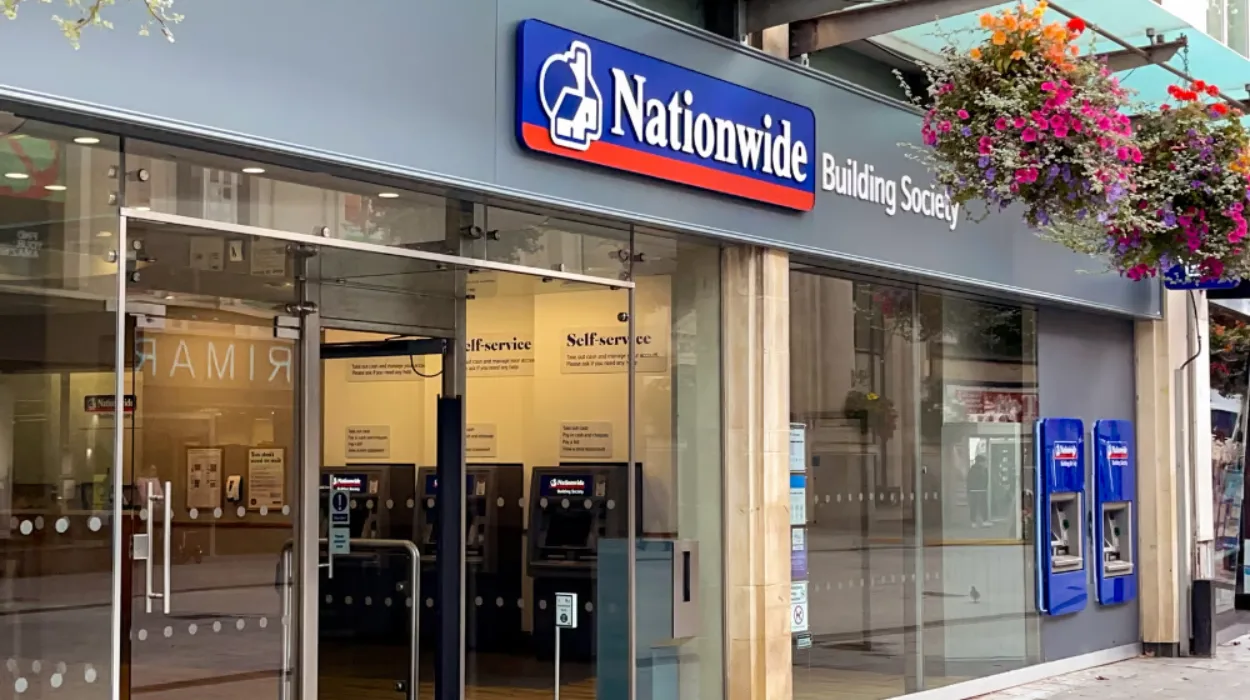
Nationwide Building Society is the UK’s largest building society, a member-owned financial institution that offers current accounts, savings, mortgages, insurance, and related banking services. Its defining feature is mutual ownership, which means it operates for members rather than shareholders.
- What is Nationwide Building Society?
- What services does Nationwide offer?
- Why do people choose Nationwide?
- What current accounts does Nationwide provide?
- How do Nationwide savings accounts work?
- What mortgage rates and deals does Nationwide offer?
- What offers and member rewards does Nationwide give?
- How does Nationwide compare with a bank?
- How safe is money with Nationwide?
- What is Nationwide’s history and scale?
- What does Nationwide mean for UK consumers?
What is Nationwide Building Society?
Nationwide Building Society is a UK mutual financial institution founded in 1884. It serves banking members, savings customers, and mortgage holders, and it uses member ownership, branch access, and profit-sharing to differentiate its services from banks.
Nationwide’s mutual structure is central to its identity. Members are people who bank, save, or hold a mortgage with the society, and the society states that it is owned by members rather than shareholders . That structure shapes product design, pricing, and customer treatment because the business is built to return value to members instead of external investors .
Nationwide also ties its public purpose to community support. It states that it gives 1% of pre-tax profits to charities and supports a social investment agenda linked to community outcomes . In practical terms, that makes Nationwide both a retail finance provider and a mutual institution with a wider civic role.
What services does Nationwide offer?
Nationwide offers the main personal finance services used by UK households: current accounts, savings accounts, mortgages, credit products, and insurance-linked banking benefits. Its product range covers day-to-day banking, long-term saving, and home finance.
Its current account range includes FlexPlus, FlexDirect, FlexAccount, FlexStudent, FlexOne, and FlexBasic . FlexPlus is the packaged account, FlexDirect is the interest-and-cashback account, and FlexAccount is the standard everyday account . Nationwide also provides support features such as overdrafts, app-based banking, and switching through the Current Account Switch Service .
On the savings side, Nationwide offers savings accounts, ISAs, and fixed rate bonds. It also markets member-linked savings value, with account options designed for instant access, regular saving, and fixed-term deposits. On the mortgage side, it provides fixed-rate and variable-rate home loans, plus remortgage and first-time buyer products.
Why do people choose Nationwide?
People choose Nationwide for member benefits, branch access, competitive account features, and a mutual model that shares value with customers. Its strongest selling points are membership rewards, nationwide branch coverage, and practical everyday banking services.
Nationwide says it is the only banking provider that shares profits with members, and its current account pages link this to Fairer Share Payments . It states that some members have received £300 in Fairer Share Payments since 2023, with eligibility depending on the society’s financial performance. That makes membership more than a label; it can create direct cash value for eligible customers .
Branch access is another major differentiator. Nationwide says it will keep all branches open until at least the start of 2030 . In an environment where UK banking has moved heavily online, that commitment matters to customers who still use in-person service for cash, identity checks, or mortgage support.
What current accounts does Nationwide provide?
Nationwide provides six main current accounts, led by FlexPlus, FlexDirect, and FlexAccount. The accounts differ by fees, interest, cashback, overdraft support, and eligibility, giving customers a range from basic banking to packaged benefits.
FlexPlus is Nationwide’s packaged account and has an £18 monthly fee . It includes worldwide family travel insurance, mobile phone insurance, and UK and European breakdown cover, subject to conditions . FlexDirect has no monthly fee and offers 5% interest on balances and 1% cashback on debit card purchases for 12 months, subject to conditions.
FlexAccount is the standard everyday account with no monthly fee . FlexStudent serves students aged 18 or over and can include an interest-free arranged overdraft, subject to eligibility . FlexOne is designed for children aged 11 to 17, while FlexBasic is aimed at people who face credit-history barriers or money problems that block access to other accounts .
How do Nationwide savings accounts work?
Nationwide savings accounts are built around access level, term length, and eligibility rules. Customers can choose instant access, regular saver, cash ISA, or fixed-term products depending on how often they need to withdraw money and how long they want to save.
Nationwide groups its savings products in one comparison area that includes savings accounts, ISAs, and fixed rate bonds. That structure helps savers match product type to purpose. Instant access products suit emergency funds, regular savers suit monthly saving habits, and fixed rate bonds suit money that will stay untouched for a set term.
Recent market commentary has highlighted Nationwide’s regular saver pricing as notably strong, with a reported 8.00% AER on its Flex Regular Saver in April 2026, though with strict conditions such as holding a qualifying current account and saving only up to £200 per month. Independent review coverage also described Nationwide’s savings range as competitive in 2026, especially for customers who already use the society as their main bank. These conditions matter because headline rates often depend on product restrictions, not universal access.
What mortgage rates and deals does Nationwide offer?
Nationwide offers fixed-rate, tracker, and variable-rate mortgages, plus remortgage and first-time buyer deals. Its mortgage pricing changes regularly, with online rate tools showing current offers for new buyers, movers, and remortgagers.
Nationwide states that it provides mortgage rate comparison tools online, including a mortgage rate finder and a remortgage page. It also offers mortgages for first-time buyers and home movers, with products shown by loan-to-value band, term, and fee structure. Independent mortgage summaries describe Nationwide as offering fixed-rate terms of 2, 3, 5, and 10 years, alongside variable options.
Recent official updates show that Nationwide has continued to cut selected fixed mortgage rates for new and existing customers. In February 2026, the society reduced rates by up to 0.15% across some products, including a three-year fixed rate at 90% LTV with a £999 fee at 4.40%. Public reporting in April 2026 also noted a two-year fixed rate at 60% LTV with a £1,499 fee at 4.66% and a new customer purchase deal at 4.50%. Mortgage pricing changes quickly, so rate comparisons require checking the exact product type, deposit band, and fee.
What offers and member rewards does Nationwide give?
Nationwide gives member rewards through switching offers, cashback, overdraft features, and Fairer Share Payments. These offers are designed to encourage primary banking relationships and to reward customers who hold multiple Nationwide products.
Current account pages show that eligible members can benefit from Fairer Share Payments when they bank, save, or hold a mortgage with Nationwide. Nationwide states that some members have received £300 since 2023, and it frames these payments as a share of profits rather than a guaranteed annual dividend. That means the payment depends on financial performance and eligibility rules rather than fixed entitlement .
Nationwide has also promoted current account incentives such as switching bonuses, debit-card cashback, and an interest-free overdraft buffer. FlexDirect currently offers 1% cashback on debit card purchases for 12 months and 5% interest on money in the account for 12 months, subject to conditions. These offers are strongest for customers who actively use the account as their main banking relationship.
How does Nationwide compare with a bank?
Nationwide differs from a bank because it is a building society owned by members, not shareholders. That mutual structure changes its priorities, its reward model, and its branch policy, while its products still function like standard UK retail banking services.
A bank generally aims to maximize returns for shareholders. Nationwide says its purpose is to focus on what is best for members, because members are the owners . That distinction explains why its messaging emphasizes Fairer Share Payments, branch retention, and member-only products.
The practical comparison for consumers is straightforward. A bank can compete on app features, lending rates, and promotional switching bonuses, while Nationwide combines those features with mutual ownership and a long branch commitment. For customers who value in-person service and member-linked rewards, that combination has clear relevance.
How safe is money with Nationwide?
Money held with Nationwide is protected by the UK Financial Services Compensation Scheme up to £120,000 per eligible person, or £240,000 for joint accounts, across Nationwide and Virgin Money accounts combined. This protection applies if the firm cannot meet its financial obligations or stops trading.
Nationwide states this protection clearly on its current accounts pages . The FSCS limit is important because it defines the maximum protection per person, per eligible institution grouping, under standard rules . That makes the safety framework relevant for current accounts, savings, and other eligible deposit products.
For most retail customers, this means standard banking balances remain protected within the scheme limit . Larger balances require spread management across eligible institutions if the customer wants to maintain deposit protection across all holdings . That issue matters more for savers, business owners, and households holding house-sale proceeds.
What is Nationwide’s history and scale?
Nationwide began in 1884 and has grown into the UK’s largest building society with around 16 million members. Its long history, mutual structure, and branch commitment explain its position as a major mainstream financial institution.
Nationwide says it first opened in 1884 and has remained focused on member benefit throughout its history . Public institutional pages also describe it as the UK’s largest building society, with 16 million members. That scale gives Nationwide national reach across savings, mortgages, and everyday banking.
Its history also reflects broader UK mutual finance development. Building societies emerged as member-focused home-finance institutions, and Nationwide’s modern identity still carries that tradition forward. The society’s name and current structure place it among the best-known mutual finance brands in Britain.
What does Nationwide mean for UK consumers?
Nationwide matters because it combines mainstream banking services with mutual ownership, branch continuity, and customer rewards. For UK consumers, that means a provider that competes on rates and products while also returning value to members through payments and benefits.
For day-to-day users, the most relevant factors are account fees, overdraft terms, app access, savings rates, and mortgage pricing. For long-term customers, the more important question is whether membership value outweighs alternatives from challenger banks or traditional high street lenders . Nationwide’s product set is broad enough to serve students, families, first-time buyers, savers, and remortgagers.
Its future relevance stays tied to three trends: the durability of branch banking, competition in savings and mortgage pricing, and the appeal of mutual customer ownership . As rates and promotions shift, Nationwide’s lasting advantage comes from being both a major lender and a member-owned institution with a clear public identity.