Key Points
- A UK government unit that documented possible Israeli war crimes has been shut down amid funding cuts, according to reporting cited in the story.
- The unit was part of the Foreign, Commonwealth and Development Office (FCDO) and worked on monitoring international humanitarian law issues related to Gaza.
- The move also ends funding for the Conflict and Security Monitoring Project run by the Centre for Information Resilience (CIR).
- The FCDO said the change is part of an internal restructure and that the work will continue in another team.
- The department said it still invests heavily in conflict prevention, resolution and international humanitarian law monitoring in Gaza.
- CIR’s database reportedly contains verified information on about 26,000 incidents across the Middle East.
- The project covered incidents in occupied Palestine, Israel and Lebanon, with data going back to October 2023.
- The Guardian report suggested the FCDO may lose access to the CIR database when the funding ends, although the department says it will retain access to funded research.
- The FCDO has faced wider funding and staffing reductions, including plans to shrink its workforce and abolish a unit focused on emerging conflicts and displacement crises.
- The issue comes amid internal tensions in the Foreign Office over UK arms sales to Israel.
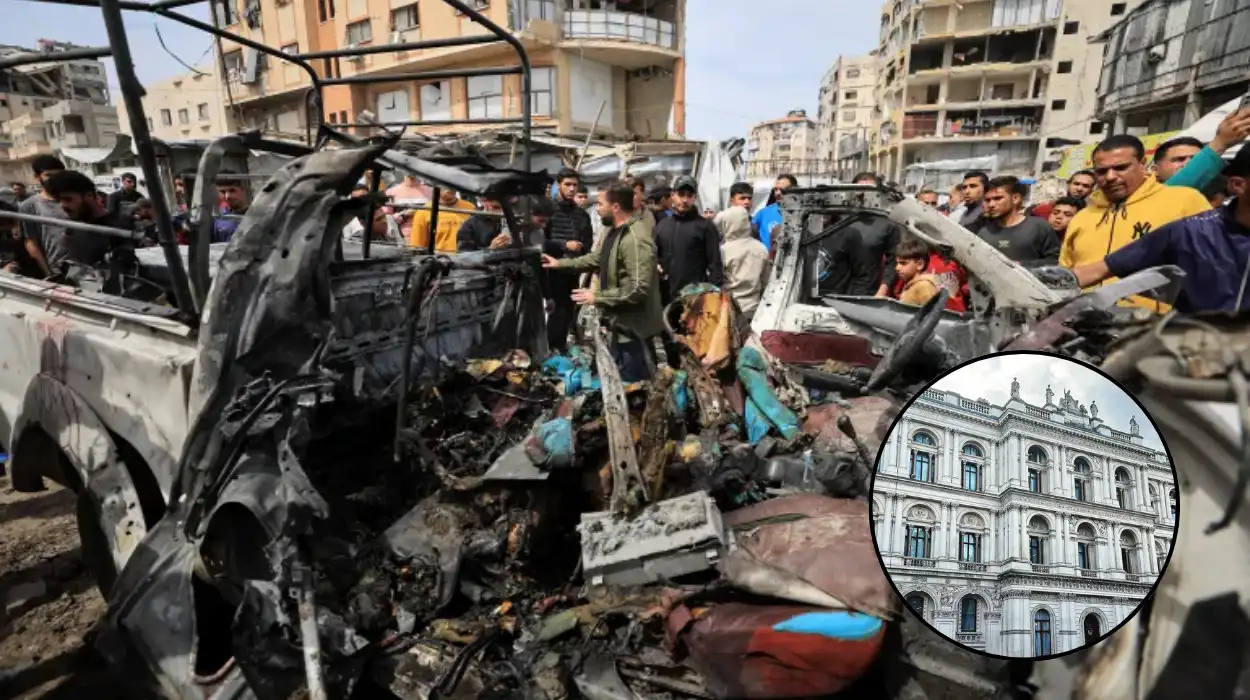
London (Britain Today News) April 24, 2026 — The UK government has shut down a Foreign, Commonwealth and Development Office unit that logged possible Israeli violations of international humanitarian law, in a move linked to funding cuts and internal restructuring, according to reporting cited in the story.
What happened to the unit?
As reported by the Guardian, a UK government unit responsible for documenting possible war crimes in Gaza has been closed after cuts inside the FCDO forced the international humanitarian law cell to shut down. The report said the closure also means the end of funding for the Conflict and Security Monitoring Project, which is run by the independent Centre for Information Resilience. The project had supported open-source monitoring of incidents across occupied Palestine, Israel and Lebanon since the start of the war on Gaza in October 2023.
The story says the unit had become an important part of the government’s information-gathering on conflict-related legal issues. It also says the closure may leave the FCDO without access to a significant database once the funding stream ends. That database was described as holding verified information on around 26,000 incidents across the Middle East.
Why was it closed?
The FCDO said the change was part of an internal restructure, not an end to the government’s interest in the issue. A spokesperson told Al Jazeera that the work would continue in a different team within the department, while declining to provide further detail. The spokesperson added that the government continues to invest “heavily” in expertise and resources for conflict prevention and resolution, including monitoring international humanitarian law in Gaza.
The report suggests the decision sits within a broader squeeze on the department’s budget and staffing. The FCDO’s former permanent secretary said in July that the office planned to reduce its workforce by up to 25 percent. The story also notes that the department announced plans last November to abolish a unit focused on emerging conflicts and displacement crises.
What did the project do?
The Conflict and Security Monitoring Project was run by the Centre for Information Resilience and supported governments and civil society in conflict zones. According to the report, the project covered Syria, South Sudan, Ethiopia and Yemen as well as the Israeli-Palestinian conflict and Lebanon. It also carried out more than 20 investigations, including material on shootings of children in Gaza.
The database was one of the project’s most significant assets because it collected and verified incident-level information over time. The Guardian’s reporting suggested that once the funding ended, the FCDO could lose access to that resource. The department, however, said it would retain access to CIR research that it had funded and stressed that the project’s reports were only one part of its wider assessment process.
Why does it matter?
The closure matters because it affects how the UK government tracks and assesses possible breaches of international humanitarian law in one of the world’s most sensitive conflict zones. The story implies that removing this unit could weaken a source of structured evidence used in policy decisions. It also raises questions about how the government will maintain continuity in monitoring work if the function has simply been moved rather than preserved in its original form.
The timing is politically significant as well. The Foreign Office has been under pressure over UK arms sales to Israel, and the report says there have been internal divisions over that policy. Mark Smith, the diplomat who quit over the UK’s refusal to stop selling arms to Israel, said late last year that civil servants who questioned government policy were routinely silenced.
How does this fit wider cuts?
The report places the closure within a wider pattern of retrenchment at the FCDO. Job cuts, reduced funding and the removal of specialist units suggest a department under growing pressure to do more with less. In that context, the closure of a monitoring cell is not just an administrative change but part of a broader shift in how the UK handles conflict-related analysis.
That wider context matters because specialist evidence-gathering teams are often used to inform diplomacy, aid decisions and legal assessments. When such units are dissolved or absorbed into other teams, there can be a risk that expertise becomes fragmented. The story suggests exactly that concern, especially if the database and institutional memory become harder to access.
What is the government saying?
The government’s position, as presented in the story, is that monitoring work is still continuing. The FCDO says it remains committed to conflict prevention and international humanitarian law, and that the closure does not mean the issue has been dropped. It argues that the project was only one element of a wider approach to assessing legal and humanitarian concerns.
At the same time, the report leaves open an important question about transparency. If the work continues in another team, the public may want to know what changes, what stays the same and how accountability will be maintained. For now, the closure appears to be both an operational change and a politically sensitive one.
What happens next?
The next issue is whether the promised replacement team can match the previous unit’s function and output. If the new arrangement lacks the same scope, access or expertise, critics are likely to say the UK has weakened its own ability to monitor conflict-related violations. If it does retain the same level of capability, the government will need to explain how that continuity is being preserved.
The story also suggests that this will remain part of a larger debate over UK policy toward Israel and Gaza. With conflict still driving legal, diplomatic and humanitarian scrutiny, any reduction in monitoring capacity will attract attention from lawmakers, civil society and international observers. The final question is whether this is a temporary restructuring or a long-term retreat from detailed oversight.