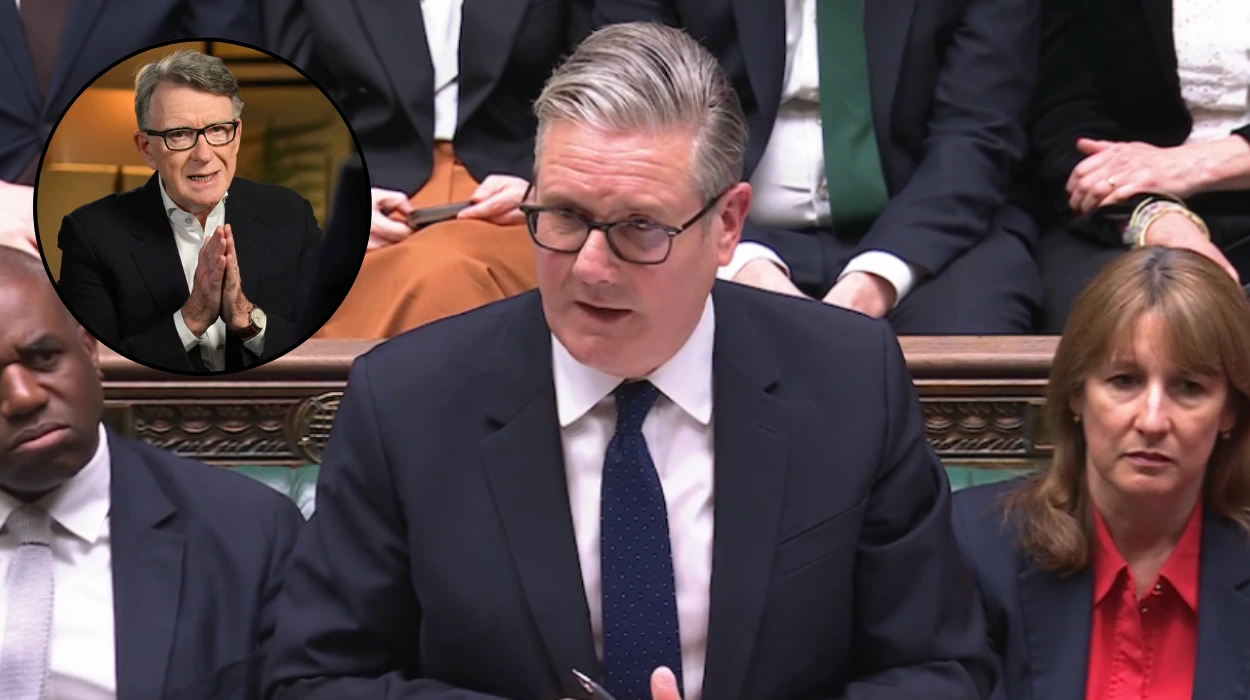
Key Points
- Keir Starmer told the UK Parliament he was wrong to appoint Peter Mandelson as ambassador to Washington.
- He said he would have withdrawn the appointment if he had known the Foreign Office had overridden security officials’ advice not to give Mandelson the job because of his links to Jeffrey Epstein.
- Starmer rejected mounting opposition calls for his resignation and denied misleading Parliament.
- He blamed the Foreign Office for withholding information from senior ministers and said it was “frankly staggering” he had not been told about the security clearance issue.
- Conservative leader Kemi Badenoch accused Starmer of not asking questions and said he had thrown government officials “under the bus”.
- Mandelson was appointed in December 2024, took up the post in February 2025, and was sacked seven months later after fresh documents deepened scrutiny of his ties to Epstein.
- The scandal intensified after The Guardian published revelations on the vetting process, and top Foreign Office civil servant Olly Robbins was removed on the same day.
- The controversy has already forced the resignation of Starmer’s former chief of staff, Morgan McSweeney, and comes weeks before local elections expected to be difficult for Labour.
United Kingdom (Britain Today News) April 20, 2026 – Prime Minister Keir Starmer has admitted that appointing Peter Mandelson as ambassador to Washington was a mistake, but he has rejected growing calls to resign. Starmer told Parliament he would have withdrawn the appointment had he known that security officials had advised against it because of Mandelson’s links to Jeffrey Epstein.
Did Starmer admit appointing Mandelson was a mistake?
United Kingdom – UK PM Starmer admits Mandelson mistake, rejects resignation calls 2026
Prime Minister Keir Starmer has admitted that appointing Peter Mandelson as ambassador to Washington was a mistake, but he has rejected calls to resign over the growing scandal surrounding the vetting process.
As reported by the political coverage cited in the source material, Starmer told Parliament that he would not have proceeded with the appointment had he known that security officials had recommended Mandelson should be sidelined because of his links to convicted sex offender Jeffrey Epstein.
He insisted the decision followed due process and rejected accusations that he misled MPs.
Why is the appointment under scrutiny?
The core of the dispute is whether senior ministers were properly informed before Mandelson was given one of the UK’s most sensitive diplomatic roles.
Starmer said it “beggared belief” that officials had withheld the security-related information from senior figures in government, and he described the omission as “frankly staggering”.
The issue has become politically damaging because Mandelson’s friendship with Epstein was long known, yet the latest revelations suggested the vetting concerns were more serious than previously understood.
What did Starmer tell Parliament?
Starmer told MPs that the Foreign Office should be held responsible for failing to pass on the security advice.
He said: “That is not how the vast majority of people in this country expect politics, government or accountability to work.”
He also defended the government’s handling of the appointment by saying the proper process had been followed, even if the outcome was wrong.
What did Badenoch say?
Conservative leader Kemi Badenoch launched a direct attack on the prime minister, accusing him of failing to ask the right questions.
She said he did not appear to have asked any questions at all because “he didn’t want to know”.
Badenoch also said Starmer had thrown officials “under the bus” instead of accepting responsibility for the decision.
How did the scandal unfold?
Mandelson was announced as ambassador in December 2024 and took up the post in February 2025.
He was removed seven months later after documents released by a United States congressional committee revealed more about the depth of his ties to Epstein.
The controversy escalated further after The Guardian published fresh reporting on the vetting process, prompting the departure of top Foreign Office civil servant Olly Robbins on the same day.
What are the political consequences?
The scandal has already had wider political fallout, including the resignation of Morgan McSweeney, Starmer’s former chief of staff.
It has also sharpened pressure on the prime minister at a sensitive moment, with local elections only three weeks away and Labour expected to perform poorly.
For Starmer, the issue is now both an ethics question and a test of political authority, because opponents are trying to turn the affair into a broader argument about trust and accountability.
How should this be reported?
As a neutral news report, the strongest angle is that Starmer has admitted error but is refusing to resign, while the opposition says the affair exposes a deeper failure of judgement and government process.
The most legally cautious framing is to attribute disputed claims clearly and avoid repeating the alleged misconduct as fact beyond what the cited report states.