Key Points
- Charbonnel et Walker, a luxury UK chocolate brand, celebrates 150 years since its founding in 1875 by Minnie Walker (English hat and jewellery box maker) and Virginie Charbonnel (French chocolatier).
- The brand originated from a Paris collaboration but launched in London, blending French chocolate expertise with English presentation.
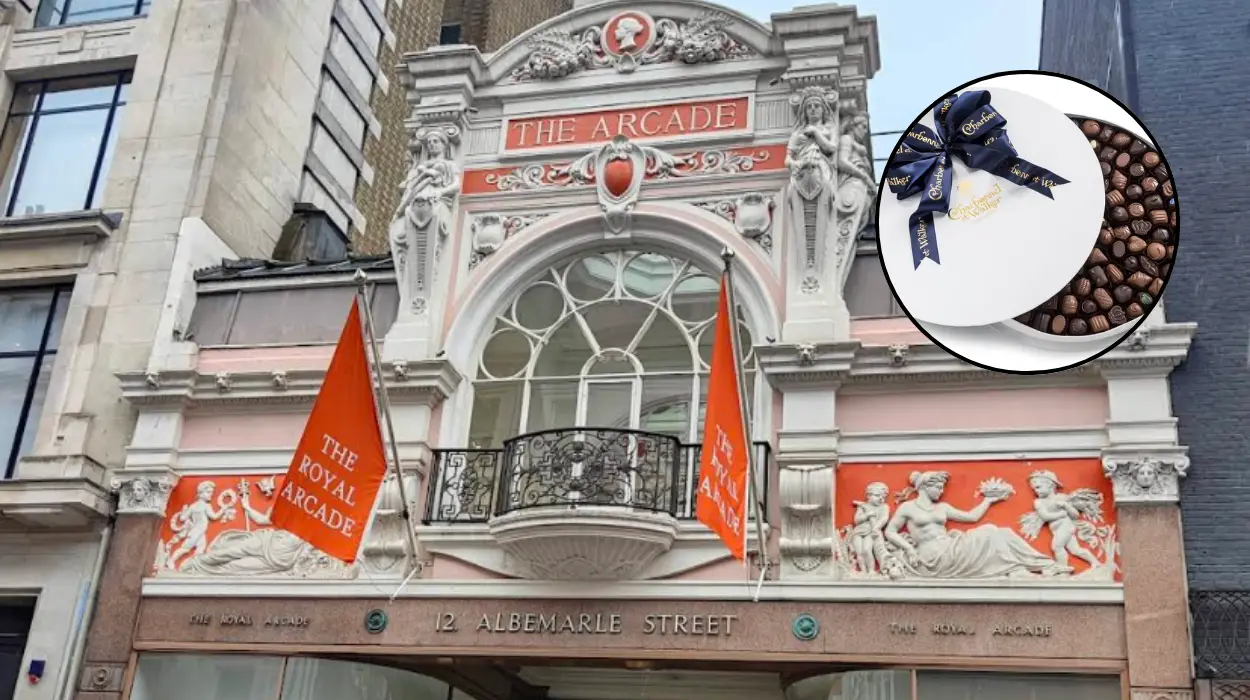
- Located today in The Royal Arcade off Old Bond Street, alongside brands like E.B. Meyrowitz (eyewear, founded 1875) and George Cleverley (shoemaker).
- Earned a Royal Warrant, starting with King Edward VII (then Prince of Wales), and remains a royal favourite, including King Charles III’s preference for Marc de Champagne truffles.
- First chocolate: Dark Chocolate Crown with marzipan, whisky, and hazelnut praline, created for the Prince of Wales.
- Oscar Wilde praised it in the 1890s as “one of the oldest ministrants to the taste for sweets” with “the latest dainties from Paris.”
- Original boutique at 173 New Bond Street; iconic packaging like hand-painted boxes, crystal vessels, embroidered satin pouches, and the 1880s “Boite Blanche.”
- Preserves 1875 recipes, especially Marc de Champagne truffles; produces over 100 varieties handmade in Poundbury, Dorset, including vegan options.
- Privately owned British company, not part of a conglomerate, balancing French finesse and British tradition.
London (Britain Today News) March 27, 2026 – Charbonnel et Walker, the iconic British luxury chocolate brand, marks its 150th anniversary, honouring the visionary partnership of two Victorian women: English entrepreneur Minnie Walker and French chocolatier Virginie Charbonnel, who founded it in 1875.
- Key Points
- Who Founded Charbonnel et Walker and How Did It Begin?
- Why Was Fine Chocolate Revolutionary in Victorian London?
- What Makes Charbonnel et Walker’s Chocolates and Packaging Iconic?
- How Has Royal Patronage Shaped the Brand’s Legacy?
- Where Is Charbonnel et Walker Located Today and What Neighbours Does It Have?
- What Original Recipes Does Charbonnel et Walker Still Produce?
- Why Does Charbonnel et Walker Remain a Symbol of British Luxury?
Who Founded Charbonnel et Walker and How Did It Begin?
The brand’s story begins with Minnie Walker, a skilled hat and jewellery box maker catering to fashionable Victorian society, and Virginie Charbonnel, a master chocolatier from France. As detailed in coverage by the brand’s official heritage page, their collaboration fused Madame Charbonnel’s Parisian chocolate-making prowess with Mrs Walker’s elite connections and business savvy. They met through Walker’s high-society clientele, spotting the potential for fine chocolates among the same discerning audience.
The partnership, often dubbed an “Entente Cordiale” between French and English talents, launched in London after initial work in Paris. Their debut creation honoured the Prince of Wales (later King Edward VII), a keen admirer who encouraged their venture. This Dark Chocolate Crown featured a sculpted shell encasing marzipan, whisky, and hazelnut praline layers.
King Edward VII granted the brand its first Royal Warrant, elevating its status among aristocracy, society hostesses, and cultural elites like Oscar Wilde. In the 1890s, Wilde wrote glowingly:
“the Maison Charbonnel is one of the oldest ministrants to the taste for sweets, and upon their counters will be found the latest dainties from Paris,”
as quoted in historical accounts from the brand’s archives.
Why Was Fine Chocolate Revolutionary in Victorian London?
Victorian London craved continental sophistication, yet fine chocolate remained a European rarity. Minnie Walker trained in Paris under Virginie Charbonnel, mastering decadent recipes like whisky-laced pralines and rose and violet creams. Back in London, they set up a workshop, producing confections with a uniquely British flair in presentation.
The first boutique opened at 173 New Bond Street, showcasing chocolates in opulent hand-painted boxes, crystal vessels, and embroidered satin pouches. Presentation became a hallmark; the 1880s “Boite Blanche”—an elegant white box custom-filled with customer choices—remains a bestseller today, per brand heritage records.
This fusion brought Parisian refinement to British palates, making luxury accessible yet elite. The Royal Warrant sealed its reputation, positioning Charbonnel et Walker as synonymous with gift-giving, celebrations, and refined British elegance.
What Makes Charbonnel et Walker’s Chocolates and Packaging Iconic?
Innovation in flavours and packaging defined the brand from the start. Mrs Walker’s box-making expertise ensured chocolates arrived as works of art. Beyond the Dark Chocolate Crown, staples included Marc de Champagne truffles—soft ganache infused with champagne, coated in milk or dark chocolate—true to 1875 recipes.
Today, over 100 varieties emerge from Poundbury, Dorset, handmade by skilled chocolatiers. Classics like Milk Sea Salt Caramel and Dark Chocolate Truffles with gold leaf join Marc de Champagne truffles, seasonal editions, themed boxes, and vegan options. The brand preserves original techniques, balancing craftsmanship with heritage.
Packaging endures as central: beautiful gift boxes evoke Victorian grandeur, blending French finesse and English tradition. As a privately owned British firm, it resists conglomerate absorption, staying true to its roots.
How Has Royal Patronage Shaped the Brand’s Legacy?
Royal endorsement propelled Charbonnel et Walker from fledgling shop to national treasure. The Prince of Wales’s admiration predated the Royal Warrant from King Edward VII, drawing elite clientele. Its presence at royal events underscores enduring appeal.
King Charles III reportedly favours the Marc de Champagne truffles, the brand’s signature, as noted in contemporary royal lifestyle coverage. From Victorian courts to modern palaces, these chocolates symbolise luxury indulgence and British craftsmanship.
Where Is Charbonnel et Walker Located Today and What Neighbours Does It Have?
London visitors now find the shop in The Royal Arcade off Old Bond Street—a charming covered passage preserving independent British heritage. It sits alongside E.B. Meyrowitz, an eyewear brand also founded in 1875 (ebmeyrowitz.com), and George Cleverley shoemakers (georgecleverley.com), as highlighted in the brand’s anniversary features.
This prime spot reinforces its status among Mayfair’s luxury independents, drawing tourists and locals to savour history in chocolate form.
What Original Recipes Does Charbonnel et Walker Still Produce?
Heritage recipes anchor the lineup. Marc de Champagne truffles, introduced by the founders, retain Virginie Charbonnel’s techniques: champagne-infused ganache in premium chocolate shells. Other classics—whisky pralines, violet creams—echo Victorian innovation.
Expansion includes modern twists like vegan lines and limited editions, yet core offerings honour 1875 origins. Handcrafted in the UK, they number over a hundred, from truffles to caramels, ensuring the brand’s refined balance endures.
Why Does Charbonnel et Walker Remain a Symbol of British Luxury?
At 150 years, the brand embodies female entrepreneurship in a male-dominated era. Minnie Walker’s acumen and Virginie Charbonnel’s artistry defied norms, creating a half-French, fully British icon. Its Royal Warrants, celebrity fans like Wilde, and unwavering quality sustain prestige.
Not absorbed by conglomerates, it thrives privately, producing in Dorset with global reach via charbonnel.co.uk. The Royal Arcade outpost invites discovery, where French elegance meets British poise in every bite.
This milestone underscores resilience: from Bond Street beginnings to worldwide acclaim, Charbonnel et Walker proves timeless fusion captivates. As it eyes the future, the founders’ vision—sophisticated, accessible luxury—remains its sweetest legacy.