Key Points
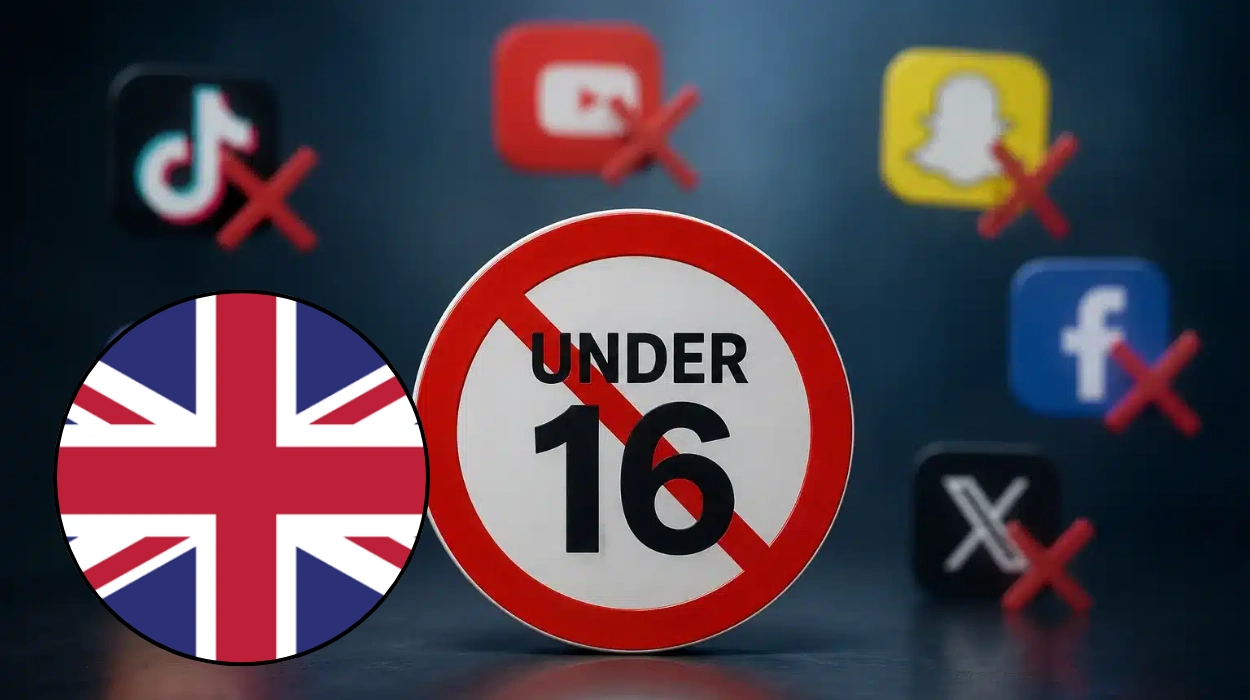
- New Ipsos UK polling, carried out between 19 and 22 June 2026, shows 69% of British adults would support a law forcing social media firms to use age-verification tools to ban under-16s from their platforms.
- 61% back a social media “curfew”, or hour restrictions, for 16- and 17-year-olds.
- Support for the under-16 ban falls to 50% if it means every adult in the UK must upload an ID or credit card to prove their age, whether that data is held by individual platforms (50%) or by device-makers such as Apple or Android/Google (51%).
- Support drops further, to 48%, if the law would also require a nationwide ban on Virtual Private Networks (VPNs) to stop people getting around the checks.
- Backing rises to 80% if age verification would also stop under-18s using AI “romantic” or roleplay chatbots, and to 72% if it stopped under-17s livestreaming or chatting with strangers on platforms such as Roblox.
- Three in four adults (74% each) expect a ban to cut children’s screen time and reduce their exposure to online harms.
- 96% of Britons say parents carry a great deal or a fair amount of responsibility for shielding under-16s from harmful content online, with 92% saying the same of social media companies.
- Alex Bogdan, Research Director at Ipsos in the UK, said the findings reveal a “strong societal consensus” that protecting children online is a collective duty.
London (Britain Today News) July 06, 2026 — Two-thirds of British adults would support a new law requiring social media companies to use age-verification technology to bar under-16s from their platforms, according to fresh polling from Ipsos in the UK, though that support weakens sharply once people are asked to consider the knock-on effects for everyone else, including nationwide identity checks and a possible ban on VPNs.
- Key Points
- What new polling data has emerged on the under-16 social media ban debate?
- How many Britons support banning under-16s from social media?
- How does support vary by age group?
- Does support hold firm if the ban requires ID verification?
- Would a VPN ban change public opinion?
- Does support increase if the ban targets AI chatbots and livestreaming?
- What impact do Britons expect the ban to have on children?
- What do Britons think about their own data security under a ban?
- What did Ipsos say about the findings?
- What happens next?
What new polling data has emerged on the under-16 social media ban debate?
The findings come from a survey conducted by Ipsos in the UK between 19 and 22 June 2026, which set out to gauge public appetite for age-verification measures designed to protect children online. The polling firm found that support for restricting under-16s’ access to social media remains high overall, but that the strength of that support is heavily dependent on how any such law would be implemented and what it would mean for adults as well as children.
According to Ipsos, the research shows continued high levels of overall support for social media restrictions for under-18s more broadly, with the majority of the public backing laws that would ban or restrict access for young people, a view shared by young people themselves in previous waves of similar research.
How many Britons support banning under-16s from social media?
Ipsos found that 69% of British adults would support a law requiring social media companies to deploy age-verification tools to prevent children under the age of 16 from accessing their platforms in the UK. The polling company noted that this figure has stayed broadly stable since January 2026, down only three percentage points over the period.
The scale of support suggests that the principle of restricting younger children’s access to social media continues to command something close to a public consensus in Britain, even as the practicalities of enforcement remain contested.
Do Britons support curfews for 16- and 17-year-olds?
Beyond an outright ban for under-16s, the polling also examined attitudes towards softer restrictions for slightly older teenagers. Ipsos reported that three in five British adults, or 61%, support a social media curfew, meaning hour restrictions, for 16- and 17-year-olds.
This suggests that public appetite for intervention does not stop at the age of 16, with a clear majority also backing limits on how and when older teenagers can use social media platforms, even if they fall short of a full ban.
How does support vary by age group?
The data shows a generational divide in how strongly different age groups back these measures. Ipsos found that support for an under-16 ban stands at 67% among 18-34-year-olds, but rises to 75% among those aged 55 to 75. A similar pattern appears for hour restrictions on 16- and 17-year-olds: 58% of 18-34-year-olds back this, compared with 66% of the 55-75 age group.
The consistent gap between younger and older adults indicates that while support for restricting children’s social media use is high across the board, older Britons remain somewhat more supportive of intervention than younger adults, many of whom are more likely to be parents of the children the policy would affect or to have grown up using these platforms themselves.
Does support hold firm if the ban requires ID verification?
The headline figures shift considerably once the public is asked to weigh up the practical implications of enforcing an age-verification law. Ipsos found that support for a law requiring age-verification tools to ban under-16s from social media drops to 50% if it would mean everyone in the UK, not just children, having to upload an ID or credit card to verify their age.
This softening in support holds regardless of who would be responsible for holding that identification data. Ipsos reported that support sits at 50% if individual social media platforms would hold the verification data, and at 51% if device manufacturers such as Apple or Android/Google would instead be responsible for it.
The near-identical figures suggest that concerns over the principle of mandatory identity verification, rather than concerns about which specific organisation would hold the data, are what is driving the drop in support.
Would a VPN ban change public opinion?
Public backing falls further still when a potential loophole in age-verification enforcement is introduced into the equation. Ipsos found that support for the under-16 ban dips to just under half, or 48%, if the law would also necessitate a total ban on Virtual Private Networks (VPNs) within the UK, a measure that would be aimed at preventing people from using such tools to circumvent age checks.
This represents the lowest level of support recorded across any of the scenarios tested by Ipsos, indicating that a VPN ban is the single policy add-on most likely to erode public backing for age-verification legislation, even among those who otherwise support restricting children’s access to social media.
Does support increase if the ban targets AI chatbots and livestreaming?
Not every additional condition tested by Ipsos reduced public support. In fact, backing for age-verification legislation rose sharply when the survey introduced specific child-safety scenarios involving newer forms of online interaction.
Ipsos found that support for a law requiring age verification to ban under-16s from social media increases to 80% if it would also prevent under-18s from engaging with AI “romantic” or roleplay chatbots. Support also climbed to 72% if the law meant under-17s could no longer livestream or chat with strangers on platforms such as Roblox.
These figures suggest that public concern over children’s exposure to AI companion chatbots and unsupervised contact with strangers online is, if anything, more acute than concern over general social media access, and that closing off these specific risks would command even stronger public backing than a blanket ban alone.
What impact do Britons expect the ban to have on children?
Ipsos asked respondents to consider the likely long-term effects of an age-verification law on children’s wellbeing and development. The polling found that three in four adults, or 74% in each case, believe that age-verification to ban under-16s from social media would have a positive impact on both reducing children’s screen usage and on the extent to which they are exposed to online harms.
Views were more mixed, however, when it came to less tangible outcomes. Ipsos reported that two in five adults expect the law to have no impact on children’s digital literacy (43%) or on their awareness of world news and current events (40%), while one in three (33%) expect a positive impact on each of these measures. This suggests a degree of public uncertainty over whether restricting access would come at any cost to children’s broader development, even as confidence in the safety benefits remains high.
What do Britons think about their own data security under a ban?
The survey also probed how adults believe an age-verification law would affect them personally, rather than just children. Ipsos found that just under half of respondents, 46%, expect the law to have a positive effect on their own ability to keep their private data secure, while fewer than one in five, at 18%, expect it to have a negative impact in this area.
The relatively modest scale of concern over personal data security, set against the much larger drop in support seen when ID verification and VPN bans were introduced, points to a distinction in the public mind between the principle of data security and the practical inconvenience or discomfort of having to submit personal identification to access online platforms.
Who does the public think should be responsible for protecting children online?
Ipsos’s polling also examined where the British public believes responsibility for protecting under-16s from online harm should lie. The results point to a broadly shared sense that responsibility should be spread across several groups rather than resting with any single actor.
According to Ipsos, 96% of Britons say that children’s parents carry a great deal or a fair amount of responsibility for preventing under-16s from accessing harmful or offensive content, the highest figure recorded across all groups tested. A near-identical proportion, 92%, place the same responsibility on social media companies themselves.
Government and regulatory bodies were also seen as bearing significant responsibility, with 84% of respondents in each case saying the UK Government and Ofcom carry a great deal or fair amount of responsibility for protecting children from online harms. Meanwhile, 85% of respondents said adults who use social media also bear some responsibility for protecting children online.
Explore More about Technology:
OpenAI’s Failure to Visit Key UK Site Raises Investment Doubts
Sainsbury’s Rolls Out Facial Recognition To 150 More Stores
What did Ipsos say about the findings?
Commenting on the results, Alex Bogdan, Research Director at Ipsos in the UK, said the data underscored a strong societal consensus that protecting young people from online harm is a collective duty, with parents and social media companies expected to lead the charge. Bogdan added that there is clear public appetite for intervention, with most people supporting age verification to ban under-16s from social media.
Bogdan went on to say that the key challenge for Westminster and regulatory bodies moving forward will be less about convincing the public of the ban’s intent, but rather to ease concerns about how the age-verification infrastructure will impact the wider public in order to maintain support and momentum.
What happens next?
The polling, conducted by Ipsos in the UK between 19 and 22 June 2026, will add to the pressure on ministers and regulators as they weigh up how any age-verification regime for social media platforms should be designed and enforced. While the underlying appetite for protecting under-16s from social media access remains strong and largely unchanged since the start of the year, the findings suggest that any legislation seen to impose burdensome identity checks on the wider adult population, or to restrict tools such as VPNs, risks eroding the very public support that currently underpins calls for reform.
For now, the data indicates that the British public is united on the principle that children need greater protection online, particularly from AI chatbots and contact with strangers, but remains far more divided on how far the rest of the population should be asked to compromise in order to achieve it.