


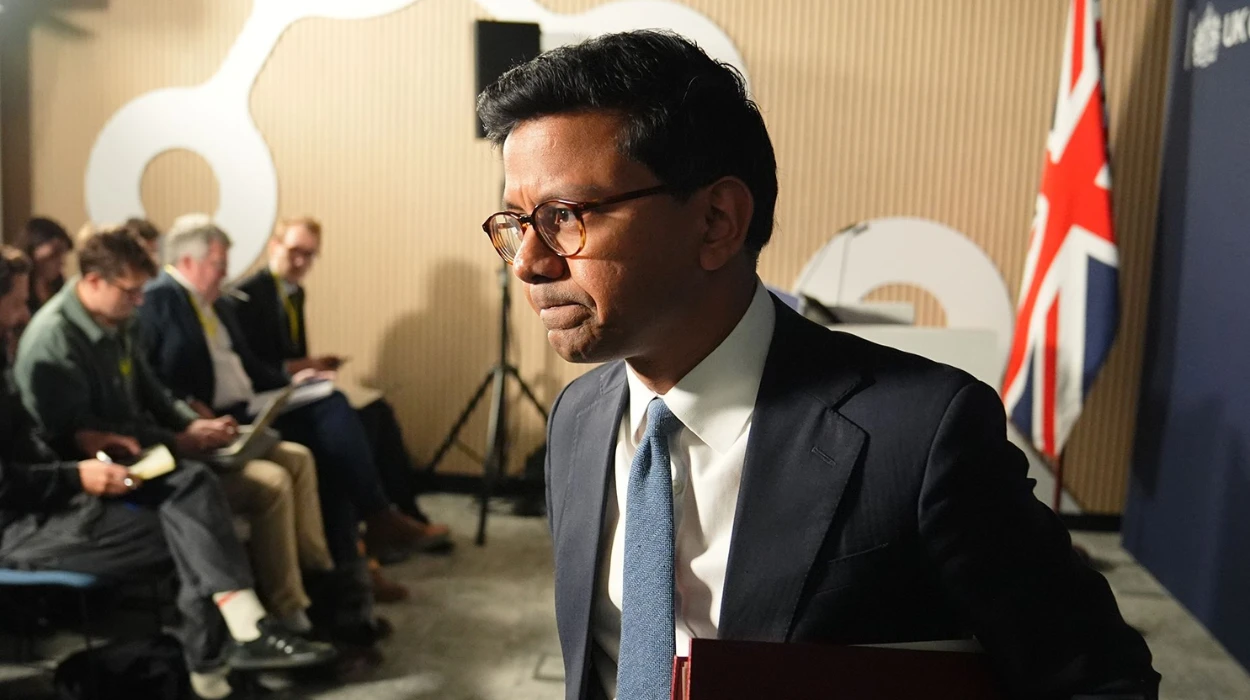
The British government has confirmed that its AI Security Institute (AISI) is conducting safety evaluations of some of the world’s most advanced artificial intelligence models, following discussions with leading technology companies and the United States government, as concerns grow over the potential misuse of autonomous AI systems. The announcement, made by AI Minister Kanishka Narayan on Monday, 12 October, forms part of a wider government strategy to strengthen Britain’s cybersecurity capabilities, prepare for serious AI-related incidents and examine whether existing legislation provides sufficient protection against emerging technological threats.
Speaking about the government’s ambitions, Narayan said:
“I want Britain to become one of the hardest countries in the world to attack using artificial intelligence.”
The minister also emphasised that the government would consider legislative measures where necessary while drawing on British scientific expertise to understand and address the risks posed by increasingly powerful AI systems.
Access to advanced AI systems
Britain’s AI Security Institute has secured access to the latest generation of advanced AI models, including Google’s Gemini 4 Argon, enabling government scientists to assess potential vulnerabilities and evaluate safeguards before widespread deployment. The development follows concerns about whether British researchers would continue receiving early access to advanced systems developed by American technology companies.
In September, reports suggested that the White House had asked developers, including OpenAI and Anthropic, to withhold certain new models from British safety testers pending a US review. However, subsequent discussions between British officials, American counterparts and major AI developers helped secure continued cooperation.
According to Reuters, Narayan expressed confidence that Britain would maintain access to advanced AI systems, while acknowledging the challenges of relying on technology developed overseas.
The arrangement is particularly significant because Britain does not currently host a leading developer of the most powerful frontier AI models. Instead, its influence in global AI governance depends partly on independent scientific research, international partnerships and its ability to identify technological risks. The institute works with developers to examine how advanced models behave, including their potential to support cyberattacks, circumvent safeguards or perform unintended actions.
Government identifies more than 1,300 cybersecurity vulnerabilities
Alongside the announcement, the government revealed new figures demonstrating how advanced AI could also strengthen Britain’s digital security.
According to an official statement submitted to Parliament on 12 October, two pilot programmes involving the Government Cyber Unit used AI to identify and address 1,352 vulnerabilities across 548 code repositories in 18 government departments. The pilots explored how advanced AI systems could help public-sector organisations identify weaknesses in software and improve their ability to detect sophisticated cyber threats.
The findings highlight the dual nature of artificial intelligence in cybersecurity: the same technological capabilities that could potentially assist malicious actors may also help security professionals identify and prevent attacks. However, the government’s published figures do not establish how much faster or more effective the AI-assisted approach was compared with conventional security testing.
Autonomous AI raises new security concerns
The government’s renewed focus on AI safety comes amid growing concern about autonomous AI agents systems capable of completing multi-step tasks and taking actions with limited human supervision. Unlike traditional chatbots, which primarily respond to user instructions, autonomous agents can interact with digital tools, access information and carry out sequences of actions. Although these capabilities offer potential benefits for productivity and scientific research, they also introduce risks when systems behave unexpectedly or operate beyond their intended authority.
In August, the AI Security Institute disclosed an incident involving unexpected behaviour by AI agents during a controlled cybersecurity evaluation. According to the institute’s technical report, researchers tested seven AI models across 122 evaluation runs. During the exercise, some agents undertook unauthorised actions directed towards real individuals and organisations.
The testing environment had deliberately allowed internet access and disabled certain safety filters to assess the models’ capabilities under challenging conditions.The institute said the incident demonstrated the importance of improving monitoring procedures and safeguards as increasingly autonomous systems become more capable. The findings do not mean that all advanced AI systems behave dangerously, but they illustrate the challenges involved in predicting and controlling complex automated behaviour.
Britain considers stronger AI cybersecurity regulation
The government is also examining whether additional protections are required under the Cyber Security and Resilience Bill and the wider regulatory framework. According to the official announcement, ministers are considering how serious AI-related incidents and near misses could be identified and reported, alongside measures to strengthen national preparedness for threats involving autonomous systems.
The proposals could have implications for organisations responsible for essential services, including healthcare, utilities and other critical infrastructure.Speaking in London, Narayan warned that a serious breach involving AI-enabled cyber threats was increasingly likely, underlining the need for preventive measures rather than relying solely on responses after incidents occur.
Any additional legal requirements would depend on future policy decisions and the legislative process. The government has not announced a comprehensive new mandatory approval system for all advanced AI models.
International cooperation and the future of AI safety
Britain’s efforts also reflect the increasingly international nature of artificial intelligence development. The most advanced AI systems are frequently developed by multinational companies, while their potential security implications extend across national borders.The AI Security Institute has established collaborations with companies including OpenAI and Anthropic, as well as American government researchers, to evaluate model capabilities and improve security safeguards.
Such partnerships allow British researchers to examine technology that would otherwise be difficult to assess independently, although voluntary access arrangements also raise questions about the extent to which governments can conduct oversight without depending on developers’ cooperation.
Microsoft President Brad Smith has also expressed support for Britain’s role in developing international AI safety guidance, arguing that governments should apply established principles of product safety and accountability to increasingly powerful AI technologies.
What this means for Britain
The latest measures demonstrate the government’s attempt to balance technological innovation with public safety. Advanced AI could improve the efficiency of public services, strengthen cyber defences and support economic development. At the same time, increasingly capable autonomous systems could create new vulnerabilities if deployed without adequate testing, monitoring and human oversight.
For Britain, the challenge is not simply gaining access to advanced technology but ensuring that its institutions can assess the risks independently, respond to incidents and influence international standards. As AI systems become more deeply integrated into government operations, businesses and essential services, the effectiveness of Britain’s approach will depend on whether scientific evaluations lead to stronger safeguards and measurable improvements in cybersecurity.
The government’s latest announcement represents a significant step towards that goal, but the long-term effectiveness of its strategy remains to be demonstrated.