Key Points
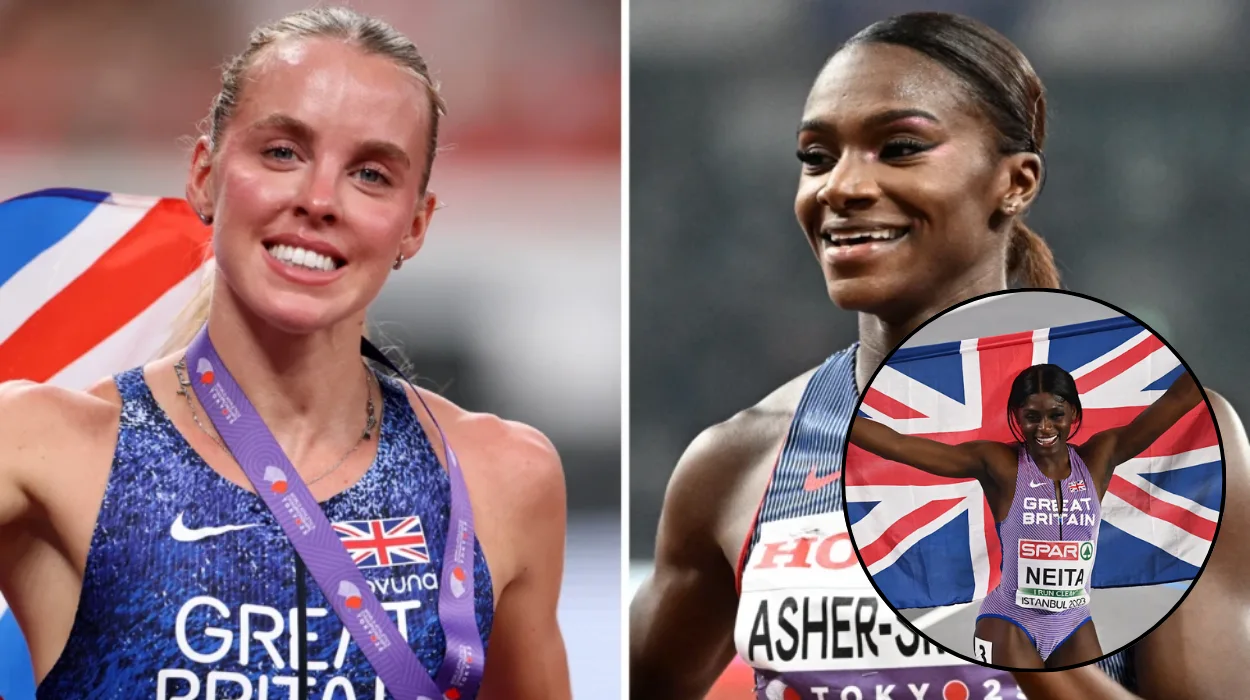
- Keely Hodgkinson, Dina Asher-Smith and Katarina Johnson-Thompson have been selected in Great Britain’s 98-strong squad for the European Athletics Championships in Birmingham.
- Britain will host the championships at Alexander Stadium for the first time, with the event scheduled for 10 to 16 August.
- Hodgkinson is set to defend her European 800m title, while Asher-Smith will defend her 100m crown.
- Johnson-Thompson returns to the event after missing the 2024 edition because of injury, and will compete in the heptathlon.
- Matt Hudson-Smith, the Birmingham-born Olympic 400m silver medallist, has been included in the men’s 400m squad.
- Georgia Hunter Bell, Laura Muir, Jake Wightman, Amber Anning and Jake Heyward also feature in the British line-up.
- Scotland’s Josh Kerr has opted out, while Norway’s Jakob Ingebrigtsen appears poised to return from Achilles surgery.
- Great Britain performance director Paula Dunn said the team reflects the strength and depth of British track and field.
North London (Britain Today News) July 27, 2026 – Great Britain has named a 98-strong team for the European Athletics Championships in Birmingham, with Olympic and world-class names headlining the squad as the host nation prepares for one of the biggest events on the continental calendar. Keely Hodgkinson, Dina Asher-Smith and Katarina Johnson-Thompson are among the most eye-catching selections, while the squad also includes Matt Hudson-Smith, Georgia Hunter Bell, Laura Muir, Jake Wightman, Amber Anning and Jake Heyward.
- Key Points
- Why is Hodgkinson’s selection so significant?
- How will Dina Asher-Smith approach her title defence?
- Why is Johnson-Thompson’s return a major talking point?
- What role could Matt Hudson-Smith play?
- Which other British athletes stand out?
- Why has Josh Kerr opted out?
- What did Paula Dunn say about the team?
- Why does home soil matter so much?
- How strong is the GB squad overall?
- What does Jakob Ingebrigtsen’s possible return mean?
- How important is Ingebrigtsen’s record at Europeans?
- What could the championships mean for British athletics?
- What happens next?
The championships will take place at Alexander Stadium from 10 to 16 August, giving Britain the rare advantage of competing on home soil in a major international championship. The size and depth of the squad underline the scale of British ambition, with established medallists joined by a group of younger athletes looking to take a step up on one of the sports biggest stages.
Why is Hodgkinson’s selection so significant?
Hodgkinson’s presence is one of the central storylines in the British squad, not only because she is an Olympic champion but also because she is expected to defend her European 800m title in Birmingham. Her selection adds immediate status to the team and places pressure on rivals who will know the home crowd is likely to be behind her every stride.
The 800m has long been one of Britain’s most watched middle-distance events, and Hodgkinson’s profile has turned her into one of the sport’s leading names. Her inclusion also strengthens the sense that Britain will not simply be participating at the championships, but will be aiming to dominate key events.
How will Dina Asher-Smith approach her title defence?
Asher-Smith will also be defending a European title, with the British sprinter set to line up in the women’s 100m. Her experience, speed and championship pedigree make her one of the most important athletes in the squad, especially in a short sprint where margins are often tiny.
The chance to race in front of a home crowd may add another layer of intensity, but it also gives Asher-Smith a platform to remind Europe of her quality. Britain’s decision to include her as part of its strongest names signals an intention to target medals across multiple disciplines rather than rely on a single standout performance.
Why is Johnson-Thompson’s return a major talking point?
Johnson-Thompson’s selection brings an important comeback element to the story because she was forced to withdraw from the 2024 European Championships with injury. She is now set to return in the heptathlon after winning silver at the Paris Olympics, which makes her one of the most compelling figures in the squad.
Her return matters not only for medal chances, but also for what it represents: resilience, recovery and continuity at the highest level. In multi-event competition, experience often counts for a great deal, and Johnson-Thompson’s history in major championships gives Britain another proven contender with the ability to score heavily across a full programme.
What role could Matt Hudson-Smith play?
Matt Hudson-Smith’s selection gives the squad a strong men’s 400m presence, and his name carries extra weight because he is both a Birmingham-born athlete and a four-time European champion. The fact that he will compete at a venue where he already has a stand named after him adds a particularly local dimension to his appearance.
His inclusion is likely to resonate strongly with supporters in the city, where the homecoming narrative is as important as the athletics itself. On a team built around experience and medals, Hudson-Smith provides another established championship performer who can compete under pressure and in front of an expectant crowd.
Which other British athletes stand out?
Georgia Hunter Bell is one of the key names in the women’s 1500m, where she will compete alongside Laura Muir, the 2022 European champion. Hunter Bell arrives with momentum after winning a European silver medal in 2024 and becoming world indoor champion, while Muir remains one of Britain’s most decorated middle-distance runners.
Jake Wightman adds further depth after previously winning the world 1500m title, and Amber Anning strengthens the squad in the women’s 400m after becoming world indoor champion. Jake Heyward, who recently broke the Welsh one-mile record at the London Diamond League, is also included, giving Britain another athlete capable of making an impact in middle-distance competition.
Why has Josh Kerr opted out?
One notable absence is Scotland’s Josh Kerr, who has chosen not to take part despite setting a world record in the same London Diamond League race in which Heyward set a new Welsh mark. His decision means Britain will head into the championships without one of its most prominent middle-distance runners, which slightly alters the competitive picture.
Even so, the squad remains exceptionally strong, with enough quality across the board to offset individual absences. The combination of proven champions and developing athletes suggests that Britain will still be one of the most formidable teams in the field.
What did Paula Dunn say about the team?
Performance director Paula Dunn described the event as a special opportunity because it will be held on home soil, saying:
“To compete at a major championship is always a tremendous achievement, and it makes the occasion even more special with the event taking place on home soil”.
Her words frame the squad not just as a selection announcement, but as a statement of intent for the hosts.
Dunn also said:
“This team reflects the strength and depth of talent we have across track and field, bringing together established international medallists alongside an exciting group of emerging athletes”.
She added:
“I have every confidence that this team will rise to the occasion”.
Those remarks capture the balance Britain is trying to strike between medal expectation and long-term development.
Why does home soil matter so much?
Hosting the championships gives Britain a chance to use familiarity, crowd support and local momentum to its advantage. Alexander Stadium is not just a venue; it becomes the centre of the team’s competitive and emotional push, especially for athletes such as Hudson-Smith who have a direct link to the city.
Home championships often create added pressure, but they can also elevate performances by turning the stadium into an atmosphere that feels personal rather than neutral. For British athletes used to travelling to major events abroad, this represents a rare chance to compete without the usual dislocation of international championship travel.
How strong is the GB squad overall?
The size of the squad alone suggests serious ambition, but the quality of the names selected is what makes it stand out. Britain has included champions, medallists and emerging contenders across sprinting, middle-distance running and combined events, showing depth across multiple sectors of the team.
That breadth is important because major championships are rarely decided by one or two athletes alone. They are often shaped by consistency across many events, and Britain’s team selection suggests a deliberate attempt to build a squad that can stay competitive from start to finish.
What does Jakob Ingebrigtsen’s possible return mean?
Norway’s two-time Olympic gold medallist Jakob Ingebrigtsen is also expected to be a major talking point when the championships begin. He has not raced in 2026 after Achilles surgery earlier in the year, but he appears ready to return next month.
Ingebrigtsen strongly hinted at participation with an Instagram post that read:
“I’ve heard Birmingham is nice this time of year”.
If he does compete, he would bring immediate international star power to the event, especially given his recent success at the European Championships, where he won the 1500m and 5,000m double in Berlin, Munich and Rome.
How important is Ingebrigtsen’s record at Europeans?
Ingebrigtsen’s record at the European Championships gives context to why his return matters. Winning the 1500m and 5,000m doubles at three successive editions underlines both his range and his dominance at continental level.
If fit, he would be a major threat again, and his presence would raise the standard in the men’s middle-distance events. For the British squad, that creates both a challenge and an opportunity, because racing elite opposition at home can sharpen performances and make medal success even more meaningful.
Explore More about Sports:
Spain Nations League Schedule: Full List Of La Furia Roja’s Matches After World Cup Glory 2026
Dalton Smith’s First WBC Title Defence Confirmed for Sheffield Homecoming in October
What could the championships mean for British athletics?
The Birmingham championships offer Britain a chance to measure its current strength against Europe’s best in front of a home crowd. With several proven winners and medal candidates in the squad, expectations will be high for a strong medal return.
At the same time, the selection reflects more than immediate medal hopes. It also shows an effort to blend experience with the next generation, building a platform for sustained success beyond this one event. That balance is often what separates a good championship team from a great one.
What happens next?
The focus now shifts to final preparation, fitness and tactical readiness before the championships begin on 10 August. For athletes such as Hodgkinson, Asher-Smith and Johnson-Thompson, the opportunity is clear: defend titles, deliver under pressure and do it in front of a British crowd.
For Britain as a whole, the event is a chance to turn squad strength into medals and headline moments. The selection has set the tone, and the next stage will be decided on the track in Birmingham.