Key Points
- Spain beat Argentina 1-0 after extra time in the FIFA World Cup 2026 final at MetLife Stadium in New Jersey on 19 July.
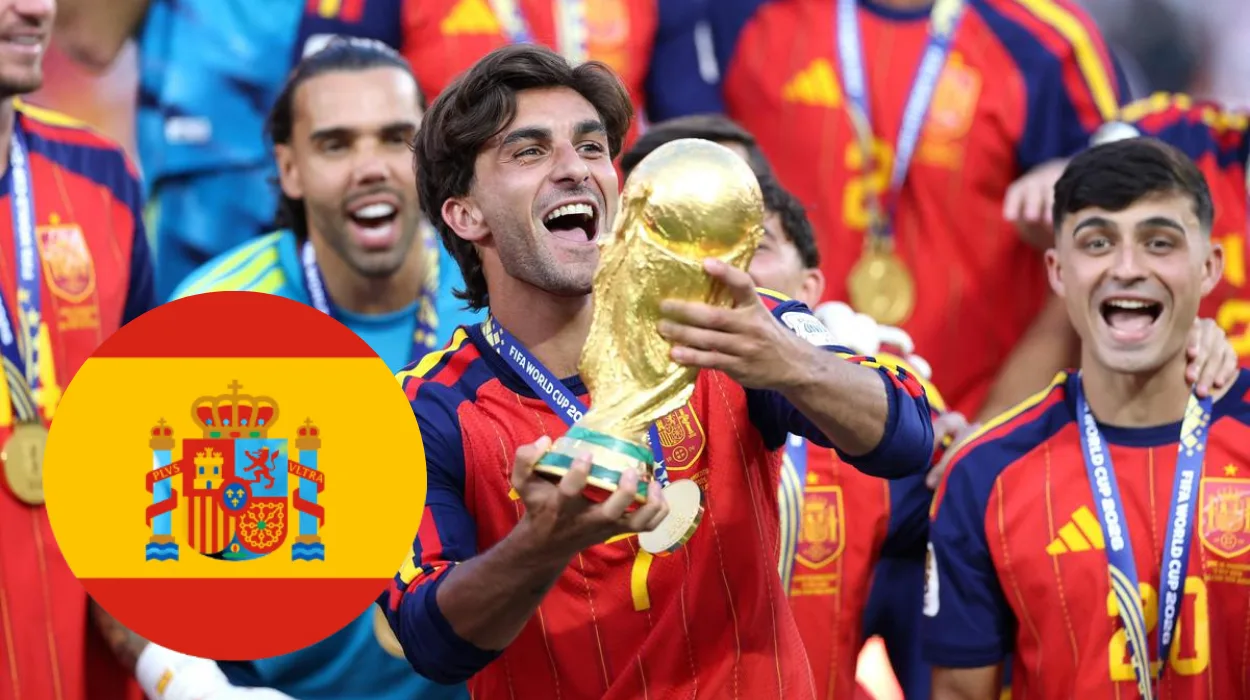
- Substitute Ferran Torres scored the decisive goal in the 106th minute to hand Spain their second World Cup title.
- Spain will return to competitive action in the UEFA Nations League 2026-27, three months after their World Cup triumph.
- La Furia Roja have been drawn against England, Croatia and Czech Republic in the group stage.
- Spain will face England at Wembley Stadium on 26 September, their first meeting since the Euro 2024 final.
- The remaining fixtures against Croatia and Czech Republic will be played on Spanish soil.
- England, managed by Thomas Tuchel, finished third at the World Cup, their best finish since 1966.
- Spain previously followed their 2010 World Cup win with the 2012 European Championship title.
England (Britain Today News) July 22, 2026 — Fresh from being crowned world champions, Spain will not have long to enjoy their celebrations before returning to competitive football. Spain’s triumph at the 2026 FIFA World Cup, sealed with a dramatic extra-time win over Argentina, will be followed just three months later by the start of their UEFA Nations League 2026-27 campaign, with a mouth-watering trip to Wembley Stadium among the standout fixtures.
- Key Points
- How Did Spain Win The 2026 FIFA World Cup?
- When Will Spain Return To Action After Winning The World Cup?
- What Is Spain’s Full Schedule In The UEFA Nations League 2026-27?
- Where Will Spain Play Their Home Nations League Fixtures?
- Why Is The England vs Spain Fixture So Significant?
- How Did England Perform At The 2026 FIFA World Cup?
- What Do Spain’s Croatia And Czech Republic Fixtures Mean For The Group?
- Can Spain Follow The Pattern Of Their 2010 World Cup Success?
- Who Else Stood Out For Spain During The World Cup Run?
- What Does This Schedule Mean For Spain’s Continued Dominance?
How Did Spain Win The 2026 FIFA World Cup?
Spain lifted their second FIFA World Cup title, and their first in 16 years, after edging out defending champions Argentina 1-0 in an extra-time thriller at MetLife Stadium in East Rutherford, New Jersey, on 19 July. The match, played in front of a global audience, remained goalless through 90 minutes before a moment of substitute magic settled the contest deep into extra time.
Barcelona forward Ferran Torres, introduced from the bench in the 62nd minute in place of Mikel Oyarzabal, struck from close range in the 106th minute to give Spain the lead they would not relinquish. It was a fitting way for Spain to complete their tournament unbeaten, having conceded just a single goal across the entire competition, a new record for the fewest goals let in by a champion at a World Cup.
Reflecting on the significance of the moment, Torres said,
“The goal belonged to 47 million people.”
He added that the achievement was the product of collective effort rather than any one individual, saying,
“It wasn’t just mine or the 26 players.”
Spain’s head coach, Luis de la Fuente, who at 65 became the oldest manager to lead a team to World Cup glory, spoke of the pride the achievement had brought the nation.
“We are world champions,”
de la Fuente said.
“It was together we reached this stage.”
Who Scored The Winning Goal For Spain In The Final?
The Barcelona striker’s extra-time intervention proved decisive against an Argentina side reduced to ten men in the closing stages of normal time, after midfielder Enzo Fernández was shown a second yellow card for a reckless challenge. Torres later described the tension of facing an Argentina team built around Lionel Messi, saying,
“When you have Messi on the other side, well, you are nervous.”
Despite the pressure, Torres insisted Spain’s approach never wavered.
“At the end of the day, we always depended on us,”
he said. The goal not only secured the trophy but also ensured Spain’s dominance extended across both the men’s and women’s game, following the Spanish women’s team’s World Cup win in 2023.
When Will Spain Return To Action After Winning The World Cup?
Having lifted the trophy on 19 July, Spain’s players and coaching staff will now turn their attention to domestic club commitments before reconvening with the national team in September. The Spanish Football Federation has confirmed that La Furia Roja’s first fixtures since becoming world champions will come in the UEFA Nations League 2026-27, roughly three months after the final whistle blew in New Jersey.
The wait for supporters to see their world champions in action again will therefore not be a short one, but the fixtures awaiting Spain when they do return promise to be some of the most eagerly anticipated of the international calendar.
What Is Spain’s Full Schedule In The UEFA Nations League 2026-27?
Spain have been drawn in a group alongside England, Croatia and Czech Republic for the 2026-27 edition of the UEFA Nations League. The full list of fixtures, spread across the September, October and November international windows, is as follows:
| Date | Match | Venue |
|---|---|---|
| 26 September | England vs Spain | Wembley Stadium, London |
| 29 September | Spain vs Croatia | Ramón Sánchez-Pizjuán Stadium, Seville |
| 3 October | Spain vs Czech Republic | Carlos Tartiere Stadium, Oviedo |
| 6 October | Croatia vs Spain | Poljud Stadium |
| 12 November | Czech Republic vs Spain | Stadion Letná |
| 15 November | Spain vs England | Estadio Santiago Bernabéu, Madrid |
Where Will Spain Play Their Home Nations League Fixtures?
Spain’s home matches in the group stage will be spread across the country, giving supporters in several cities the chance to see the newly crowned world champions in person. The Ramón Sánchez-Pizjuán Stadium in Seville and the Carlos Tartiere Stadium in Oviedo will host the September and October home fixtures against Croatia and Czech Republic respectively, before the campaign concludes at the Santiago Bernabéu in Madrid, where Spain will host England in November.
Why Is The England vs Spain Fixture So Significant?
The opening match of Spain’s campaign, away to England at Wembley Stadium on 26 September, carries extra significance as it will be the first meeting between the two sides since the Euro 2024 final in Germany, where Spain emerged victorious with England finishing as runners-up. The rematch, and the reverse fixture in Madrid in November, will offer both nations an early opportunity to measure themselves against one another following contrasting World Cup campaigns.
How Did England Perform At The 2026 FIFA World Cup?
England enjoyed a strong showing at the tournament in North America, finishing in third place, their best result at a World Cup since they won the competition on home soil in 1966. The Three Lions, managed by German head coach Thomas Tuchel, will be looking to build on that platform when they face Spain in September, using the fixture as a marker of their progress under his stewardship.
Explore More about Sports:
Wales’ First Esports World Champion Otis Lawrence Eyes Formula One Doors
Sam Burns Leads British Open Into Final Round At Royal Birkdale
What Do Spain’s Croatia And Czech Republic Fixtures Mean For The Group?
Alongside the standout meetings with England, Spain’s group also includes two fixtures each against Croatia and Czech Republic. The double-header against Croatia, played on 29 September in Seville and 6 October in Poljud, will offer an early test of Spain’s ability to maintain their World Cup-winning form on both home and away soil. The Czech Republic fixtures, scheduled for 3 October in Oviedo and 12 November in Prague, round out a demanding opening block of matches for the world champions.
Can Spain Follow The Pattern Of Their 2010 World Cup Success?
Historically, Spain’s World Cup triumphs have been followed by continued success on the continental stage. After winning the World Cup in 2010, the same core of players went on to lift the European Championship in 2012, a rare feat of sustained dominance in international football. The Nations League campaign beginning in September will be an early indicator of whether the current generation, built around Torres, Lamine Yamal and Rodri, can replicate that trajectory beyond the quadrennial tournament.
Spain’s defensive record at the 2026 World Cup, conceding only once across eight matches, has drawn comparisons with the miserly Spanish sides of the late 2000s and early 2010s that dominated world football through possession-based control rather than raw attacking output. Should that discipline carry over into the Nations League, Spain will enter the campaign as one of the most difficult sides in Europe to break down, even without the added incentive of a major trophy on the line.
Who Else Stood Out For Spain During The World Cup Run?
Beyond Torres’ decisive intervention in the final, Spain’s title-winning campaign was built on contributions from across the squad. Rodri anchored the midfield throughout the tournament, while Mikel Oyarzabal led the line before making way for Torres in the final. Teenage forward Lamine Yamal, despite arriving at the tournament carrying a hamstring issue picked up towards the end of the club season, remained a central attacking outlet for La Furia Roja as they progressed through the knockout rounds.
Defensively, centre-back Pau Cubarsí was at the heart of a rearguard that limited Argentina to almost no clear-cut chances in the final itself, with the South Americans managing only a handful of efforts across the full 120 minutes. It was a foul on Cubarsí in stoppage time that led to Fernández’s dismissal, further underlining the young defender’s importance to the side both on and off the ball.
What Does This Schedule Mean For Spain’s Continued Dominance?
For Luis de la Fuente’s side, the Nations League campaign represents the first real test of whether their World Cup success can be sustained rather than treated as a standalone achievement. The trip to Wembley in September will be watched closely as an early gauge of Spain’s ability to maintain the standards they set in the United States, while the two remaining fixtures against Croatia and Czech Republic will offer opportunities to build further momentum before the reverse fixture with England in Madrid brings the group phase to a close in November.
With a squad that delivered a record-low goals-conceded tally on their way to the World Cup, and a coach who has already etched his name into the history books as the oldest World Cup-winning manager, Spain will head into their Nations League campaign as favourites to continue where they left off in New Jersey.