Key Points
- British cross-country skier Gabriel Gledhill drank alcohol with fans during a World Cup race at Holmenkollen, Norway, in the 2025/26 season after losing any realistic chance of a top result.
- The incident occurred “two days ago” during a World Cup event in Holmenkollen, a traditional and high‑profile venue on the international skiing calendar.
- Having fallen well behind the race leaders, Gledhill moved towards the course side-lines, where spectators were offering him alcoholic drinks.
- The British skier accepted multiple beverages, including what he described as “pretty strong drinks” such as Jägermeister.
- Gledhill said he “had to accept every offer” that came his way from fans and admitted that after a while he was “pretty drunk” during the race.
- He described the experience as “a lot of fun” and “one of the most entertaining events” he had ever taken part in, focusing on the atmosphere and crowd interaction.
- Fans reportedly ran alongside him on parts of the course, cheering and handing him drinks as he continued skiing well behind the main field.
- Because he was so delayed, Gledhill ultimately finished 67th, 20 minutes and 16 seconds behind the winner’s time.
- His finish was so late that he ended up crossing the line together with the women’s group, who had started 45 minutes after the men’s race.
- The episode has been widely shared on social media and discussed in skiing circles as a bizarre, humorous but controversial example of athlete behaviour during elite competition.
- The incident raises questions about professionalism, athlete conduct, safety and possible disciplinary action under International Ski and Snowboard Federation and team regulations.
- Gledhill, however, framed the episode as a spontaneous way to engage with fans after his competitive hopes had already evaporated.
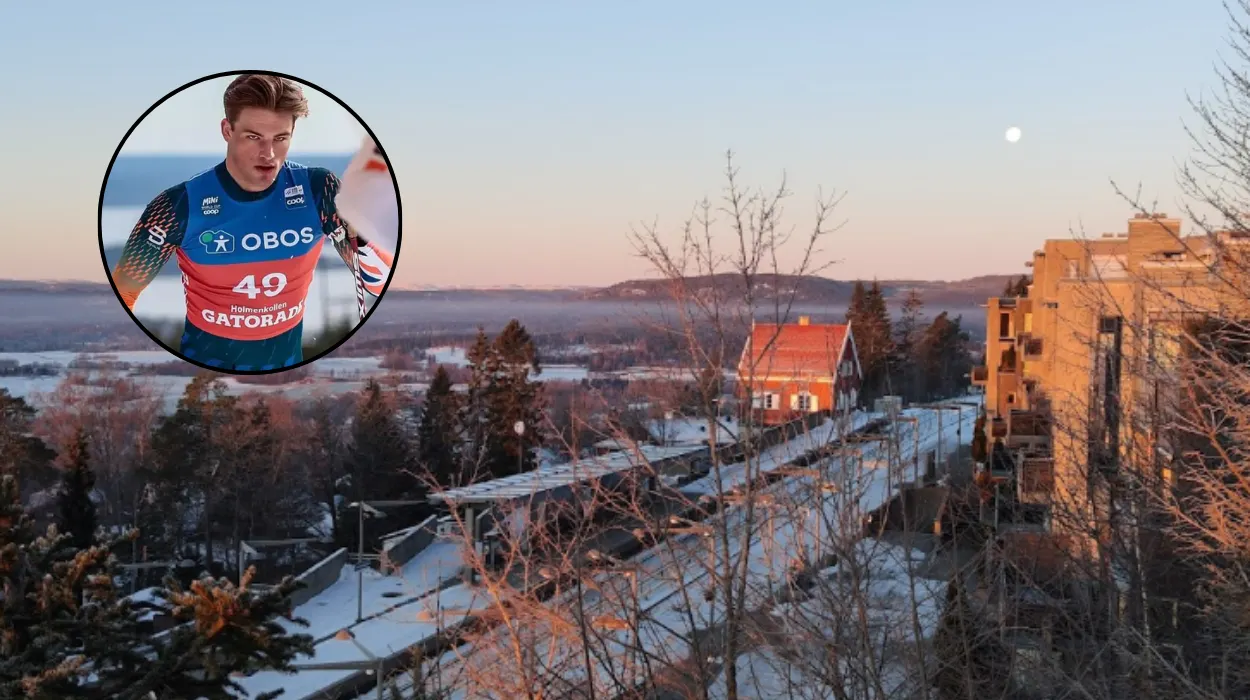
Holmenkollen (Britain Today News) March 16,2026 – British skier Gabriel Gledhill 2026 — A World Cup cross-country race at Norway’s iconic Holmenkollen venue turned into a surreal spectacle when British skier Gabriel Gledhill, having slipped out of contention, began drinking alcohol with fans while still on the course, later admitting he became “pretty drunk” but calling the experience “a lot of fun” and “one of the most entertaining events” of his career.
- Key Points
- How did Gabriel Gledhill end up drinking with fans mid‑race?
- What did Gabriel Gledhill say about his decision to drink?
- How badly did the drinking affect his result and race timing?
- How did fans react to Gledhill’s behaviour during the race?
- What are the concerns about professionalism, safety and sporting integrity?
- Could Gabriel Gledhill face disciplinary or reputational consequences?
How did Gabriel Gledhill end up drinking with fans mid‑race?
Holmenkollen British skier Gabriel Gledhill 2026 – The incident unfolded during a World Cup cross‑country race that formed part of the 2025/26 season in Holmenkollen, Norway, a venue renowned for its steep climbs, unpredictable conditions and passionate crowds. After a poor start or mid‑race setback, Gledhill lost all realistic hope of competing for a podium or even a strong top‑tier finish, dropping far behind the race leaders and the main pack. In that context, instead of pushing solely for time, he gradually shifted his focus towards interacting with spectators lining the track.
As he skied past fan clusters along the course, some supporters began running alongside him and offering alcoholic drinks directly over the barriers or from the side of the track. Gledhill, rather than refusing, chose to accept the offers and drink while still officially competing, turning what should have been a purely high‑performance effort into a quasi‑party run. The atmosphere grew increasingly carnival‑like around him, with spectators laughing, filming the episode and treating the British skier as much as an entertainer as an athlete.
What did Gabriel Gledhill say about his decision to drink?
According to the account of the race and Gledhill’s own description afterwards, the British skier portrayed the decision to drink with fans as spontaneous and driven by the crowd energy once he realised that his race was effectively over from a competitive standpoint. He is quoted as saying that he
“had to accept every offer”
that came his way from spectators, implying both humour and a sense of obligation to the fans who stood in the cold to watch the event. As reported in coverage of the incident, Gledhill candidly admitted that
“after a while, I was pretty drunk,”
underscoring that this was not a single symbolic sip but repeated consumption during the race.
In his post‑race reflections, the skier focused heavily on the entertainment value and the unique nature of the experience rather than on performance metrics. Gledhill described the race as “a lot of fun” and went further, calling it
“one of the most entertaining events I’ve ever been a part of.”
He emphasised that some of the drinks he accepted were “pretty strong drinks” and singled out Jägermeister as one of the beverages offered by the crowd, which he said he agreed to try. The tone of his remarks suggested he viewed the incident more as a light‑hearted, memorable episode with supporters than as a serious breach of sporting norms.
How badly did the drinking affect his result and race timing?
Holmenkollen’s World Cup races are known for tight competition among the elite, where seconds and small tactical errors can decide podium places. In Gledhill’s case, the combination of a weak competitive position and the subsequent drinking with fans meant that his finishing time bore no resemblance to the leaders’ results. Officially, he placed 67th, a position far outside the points and well back from the front groups that typically dominate World Cup standings.
The time gap was particularly stark: Gledhill finished 20 minutes and 16 seconds behind the race winner, an enormous margin in elite cross‑country skiing where top athletes often finish within seconds or at most a couple of minutes of each other. His delay on the course was so substantial that he ended up crossing the finish line together with the women’s field, whose race had started 45 minutes after the men’s start. That unusual overlap visually underscored how far his race had drifted away from competitive norms, as fans and commentators watched a men’s racer roll across the line alongside athletes from a different category that had begun nearly three‑quarters of an hour later.
How did fans react to Gledhill’s behaviour during the race?
Spectator culture at Holmenkollen is famously exuberant, with fans often camping, waving flags and creating a festival‑like environment along the ski tracks. Within that context, Gledhill’s decision to drink with spectators was met on the day with obvious amusement and enthusiasm from many in the crowd. Fans reportedly ran alongside him on parts of the course, cheering, laughing and handing him drinks, turning his late‑race laps into a moving celebration that contrasted sharply with the intensity of the leaders racing further ahead.
From the stands and along the barriers, supporters appeared to embrace the British skier’s unexpected shift from competitor to crowd favourite. Videos and photos of Gledhill accepting drinks, smiling and skiing in a noticeably relaxed manner circulated rapidly on social media, with online users commenting on the surreal sight of a World Cup athlete apparently prioritising entertainment and fan engagement over competition. While some viewers framed it as an amusing, human moment in a high‑pressure sport, others questioned whether such behaviour was appropriate in a top‑level event.
What are the concerns about professionalism, safety and sporting integrity?
While Gledhill’s own comments made clear he found the episode enjoyable and memorable, the incident inevitably raises questions about professional standards in elite sport, particularly in disciplines where endurance, discipline and physical risk are central. Drinking alcohol to the point of feeling “pretty drunk” during a high‑intensity race on snow and ice introduces obvious safety concerns, both for the athlete himself and for others on the course. Reduced coordination, slower reflexes and impaired judgement could increase the risk of falls, collisions or other mishaps on narrow, crowded tracks.
Beyond safety, there is also the matter of sporting integrity. World Cup events are sanctioned at the highest level, with athletes representing national teams, sponsors and federations. Gledhill’s behaviour will likely be scrutinised in terms of whether it undermines the perceived seriousness of the competition, potentially disrespecting fellow athletes who continued to race at full effort to the finish. Debates may also focus on whether his actions violated any specific conduct rules or anti‑alcohol policies in place for athletes during events, even if performance‑enhancing doping was not involved. For governing bodies and team managers, the incident could prompt discussion about clearer guidelines on athlete behaviour when results have already gone awry.
Could Gabriel Gledhill face disciplinary or reputational consequences?
At the time of reporting, the anecdotal details of Gledhill’s drinking mid‑race and his jovial comments afterwards have dominated public discussion, but the longer‑term implications may depend on the response of officials. National team managers and the organisers of the World Cup circuit will be expected to review the incident, considering whether to issue a warning, fine or other disciplinary measure. Even in the absence of a formal sanction, the episode could factor into future selection decisions, sponsorship discussions and the athlete’s broader professional reputation.
Gledhill’s open admission that he became “pretty drunk” during competition, combined with widely shared images of his interactions with fans, means the incident is unlikely to fade quickly from view. Some observers, especially among casual fans, may remember him fondly as the skier who turned a lost race into a party. Others, particularly within the professional community, may see the episode as a cautionary tale about maintaining standards and focus even when a race is not going to plan. For the athlete himself, the race is certain to remain one of the defining stories of his career, not for a breakthrough performance or podium, but for an extraordinary, controversial choice in front of a global audience.