Key Points
- A 26-year-old man arrested on suspicion of murdering former Conservative minister Ann Widdecombe has been released and is no longer part of the investigation.
- Devon and Cornwall Police confirmed the man, a white British national, was arrested in Newton Abbot, roughly 15km from Widdecombe’s home in Haytor, Devon.
- Police say there is no evidence linking the killing to terrorism or any political motive.
- Widdecombe, 78, was found dead at her home in Haytor, on the edge of Dartmoor, on Thursday after suffering serious injuries.
- Assistant Chief Constable Matt Longman said the investigation was in its early stages but “moving at a significant pace”.
- Widdecombe served as a Conservative MP from 1987 to 2010, including as a minister under Sir John Major, before later becoming an immigration and justice spokeswoman for Reform UK.
- She was known for her staunchly socially conservative views, opposing abortion and the equalisation of the age of consent, while breaking with many Conservative colleagues by opposing fox hunting.
- Tributes have come from across the political spectrum, including from Prime Minister Sir Keir Starmer and Reform UK leader Nigel Farage.
- Her death marks the third killing or attempted killing of a serving or former British parliamentarian in a decade, following the murders of Jo Cox in 2016 and Sir David Amess in 2021.
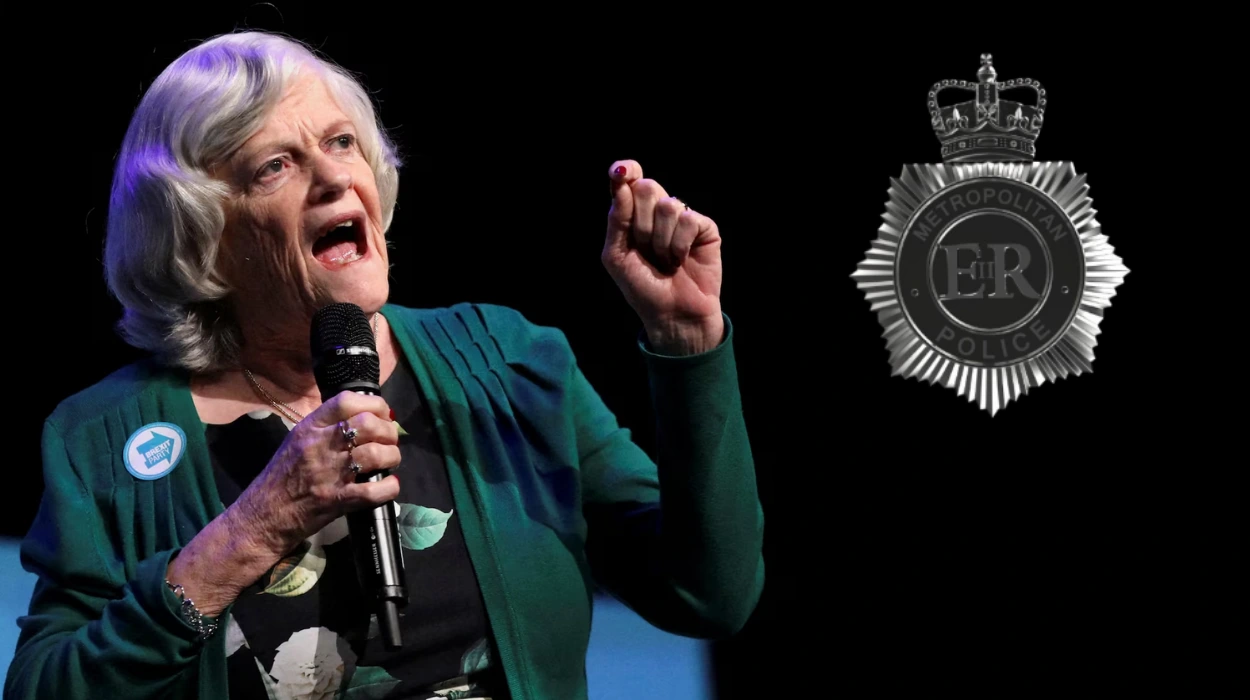
Haytor (Britain Today News) July 11, 2026 – A 26-year-old man arrested on suspicion of murdering former British government minister Ann Widdecombe has been released and is no longer part of the investigation, police said on Saturday, as detectives stressed there was no evidence to suggest the killing was linked to terrorism or motivated by politics. Devon and Cornwall Police confirmed on Saturday that the man arrested in connection with the death of Ann Widdecombe, the former Conservative minister turned Reform UK spokeswoman, has been freed from custody. The force said the suspect, a white British national who was detained in Newton Abbot, a town roughly 15km from Widdecombe’s home in the village of Haytor, is no longer part of the ongoing murder inquiry. Widdecombe, 78, was discovered dead at her isolated rural property on Thursday after suffering serious injuries, in a case that has sent shockwaves through British politics and prompted tributes from figures across the political divide.
What happened to Ann Widdecombe?
Ambulance staff called police to Widdecombe’s home in Haytor, on the edge of Dartmoor National Park in rural southwest England, on Thursday, where she was found dead after suffering serious injuries. Devon and Cornwall Police launched a murder investigation shortly afterwards, and the case has since drawn national attention given Widdecombe’s decades-long public profile. Detectives have not released further detail on the nature of her injuries, and forensic examinations of the scene are understood to be ongoing.
The property sits in a sparsely populated part of Dartmoor, some distance from Widdecombe’s nearest neighbours, a factor that is understood to be shaping the pace and scope of the police response. Officers have cordoned off the immediate area around the house while specialist forensic teams carry out their examinations, a process that is likely to take some time given the rural setting. Local residents in Haytor and the surrounding villages have described shock at the news, given Widdecombe’s long-standing presence in the community and her continued public profile as a political commentator and broadcaster in the years since leaving front-line Westminster politics.
Who was arrested in connection with the killing?
Police said on Friday that a 26-year-old man had been arrested on suspicion of murder. The suspect, described by police as a white British national, was detained in Newton Abbot, a town situated approximately 15km from Widdecombe’s home. His arrest came within a day of the discovery of Widdecombe’s body, as detectives moved quickly to pursue an initial line of enquiry.
Why was the suspect released?
By Saturday, police confirmed the man was no longer part of the investigation and had been released. Devon and Cornwall Police did not immediately publish further detail on the exact grounds for his release, though the force reiterated that the wider investigation into Widdecombe’s death remains active and is being pursued at pace. His release means detectives must now widen or refocus their search for those responsible.
Such releases are a routine part of major criminal investigations, allowing police to eliminate individuals from an enquiry once evidence, or the lack of it, has been assessed. It does not necessarily indicate that the individual was wrongly suspected in the first instance, but rather that the material gathered by detectives has not supported continuing to hold him. The force has given no indication of whether any other individuals are currently being sought or questioned, and has not ruled out further arrests as the investigation progresses. Detectives are understood to be reviewing CCTV footage, telephone data and witness statements gathered from the area around Haytor and Newton Abbot in the days since Widdecombe’s body was discovered.
What have Devon and Cornwall Police said about the investigation?
Devon and Cornwall Police Assistant Chief Constable Matt Longman addressed the case directly in a statement issued on Saturday.
“Our priority remains identifying those responsible and ensuring that all available evidence is thoroughly examined,”
Longman said, adding that the enquiry was in its early stages but “moving at a significant pace”. His comments underline the scale of the operation now under way, with officers continuing to gather evidence from the scene and the surrounding area as they work to establish exactly what happened to Widdecombe.
Is there any evidence of a terrorist or political motive?
Police have been explicit in ruling out, at this stage, any suggestion that the killing was connected to terrorism or driven by political motives. Officers said there was no information to suggest the murder of the 78-year-old was related to terrorism or had a political dimension. This assessment will be of particular significance given Widdecombe’s decades in frontline politics and her outspoken, often controversial, public positions, which some observers had speculated might have made her a target. Investigators have so far found nothing to support that theory.
Who was Ann Widdecombe?
Ann Widdecombe was one of the most recognisable and outspoken figures in modern British politics. She first entered Parliament in 1987 and went on to serve as a junior minister in Sir John Major’s Conservative government between 1992 and 1997. She remained an MP until 2010, building a reputation over more than two decades in the House of Commons as a forthright and uncompromising voice on the Conservative benches.
During her decades at Westminster, Widdecombe became known well beyond the confines of Parliament for her combative media appearances and her willingness to defend unpopular positions publicly, traits that made her a familiar face on British television long before her formal retirement from frontline politics. After standing down as an MP in 2010, she did not disappear from public life. She went on to become a familiar figure to a new generation of viewers through appearances on reality television programmes, and later re-entered frontline politics via the Brexit Party, briefly serving as a Member of the European Parliament before Britain’s departure from the European Union. In later years she moved away from the Conservative Party altogether, becoming an immigration and justice spokeswoman for Nigel Farage’s populist Reform UK, a role that kept her firmly in the political conversation right up until her death.
What were Ann Widdecombe’s political views and career highlights?
Widdecombe was renowned for her strongly held, socially conservative convictions. A convert to Catholicism, partly in protest at the Church of England’s decision to ordain women as priests, she was a vocal opponent of abortion and of equalising the age of consent for homosexual and heterosexual relationships. She also defended the now-abandoned policy of shackling pregnant prisoners during childbirth, a stance intended to prevent escape attempts, and she was known for describing single mothers as poor role models. Yet her politics did not fit a simple ideological mould: unusually among her Conservative contemporaries, she was a committed opponent of fox hunting with hounds, a position that set her apart from many in her own party.
How have political figures reacted to her death?
News of Widdecombe’s death on Friday prompted an outpouring of tributes from politicians across the spectrum, reflecting the extent to which she had become a fixture of British public life over nearly four decades. Prime Minister Sir Keir Starmer was among those who paid tribute, alongside figures from her former party and from Reform UK, where she had spent her most recent years in frontline politics as an immigration and justice spokeswoman. The scale and breadth of the reaction, spanning politicians who often disagreed sharply with Widdecombe’s socially conservative views, was seen by commentators as a reflection of the personal respect she commanded even among ideological opponents, built up over nearly forty years in and around Westminster.
Explore More about Politics:
Ann Widdecombe Death: Kent Pays Tribute to ‘National Treasure’
Andy Burnham Nears No. 10 as Labour MPs Back Him
What has Nigel Farage said about the killing?
Reform UK leader Nigel Farage, who worked closely with Widdecombe during her time as the party’s immigration and justice spokeswoman, led tributes to his colleague.
“An extraordinary woman,”
Farage said in a video posted to his account on X. He went on to praise her willingness to fight publicly for her beliefs, saying:
“She stood up and fought for what she believed in – a devout Christian and somebody with strong, socially conservative views.”
His remarks captured the widespread sentiment that, whatever disagreements existed over her politics, Widdecombe’s conviction and independence of thought had earned respect across party lines.
Is this part of a wider pattern of violence against British politicians?
Widdecombe’s killing has inevitably drawn comparisons with two other attacks on serving British parliamentarians over the past decade, both of which shocked the nation at the time. Labour MP Jo Cox was shot and stabbed to death by a Nazi-obsessed loner during the 2016 Brexit referendum campaign, in an attack that was widely seen as politically and ideologically motivated. Five years later, in 2021, Conservative MP Sir David Amess was stabbed to death by an attacker inspired by the militant group Islamic State.
Those two killings prompted significant reviews of security arrangements for MPs and other public figures, including changes to how constituency surgeries and public engagements are policed. They also led to a broader national conversation about the safety of people in public life, and about the tone of political discourse more generally, particularly online. Widdecombe, although not a serving MP at the time of her death, remained a high-profile public figure through her broadcasting work and her role with Reform UK, and her killing is likely to reignite some of that same debate about the risks faced by politicians and former politicians alike. Police have stressed, however, that unlike those earlier cases, there is currently no evidence connecting Widdecombe’s death to terrorism or to any political or ideological motive, marking a key distinction in how this investigation is likely to proceed.
What happens next in the investigation?
With the initial suspect released and no longer part of the inquiry, Devon and Cornwall Police face the task of reassessing their approach and pursuing fresh lines of enquiry. Assistant Chief Constable Matt Longman’s description of the investigation as “moving at a significant pace” suggests officers are continuing to work through forensic evidence, witness accounts and any material gathered from the area around Widdecombe’s home in Haytor. Detectives have given no indication of a timeframe for further arrests, and the force is expected to provide updates as the investigation develops. Widdecombe’s family and friends, meanwhile, are coming to terms with the loss of a woman who spent nearly forty years as one of the most instantly recognisable figures in British public life. Police have also confirmed that a public appeal for information remains open, with anyone holding relevant footage, images or knowledge of events in and around Haytor in the days before Widdecombe’s death being urged to come forward. Members of the public have been told that information can be submitted anonymously, a route often used in major investigations to encourage witnesses who may otherwise be reluctant to speak directly to officers.