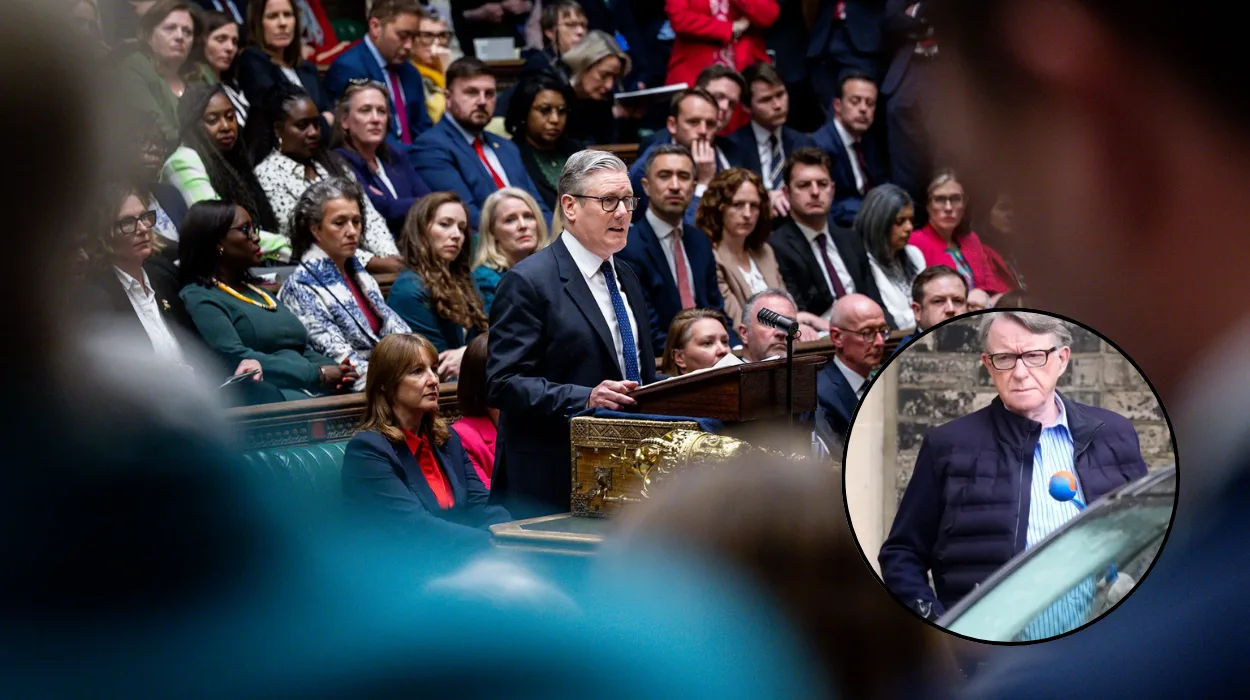
Key Points
- Sir Keir Starmer is facing a growing dispute with the UK civil service after the Peter Mandelson appointment controversy.
- The row centres on whether No 10 was properly informed about Mandelson’s failed security vetting before he was appointed as ambassador to Washington.
- Starmer sacked Olly Robbins, the Foreign Office’s top civil servant, after blaming officials for not giving him the full facts.
- Robbins then accused the government of a “dismissive” approach to the vetting process, escalating the clash into a public confrontation.
- Bloomberg reported that the affair has left Starmer looking weakened and increasingly exposed politically.
- The dispute has also highlighted tension between elected ministers and senior bureaucrats inside the British state.
- The broader criticism is that Labour came in promising better morale and competence, but has instead become entangled in a high-profile internal feud.
- The article argues that seasoned diplomats are now in open revolt at a time when global crises are intensifying.
Why does the Mandelson affair matter?
London (Britain Today News) April 22, 2026 – The Peter Mandelson controversy has become more than a dispute over one appointment; it has grown into a test of Keir Starmer’s judgment, authority and relationship with the civil service. As reported by Bloomberg, the affair began with questions over how Mandelson, despite his links to convicted sex offender Jeffrey Epstein, was approved for the Washington post. The fallout has now widened into a public row between No 10 and senior officials, with Starmer facing criticism for how he handled the vetting process and the subsequent blame-shifting.
The central issue is not only whether proper procedure was followed, but also who knew what, and when they knew it. Bloomberg reported that Starmer said he was not told Mandelson had failed security vetting, and that he was furious no minister had been informed. That claim has become politically significant because it suggests a serious breakdown in communication between ministers and officials at the heart of government.
What did Starmer do about the vetting failure?
Starmer responded by firing Olly Robbins, the Foreign Office’s top civil servant, after the Mandelson affair turned into a political liability. Bloomberg said Robbins had long been known for his low-profile role in Brexit negotiations, which made his decision to speak out especially striking. The dismissal was meant to show ministerial control, but instead it triggered a direct and unusual counterattack from a senior official who refused to absorb the blame alone.
Robbins told parliament that he felt pressure around the approval process, and the row quickly moved beyond private disagreement into open institutional conflict. According to Bloomberg’s reporting, this was the moment the dispute stopped being a standard personnel issue and became a wider argument about how government works. The result is that the civil service, normally known for discretion, has entered into a highly public confrontation with the elected leadership.
Why are officials pushing back?
The pushback reflects deeper frustration inside Whitehall over how the government is being run and who is being held accountable. Bloomberg reported that the civil service had been promised a morale boost under Labour after years of Conservative budget pressure, but instead found itself drawn into a damaging public feud. Robbins’ comments have been read as an attempt to resist being made the sole scapegoat for a decision that involved broader political oversight.
This matters because civil servants are supposed to serve governments, not fight them in public. Yet the Mandelson affair has exposed how fragile the boundary can become when appointments, security vetting and political judgment collide. The dispute also suggests a breakdown in trust between No 10 and senior departments at a moment when the government needs disciplined administration.
How is Starmer being judged?
Bloomberg’s analysis is stark: the Mandelson fiasco has left Starmer looking increasingly like a leader on the back foot. The report said the prime minister had already been under pressure before the latest revelations, and that the affair now threatens to define his authority. His handling of the issue has been criticised because the response to the vetting failure has turned into a prolonged public fight rather than a contained correction.
The political damage is not only about Mandelson himself but about what the episode says regarding judgment at the top of government. Starmer had promised competence and steadiness, yet the affair has fed an impression of confusion and defensiveness. In political terms, that is especially costly because it gives opponents a simple narrative: a government that was meant to restore order is now embroiled in its own internal disorder.
What does this say about the civil service?
Bloomberg described the current mood as an “uncivil war”, a phrase that captures how unusual and public this clash has become. The article says the civil service, once discreet and rarely visible in political disputes, has now turned openly on the prime minister. That is significant because the British system relies heavily on the idea that officials remain politically neutral while ministers take responsibility.
At the same time, the row exposes a long-running tension in Westminster: elected politicians want speed and control, while civil servants insist on process and caution. When that balance breaks down, the state can appear divided and uncertain, especially during foreign policy and security decisions. The Mandelson affair has therefore become a symbolic fight about accountability, discretion and the limits of ministerial authority.
What happens next?
The immediate consequence is that Starmer now has to manage the political fallout while trying to stop the dispute widening further. Bloomberg and other reports indicate that the affair has already triggered parliamentary scrutiny and placed additional pressure on ministers to explain how the appointment was handled. If the row continues, it may deepen the impression that Labour’s early promise of administrative competence has been damaged by internal mistrust.
For now, the Mandelson saga has shifted from a personnel mistake into a broader institutional crisis. The government wanted to present itself as a reset after 14 years of Conservative rule, but instead it is confronting one of the most public civil service rebellions in recent memory. That is why this story matters beyond Westminster: it goes to the heart of how Britain’s government is meant to function.