Key points
- As the capital’s Mayor, Sadiq Khan has asked Prime Minister Andy Burnham to “not slow down on net zero”.
- Recent heat waves, drought and wildfires have made the point of climate change, Khan said.
- He urged the Government to reassure the UK public that it will keep on phasing out the country’s reliance on oil and gas.
- Burnham has committed to a “pragmatic” attitude towards North Sea oil and gas.
- The Prime Minister has said the UK’s oil and gas is where it will come from, not whether the UK will continue to use it.
- Labour had vowed in its election platform for 2024 that there would be no new licence for oil and gas exploration.
- The manifesto pledge does not rule out using existing sites such as Jackdaw, Rosebank, etc., which are licensed.
- Governments around the world should “act, not be apathetic,” and speed up green investments, Khan said.
- The Government has launched a consultation for lowering the ZEV mandate.
- The current goal is 80 per cent of new car sales to be from zero-emission vehicles by 2030.
- Considered are cuts of 70, 60 or 50 per cent. The options being considered are: 70, 60 or 50 per cent.
- The Government should continue to review targets to make sure they are realistic and help British industry, Transport Secretary Heidi Alexander said.
- Green groups have challenged any loosening of the restrictions as the UK experiences unprecedented heat, droughts and wildfires.
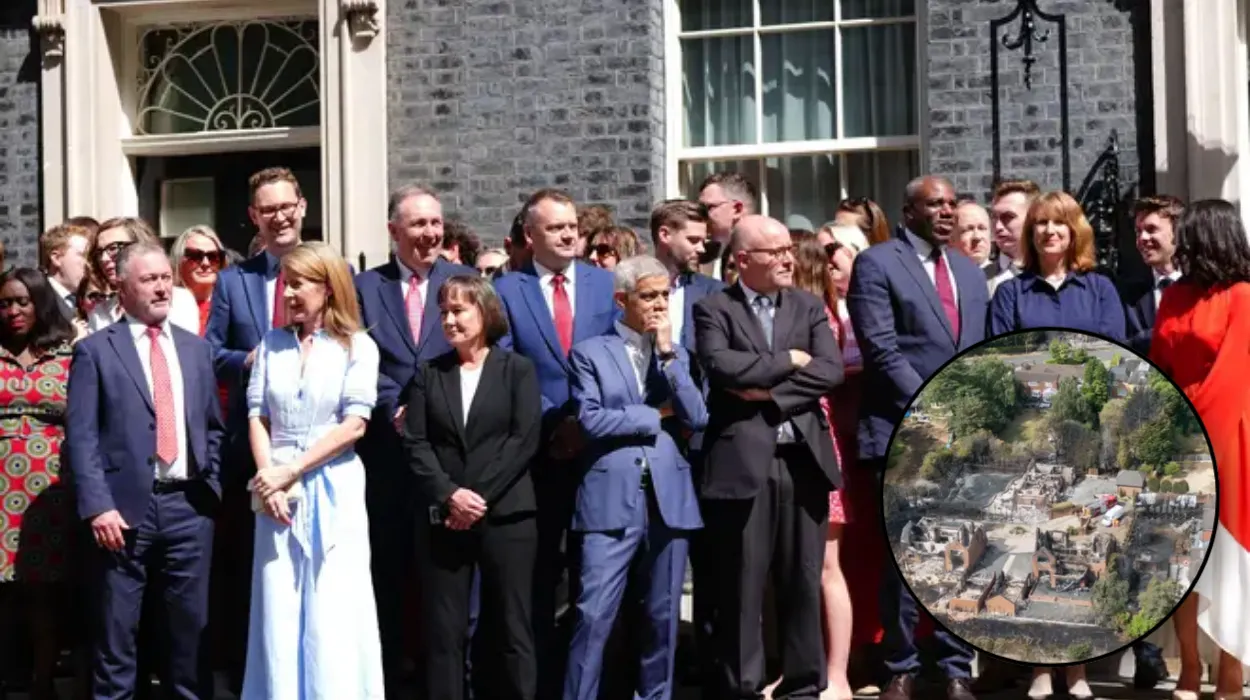
London (Britain Today News) August 15, 2026: Sir Sadiq Khan has challenged Prime Minister Andy Burnham to maintain the Government’s climate commitments, warning him not to “slow down on net zero” as the UK faces heatwaves, drought and wildfires.
- Key points
- Why has Sadiq Khan challenged Andy Burnham?
- What did Andy Burnham say about climate change?
- What is Burnham’s position on North Sea oil and gas?
- Could Rosebank and Jackdaw be approved?
- Why are Labour figures divided over net zero?
- What is changing under the electric vehicle consultation?
- What did Heidi Alexander say about the ZEV mandate?
- Why has the timing of the consultation been criticised?
- What does the dispute mean for the UK’s net-zero policy?
- What happens next?
The London Mayor said the recent extreme weather had demonstrated why the Government should continue reducing the country’s reliance on oil and gas and invest in large-scale renewable energy projects. He called for reassurance that ministers would not weaken their environmental objectives.
The intervention comes amid growing political tension within Labour over North Sea oil and gas, the future of the UK’s electric vehicle targets and the pace of the transition away from fossil fuels. Burnham has described his approach to North Sea energy as “pragmatic”, while the Government has launched a consultation that could reduce the proportion of new cars required to be zero-emission by 2030.
Why has Sadiq Khan challenged Andy Burnham?
Sir Sadiq Khan’s intervention reflects concern among Labour figures and environmental campaigners that the Government could soften its approach to climate policy.
Khan said the planet was in a “deeply precarious position” and argued that recent heatwaves and wildfires should encourage ministers to accelerate, rather than delay, action.
“And that’s why we need reassurance from the Government that they won’t slow down on net zero or reducing our reliance on oil and gas and that they’ll continue accelerating the green investment we need to get our country and planet back on track.”
He said.
The Mayor’s comments were directed at Burnham, who became Prime Minister after previously serving as Mayor of Greater Manchester. His position on climate and energy policy is being closely watched because of his earlier commitments to environmental targets in the region and his current responsibility for national policy.
Khan, who has been nominated for a life peerage, also urged governments around the world to respond to the effects of climate change with greater urgency.
He said national governments.
“must choose action over apathy and commit to delivering Net Zero, reducing our reliance on oil and gas, and investing in the large-scale green projects we urgently need to cut emissions, adapt to extreme heat, and protect communities from flooding and wildfires”.
What did Andy Burnham say about climate change?
Burnham has acknowledged the seriousness of the extreme weather affecting the UK. During a visit to Stourbridge on Friday to see the impact of a wildfire, he said the conditions were evidence of the changing climate.
“This is what climate change looks like, here and now.”
The Prime Minister said.
He added:
“We have to face up to the changing climate. We need more clean energy, we need to see that transition accelerate.”
Burnham’s comments appeared to support continued investment in clean energy. However, his position on North Sea oil and gas and the possible relaxation of electric vehicle targets has prompted questions about how the Government will balance climate commitments with energy security, industrial concerns and household costs.
The Prime Minister has argued that the country will continue to use oil and gas for some time and that the central issue is whether those resources are produced domestically or imported.
“The question isn’t whether Britain will still be using oil and gas; the question is where it comes from.”
Burnham said previously.
The comment has been interpreted by critics as leaving the door open to further North Sea production. Climate campaigners have argued that continued investment in new fossil fuel projects could conflict with the UK’s legal and political commitments to reach net zero.
What is Burnham’s position on North Sea oil and gas?
Burnham has promised what he describes as a “pragmatic” approach to North Sea oil and gas. His position has attracted support from figures who believe domestic production could strengthen energy security and protect jobs in the oil and gas industry.
The stance has also received praise from US President Donald Trump, who has advocated a “drill, baby, drill” approach to fossil fuel production.
However, environmental groups and some Labour MPs have warned that approving additional drilling could undermine the Government’s climate message. The disagreement has become more prominent as the UK experiences extreme weather, including high temperatures, drought and fires.
The Labour Party’s 2024 election manifesto promised that there would be no new licences for oil and gas exploration. That commitment was subsequently implemented by the Government.
However, the manifesto pledge does not necessarily prevent the further development of sites that already hold licences. The distinction between issuing new licences and approving production from existing licensed fields has become central to the debate.
The Rosebank and Jackdaw fields are among the projects being discussed. Both sites already have licences to explore for oil and gas, although decisions relating to production have faced legal and regulatory challenges.
The Guardian reported that a decision on whether to approve further North Sea drilling was expected after consultations on the projects. It said the debate had intensified as Burnham’s Government considered what to do with the UK’s remaining oil and gas reserves.
Could Rosebank and Jackdaw be approved?
Rosebank and Jackdaw have become symbols of the disagreement between energy security and climate policy.
The BBC reported that the fields already hold licences and that possible approval for production would not necessarily breach Labour’s manifesto commitment, which focused on preventing new exploration licences.
However, campaigners have argued that approving production would still represent a major policy shift because it would permit additional fossil fuel extraction at a time when countries are being urged to reduce emissions.
The legal position surrounding the projects remains important. Previous approvals have faced successful legal challenges, requiring the Government to reconsider aspects of the decisions.
Burnham was expected to maintain Labour’s formal manifesto commitment not to issue new licences while potentially changing the emphasis of the Government’s North Sea policy.
The Prime Minister’s approach could therefore involve supporting existing projects without announcing a complete reversal of Labour’s pledge. Such a policy would seek to reassure the oil and gas industry while avoiding an explicit commitment to unrestricted new exploration.
The outcome is likely to influence relations between the Government, climate campaigners, Labour MPs, trade unions and businesses connected to the energy sector.
Why are Labour figures divided over net zero?
The dispute has exposed competing priorities within the Labour Party.
Supporters of a faster transition argue that climate change is already affecting communities through heatwaves, flooding, wildfires and pressure on food production. They say delaying action could increase future costs and make it more difficult to meet emissions targets.
Other Labour figures are concerned about the impact of environmental policies on households, workers and British industry. They argue that climate measures must be affordable and should not weaken the competitiveness of domestic manufacturers.
Khan’s intervention reflects the first position. He said the UK needed continued green investment to reduce emissions, adapt to extreme weather and protect communities.
Burnham’s use of the word “pragmatic” reflects the second concern. His Government is under pressure to consider energy security, industrial employment and the cost of energy while also maintaining its commitment to net zero.
The disagreement is not limited to North Sea drilling. It also includes the future of the Government’s rules governing electric vehicle sales.
What is changing under the electric vehicle consultation?
On the same day Burnham acknowledged the impact of climate change, the Government launched a consultation on the zero-emission vehicle mandate.
The current rules set a target that 80 per cent of new car sales should be zero-emission vehicles by 2030. The consultation is examining whether that target should be reduced.
The options include retaining the existing 80 per cent target or lowering it to 70, 60 or 50 per cent.
A reduction to 50 per cent would mean that only half of new cars sold in 2030 would be required to be zero-emission vehicles under the revised target. The proposal has raised concerns among climate campaigners, who say it could lead to higher emissions and slow the transition to electric transport.
The Government has said the consultation is intended to ensure that the rules remain practical and support British industry. Ministers are also under pressure from parts of the motor industry, where concerns have been raised about consumer demand, affordability, charging infrastructure and the pace of the transition.
The consultation does not itself represent a final decision. It allows businesses, organisations and members of the public to submit views before the Government decides whether to amend the existing rules.
What did Heidi Alexander say about the ZEV mandate?
Transport Secretary Heidi Alexander defended the review of the electric vehicle targets.
“It’s right we keep targets under review to ensure they’re practical and back British industry.”
She said.
Her comments indicate that the Government wants to present the consultation as a review of implementation rather than a rejection of the transition to electric vehicles.
Ministers face a difficult balance. Maintaining the current target could reinforce the UK’s climate commitments and provide certainty for manufacturers investing in electric vehicles. However, reducing the target could give carmakers and consumers more flexibility, particularly if demand for electric cars remains weaker than expected.
The Government’s decision will also affect the wider automotive industry. Manufacturers are making long-term investment decisions based on expected sales requirements, while motorists are considering vehicle prices, charging availability and running costs.
The consultation is therefore expected to attract responses from car manufacturers, dealerships, environmental organisations, transport groups and consumer representatives.
Why has the timing of the consultation been criticised?
The decision to review the electric vehicle target came as the UK experienced severe summer weather.
Colin Walker, head of transport at the Energy and Climate Intelligence Unit, said weakening the target during heatwaves and drought could appear difficult to understand.
He said it
“may seem strange to the increasing number of people concerned by images of homes on fire and the security and affordability of the food we eat”.
The criticism centres on the apparent contradiction between acknowledging the effects of climate change and considering policies that could slow emissions reductions.
Climate campaigners say transport is one of the sectors where emissions can be reduced through the replacement of petrol and diesel vehicles with electric alternatives. They argue that weakening the target could delay investment and create uncertainty for consumers and manufacturers.
Supporters of the review say targets must reflect real-world conditions. They argue that policies will only succeed if electric vehicles are affordable, charging networks are reliable and motorists have access to suitable models.
The Government’s consultation is expected to examine those practical issues before any final change is made.
Explore More about Politics:
Alexander Burnett Calls Pylon Payments a Bribe
UK Lawmakers Challenge Banks Over Crypto Access in 2026
What does the dispute mean for the UK’s net-zero policy?
The dispute raises wider questions about the Government’s commitment to net zero.
Khan has called for faster action, more green investment and a continued reduction in reliance on oil and gas. Burnham has also said the transition to clean energy must accelerate, but his comments on North Sea production and the ZEV mandate suggest that his Government is considering a more flexible approach.
The central political challenge is whether the Government can combine ambitious climate action with energy security, affordable transport and industrial support.
A decision to approve further North Sea production could reassure the energy sector but lead to criticism from environmental groups and Labour MPs. A decision to maintain strict limits could strengthen the Government’s climate credentials but increase pressure from those who argue that domestic production is needed to support jobs and reduce dependence on imports.
The electric vehicle consultation presents a similar choice. A lower target could make the policy appear more achievable in the short term, while a higher target could deliver stronger incentives for manufacturers and buyers to move towards zero-emission transport.
What happens next?
The Government will consider responses to the consultation before deciding whether to amend the zero-emission vehicle mandate.
The future of Rosebank and Jackdaw will also depend on legal and regulatory processes. Further decisions on North Sea oil and gas are expected to remain politically sensitive, particularly as ministers prepare broader energy and economic policies.
Khan’s warning is likely to intensify pressure on Burnham to clarify his position. Labour MPs and climate campaigners will want the Prime Minister to explain whether his “pragmatic” approach means supporting existing projects only or allowing a broader expansion of North Sea production.
The Government has not abandoned its net-zero objective. However, the debate over oil and gas and electric vehicles has created uncertainty over the speed and method of reaching it.
For now, the disagreement remains unresolved. Khan is demanding “reassurance” that ministers will not retreat from climate commitments, while Burnham’s Government says environmental targets must be practical, support British industry and protect the country’s energy interests.