Key Points:
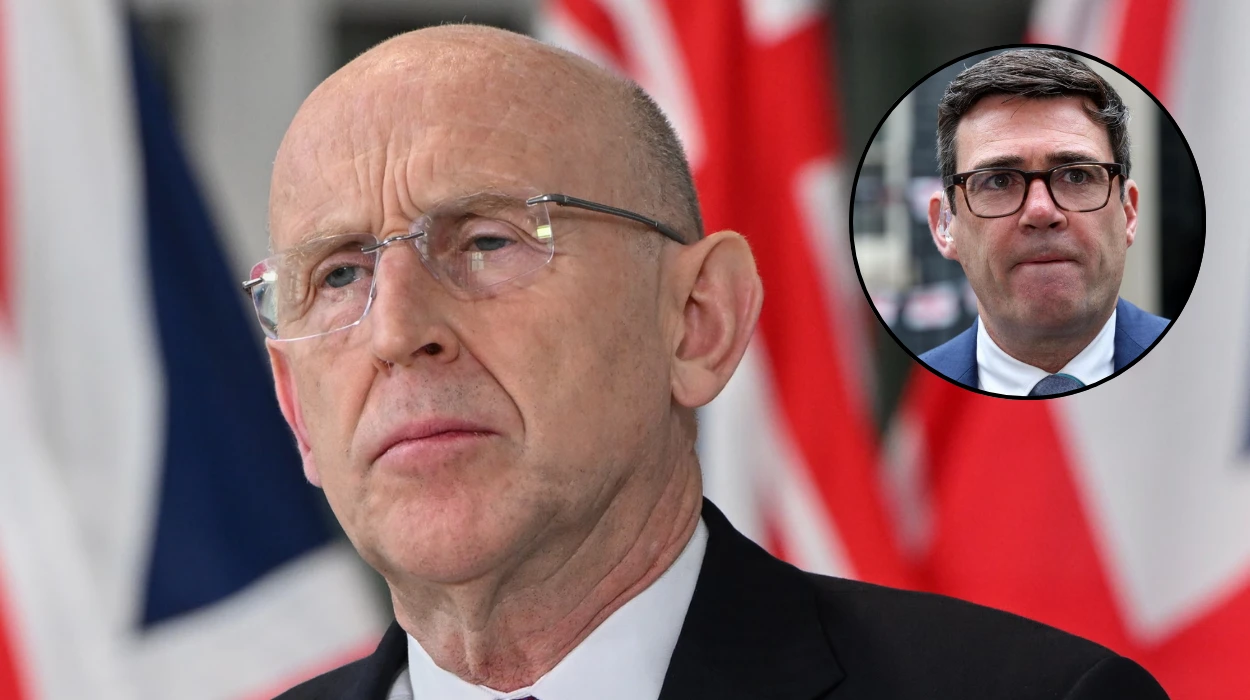
- Andy Burnham has appointed John Healey as Chancellor of the Exchequer in his first major cabinet decision, replacing Rachel Reeves .
- Healey resigned as Defence Secretary in June 2026 over a defence spending row, accusing Sir Keir Starmer of being “unable” and the Treasury “unwilling” to fund military needs .
- Healey previously served as Economic Secretary to the Treasury under Gordon Brown from 2002 to 2005 .
- The appointment defied expectations as Shabana Mahmood and Ed Miliband had been considered frontrunners for the Treasury role .
- Business leaders, including the CBI’s Louise Hellem, have welcomed Healey cautiously but stressed that fiscal stability and growth remain critical priorities .
- The CBI has demanded the new administration stick to fiscal rules, protect capital investment, and progress the EU-UK reset .
- Hellem warned that high energy and employment costs continue to act as a brake on growth for small and medium-sized firms .
- The new Chancellor inherits the Treasury he condemned just weeks ago, including the Mansion House reforms that could unlock £80 billion for business investment .
- Ed Miliband has been appointed Foreign Secretary, while Shabana Mahmood remains Home Secretary .
Westminster (Britain Today News) – July 20, 2026 – The first major appointment of Andy Burnham’s premiership has landed like a politics thunderbolt, with former Defence Secretary John Healey named as Chancellor of the Exchequer. The move, which sees Healey handed the keys to No. 11 Downing Street, has sent ripples through Westminster and the business community alike, given the circumstances of his dramatic resignation just weeks ago .
Healey, who walked out of Sir Keir Starmer’s cabinet in a blistering row over defence spending, replaces Rachel Reeves at the Treasury. His appointment not only reshuffles the economic deck but also places a man who condemned the Treasury as “unwilling” to fund national defence at the very helm of the department he criticised . The choice has caught seasoned political observers off guard, with analysts noting that the “smart money” had settled on either Home Secretary Shabana Mahmood or Energy Secretary Ed Miliband for the role .
Why Has Burnham Chosen Healey Over the Other Contenders?
The selection of Healey, a figure previously considered an “outside bet” for the position, suggests Burnham is prioritising a mix of economic experience and a reputation for fiscal discipline over some of the more ideologically driven or divisive figures in his party . According to BBC News political correspondent Joshua Nevett, while Healey is a surprise choice, his experience should not have been overlooked .
Healey is no stranger to the Treasury. He served as Economic Secretary to the Treasury between 2002 and 2005, a crucial period when Gordon Brown was Chancellor under Tony Blair’s Labour government . This experience within the “Brownite” tradition of economic management is seen by many as a stabilising factor. The Ukrainian news agency UNN reported that Burnham believes they share the same views on economic stability, existing fiscal rules, devolution and reindustrialisation .
Speculation had mounted that Burnham was under pressure to keep Ed Miliband “out of the Treasury” due to market concerns about his left-wing economic stance . Nigel Green, CEO of the deVere Group, had earlier warned that a Miliband appointment would risk a “mini-budget moment” akin to Liz Truss’s ill-fated fiscal plan, which sent gilt yields soaring . The market’s apparent preference for a more predictable and orthodox economist appears to have swayed Burnham’s thinking. Instead, Miliband has been offered the role of Foreign Secretary, while Shabana Mahmood has retained her position at the Home Office .
Can Healey Reconcile His Defence Stance with the Treasury’s Fiscal Reality?
The irony of Healey’s appointment is palpable. As Defence Secretary, he resigned on 11 June 2026, accusing the Prime Minister of being “unable” and the Treasury of being “unwilling” to properly fund the Defence Investment Plan (DIP) . In his resignation letter to Sir Keir, Healey was scathing, stating that the funding settlement “falls well short of what is required for defence and the country at this dangerous time” . He specifically criticised the Treasury for backloading support, arguing that the “pressure of operations and imperative to speed up readiness to fight is in the first two years” .
He warned that accepting the plan would force him to make decisions that would
“reduce the readiness of our Forces and increase the risk to personnel on operations, and could make the country less safe” .
Now, as Chancellor, Healey is responsible for the very department he condemned and must manage the “chequebook” he demanded be opened further. This puts him in the position of having to balance the defence ambitions he championed against the broader fiscal rules he is now tasked with upholding. As reported by business journalist Amy Ingham of Business Matters, Healey now inherits “every bill he once demanded it pay” .
What is the Immediate Business Reaction to Healey’s Appointment?
For the UK’s small and medium-sized enterprises (SMEs), the reaction has been swift, measured, and laden with warnings. Louise Hellem, Chief Economist at the Confederation of British Industry (CBI), issued a congratulatory but firm statement to the new Chancellor, making clear that a “new name on the door changes little else” .
“Business will be conscious that whilst there is now a new occupant at No. 11 Downing Street, the same challenges to unlock growth remain,”
Hellem stated.
“Maintaining business and investor confidence will be critical to delivering the growth needed to raise living standards and strengthen prosperity across the UK” .
Hellem’s prescription for the new administration is clear and carries the weight of the UK’s foremost business lobby group. She insists the new administration must remain committed to
“established fiscal rules, protecting capital investment, progressing the EU-UK reset and retaining a single fiscal event each year” .
This call for stability is crucial as the country navigates a period of political transition. Hellem added a demand for urgency, stating the government must
“move quickly to accelerate key Industrial and Infrastructure Strategy commitments and deliver the Mansion House reforms” .
Will Healey Deliver the Mansion House Reforms?
The Mansion House reforms, a pension consolidation programme initiated by Rachel Reeves, represent a potential economic game-changer. The plan aims to consolidate pension funds to unlock approximately £80 billion of investment that could be channelled into growing businesses and critical infrastructure projects . The task of delivering these reforms now falls squarely to Healey.
CBI data from earlier this year showed that optimism in the financial services sector had fallen at its quickest pace since September 2022, with firms citing the Autumn Budget measures as a limiting factor on investment . Hellem previously stated that implementing the Mansion House reforms in full is “vital to achieving the UK’s growth ambitions” . For business owners watching closely, Healey’s success in this area will be a key test of his chancellorship.
What Are the Key Demands from SMEs?
For smaller employers, the sharpest criticisms were directed at operational costs. Hellem emphasised that “high energy costs and rising employment costs continue to act as a brake on growth” . The CBI has already urged Burnham to make stripping green levies from business energy bills a day-one priority. A joint blueprint with Energy UK argues this move alone could cut bills by a fifth, offering immediate relief to hard-pressed businesses .
Furthermore, the CBI is calling for a comprehensive review of the tax and regulatory system.
“Firms will also be looking for a review of the tax and regulatory system to ensure that it rewards investment and growth, rather than simply mounts further costs on hard-pressed businesses,”
Hellem added .
Explore More about Politics:
Andy Burnham Becomes UK Prime Minister, Vows to End Political Instability
David Lammy Exits Government as Andy Burnham Becomes UK Prime Minister
What is the “Acid Test” for Healey’s Economic Policy?
Hellem has set a clear benchmark for the new Chancellor’s tenure. She stated that the
“acid test for every major economic decision in the months ahead should be simple: will it make it easier for businesses to invest, hire, innovate and grow?”
This challenge cuts to the core of the economic dilemma facing the Burnham government. Healey must bridge the gap between the ambitious spending demands of various government departments and the need to maintain market confidence, which is “critical to delivering the growth needed to raise living standards and strengthen prosperity across the UK” .
Can Healey Tackle the Cost-of-Living and Doing Business Crises?
Ultimately, the business community’s argument—persistent since Starmer’s exit prompted demands for an end to “drift and delay”—is that the economic challenges facing households and firms are two sides of the same coin. Hellem concluded her remarks with a final warning:
“Tackling the cost-of-living crisis goes hand in hand with tackling the cost of doing business. If the government wants higher employment, lower inactivity and stronger public finances, it must create the conditions that give firms confidence to invest, expand and create jobs” .
What Does Healey’s Treasury Past Tell Us About His Future?
John Healey’s previous tenure at the Treasury under Gordon Brown provides insight into his economic philosophy. During that period, he was involved in the then-Chancellor’s approach to regeneration and devolution of power through Regional Development Agencies . He is also well-respected on the international stage, having built links with key economic allies across Europe, the Middle East and the United States . This experience may prove vital as Burnham aims for a “EU-UK reset,” a policy closely linked to improving trade relations and business confidence .
From Defence Rebel to the Nation’s Chequebook
John Healey’s appointment as Chancellor is a masterstroke that has reshaped the political landscape. By appointing a safe, experienced, and internationally recognised figure who previously rebelled for more spending, Burnham is sending a complex signal: stability and adherence to fiscal rules are paramount, but he is not afraid to make bold and disruptive personnel choices .
Healey now holds the “nation’s chequebook,” and the business community will be watching his every move. He quit because the Treasury would not spend. Now, business owners—and the country—will soon discover what he does now that the chequebook is his .