Key Points
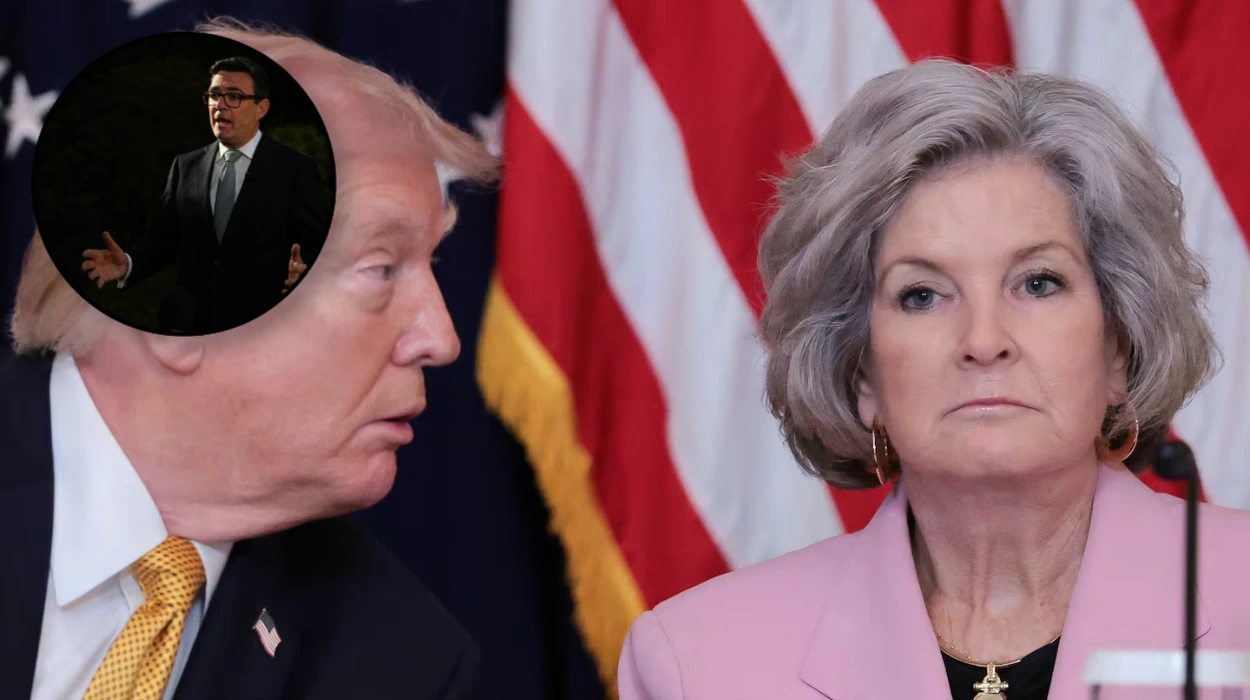
- British Prime Minister Andy Burnham is said to have had a few exchanges of messages with someone who said they were White House chief of staff, Susie Wiles.
- Before he grew suspicious of the authenticity of the contact, Burnham was believed to be in touch with Wiles.
- Officials told Politico that they had cut off communication since Burnham’s doubts came to light.
- Downing Street did not comment, stating that it “does not comment on matters of national security.”
- The messages were said to have been sent via texting or messaging, but not over the phone or video.
- There was no significant or sensitive information traded, officials said.
- Messages were reportedly reported to the appropriate authorities in response to concerns.
- The British embassy in Washington is said to have notified the White House.
- The incident comes on the heels of a previous investigation of an attempt to impersonate Wiles through contacts from her personal cell phone.
- US government officials have issued a warning that the malicious use of artificial intelligence to mimic high-ranking officials is a possibility.
- The same kind of impersonation attempts have been made in the past on U.S. politicians, businessmen and foreign officials.
- On July 20, 2026, Andy Burnham was elected prime minister of Britain and has tried to develop positive relations with the White House.
London (Britain Today News) August 17, 2026 — British Prime Minister Andy Burnham reportedly exchanged messages with an individual posing as White House Chief of Staff Susie Wiles on August 17, 2026, before becoming suspicious and ending the communication.
- Key Points
- What happened during the alleged exchange?
- Why was Susie Wiles allegedly impersonated?
- What did Downing Street say?
- How does the incident relate to earlier US investigations?
- Who is Andy Burnham?
- Why could the incident matter for UK-US relations?
- What remains unknown about the messages?
- What could happen next?
The alleged exchange involved a person who claimed to be Wiles, one of US President Donald Trump’s most senior advisers. Burnham initially believed that he was communicating with the White House chief of staff but later questioned whether the contact was genuine.
The reports said that only a limited number of messages were exchanged and that none was considered significant. There was reportedly no direct telephone or video conversation between Burnham and the person posing as Wiles.
Downing Street declined to provide details. A government spokesperson said:
“We do not comment on matters of national security.”
The report has raised questions about the security procedures used when senior political figures communicate through mobile messaging platforms, particularly when contact appears to come from a trusted government official. However, there is currently no public evidence that confidential British government information was disclosed during the exchange.
What happened during the alleged exchange?
According to Politico’s reporting, Burnham was contacted by someone who presented themselves as Susie Wiles. The report did not publicly identify the platform used, the exact time of the exchange or the precise content of the messages.
Officials said Burnham exchanged several messages with the person before becoming doubtful about the contact’s identity. Once those suspicions arose, communication was ended, and the incident was reportedly referred to the relevant authorities.
The BBC reported that the interaction involved messaging rather than a direct call. It also cited sources who said that “no significant messages” were exchanged and that the matter was “swiftly reported to the relevant authorities” after concerns emerged.
The absence of a detailed official account means that important questions remain unanswered. It is not known how the individual obtained Burnham’s contact details, whether the person used a number associated with Wiles or whether the messages contained any attempt to obtain information.
The reports also do not establish whether the impersonator was acting alone or as part of a wider campaign targeting senior political figures.
Why was Susie Wiles allegedly impersonated?
Susie Wiles is the White House chief of staff and a close political ally of President Donald Trump. Her position gives her access to senior US officials, political figures, foreign governments and influential business leaders.
The Associated Press reported that the alleged contact with Burnham took place against the background of earlier efforts to impersonate Wiles. US officials previously investigated messages sent to elected officials, executives and other prominent individuals by someone claiming to be the White House chief of staff.
The earlier investigation reportedly followed the compromise of contacts stored on Wiles’ personal mobile phone. The BBC reported that messages and calls were directed at US senators, governors and prominent business figures after an impersonator or impersonators gained access to information connected to her contact list.
The reports said the impersonation attempts did not necessarily originate from Wiles’ own phone. Some communications were sent from unknown numbers, making it possible for recipients to receive messages that appeared to come from a familiar senior official while actually originating elsewhere.
The alleged targeting of Burnham demonstrates how such a scheme could extend beyond US political circles and reach foreign leaders.
Did Andy Burnham reveal sensitive information?
There is no public evidence that Burnham disclosed sensitive information in the exchange. Officials cited in reports described the messages as limited and of no significance.
The BBC reported that sources considered the content insignificant and said that the interaction was reported once its authenticity became doubtful. The Associated Press also reported that Politico’s sources said Burnham became suspicious and cut off communications.
However, the absence of publicly known sensitive information does not eliminate the security concerns. Even a short exchange can reveal information about a leader’s communication habits, availability, relationships or preferred messaging channels.
It is also possible for an impersonator to use an apparently harmless conversation as a first stage in a longer social-engineering operation. The purpose may be to establish trust before requesting documents, introductions, official assistance or further communication on a different platform.
No government department has said that classified information was compromised. Downing Street has not confirmed the identity of the person involved, the content of the messages or the investigative steps being taken.
What did Downing Street say?
Downing Street declined to discuss the incident in detail. Its spokesperson said:
“We do not comment on matters of national security.”
That response is consistent with the government’s general practice of avoiding public discussion of security incidents involving senior ministers and officials. Confirming the platform, timing or content of communications could potentially provide information useful to those attempting to exploit political networks.
The spokesperson’s statement did not confirm or deny that Burnham had exchanged messages with an impostor. It also did not say whether a British security agency or another government department was examining the matter.
The BBC reported that the White House had also been approached for comment. Public reporting has not included a detailed response from Wiles or the White House regarding the alleged contact with Burnham.
Was the British embassy involved?
The British embassy in Washington was reportedly informed about the incident and raised it with the White House, according to reports citing officials familiar with the matter.
The reported embassy involvement suggests that the exchange was treated as more than a routine mistaken identity. Diplomatic missions often act as communication channels between governments when a matter involves senior officials, security concerns or possible interference.
The embassy’s reported communication with the White House may also have helped determine whether the individual had attempted to contact other government figures while claiming to represent Wiles.
No government has publicly confirmed what information was shared between the embassy and US officials. It is also unclear whether British or American investigators have identified the person behind the messages.
How does the incident relate to earlier US investigations?
The alleged exchange comes after US authorities investigated a wider attempt to impersonate Susie Wiles. The earlier operation reportedly involved texts and calls directed at senior US officials, business executives and other influential people.
The Wall Street Journal reported in 2025 that federal authorities were investigating an effort to impersonate Wiles after individuals received communications from someone claiming to be the White House chief of staff. The newspaper reported that Wiles had told associates that contacts on her personal mobile phone had been hacked.
CBS News reported that unknown individuals may have accessed the contact file on Wiles’ personal phone and used the information to contact other senior officials. Some recipients reportedly became suspicious because the messages came from an unfamiliar number or sought to move conversations to another platform, including Telegram.
The earlier investigation was significant because access to a senior official’s contact list can create an effective map of political and commercial relationships. A criminal or hostile actor does not necessarily need access to the official’s phone to impersonate them convincingly; contact information, personal details and knowledge of existing relationships may be sufficient to begin an attack.
Have other US officials been impersonated?
The Associated Press reported that the US State Department previously warned diplomats about attempts to impersonate Secretary of State Marco Rubio and possibly other officials using artificial intelligence. The warning followed an attempt by an impostor posing as Rubio to contact at least three foreign ministers, a US senator and a governor.
The FBI has also warned about “malicious actors” using artificial intelligence to impersonate senior US government officials. Such methods can include fake text messages, cloned voices, manipulated email identities and fabricated online profiles.
The Independent reported in 2025 that a person impersonating Wiles had contacted Republican senators, governors and prominent business executives. Sources told the publication that the caller reportedly sounded like Wiles, raising concerns that artificial intelligence may have been used to imitate her voice.
These incidents show that impersonation campaigns can combine traditional deception with newer technology. A message may appear credible because it uses a known name, while an audio call may sound convincing because of voice-cloning tools.
Has Britain faced similar impersonation attempts?
The BBC reported that British officials have previously been targeted by people posing as foreign political leaders.
In one earlier incident, then-Foreign Secretary David Cameron was deceived by a hoax call from someone impersonating former Ukrainian President Petro Poroshenko. Cameron also exchanged text messages with the person. The Foreign, Commonwealth and Development Office later disclosed details of the incident because it believed the exchange could be “exploited”.
The BBC also reported that two other British government ministers were targeted in 2022 by an individual posing as Ukraine’s then-prime minister, Denys Shmyhal. Defence Secretary Ben Wallace described those calls, which took place through Microsoft Teams, as Russian “dirty tricks”, while Home Secretary Priti Patel supported that assessment.
A Ministry of Defence source described the video call as “relatively sophisticated” and said it appeared to originate from another government department, making it more credible to the recipients.
The previous cases underline the continuing risk faced by ministers and senior public officials, particularly when international diplomacy increasingly relies on fast digital communication.
Who is Andy Burnham?
Andy Burnham became prime minister on July 20, 2026, after succeeding Keir Starmer. The official GOV.UK profile lists him as the current holder of the office and says he became Labour Party leader on July 16, 2026.
Burnham was elected as a Member of Parliament for Leigh in June 2001. He held several ministerial positions between 2007 and 2010, including Chief Secretary to the Treasury, Secretary of State for Culture, Media and Sport, and Secretary of State for Health.
He later served as Labour’s shadow health secretary, shadow education secretary and shadow home secretary. Burnham became Mayor of Greater Manchester in 2017 and was re-elected in 2021 and 2024.
The official government biography says that, during his time as mayor, he brought the bus network back under public control and oversaw Manchester becoming the fastest-growing city-region in the UK. He returned to Parliament in June 2026 and became Labour leader the following month.
His relatively recent arrival in Downing Street is relevant to the reported incident because he has been seeking to build working relations with the Trump administration. The Associated Press said Burnham had tried to forge good ties with the White House.
Why could the incident matter for UK-US relations?
The alleged exchange does not, by itself, indicate a diplomatic breach or a confirmed foreign-intelligence operation. Nevertheless, it occurred between the leaders or senior officials of two closely allied countries and involved a person claiming to represent the US president’s office.
The UK and the US routinely exchange sensitive information through established diplomatic, military and intelligence channels. For that reason, senior officials are expected to verify unexpected communications before discussing government business.
An impersonation attempt can create confusion even when no information is released. It may force officials to reassess previous conversations, examine whether other contacts were targeted and determine whether any documents or instructions were sent in response.
The incident may also lead to renewed scrutiny of how political leaders use personal devices. Security specialists have repeatedly warned that personal contact lists, public biographies and social-media information can be combined to construct believable approaches.
Explore More about Politics:
Count Binface ‘Gratified’ As He Beats Nigel Farage Into Second Place At Clacton
Jason Arday’s Death: PM Andy Burnham Calls It ‘Tragedy on So Many Levels’
What remains unknown about the messages?
Several details have not been established publicly.
- The exact date and time of the exchange have not been disclosed.
- The messaging platform has not been identified.
- The number used by the impersonator has not been made public.
- The content of the messages has not been released.
- It is not known how the impersonator obtained Burnham’s contact details.
- No suspect has been publicly identified.
- It is unclear whether the alleged incident forms part of the earlier campaign targeting Wiles.
- The UK government has not confirmed whether a formal investigation is under way.
The available accounts are based largely on unnamed officials and media reporting. Downing Street has not independently confirmed the central details, while the White House has not publicly provided a full account.
Accordingly, the incident should be described as a reported exchange rather than a confirmed security breach involving the disclosure of classified information.
What could happen next?
British and US authorities may examine the communication records, verify the identity of the sender and establish whether other officials received similar messages.
Investigators could also compare the alleged messages with previous attempts to impersonate Wiles. Similar wording, phone numbers, account details or communication patterns could help determine whether the incidents were connected.
The episode may prompt political offices to reinforce authentication procedures for direct contact with foreign officials. These measures could include verification through known diplomatic channels, restrictions on using personal messaging applications and mandatory reporting of suspicious approaches.
For now, officials have not announced any specific changes. The main confirmed public position from Downing Street remains that it will not comment on national security matters.
The reported exchange highlights the vulnerability of modern political communication, but it does not establish that sensitive information was lost or that a foreign government was responsible. Further conclusions will depend on the outcome of any investigation and on additional information released by British or US authorities.