Key Points
- The UK is facing an impact of up to 30 per cent for farmers due to the long drought.
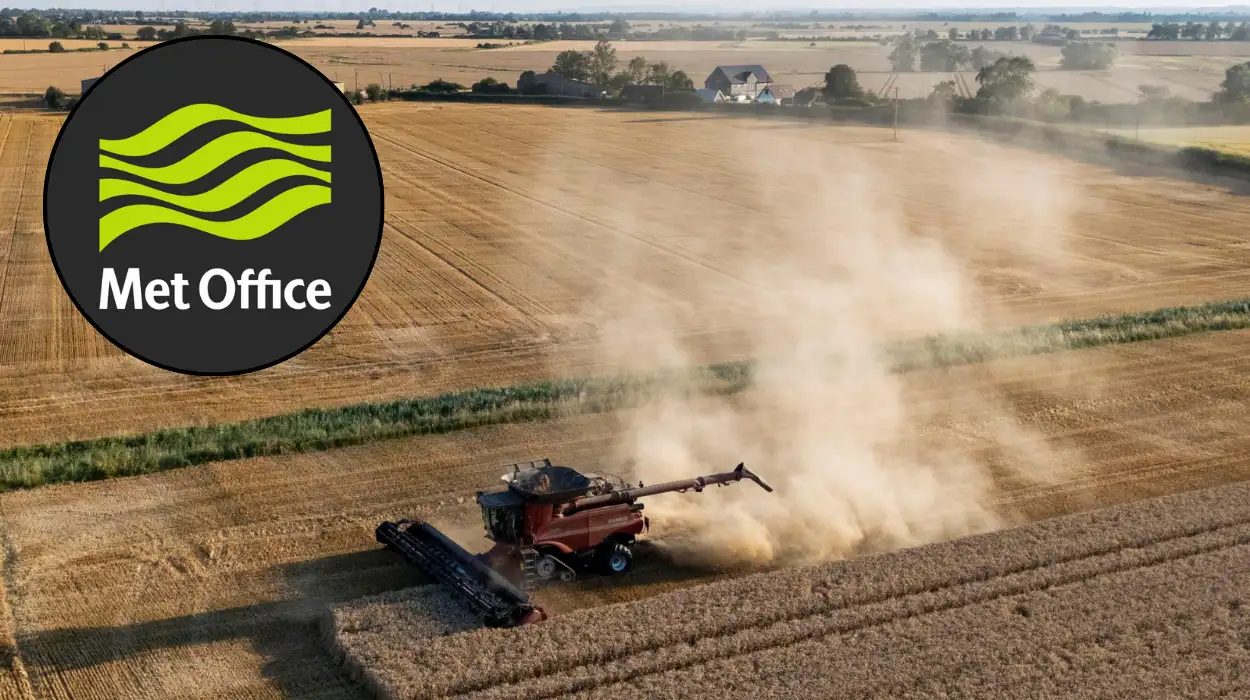
- The Met Office says July was the driest month ever in England.
- Quinoa production is completely lost, and oats, wheat and vetch production is reduced by 25 to 30 per cent on average in Suffolk.
- Prof Nicola Cannon of Royal Agricultural College estimates that half the expected harvest of peas was achieved.
- If dry weather continues, there may be food shortages, National Farmers’ Union president Tom Bradshaw says.
- Food security expert Timothy Benton urges a more diverse and circular farming system that is less dependent on imports.
- As summer heat and drought become more common on farms, farmers are testing drought-tolerant cultivars like fava beans, chickpeas and soya beans.
- Farmers’ lower incomes are making it easier to avoid investing in the adaptations necessary to deal with climate change, experts say.
Suffolk (Britain Today News) August 08, 2026 – English farmers are facing sharply reduced crop yields and mounting pressure to overhaul how they grow food, after the country recorded its driest July on record, with experts warning that climate change is emerging as a serious and growing threat to Britain’s food supply.
- Key Points
- Why did England record its driest July on record?
- How badly have crop yields been affected on English farms?
- What are farmers saying about the impact of the drought?
- Why is Britain’s food security under threat from prolonged dry weather?
- What crops have suffered the most during the drought?
- How are farmers adapting to changing weather patterns?
- Could climate-resilient farming methods be the answer?
- Are alternative crops such as soya part of the solution?
- What role can consumers play in supporting British farmers?
- Why is investment in adaptation proving difficult for farmers?
- What needs to change to protect UK food security in future?
Why did England record its driest July on record?
England experienced its driest July since Met Office records began, capping months of unusually low rainfall that left fields parched across large parts of the country. The prolonged dry spell has added to a run of difficult weather years for the farming sector, which has already had to contend with flooding, unseasonal frosts and erratic rainfall patterns in recent seasons.
Meteorologists have pointed to the record-breaking month as further evidence that Britain’s climate is shifting, with longer dry spells becoming more frequent even in a country traditionally associated with wet summers. For farmers who plan their planting and harvesting cycles around predictable rainfall, the extreme dryness has proved especially disruptive.
How badly have crop yields been affected on English farms?
The impact on the ground has been severe. In Suffolk, organic farmer John Pawsey said yields of oats, wheat and vetch came in between 25 per cent and 30 per cent lower than expected this year.
“All of our fears were realised when we got our combines into the field,”
Pawsey said. He explained that the drought had persisted for weeks and that his land had “suddenly, completely dried out”.
Pawsey, 62, whose family has farmed in Suffolk for generations, said the experience had left him deeply concerned about the years ahead.
“I am worried about the coming years,”
He said.
What are farmers saying about the impact of the drought?
For growers like Pawsey, the drought has not simply meant smaller harvests — it has meant watching entire crops fail outright. His farm lost its whole quinoa crop this year, with nothing surviving the dry conditions.
“We just had no rain,”
He said.
“The only things that started growing were docks and thistles.”
The comment illustrates a wider concern among farmers that without meaningful rainfall, even hardy arable land can quickly become unproductive, with weeds taking hold where food crops once grew.
Why is Britain’s food security under threat from prolonged dry weather?
The scale of this year’s losses has renewed concerns about the resilience of Britain’s food supply, particularly if dry summers of this kind become the norm rather than the exception.
Tom Bradshaw, president of the National Farmers’ Union, said shortages of certain foods could emerge if drought conditions continued in future years.
“We have taken our food supply for granted for far too long,”
He said.
His comments reflect a broader anxiety within the farming industry that repeated poor harvests could eventually filter through to supermarket shelves, affecting the availability and affordability of British-grown produce.
What crops have suffered the most during the drought?
The dry weather has not affected all crops equally, but few have escaped unscathed. Nicola Cannon, a professor at the Royal Agricultural College, said this year’s pea crop had produced only “50 per cent of what we wanted”.
She attributed the shortfall to a lack of moisture stretching back months.
“There had been very little moisture since March,”
She said.
Alongside peas, wheat, oats, vetch and quinoa have all been hit on farms such as Pawsey’s, underlining how widespread the damage has been across different crop types and growing regions.
How are farmers adapting to changing weather patterns?
Faced with repeated dry summers, some farmers are already rethinking what they grow and how they grow it. Pawsey’s farm has been trialling crops such as fava beans and chickpeas, which tend to cope better with warmer, drier conditions than traditional staples.
The farm has also experimented with intercropping — growing two crops together in the same field — as a way of building greater resilience into the system, so that if one crop struggles, another may still produce a usable yield.
Pawsey said the government needed to do more to support farmers “making a transition” towards farming methods better suited to a changing climate.
Could climate-resilient farming methods be the answer?
Food security expert Timothy Benton believes the answer lies in a fundamental rethink of how Britain produces its food. He said the country needed to move towards “a more circular, diverse farming system” that would reduce reliance on imports of items such as fruit and fertilisers.
“Climate impacts will become greater,”
Benton said, warning that “food systems will have to change” as a result.
He also argued that Britain has focused too narrowly on crop science at the expense of broader farming system reform.
“We’ve invested too much in worrying about wheat genetics and not enough about farming systems,”
Benton said.
His remarks point to a growing debate within agricultural circles about whether incremental improvements to existing crops will be enough, or whether more radical changes to farming practices are required to keep pace with a warming climate.
Are alternative crops such as soya part of the solution?
Cannon has been growing soya on her own land and hopes the crop could be introduced more widely across British farms as part of wider efforts to diversify the country’s food production base. Soya, along with other legumes, is seen by some agricultural experts as a crop that could help reduce Britain’s dependence on imported protein sources while also being better suited to warmer conditions.
What role can consumers play in supporting British farmers?
Cannon suggested that consumers also have a part to play in helping farmers weather the changing climate. She said buying seasonal British produce could give farmers greater certainty about demand, allowing them to invest with more confidence in adapting their businesses for the future.
By supporting home-grown, in-season produce rather than relying heavily on imports, shoppers could, in theory, help create the financial stability farmers need to experiment with new crops and techniques.
Why is investment in adaptation proving difficult for farmers?
Despite the clear need for change, lower yields are making it harder for many farmers to find the capital required to invest in new crops, equipment or techniques. Cannon highlighted this tension directly.
“If farmers are not making money, where is the capital going to come from to invest in adaptation?”
She said.
Her question underscores a difficult cycle facing the industry: the very conditions that make adaptation necessary — poor harvests and falling incomes — are also the conditions that make adaptation harder to afford.
Explore More about the UK:
Cardiff Men Accused of Trafficking Teens to Thailand, Court Told
Best Places to Watch London’s Solar Eclipse
What needs to change to protect UK food security in future?
Taken together, the accounts from farmers and experts point to a sector under mounting strain from a changing climate, with this year’s record-dry July serving as a stark illustration of the risks ahead. From Suffolk’s quinoa fields to the Royal Agricultural College’s pea trials, the message from those on the front line of British farming is consistent: without further support, investment and a willingness to diversify, future droughts could pose an even greater threat to the nation’s food supply.
Whether through government backing for farmers transitioning to drought-resistant crops, greater investment in resilient farming systems, or consumers choosing seasonal British produce, the coming years are likely to test how well Britain’s agricultural sector can adapt to a climate that is becoming increasingly unpredictable.