
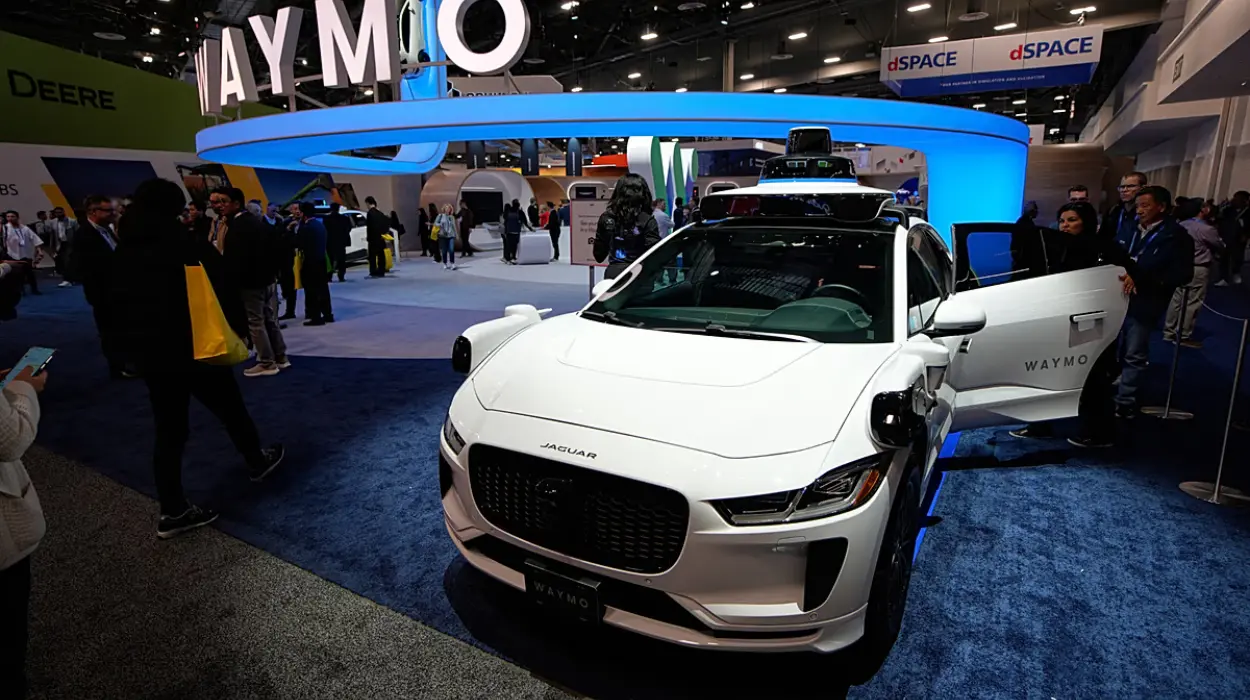
For generations, London’s taxis have had one unmistakable feature: a human behind the wheel. Now, that familiar picture is beginning to change. This week, London entered a new chapter in urban transport as Uber and British artificial-intelligence company Wayve launched the UK’s first autonomous ride-hailing service. The initial rollout is deliberately cautious: passengers travel in electric Ford Mustang Mach-E vehicles equipped with Wayve’s AI Driver, but a trained, TfL-licensed private-hire driver remains inside the vehicle and can intervene if necessary. It may look like a small experiment. But it could become the beginning of a much bigger transformation, one that raises a difficult question for London’s transport system: when cars can drive themselves, what happens to the people who currently make their living by driving?
London is no easy road for artificial intelligence.
If autonomous vehicles can master London, they will have faced one of their toughest urban tests. The capital’s roads bring together double-decker buses, black cabs, cyclists, motorbikes, delivery vehicles, pedestrians, roadworks and constantly changing traffic patterns. A vehicle can move from a relatively quiet road into a complicated junction within seconds. Wayve says it has been developing and specifically training its AI technology on London’s roads since 2018. Its system is designed to learn from driving experience and adapt to complex environments without relying entirely on traditional high-definition maps or hand-coded rules. Wayve chief executive Alex Kendall described London as “one of the most complex driving environments in the world”. But an AI system learning to drive is not the same as the public learning to trust it.
Safety remains the biggest test.
The UK Government is setting a deliberately high bar. Under the Automated Vehicles Act 2024, authorised automated vehicles must achieve a level of safety equivalent to, or higher than, that of a careful and competent human driver, while road safety should be better as a result of their use. The Department for Transport’s latest draft safety principles cover vehicle control, hazard perception and reaction, obeying traffic rules, interaction with other road users and adapting to road conditions. The Government has also highlighted that human drivers contribute to 88% of reported road collisions, arguing that automation could eventually reduce crashes caused by human error. There is encouraging evidence from overseas. A peer-reviewed study examining 56.7 million miles of Waymo’s driverless ride-hailing operations in the United States found significant reductions in several types of injury-related crashes compared with human-driver benchmarks. But London’s roads are not American roads. Evidence from another country cannot automatically prove how a robotaxi will perform in London’s uniquely crowded and unpredictable environment. That is why the first London vehicles still have a safety driver onboard.
The job question no one can ignore
For London’s professional drivers, the technological revolution carries a much more immediate concern. Transport for London currently licenses more than 100,000 private-hire drivers, alongside thousands of taxi drivers. The arrival of autonomous vehicles does not mean all of those jobs will disappear, and it would be misleading to suggest that they will. Uber itself says its vision is a hybrid network, in which autonomous vehicles and human drivers operate alongside each other. The company says the London rollout will begin with a small fleet and expand according to passenger demand, technological readiness and regulation. But the long-term question remains unavoidable. If autonomous vehicles eventually operate without safety drivers, one vehicle could complete journeys without paying a human driver for every trip. At scale, that could put pressure on an industry employing tens of thousands of people. The Government, however, sees another side of the equation. Its self-driving vehicle pilot scheme says the industry could create thousands of jobs and unlock billions of pounds in economic value by 2035. The challenge will be whether those new jobs in AI, engineering, software, manufacturing and vehicle operations can realistically provide opportunities for workers displaced from driving.
Londoners are not yet sold on the idea.
Public reaction suggests the transition will not be effortless. A YouGov survey of 1,053 London residents, commissioned by the London Assembly Transport Committee, found that 42% opposed autonomous passenger vehicles, compared with 29% who supported them. Only 29% said they would be likely to use one if available. Safety was the dominant concern. 48% worried about autonomous vehicles responding to unexpected situations such as emergencies, 41% cited road danger and 39% were concerned about technical or system failure. Only 17% expressed a great deal or a fair amount of trust in companies to collect and analyse personal data. The London Assembly has consequently been examining not only safety, but also the impact of autonomous passenger vehicles on jobs, licensing, congestion, cybersecurity and London’s wider transport choices. That scepticism matters. A robotaxi may be technically capable of driving through London, but passengers still have to be willing to get inside.
What happens next?
Uber says more than 140,000 Londoners have already opted in to increase their chances of being matched with a Wayve vehicle. Passengers can also reject an autonomous vehicle and switch to a conventional ride before the journey begins. That combination of curiosity and caution may define London’s robotaxi era. The technology could eventually make transport more accessible, reduce some forms of human error and create a new high-tech industry. But it could also create new cybersecurity risks, complicate congestion, challenge traditional driving jobs and test public confidence in ways that technology alone cannot solve. For now, London’s robotaxis still have a human sitting behind the wheel. The bigger question is what happens when that seat is empty. London’s robotaxi revolution is therefore not simply a story about cars learning to drive. It is a story about a city deciding how much of its transport system and how many livelihoods it is prepared to hand over to artificial intelligence.