Key Points
- Newly surfaced details reveal the Queen’s private stance during the tiara dispute ahead of Meghan Markle and Prince Harry’s 2018 wedding.
- Royal historian Robert Hardman offers new insight in his upcoming book Queen Elizabeth II: In Private. In Public. The Inside Story.
- Hardman’s version contrasts Prince Harry’s account in Spare, which described friction with royal dresser Angela Kelly.
- The disagreement reportedly centred around Queen Mary’s diamond bandeau, ultimately worn by Meghan on her wedding day.
- Inside sources allege the Queen told her staff, “It’s not a toy,” in reference to the tiara controversy.
- The late monarch was said to have managed the dispute while attending the Royal Windsor Horse Show.
- The episode sheds light on the inner workings of royal preparation and the balance between tradition and modernity.
United Kingdom (Britain Today News) April 8, 2026 — Fresh revelations have surfaced surrounding the royal tiara dispute between Meghan Markle and Queen Elizabeth II, a moment said to have caused tension ahead of the Duke and Duchess of Sussex’s 2018 wedding. The new account comes from royal historian Robert Hardman, who in his upcoming publication Queen Elizabeth II: In Private. In Public. The Inside Story provides additional context to the long-discussed episode.
- Key Points
- What did Robert Hardman’s book reveal about Meghan’s tiara choice?
- How does Prince Harry’s account differ?
- Why was the tiara choice significant?
- What did the Queen say in response to the dispute?
- How does this change public understanding of the event?
- Did the tiara dispute affect preparations for the royal wedding?
- How has public perception evolved since then?
- Is this the final word on the tiara controversy?
What did Robert Hardman’s book reveal about Meghan’s tiara choice?
According to excerpts, Hardman writes that
“another pre-wedding row, which would continue to create headlines years after the wedding, concerned Meghan’s choice of tiara.”
He notes that the Queen
“much enjoyed offering a piece from her own tiara collection to a royal bride, when required,”
a tradition demonstrating her personal involvement in royal ceremonies.
Hardman’s insiders recall the scene inside Buckingham Palace as filled with tension.
“There was already an atmosphere before Angela arrived,”
one staffer recollected.
“Meghan was nowhere to be seen. Harry poked the box and said, ‘Is that it?’ Then he stood over Angela and said he did not like her whining to his grandmother.”
Hardman’s retelling depicts a clash not of personalities but of protocol and timing — one that drew the Queen’s attention directly.
How does Prince Harry’s account differ?
Prince Harry’s version, shared in his 2023 memoir Spare, painted a more personal and emotional picture. He described obstacles in coordinating with the Queen’s dresser Angela Kelly, stating candidly that “to my mind, Angela was a troublemaker.” Harry added that he had considered taking the matter up with the Queen but feared “sparking an all-out confrontation.”
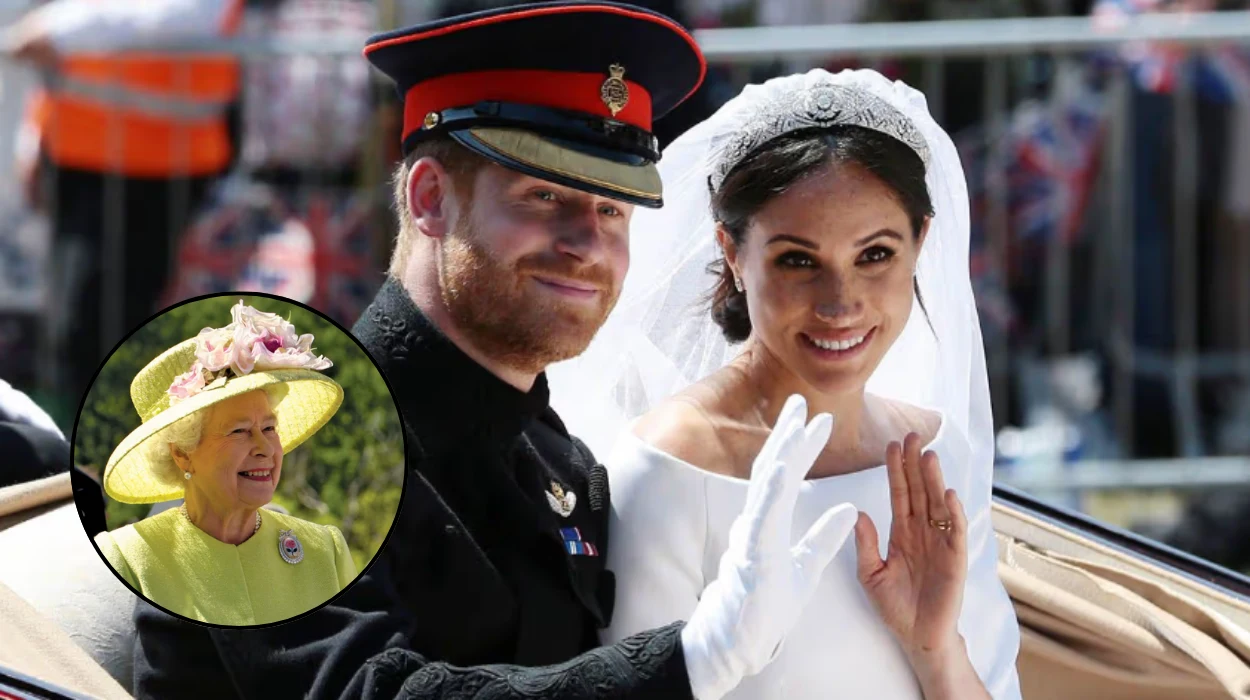
This version captured public imagination, highlighting the tension between Harry and palace employees during preparations for the royal wedding. Meghan ultimately wore the Queen Mary’s diamond bandeau — a piece made in 1932 for Queen Mary, featuring a detachable brooch first given to her in 1893 by the County of Lincoln.
Hardman’s counter-narrative now places the event in a different light, portraying it as a situation that required royal diplomacy rather than familial conflict.
Why was the tiara choice significant?
The Queen Mary’s diamond bandeau was not merely ornamental; it carries deep historical and sentimental value within the royal collection. Created during the early 20th century, it symbolises continuity between generations — a theme fitting for the royal wedding of a new Duchess entering the family. Royal brides traditionally select from the Queen’s personal collection, a gesture that embodies both generosity and heritage.
However, as Hardman suggests, logistical issues may have complicated the process. During Easter week, the Queen was based in Windsor and occupied with duties surrounding the Royal Windsor Horse Show. Meanwhile, Angela Kelly was said to be
“carefully verifying the tiara to make sure there was no awkward backstory attached to the headpiece,”
ensuring its historical context was appropriate for the occasion.
What did the Queen say in response to the dispute?
Hardman reports that the matter reached the Queen directly. According to his sources within the Royal Household, Her Majesty expressed frustration and reportedly told a staff member, “It’s not a toy.” This remark — concise yet pointed — reflects her seriousness about upholding royal protocol and respect for the regalia’s significance.
While not a public rebuke, the statement underscored the monarch’s emphasis on propriety during one of the most widely watched weddings of the modern era. Hardman’s version illustrates how the Queen balanced diplomacy with firmness, even amid private family tension.
How does this change public understanding of the event?
The tiara row has been a subject of reporting for years, representing symbolic strain between the old guard of royal tradition and the modern aspirations Meghan sought to bring to her role. Hardman’s revelations, however, recalibrate that narrative — portraying the Queen as patient but firm, and the episode as an administrative misunderstanding more than a personal feud.
His account also aligns with accounts from royal insiders who have long stated the Queen took interest in ensuring her jewels were treated with respect and historical awareness.
Though Harry’s version remains emotionally charged, Hardman’s detailed documentation offers perspective rooted in royal procedure rather than interpersonal drama.
Did the tiara dispute affect preparations for the royal wedding?
Large-scale royal events are known for intricate coordination across departments — from wardrobe to media to protocol. As seen in Hardman’s description, even seemingly small details such as jewellery trials can reveal how internal operations unfold behind palace walls.
Sources close to the royal household told the author the Queen was “aware but not distracted,” continuing her Windsor commitments during the tiara selection period. It appears the dispute did not delay progress significantly, but it did linger in public discussion long after the ceremony concluded at St George’s Chapel.
How has public perception evolved since then?
In the years following the Sussexes’ departure from frontline royal duties, the tiara debate has resurfaced as shorthand for deeper tensions between modernisation and tradition within the monarchy. Royal observers note that Hardman’s version recasts the Queen’s role as that of a dignified arbiter, maintaining continuity during shifting family dynamics.
Meghan’s tiara, now immortalised in wedding photos, continues to feature prominently in online discussions about royal symbolism. Yet Hardman’s words remind readers that behind that moment stands a monarch who prized history and respect above spectacle.
Is this the final word on the tiara controversy?
Hardman’s forthcoming book may not be the final account of these events, but it offers one of the most detailed versions yet, informed by direct interviews with staff who witnessed the preparations. His portrayal bridges personal recollection and institutional memory, contributing to the broader understanding of Queen Elizabeth II’s private style of leadership.
Whether subsequent retrospectives will confirm or contest his findings remains to be seen. For now, Hardman’s narrative adds a new layer to one of the Royal Family’s most discussed private episodes — shedding light on the Queen’s quiet authority even in moments of personal tension.