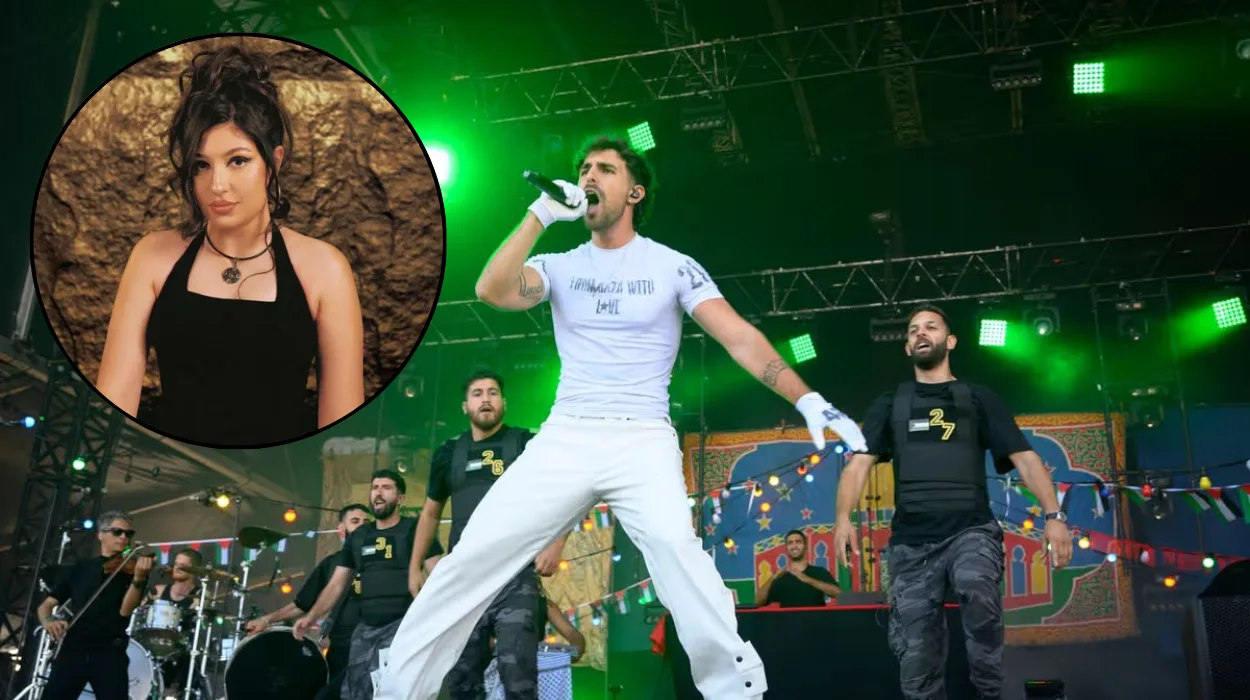
Key Points
- Mahrajan Festival is described as the first entirely Arabic music festival of its kind in the UK.
- The event is organised by Live Nation and ABU Recordings.
- It takes place at Crystal Palace Bowl as an all-day outdoor festival.
- Headliners include Saint Levant, Dystinct and Khaled.
- Egyptian singer Lella Fadda says she is “super excited” to perform.
- Fans told BBC Newsbeat they see the event as a chance to “enjoy and celebrate” Arabic music and culture.
- Mariam Azam says the festival is a “step forward” for Arabic music fans and better representation.
- Natalina Popat says she is excited to see Saint Levant and hopes he performs “Samra”.
- Lella Fadda says Arabic music is now “changing the narrative” and gaining wider recognition.
- The festival is being seen as a moment of celebration for Arabic communities in London and across the UK.
London (Britain Today News) July 31, 2026 – Mahrajan Festival is being hailed as a landmark moment for Arabic music fans in the UK, with organisers, artists and attendees describing it as a “first of its kind” celebration of Arabic culture, sound and identity. The all-day event at Crystal Palace Bowl is bringing together some of the biggest Arabic artists in the world, alongside emerging voices, in what many are calling an important step forward for representation.
- Key Points
- What is Mahrajan Festival?
- Why is the festival being called a milestone?
- Who is performing at Crystal Palace Bowl?
- What did Lella Fadda say about performing?
- How does Lella Fadda describe Arabic rap?
- Why does representation matter to fans?
- What does the festival mean to London audiences?
- Why is Saint Levant such a draw?
- What does the festival say about Arabic identity?
- How are fans responding to the UK event?
- What role do artists play in changing the narrative?
- Why is this event important now?
- What does this mean for future Arabic music events?
- How are artists and fans connected by this moment?
- What happens next for Mahrajan Festival?
- What is the wider cultural message?
What is Mahrajan Festival?
Mahrajan Festival has been billed as an entirely Arabic music event designed to honour Arabic music across generations. Organised in collaboration with Live Nation and ABU Recordings, the festival brings together a wide range of performers and audiences for a full-day outdoor celebration in London.
The event is significant not only because of its size and ambition, but also because of what it represents for a community that has often felt underrepresented in mainstream British media. For many fans, it is not simply a concert. It is a cultural milestone.
Why is the festival being called a milestone?
The word “milestone” has been used repeatedly by fans because the festival gives Arabic music a prominent stage in the UK at a scale many people say they have never seen before. Attendees told BBC Newsbeat that the event feels like a long-awaited moment for recognition, belonging and visibility.
Mariam Azam, 24, said growing up she rarely saw Arabic communities reflected positively in the media. She said:
“Growing up we didn’t see ourselves in the media at all, and if we did it was never good representation.”
Her remarks reflect a wider sentiment among fans who feel the festival addresses a long-standing gap.
For many people, the event is not only about enjoying live music. It is about seeing Arabic artists given the same type of platform often reserved for other global music scenes.
Who is performing at Crystal Palace Bowl?
The festival features a mix of established names and rising talent. Among the headline acts are Saint Levant, Dystinct and Khaled, three artists with significant followings across Arabic-speaking audiences and beyond.
Egyptian singer Lella Fadda is also taking to the stage, and she says she is “super excited” to be part of the event. The line-up has been carefully presented as a broad showcase of Arabic music across styles, generations and regions, giving fans a chance to hear a range of sounds in one place.
The all-day outdoor setting at Crystal Palace Bowl also adds to the sense of occasion. The venue gives the festival room to breathe, while allowing the organisers to create a large-scale cultural event that feels celebratory rather than niche.
What did Lella Fadda say about performing?
Egyptian singer Lella Fadda said she is “super excited” to perform at Mahrajan Festival. She explained that performing abroad has a special appeal because it gives new audiences the chance to discover her music live.
“I have never performed here before – when I perform abroad, most of the people don’t know me, so they get to know me through the performance, which I really love,”
she said.
Her comments highlight one of the central strengths of festivals like Mahrajan: they introduce artists to audiences who may not yet be familiar with them. For performers working in Arabic, that discovery can be especially meaningful because it helps bridge cultural and language differences through live performance.
How does Lella Fadda describe Arabic rap?
Lella Fadda is vocally trained, but she says rap has always been one of her passions, and it is the genre through which she found her artistic path. She performs mostly in Egyptian Arabic, which she acknowledges may not be understood by everyone in the diaspora.
“Not everyone knows me at the [festival] because I rap mostly in Egyptian Arabic and it’s not for all the diaspora to understand, but I’m so happy to be connecting with everyone,”
she said.
Her statement reflects a wider reality for Arabic-language artists working internationally. Language can be both a strength and a barrier, but festivals like Mahrajan create space where that language becomes part of the attraction rather than a limitation.
Why does representation matter to fans?
For many fans attending the festival, the emotional value of the event is as important as the music itself. Mariam Azam said the festival feels like a step forward because Arabic communities have not often seen themselves reflected positively in the media.
“It’s just nice to have something for us, especially in London,”
she said.
That sense of ownership matters. When communities do not see themselves on stages, in headlines or in major cultural events, those absences can shape how included they feel in the wider public conversation. Mahrajan Festival appears to be offering a different message: that Arabic culture is not peripheral, but central enough to be celebrated on a major platform.
What does the festival mean to London audiences?
London has long been known as a city of mixed communities, and many attendees see the festival as a natural fit for the capital. Natalina Popat, 25, told Newsbeat she feels the event is especially meaningful because of London’s diversity and the chance it gives Arabic communities to come together.
“London has always been a melting pot of diversity and celebrating communities,”
she said.
“So I think it’s really cool that the Arab community is getting their chance to celebrate.”
Her remarks underline why the festival has resonated so strongly. In a city built on cultural exchange, the event creates a space where Arabic identity can be expressed visibly and collectively.
Why is Saint Levant such a draw?
For many fans, Palestinian artist Saint Levant is one of the most anticipated performers on the bill. Natalina Popat said he was the act she was most looking forward to seeing, and she expressed hope that he would perform “Samra”.
“I’m really hoping that he plays Samra, which is a song about loving a girl with a little bit of a darker skin tone,”
she said.
She added that the song is meaningful in a community where lighter skin is often idealised.
“I think in a community where fair is often the more beautiful, that song is really comforting and I love it a lot.”
Her comment points to the deeper cultural conversations that can sit underneath music festivals. Songs are not only entertainment; they can carry ideas about identity, beauty, self-worth and belonging.
What does the festival say about Arabic identity?
The festival is being described by fans as more than an entertainment event because it places Arabic identity at the centre of the experience. That matters in both symbolic and practical terms. Symbolically, it signals recognition. Practically, it gives audiences a place to gather around music that reflects their language, heritage and lived experience.
Popat, who grew up in Dubai and Saudi Arabia, said she was “always surrounded by the culture” before moving to the UK. She described that move as a shift in how often Arabic music appeared in mainstream spaces.
“There wasn’t as much [Arab music] in the mainstream media, so that’s why I’m excited for this festival to meet like-minded people,”
she said.
Her comments suggest that the festival is filling a gap not just in event programming, but in cultural visibility.
How are fans responding to the UK event?
The response from fans has been overwhelmingly emotional and celebratory. Several attendees told Newsbeat they see the event as a rare chance to enjoy Arabic music in a large public setting surrounded by people who share similar cultural experiences.
Popat said she even has a friend flying in from the US for the occasion, showing how the event’s appeal reaches well beyond London. That kind of travel reflects how meaningful the festival is to people who want to be part of what they see as a historic moment.
For many, the festival is not simply a one-off concert. It is a gathering point for communities spread across the UK and beyond, connected through music and shared identity.
What role do artists play in changing the narrative?
Lella Fadda said she believes Arabic music is helping reshape how Arabic communities are seen internationally. For her, the festival is part of a wider cultural shift.
“We are changing the narrative, we are good at what we do, and we can succeed on a worldwide level and not just for Arabic-speaking audiences,”
she said.
That message speaks to the growing confidence of Arabic artists who are increasingly reaching audiences across borders. It also reflects a desire to be judged not only within a local or linguistic frame, but as part of the wider global music landscape.
Why is this event important now?
Mahrajan Festival comes at a time when music festivals are being expected to do more than provide entertainment. Audiences are increasingly looking for events that feel inclusive, representative and culturally meaningful. In that context, the festival stands out as both a celebration and a statement.
It brings Arabic music into a major UK venue, gives visibility to artists from different backgrounds, and creates a shared space for fans who may have long wanted a festival designed with them in mind. That combination is what makes the event feel historic to those involved.
What does this mean for future Arabic music events?
The success and visibility of Mahrajan Festival could shape how promoters, labels and venues think about Arabic music in the UK. If the response is strong, it may encourage more large-scale events that celebrate Arabic artists and audiences without treating them as a niche market.
The festival also demonstrates that there is demand for culturally specific programming when it is presented with scale, care and ambition. For fans, that may be the biggest takeaway: a sense that this is not just a celebration of what Arabic music has been, but also a sign of where it can go next.
How are artists and fans connected by this moment?
What makes Mahrajan Festival distinctive is the connection between stage and audience. Artists like Lella Fadda are not only performing; they are speaking directly to the same sense of identity and memory that fans brought to the event.
That shared experience is visible in the language used by attendees. Words like “milestone,” “comforting,” “celebrate” and “step forward” show that the festival is being understood as emotionally significant as well as culturally important.
The event appears to be succeeding because it gives people something they have been missing: a high-profile place to gather around Arabic music in the heart of London.
Explore More about Entertainment:
Maya Jama Takes Aim At Love Island Producers Over Series Pace
Sarah Cawood Recalls ‘Face-Crashing’ Declan Donnelly Kiss
What happens next for Mahrajan Festival?
As the festival takes place at Crystal Palace Bowl, attention will turn to the performances themselves and how audiences respond to the first edition of this Arabic-focused event. If the atmosphere matches the anticipation, Mahrajan could establish itself as an annual cultural fixture.
For now, the mood around the festival is one of excitement, pride and long-awaited recognition. Fans are not just attending a concert; they are witnessing what many believe is a turning point for Arabic music in the UK.
What is the wider cultural message?
The wider message from Mahrajan Festival is simple: Arabic music has a powerful audience, a rich identity and a place on major international stages. By bringing together top artists, rising voices and enthusiastic fans, the event is showing how culture can be both deeply personal and widely shared.
As Lella Fadda put it, the community is “changing the narrative.” For the people gathering at Crystal Palace Bowl, that narrative is being rewritten in real time through music, pride and celebration.