Key Points
- Celebrated British artist David Hockney has died peacefully at home on 11 June 2026, aged 88, one month short of his 89th birthday, his publicist confirmed.
- Hockney was best known for the 1967 acrylic painting A Bigger Splash and other iconic works depicting California pools and Yorkshire landscapes.
- Born in Bradford in 1937, he studied at Bradford School of Art and the Royal College of Art in London.
- Over a career spanning more than seven decades, Hockney became one of the most influential British artists of the 20th and 21st centuries, widely regarded as a national treasure.
- His Portrait of an Artist (Pool with Two Figures) sold at auction in 2018 for $90 million (£70 million), then a record for a living artist.
- Known for bold colour, figurative work, and a refusal to follow prevailing fashions, Hockney combined influences from Renaissance to Abstract Expressionism while pursuing his own path.
- As an openly gay man, he made work addressing sexuality at times when it remained illegal in England.
- He lived for decades between California and Yorkshire, drawing equal inspiration from both locales.
- Hockney was politically conscious, came from a working‑class background, and remained outspoken about artistic independence.
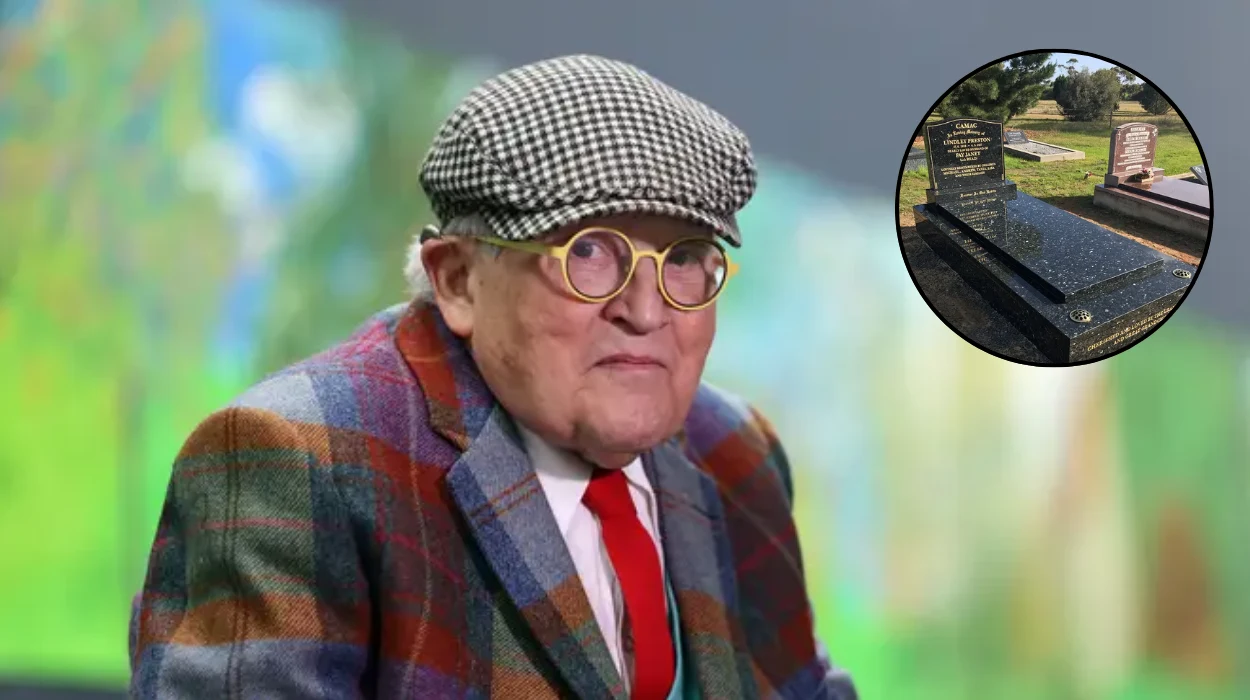
- The artist’s public image — round spectacles, Yorkshire burr and distinctive caps — became as recognisable as his paintings.
London (Britain Today News) June 12, 2026 — The celebrated British artist David Hockney, best known for his 1967 painting A Bigger Splash, passed away peacefully at home on 11 June 2026, his publicist said, one month short of his 89th birthday.
- Key Points
- Why is David Hockney’s death significant?
- What were Hockney’s most famous works and achievements?
- How did Hockney’s upbringing and education shape his art?
- How did Hockney approach style and artistic influences?
- What did Hockney say about sexuality and subject matter?
- How did critics and the public view Hockney over time?
- What places did Hockney live and work in, and how did they influence him?
- What is the scale of Hockney’s market and legacies?
- How should newsrooms attribute statements and reports about Hockney’s life and death?
- How did Hockney’s personal image influence public perception?
- What controversies or debates surrounded his career?
- What immediate reactions are expected following his death?
- What are the definitive facts of Hockney’s life?
Why is David Hockney’s death significant?
As reported by Hockney’s publicist,
“The celebrated British artist David Hockney, one of the most important figures in contemporary art in both the 20th and 21st centuries, passed away peacefully at home on 11 June 2026, one month short of his 89th birthday.”
The statement underscores Hockney’s scale of influence: a career lasting more than seven decades that reshaped public expectations about colour, space and subject in modern painting.
Hockney’s passing marks the loss of a figure whose work entered everyday visual culture. From the azure blue swimming pools of California to the lush green landscapes of Yorkshire, his images — often joyous and optimistically hued — became emblems of modern British art on a global stage. His death therefore resonates across museums, galleries, auction houses and households that have lived with his imagery for decades.
What were Hockney’s most famous works and achievements?
- A Bigger Splash (1967): The acrylic painting of a swimming pool has become one of the defining images of 20th‑century British art, capturing the sunlit cool of California with spare, crystalline composition.
- Portrait of an Artist (Pool with Two Figures) (1972): This painting sold in New York in 2018 for $90 million (£70 million), then breaking the auction record for a work by a living artist and cementing Hockney’s market and cultural status.
- Wide-ranging exhibitions: Hockney’s paintings, prints and digital works were exhibited internationally and remain staples of major museum collections.
How did Hockney’s upbringing and education shape his art?
Born in Bradford in 1937 to a working‑class family, Hockney trained at Bradford School of Art before attending the Royal College of Art in London. Early on, he showed the mark of an art‑school rebel: he refused to write a required essay and initially was denied a diploma, insisting his work should be judged visually rather than academically. That independence became a constant in his career.
His Yorkshire roots informed his lifelong interest in landscape and light; he repeatedly returned to northern scenes throughout his career. Yet the sun and openness of 1960s California — where he lived for about 40 years — provided him with a contrasting palette and subject matter. The interplay between northern atmosphere and Californian sunlight is one of the distinguishing themes of his oeuvre.
How did Hockney approach style and artistic influences?
Hockney pursued figurative painting at a moment when abstraction dominated the avant‑garde. He drew from a wide range of precedents — from Renaissance perspective experiments to the dynamism of Abstract Expressionism — but consistently rejected fashionable conformity. His use of bold, flat colour, simplified forms and playful distortions of space made his work instantly recognisable.
As Hockney himself said in past interviews, he did not want to be constrained by what critics demanded. He once declared that critics’ opinions did not direct his practice, and he often returned to subjects — the pool, the portrait, the landscape — with fresh technical approaches, including later experiments with Polaroid collages and iPad drawings.
What did Hockney say about sexuality and subject matter?
Hockney was forthright about his experiences as a gay man at a time when homosexuality was criminalised in England. He produced works featuring naked and semi‑naked men, later describing some of that output as “homosexual propaganda.” In his own words, quoted in past interviews, he explained:
“I felt it should be done. Nobody else would use it as a subject because it was a part of me. It was a subject I could treat humorously.”
That candour and the inclusion of same‑sex desire in his imagery were integral to his practice and to wider cultural shifts.
How did critics and the public view Hockney over time?
Hockney’s reception was never straightforward. Early in his career, when his figurative, colour‑driven work bucked the trend for abstraction, some critics viewed him as retrograde. Yet his persistent commitment to his vision won him mass public affection and critical reassessment. By the turn of the 21st century, he was widely celebrated as a national treasure: a figure whose personality — round spectacles, bleached hair then flat caps, and a gentle Yorkshire burr — was almost as instantly recognisable as his paintings.
His later return to landscape painting drew mixed critical responses; some writers decried it as backwards-looking while Hockney dismissed such criticism, saying he “didn’t give a damn.” That refusal to pander to approval was part of his appeal.
What places did Hockney live and work in, and how did they influence him?
Hockney divided his life mainly between his native Yorkshire and the bright expanses of California. The Californian pool became a recurring icon, a subject that allowed him to explore flat planes of vivid colour and distilled geometry. Yorkshire supplied counterpoint: green rolling hills, the northern light, and the more introspective subjects of rural life. Those dual geographies provided the emotional and visual range that characterised his output.
What is the scale of Hockney’s market and legacies?
The auction of Portrait of an Artist (Pool with Two Figures) for $90 million in 2018 remains a headline marker of Hockney’s market strength. Beyond auction records, Hockney’s works inhabit major public collections worldwide and continue to inspire younger generations of artists. His experiments with new media late in life — photography collages, stage design, and digital drawing — showed an artist continually curious about tools and representation.
Explore More about Entertainment:
Zoe Kravitz Finally Addresses Harry Styles Engagement Rumours
Netflix’s New #2 Crime Drama Is Perfectly Rated at 100% on Rotten Tomatoes
How should newsrooms attribute statements and reports about Hockney’s life and death?
As a journalist maintaining neutrality and legal clarity, attribution must be explicit. For example: As reported by Hockney’s publicist,
“The celebrated British artist David Hockney, one of the most important figures in contemporary art in both the 20th and 21st centuries, passed away peacefully at home on 11 June 2026, one month short of his 89th birthday.”
Such attribution ensures readers know the source of key factual claims and preserves journalistic rigour.
How did Hockney’s personal image influence public perception?
Hockney’s public persona — the spectacles, the distinct voice and the caps — made him a recognisable cultural figure beyond the specialist art world. That familiarity, coupled with a prodigious output and flair for colour, elevated him into a public role: an accessible great artist whose popularity extended beyond galleries into books, prints and reproductions that entered domestic spaces.
What controversies or debates surrounded his career?
There were periodic debates about Hockney’s choices. Critics argued whether his figurative focus in an abstract-dominated moment was reactionary. Others questioned his later embrace of landscape. Hockney’s outspoken nature and cultural positions sometimes sparked argument, but he remained unapologetically committed to his subjects and methods.
What immediate reactions are expected following his death?
Museums, galleries and collectors are likely to issue statements, and planned exhibitions may be recontextualised as retrospectives of a full career. Public mourning among art communities and the appearance of tributes in national media are expected. Given Hockney’s status as a household name in Britain, his death will trigger wide cultural reflection on post‑war and contemporary British art.
What are the definitive facts of Hockney’s life?
- Born: 1937, Bradford, West Yorkshire.
- Education: Bradford School of Art; Royal College of Art, London.
- Signature works: A Bigger Splash (1967); Portrait of an Artist (Pool with Two Figures) (1972).
- Auction milestone: Portrait of an Artist sold for $90 million (£70 million) in 2018.
- Died: 11 June 2026, at home, aged 88, as confirmed by his publicist.