Key Points
- Britain’s financial services companies reported a strong recovery in activity at the start of 2026, marking a surprise boost to the government after a gloomy end to 2025.
- Banks, insurers, and investment managers noted business expansion, with a positive balance of nearly two-thirds in the CBI survey.
- This contrasts sharply with the negative balance of 38% recorded in December 2025, despite the onset of the US-Israel war on Iran.
- The turnaround represents the fastest improvement in the sector’s fortunes in 30 years, since December 1996, according to the Confederation of British Industry (CBI).
- Strong profits have driven bank share prices to their highest levels since before the global financial crisis, aided by higher interest rates.
- The performance offers welcome news for Chancellor Rachel Reeves, who has positioned financial services as the “crown jewel” of the UK economy and prioritised growth.
- Banks successfully resisted tax increases in last year’s budget; Reeves has urged regulators to balance growth with consumer protection.
- John Cronin of SeaPoint Insights attributed the strength to improved credit availability and resilient household/business finances, but warned of rapid changes due to Middle East turmoil.
- The survey, ending 18 March 2026, captured views post-war start but before full realisation of its prolonged impact, including Strait of Hormuz closure and global energy crisis.
- Firms expect continued growth at a more moderate pace next quarter.
- CBI deputy chief economist Alpesh Paleja highlighted sharp recovery in volumes and rebound in sentiment, noting the sector’s digestion of Middle East conflict implications.
- Survey involved 58 respondents, likely including major players like Barclays, HSBC, Lloyds Banking Group, and NatWest Group.
- CBI has rebuilt influence post-2023 crisis involving sexual misconduct allegations.
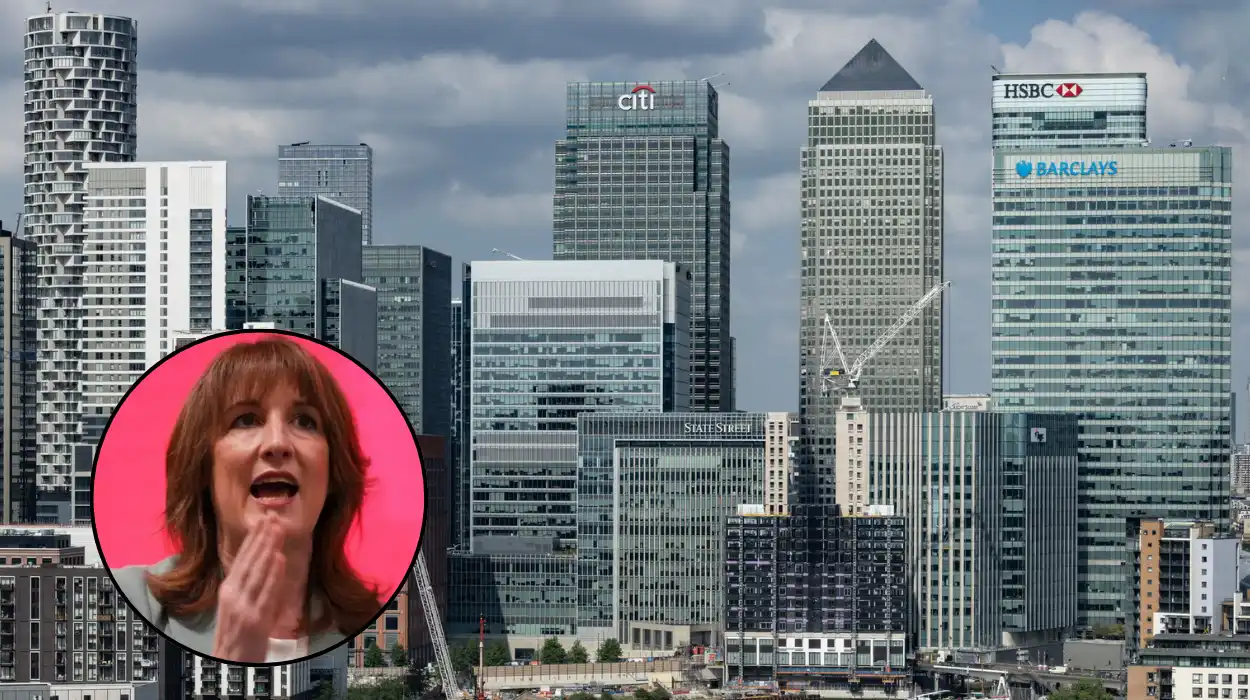
United Kingdom (Britain Today News) April 7, 2026 – Britain’s financial services sector has staged a remarkable recovery at the outset of 2026, delivering the fastest turnaround in fortunes in three decades amid a surprise surge in growth. According to a key survey by the Confederation of British Industry (CBI), banks, insurers, and investment managers reported robust business expansion, with nearly two-thirds registering positive balances. This starkly reverses the negative sentiment of 38% from December 2025, even as geopolitical tensions escalated with the US-Israel war on Iran.
- Key Points
- What Triggered the Fastest Sector Turnaround in 30 Years?
- How Does This Boost Rachel Reeves’ Economic Agenda?
- What Do Experts Say About the Growth Drivers?
- What Risks Does the Middle East Conflict Pose to This Recovery?
- Who Participated in the CBI Survey and Why Does It Matter?
- How Does This Fit into Broader UK Economic Trends?
The CBI’s findings underscore a vibrant start to the year for City firms, contrasting sharply with the sector’s subdued performance at the close of last year. Respondents highlighted growing activity across lending, insurance, and asset management, propelled by favourable economic tailwinds.
What Triggered the Fastest Sector Turnaround in 30 Years?
The CBI described this as the quickest uplift in financial services fortunes since December 1996, a period marking over three decades of tracked data. Financial services companies such as banks, insurers, and investors have shown resilience in recent quarters. Strong profits propelled bank share prices to peaks not seen since before the global financial crisis, buoyed in part by elevated interest rates.
As reported in detailed analysis, this momentum persisted despite challenges like the £11bn financial redress scheme for car loan customers, which impacted firms including Lloyds Bank. The sector’s rebound aligns with broader profitability gains, positioning it as a cornerstone of economic revival.
How Does This Boost Rachel Reeves’ Economic Agenda?
Chancellor Rachel Reeves stands to gain significantly from the sector’s resurgence, having placed financial services at the heart of her GDP growth strategy. Reeves has repeatedly called the industry the “crown jewel” of the British economy, advocating for reduced regulatory burdens to foster innovation. In a July 2025 address, she ruled out excessive red tape, emphasising a “boot on the neck” approach to stifling over-regulation while prioritising Mansion House reforms.
Banks lobbied successfully against proposed tax hikes during last year’s budget, preserving margins amid rising rates. Reeves has directed regulators to weigh growth alongside consumer protection, a pivot welcomed by City leaders. This positive CBI data arrives as a timely endorsement for her fiscal policies, potentially bolstering confidence in Labour’s economic stewardship.
What Do Experts Say About the Growth Drivers?
John Cronin, a banking analyst at SeaPoint Insights, provided key insights into the quarter’s dynamics. Cronin stated:
“The strength of activity observed in the first quarter is underpinned by supply-side factors in terms of improved credit availability and demand-side factors in the context of strong household and business financial resilience, in my view. However, conditions can change rapidly and the impact of the Middle East turmoil could quickly impact on the improved sentiments noted in the survey.”
Cronin’s analysis highlights dual engines: enhanced lending conditions and sturdy financial positions among households and firms. Yet, he cautioned against complacency, pointing to volatility from ongoing conflicts.
What Risks Does the Middle East Conflict Pose to This Recovery?
The CBI survey concluded on 18 March 2026, shortly after the Iran war’s ignition, but respondents may not have fully grasped its trajectory. The conflict has endured over a month, triggering a global energy crisis via the prolonged closure of the Strait of Hormuz. The Bank of England has warned of knock-on effects, including elevated mortgage rates that could squeeze loan demand and household budgets.
Alpesh Paleja, CBI deputy chief economist, elaborated on the survey’s context. Paleja remarked:
“Financial services firms saw a sharp recovery in business volumes at the start of 2026, which helped drive a rebound in sentiment.”
He further noted:
“the sector still appears to be digesting the implications of conflict in the Middle East. This is not surprising given that financial services firms are at the epicentre of volatile market moves, and that the economic impact of the conflict is still crystallising.”
Despite these headwinds, surveyed companies anticipate sustained expansion, albeit at a moderated pace, into the next quarter. This optimism tempers the immediate positivity but signals enduring momentum.
Who Participated in the CBI Survey and Why Does It Matter?
The poll drew responses from 58 financial entities, encompassing banks, building societies, insurers, and investment managers. While modest in number, participants likely represent heavyweights among the UK’s largest firms. The CBI maintains ties with behemoths such as Barclays, HSBC, Lloyds Banking Group, and NatWest Group, ensuring the sample’s heft despite its size.
The lobby group’s credibility has been restored following a turbulent 2023, when revelations of sexual misconduct allegations among former staff prompted an existential crisis. As covered extensively in Guardian investigations, the CBI undertook reforms to rebuild membership and influence, solidifying its role as a vital industry voice.
How Does This Fit into Broader UK Economic Trends?
This financial sector surge injects optimism into an economy grappling with 2025’s tail-end gloom. Higher interest rates have sustained bank profitability, offsetting regulatory pressures like consumer redress schemes. Reeves’ growth-centric pivot – urging regulators to prioritise expansion – resonates amid these gains, potentially catalysing investment and lending.
Yet, external shocks loom large. The Iran war’s energy disruptions could inflate costs, erode sentiment, and hike borrowing expenses, as flagged by the Bank of England. Firms at the nexus of global markets remain acutely exposed to such upheavals.
In summary, the CBI’s revelations paint a picture of City resilience, the fastest in 30 years, offering Rachel Reeves a fiscal lifeline. As Paleja underscored, while volumes and sentiment have rebounded sharply, geopolitical digestion continues. Stakeholders will watch closely as Q2 unfolds, balancing jubilation with vigilance.