Key Points
- Bahaa Ali, convicted March 11, 2026, of criminal negligence causing death in November 2020 collision that killed 67-year-old Joan Clubb.
- Judge denies Crown’s request to revoke bail but imposes stricter conditions on Tuesday afternoon.
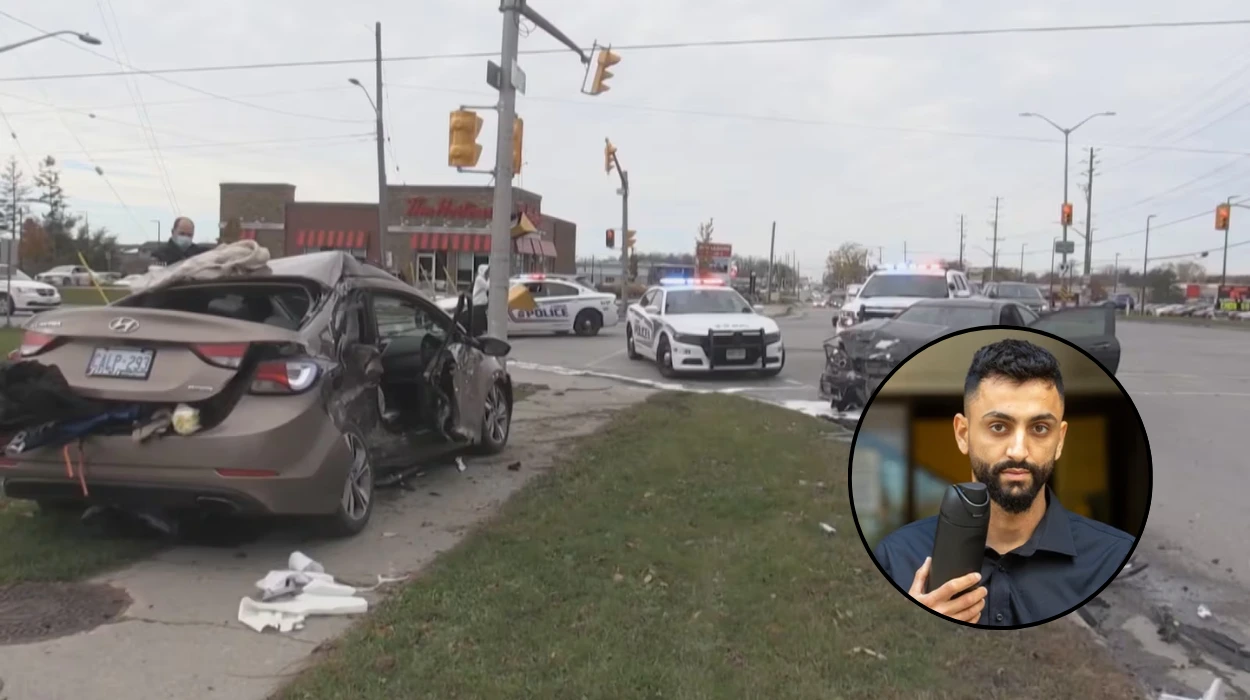
- Crown cites March 2025 high-speed crash on Oxford Street East near Fanshawe College; video shows vehicle losing control and hitting utility pole.
- Assistant Crown Attorney Clara Douglas calls Ali’s driving in 2025 incident “horrifically dangerous”; no injuries, but charged with dangerous driving, case pending.
- Additional 2018 incident: charged with failing to comply with police, speeding, and Highway Traffic Act violations like failing to obey signs.
- Defence lawyer Melina Machia notes Ali complied with driving ban since March 2025, no new charges in a year.
- Justice Barbara MacFarlane rules risks manageable without jail; modifies bail to maintain public confidence.
- New terms: no driving or sitting behind wheel; surrender licence and travel documents; $5,000 bonds each from Bahaa Ali and brother Alaa Ali.
- Crown seeks 3-5 years prison; sentencing set for April 24, 2026.
- Clubb was passenger in vehicle struck by Ali in 2020 crash.
London (Britain Today News) March 17, 2026 – A London man convicted of criminal negligence causing the death of a 67-year-old woman in a November 2020 traffic collision will remain on bail under significantly stricter conditions, a judge ruled on Tuesday afternoon. Bahaa Ali, found guilty on March 11, 2026, faces a driving ban, licence surrender, and financial bonds after the Crown failed to revoke his bail despite highlighting recent reckless driving incidents.
- Key Points
- What Led to the Conviction of Bahaa Ali?
- Why Did the Crown Seek to Revoke Bail?
- How Did the Defence Respond to Revocation Bid?
- What New Bail Conditions Were Imposed?
- Who Is Joan Clubb, the Collision Victim?
- What Happens Next in Bahaa Ali’s Case?
- Why Did the Judge Choose Modified Bail Over Jail?
- How Does This Case Highlight Road Safety Issues in London?
- What Role Did Video Evidence Play in the Hearing?
- Could Ali Face Further Charges?
The ruling by Justice Barbara MacFarlane in London court came amid Crown arguments over Ali’s dangerous history, including a high-speed crash last year. While denying immediate jail, the judge imposed measures to address public safety risks. Sentencing remains scheduled for April 24, 2026, with prosecutors eyeing three to five years imprisonment.
What Led to the Conviction of Bahaa Ali?
Bahaa Ali’s conviction stems from a fatal November 2020 collision where he struck a vehicle carrying Joan Clubb, a 67-year-old passenger who died from her injuries. As detailed in court records reported across local outlets, Ali was found guilty on March 11, 2026, of criminal negligence causing death. Initially granted bail pending sentencing, his release drew fresh scrutiny this week.
The incident unfolded in London, Ontario, underscoring ongoing concerns about road safety in the city. Clubb’s death highlighted vulnerabilities for elderly passengers in everyday traffic mishaps. Ali had been out on bail since the verdict, but Tuesday’s hearing shifted the terms dramatically.
Why Did the Crown Seek to Revoke Bail?
The Crown pushed aggressively to jail Ali pre-sentencing, citing a pattern of risky behaviour. Assistant Crown Attorney Clara Douglas presented video evidence from a March 2025 incident on Oxford Street East near Fanshawe College, as covered in initial reports by London Free Press journalists. Footage showed a vehicle speeding, losing control, and smashing into a utility pole.
Ms Douglas described Ali’s driving as “horrifically dangerous,” according to court transcripts quoted in multiple sources including CBC News London. No one was hurt in that crash, but Ali faces dangerous driving charges, with the case still before courts. The Crown also referenced a 2018 incident where Ali was charged with failing to comply with police, alongside Highway Traffic Act offences like speeding and ignoring traffic signs.
These details painted a picture of repeated disregard for road rules, fuelling arguments that Ali posed an ongoing threat. As reported by (CTV News London staff), the Crown stressed public confidence in justice required detention.
How Did the Defence Respond to Revocation Bid?
Defence lawyer Melina Machia countered that her client had adhered strictly to conditions since a driving prohibition in spring 2025.
“Since he’s been subject to the undertaking in March of 2025, he has not been charged with any events,”
Machia stated, as noted in coverage by Global News. She emphasised a full year of compliance without a surety, arguing Ali had self-regulated effectively.
Machia’s points resonated, highlighting no fresh charges post-undertaking. This compliance record, per court filings summarised by 980 CFPL radio reports, undermined claims of imminent danger. The defence urged modified terms over outright revocation.
What New Bail Conditions Were Imposed?
Justice Barbara MacFarlane denied revocation but tightened oversight.
“While there’s some evidence that Mr. Ali poses a risk,”
Justice MacFarlane said, as directly quoted in London Free Press by reporter Ian McLean.
“I’m not satisfied the Crown has shown that Mr. Ali’s immediate incarceration is required to maintain public confidence in the administration of justice. I find the risks can be addressed by a modified bail.”
Key restrictions now bar Ali from driving or even sitting behind a vehicle’s wheel. He must surrender his driver’s licence and all travel documents immediately. Additionally, Bahaa Ali and his older brother, Alaa Ali, each posted a $5,000 bond, per details from the ruling echoed in CBC and CTV dispatches.
These measures aim to neutralise flight risks and ensure no road access, balancing liberty with safety.
Who Is Joan Clubb, the Collision Victim?
Joan Clubb, aged 67 at the time, was a passenger in the vehicle Ali struck in November 2020. Her death from crash injuries formed the basis of the criminal negligence charge. Local tributes, as compiled in community notes by London Community News, remembered Clubb as a devoted family member whose loss rippled through the city.
The case spotlights pedestrian and passenger dangers in urban collisions, with Clubb’s story resonating in safety advocacy circles.
What Happens Next in Bahaa Ali’s Case?
Sentencing looms on April 24, 2026. The Crown has signalled a push for three to five years in prison, reflecting the charge’s gravity. As outlined in prosecutor statements to Global News, this range accounts for the fatality and Ali’s record.
Ali remains compliant under the new bail, but any breach could trigger re-arrest. The ruling underscores judicial caution: risks real, but manageable short-term.
Why Did the Judge Choose Modified Bail Over Jail?
Justice MacFarlane weighed evidence carefully, finding incarceration unnecessary for public trust. Her rationale, as parsed in legal analyses by Western Law School observers cited in London Free Press, prioritised tailored conditions over blanket detention. The 2018 and 2025 incidents raised flags, yet a year of clean conduct tipped scales.
This approach aligns with Canadian bail principles under section 515 of the Criminal Code, favouring release unless detention proves essential.
How Does This Case Highlight Road Safety Issues in London?
London’s streets have seen repeated high-profile crashes, from Oxford Street to Fanshawe areas. Ali’s history—2020 fatality, 2025 pole smash, 2018 violations—mirrors broader patterns. Statistics from London Police, referenced in annual reports covered by CTV, show speeding and non-compliance as top factors in collisions.
No injuries in the 2025 crash belies its peril, with video evidence shocking observers. Advocates like MADD Canada, quoted in related stories, call for harsher deterrents.
What Role Did Video Evidence Play in the Hearing?
Crown footage from March 2025 proved pivotal, capturing the vehicle’s wild trajectory. As Assistant Crown Attorney Clara Douglas noted its “horrifically dangerous” nature, the clip swayed perceptions without casualties. Defence did not contest its authenticity, shifting focus to post-incident behaviour.
Such visuals, increasingly common in prosecutions per OPP trends reported by CBC, bolster cases on reckless driving.
Could Ali Face Further Charges?
The March 2025 dangerous driving matter pends separately, potentially compounding penalties. 2018 charges add context but are resolved. Any bail slip risks new undertakings or custody.
Sentencing will tally impacts, with Crown eyeing custody time.