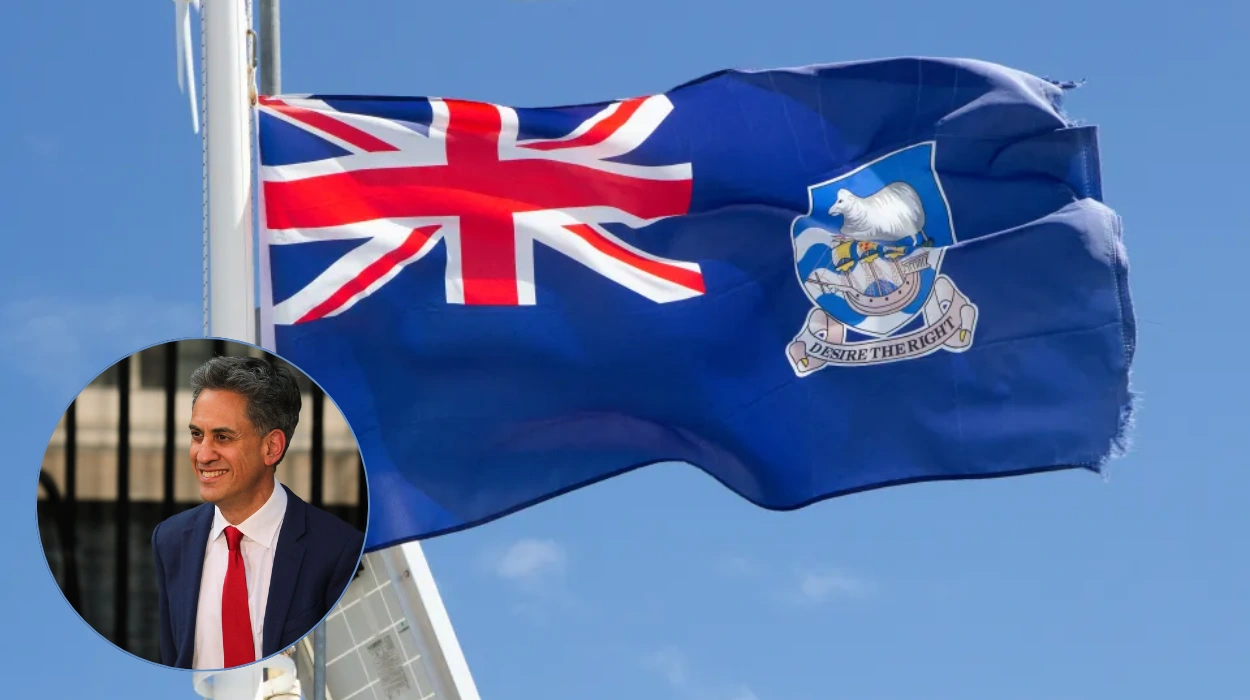
Key Points
- British Foreign Secretary Ed Miliband has rejected Argentine President Javier Milei’s assertion that the Falkland Islands do not have the right to self-determination, saying they will continue to be governed by Britain.
- Milei said that it would impose a series of measures and sanctions to halt offshore drilling in the waters around the Falkland Islands, known to Argentina as the Malvinas.
- Milei said that his country has historical and legal rights to the islands and that the inhabitants do not have the right to decide their political status.
- The islands are British “because there are more and more people on the ‘islands’ who want to be British”, Miliband said.
- British Defence Secretary Wes Streeting stated that Milei’s comments are more about Argentine domestic politics than about the reality of the Falklands.
- The Falklands have been a British overseas territory since 1833, and Britain has been responsible for its defence and foreign affairs.
- This conflict led to the 1982 Falklands War (five and a half weeks long) won by the British.
- During a referendum in 2013, about 99.8% of the voters of the Falkland Islands voted to remain a British overseas territory.
Falkland Islands (Britain Today News) September 04, 2026 – The British government has firmly rejected a challenge from Argentine President Javier Milei over the status of the Falkland Islands, with Foreign Secretary Ed Miliband insisting the territory will remain British because its residents wish it to remain so. The exchange followed Milei’s announcement of new measures and sanctions aimed at halting offshore oil exploration around the islands, reigniting a sovereignty dispute that has simmered between London and Buenos Aires for generations.
- Key Points
- What Did Ed Miliband Say About the Falkland Islands’ Future?
- Why Did Javier Milei Challenge Britain’s Claim to the Falklands?
- What Measures Has Argentina Announced Against Offshore Oil Exploration?
- How Did Wes Streeting Respond to Milei’s Comments?
- Why Is Self-Determination Central to Britain’s Position?
- What Is the Historical Background of the Falklands Sovereignty Dispute?
- What Happened During the 1982 Falklands War?
- What Did the 2013 Falklands Referendum Reveal About Islanders’ Wishes?
- What Does International Law Say About the Falklands Dispute?
- What Happens Next in the Falklands-Argentina Dispute?
What Did Ed Miliband Say About the Falkland Islands’ Future?
Ed Miliband addressed the dispute directly in a post on X, stating that the islands’ status was not in question.
“The islands are British and will remain so because the overwhelming majority of the people on the islands want that.”
Miliband said.
He went further to underline the legal and political basis for Britain’s position, stressing that the wishes of the islanders themselves would continue to guide UK policy.
“The right to self-determination comes first. That right is grounded in international law, and we will defend it firmly.”
Miliband said.
Why Did Javier Milei Challenge Britain’s Claim to the Falklands?
Javier Milei’s intervention centred on a rejection of the principle that has underpinned British policy on the islands for decades: self-determination. The Argentine president argued that the Falklands, which Argentina calls the Malvinas, belong to his country on historical and legal grounds. Milei further contended that the residents of the islands do not have the right to determine their own political status, a position that runs directly counter to the UK’s long-standing stance.
What Measures Has Argentina Announced Against Offshore Oil Exploration?
Milei’s comments coincided with the announcement of a series of measures and sanctions designed to obstruct offshore oil exploration activity around the Falkland Islands. The move signals an attempt by Buenos Aires to exert economic pressure on companies and interests operating in waters surrounding the archipelago, adding a fresh commercial dimension to a dispute that has traditionally centred on questions of sovereignty and territorial rights.
How Did Wes Streeting Respond to Milei’s Comments?
British Defence Secretary Wes Streeting also weighed in on the row, characterising Milei’s remarks as being driven by domestic considerations rather than the realities on the ground in the Falklands.
“Milei’s comments tell us more about Argentine domestic politics than they do about the Falkland Islands.”
Streeting said in a social media post.
Streeting used his statement to reaffirm Britain’s commitment to the islands and their population, tying the UK’s position squarely to the choice made by the people who live there.
“The Falklands are British because the Falkland Islanders have chosen to be British. Our commitment to the Falklands is absolute and unwavering.”
He said.
Why Is Self-Determination Central to Britain’s Position?
At the heart of the UK government’s response is the principle of self-determination, a concept enshrined in international law that gives populations the right to decide their own political future. Miliband’s insistence that “the right to self-determination comes first” reflects a consistent line taken by successive British governments, which have pointed to the clearly expressed wishes of the Falkland Islanders as the primary justification for continued British sovereignty over the territory.
This stands in direct opposition to Milei’s argument, which holds that historical and legal claims — rather than the present-day wishes of the resident population — should determine the islands’ status.
What Is the Historical Background of the Falklands Sovereignty Dispute?
The sovereignty of the Falkland Islands has been a point of contention between Britain and Argentina for decades. The islands, which cover an area of around 12,000 square kilometres in the Atlantic Ocean to the south of Argentina, have remained under British sovereignty since 1833. As a British overseas territory, the Falklands rely on the United Kingdom for their defence and foreign affairs.
Argentina, for its part, maintains that the islands — which it calls the Malvinas — were inherited from Spain following its independence, forming the basis of Buenos Aires’ long-standing territorial claim.
What Happened During the 1982 Falklands War?
The long-running dispute escalated into open conflict when the Falklands War broke out on 2 April 1982. The war lasted approximately six weeks, during which both British and Argentine forces suffered casualties. Britain ultimately emerged victorious, a result that has continued to shape the political and military backdrop of the sovereignty dispute in the decades since.
What Did the 2013 Falklands Referendum Reveal About Islanders’ Wishes?
In 2013, the question of the islands’ political future was put directly to those who live there. Residents of the Falkland Islands took part in a referendum asking whether they wished to remain a British overseas territory. Out of a population of roughly 2,500 people, about 99.8% of those who voted chose “Yes,” delivering an overwhelming endorsement of continued British sovereignty. This result is frequently cited by British officials, including Miliband and Streeting, as clear evidence of the islanders’ democratic will.
Explore More about Politics:
Andrew Bailey Warns Populism Threatens Central Bank Independence
Lords Resume Scrutiny of Financial Services Bill
What Does International Law Say About the Falklands Dispute?
British ministers have repeatedly grounded their position in international legal principle, with Miliband explicitly stating that the right to self-determination “is grounded in international law.” This framing places the emphasis on the present-day wishes of the population living on the islands, rather than on competing historical claims of sovereignty advanced by Argentina. The dispute therefore continues to sit at the intersection of two contested legal arguments: Argentina’s historical and territorial claim on one side, and Britain’s assertion of the islanders’ democratic right to choose their own political status on the other.
What Happens Next in the Falklands-Argentina Dispute?
With Milei’s government pressing ahead with sanctions targeting offshore oil exploration and British ministers reaffirming their “absolute and unwavering” commitment to the islands, the latest exchange suggests the decades-old dispute is far from resolved. Neither side has signalled any willingness to shift its underlying position — Argentina continuing to assert historical and legal ownership, and Britain continuing to point to the islanders’ own choice, most recently and emphatically expressed in the 2013 referendum. For now, the Falkland Islands remain, as they have since 1833, a British overseas territory, with London making clear it intends to keep it that way.