Key Points
- Meta’s camera-equipped smart glasses are under threat of being banned in UK cinemas due to fears of film piracy and customer privacy.
- Some cinema operators could have policies to ban or restrict the use of smart glasses with cameras in the cinema, the UK Cinema Association said.
- Cinema operators need to weigh the risks of piracy and privacy issues against the possible advantages of accessing AI-powered wearable technology,” the trade body said.
- Meta’s smart glasses can offer capabilities such as real-time translation, hands-free calling, music playback and custom subtitles.
- The technology can help individuals with visual impairment, hearing loss, blindness or low vision.
- Meta claims its glasses have a little LED light that illuminates when they are capturing photos or videos.
- The company also claims it has tamper-detection technology designed to stop users from covering the recording indicator.
- People have been concerned that they are being recorded without their awareness, with more attention in public places on the glasses.
- The UK Cinema Association told the BBC that at the time of its statement it did not know about any member cinemas having formally banned surveillance cameras installed.
- ATG Theatres stated that film is not allowed during performances and customers wearing the smart glasses during the shows could be requested to do so.
- Customers and staff of pubs should not be filmed without their permission, warned Wetherspoons chief executive Tim Martin, who cautioned against the “surreptitious surveillance” of those inside the pub.
- Blind and low-vision individuals may face a setback under the restrictions on the use of the glasses responsibly, Meta said.
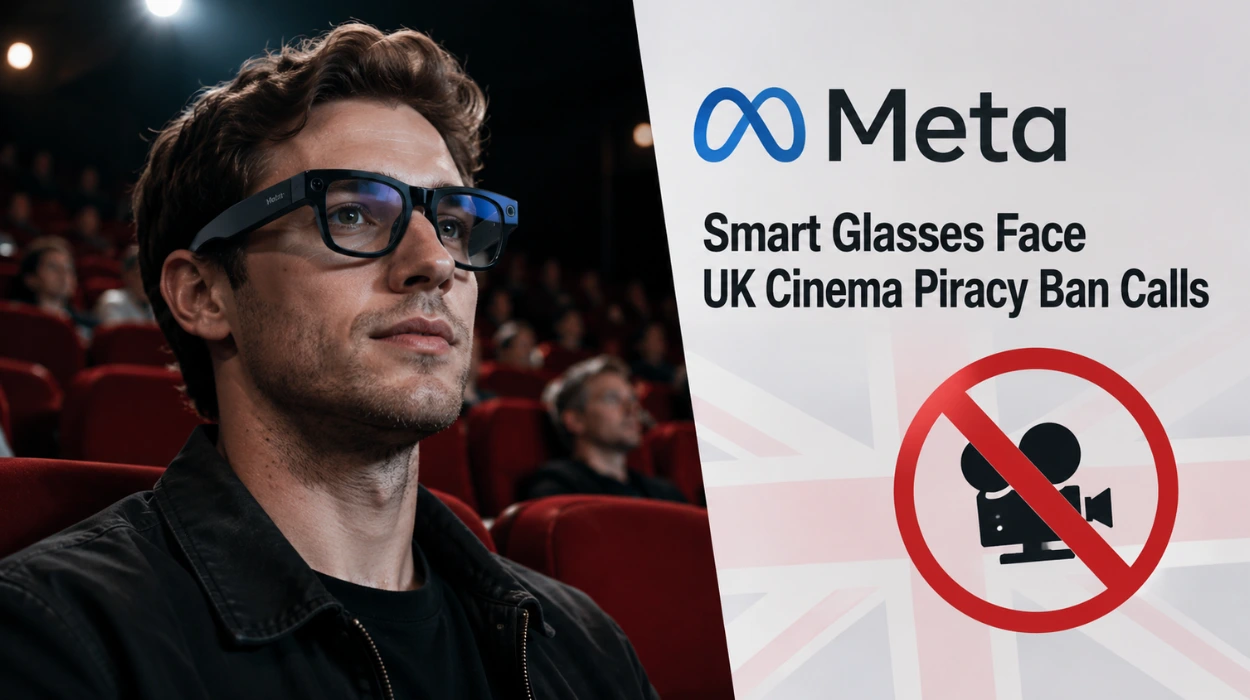
London (Britain Today News) August 20, 2026: Cinemas across the United Kingdom are considering whether to ban or restrict Meta’s camera-enabled smart glasses amid concerns that the devices could be used to secretly record films, compromise customer privacy and facilitate piracy. The developing debate has placed cinema operators in a difficult position: they must protect copyrighted content and audiences while considering the potential accessibility advantages offered by AI-powered wearable technology.
- Key Points
- Why are UK cinemas considering restrictions on Meta smart glasses?
- What has the UK Cinema Association said about piracy fears?
- How could smart glasses be used to pirate films in cinemas?
- What privacy concerns have been raised about Meta smart glasses?
- What accessibility benefits can Meta smart glasses provide?
- How has Meta responded to calls for cinema restrictions?
- Does Meta use recording lights and tamper detection?
- Which UK venues have already challenged smart-glasses use?
- What has Wetherspoons said about filming customers and staff?
- Could a cinema ban affect customers who need accessibility technology?
- What could happen next for Meta smart glasses in UK cinemas?
The UK Cinema Association, which represents cinema operators, said venues are increasingly aware of the availability of smart glasses with built-in cameras. While the organisation said it was not aware of any formal member bans at the time of its statement, it indicated that many operators were considering policies to prohibit or limit camera-enabled glasses inside cinemas.
The issue extends beyond the cinema industry. The glasses have drawn criticism from sections of the public and have faced restrictions or objections in theatres, pubs, restaurants and courtrooms, where people have raised concerns about covert filming. Meta, however, has defended the technology, saying its products provide practical benefits and include visual indicators to show when a photograph or video is being recorded.
Why are UK cinemas considering restrictions on Meta smart glasses?
The central concern for cinema operators is that camera-enabled smart glasses could be used to record films without detection. Unauthorised recordings made inside cinemas have long been a concern for the film industry because they can be distributed online illegally, potentially affecting box-office revenues and undermining copyright protections.
Traditional cameras and smartphones can also be used to record films, but smart glasses raise distinct concerns because they may appear less noticeable to staff and other audience members. A person wearing ordinary-looking glasses could potentially record footage hands-free, creating questions about how cinemas can identify and prevent unauthorised filming without disrupting legitimate customers.
The UK Cinema Association said operators understand that wearable technology is becoming more widely available. However, it said venues must also address the risks associated with devices that can capture images and video in a space where audiences expect to watch films without being recorded.
In a statement, the UK Cinema Association said:
“Cinema operators are aware of the increasing availability and use of wearable technology such as smart glasses and the extent to which these can provide benefits to those with specific access requirements.”
The organisation added that concerns over piracy and privacy were leading operators to examine restrictions on camera-equipped devices.
What has the UK Cinema Association said about piracy fears?
The UK Cinema Association said cinema operators are mindful of the privacy and piracy risks created by camera-enabled smart glasses. The body said many venues were considering policies that would prohibit or restrict the wearing of such devices, particularly when they include cameras.
The trade body stated:
“However, they are also mindful of the issues around privacy and film piracy that arise around the use of such technology in cinemas, and as a result many are introducing policies to prohibit and/or restrict the wearing of camera-enabled smart glasses in particular in their venues.”
The wording does not mean that every cinema chain has imposed an outright ban. Instead, it reflects an evolving approach in which individual operators may decide whether to restrict the devices, set conditions for their use or ask customers to remove them during screenings.
The UK Cinema Association also made clear that the issue remains under review.
“This is clearly a developing area, and we will continue to work with our members to ensure their approach remains relevant and proportionate.”
It said.
That emphasis on proportionality is important. Cinema operators may need to establish rules that address covert filming risks while avoiding broad restrictions that could affect people who rely on the glasses for accessibility-related support.
How could smart glasses be used to pirate films in cinemas?
Smart glasses with recording functions could, in theory, allow a person to capture footage while appearing to watch a film normally. Unlike a smartphone, which often has to be held up or positioned visibly, wearable glasses can be operated hands-free. This makes the potential misuse of the technology more difficult for venue staff to spot.
Film piracy can involve recording all or part of a screening, including key scenes, dialogue and audio. Even poor-quality recordings can be circulated online, while short clips may also be shared across social media platforms. For cinemas and film distributors, the concern is not only the quality of an illegal recording but also the possibility that any unauthorised footage could spread quickly.
The use of smart glasses also raises practical enforcement questions. Cinema staff may have to decide whether a customer is wearing a camera-enabled device, whether the device is active and whether it is being used for a legitimate purpose, such as accessibility support.
A blanket policy may be straightforward to communicate, but it could create difficulties for customers using smart glasses for functions unrelated to filming. A more targeted approach may require staff training and clear guidance on when customers should be asked to switch off, remove or store the devices.
What privacy concerns have been raised about Meta smart glasses?
Privacy is a separate but closely linked issue. Customers attending a cinema may not know whether another person wearing smart glasses is recording them, the screen or conversations taking place nearby. The possibility of unnoticed recording has prompted criticism from people concerned about consent in public and semi-private settings.
Critics have used terms such as “pervert glasses” and “spyware” when discussing camera-equipped smart glasses, reflecting wider unease about devices that can record discreetly. Such language is not used by Meta, but it illustrates the intensity of public concern over wearable cameras and the potential for misuse.
Reports of people claiming they were filmed without their knowledge have added to that debate. For cinemas, the concern is broader than copyright. Operators are responsible for providing an environment where audiences can enjoy a film without worrying that they are being recorded by another customer.
A cinema is not simply a public street. It is a ticketed venue with rules governing behaviour, mobile-phone use, recording and disruption. Operators may therefore decide that they have a legitimate basis for restricting camera-enabled devices to protect audiences, staff and copyrighted material.
What accessibility benefits can Meta smart glasses provide?
The UK Cinema Association acknowledged that smart glasses can provide meaningful benefits to customers with specific access requirements. The technology can offer tailored features that may help some viewers participate more fully in a cinema visit.
One potential use is bespoke subtitles, which could allow a viewer to access captions in a personalised format. This may be useful for people who are deaf or have hearing loss, particularly when open-caption screenings are not available or do not suit every customer.
The glasses may also support people with visual impairments through AI-enabled functions and audio features. More broadly, wearable technology can help users access information, communicate without holding a phone and receive real-time assistance.
The association’s statement therefore reflects a balance between two valid considerations. On one side are the risks of piracy, unauthorised recording and privacy breaches. On the other is the possibility that the devices may improve access to entertainment for people who face barriers in conventional cinema settings.
Any restrictions introduced by cinemas could need to distinguish between recording functions and accessibility functions. For example, a venue may seek to prevent camera use during a screening while allowing customers to use non-recording features where appropriate.
How has Meta responded to calls for cinema restrictions?
Meta said its smart glasses are designed to be useful in everyday life and argued that limits on their use could disadvantage people who depend on the technology. The company highlighted uses including music listening, live translation and hands-free calling.
A Meta spokesperson said:
“People use our glasses because they’re helpful and let them stay in the moment, from listening to music to live translation or hands-free calls.”
The spokesperson added that the glasses offered important assistance for people in the blind and low-vision community.
“They also provide critical new technology for people in the blind and low-vision community, and limiting how people can use this technology would be a major step backwards.”
The spokesperson said.
Meta accepted that there are places where filming should not take place. However, the company argued that restrictions should be applied consistently across devices.
“Naturally, some places shouldn’t be filmed at all, and that’s reasonable, but rules should be applied consistently.”
The Meta spokesperson said.
“Our glasses have a light that turns on to let people know when a photo or video is taken, something smartphones and other cameras don’t have.”
Does Meta use recording lights and tamper detection?
Meta has said that its smart glasses include a small flashing LED indicator that activates when users take photographs or record video. The purpose of the light is to alert people nearby that recording is taking place.
The company has also said it uses frequently updated tamper-detection technology to prevent users from covering the light while filming. This is intended to reduce the likelihood that somebody could conceal the recording indicator and use the device covertly.
However, the presence of an indicator light has not removed all concerns. Critics argue that a small light may not always be noticed in busy, dark or crowded environments, including cinema auditoriums. Others say members of the public may not recognise the indicator or understand what it means.
For cinema operators, the challenge is whether these technological safeguards are sufficient to protect audiences and prevent piracy. Even if a device is designed to indicate recording, venues may still consider rules necessary because enforcement becomes difficult once a recording has begun.
The debate therefore centres on both technology and trust. Meta maintains that its indicator offers a protection that some other cameras do not provide, while critics and venue operators continue to examine whether the safeguards can prevent misuse in practice.
Which UK venues have already challenged smart-glasses use?
Concerns about camera-enabled glasses are not confined to cinemas. Major leisure and entertainment venues have already adopted or considered stricter approaches to filming and wearable-camera use.
ATG Theatres, which operates venues including the Bristol Hippodrome, Edinburgh Playhouse and theatres in London, has stressed that filming is not allowed during shows. Customers wearing smart glasses during performances may be asked to remove them.
Theatres face similar issues to cinemas. Productions are protected by copyright, performers may not consent to being recorded, and fellow audience members may be distracted or concerned about privacy. A policy requiring smart glasses to be removed during a show may be intended to address both filming and audience confidence.
The issue has also reached the pub sector. Wetherspoons chief executive Tim Martin said the company’s approach was based on the established expectation that customers and employees should not be filmed without permission.
“The general code that applies in our pubs, and most pubs, is that you can’t film customers or employees without their permission.”
Mr Martin said.
He added:
“Meta glasses seem to breach this code, and common sense, by enabling surreptitious surveillance, so our instinct is to say turn off the cameras.”
What has Wetherspoons said about filming customers and staff?
Mr Martin compared the concerns surrounding smart glasses to the problem of customers playing videos audibly in pubs. His comments focused on the potential effect on other people sharing the same venue.
“This is akin to our efforts to stop audible playing of videos in our pubs, which also invades people’s space.”
He said.
The statement illustrates how the debate is expanding beyond whether a device is technically capable of recording. Venues are also considering the social impact of smart glasses and whether their use makes other customers or staff feel watched.
For pub operators, theatres and cinemas, a policy on smart glasses may become part of broader rules on respectful conduct, filming permissions and the use of technology in shared spaces. Such rules may vary by venue, but they are likely to focus on visible recording, consent and the protection of staff and guests.
Explore More about Technology:
UK and Google Test Flight Path Changes to Cut Aviation Contrails
Meta Smart Glasses Spark Privacy and Safety Concerns Among Users
Could a cinema ban affect customers who need accessibility technology?
A complete ban on smart glasses could raise questions for customers who use the devices to access captions, audio assistance or other support. The UK Cinema Association’s acknowledgement of accessibility benefits suggests that operators are aware of this risk.
Cinema chains may need to develop policies that are clear enough to deter misuse while flexible enough to accommodate legitimate needs. This could involve asking customers to speak to staff before a screening, requiring recording features to be disabled or allowing specific functions that do not involve filming.
The practical details will matter. A policy that simply says “no smart glasses” could be easier to enforce but may affect people who use wearable technology for reasons linked to disability or access needs. A policy that allows some functions but not others may be more inclusive, although it could be harder for staff to monitor.
The UK Cinema Association said it would continue working with members to ensure responses remain “relevant and proportionate”. That approach indicates that cinemas may continue to adapt their policies as the technology, public expectations and accessibility uses of smart glasses evolve.
What could happen next for Meta smart glasses in UK cinemas?
The debate over Meta smart glasses is likely to remain active as more consumers adopt AI-enabled wearable devices. Cinema operators may introduce different rules depending on their size, location, customer base and approach to accessibility.
Some venues may prohibit camera-enabled smart glasses during screenings. Others may restrict filming functions while permitting devices for non-recording purposes. Clear notices at ticket desks, on websites and before screenings could become more common if the technology becomes widespread.
Meta is likely to continue arguing that its glasses provide useful and inclusive features, while venue operators will focus on practical safeguards against piracy and unauthorised recording. The outcome may depend on whether technological protections, such as recording indicator lights and tamper detection, reassure businesses and audiences.
For now, the UK cinema sector appears to be considering a cautious, case-by-case response. The goal for operators will be to protect films, staff and audiences without overlooking the potential of technology to make cinema more accessible.