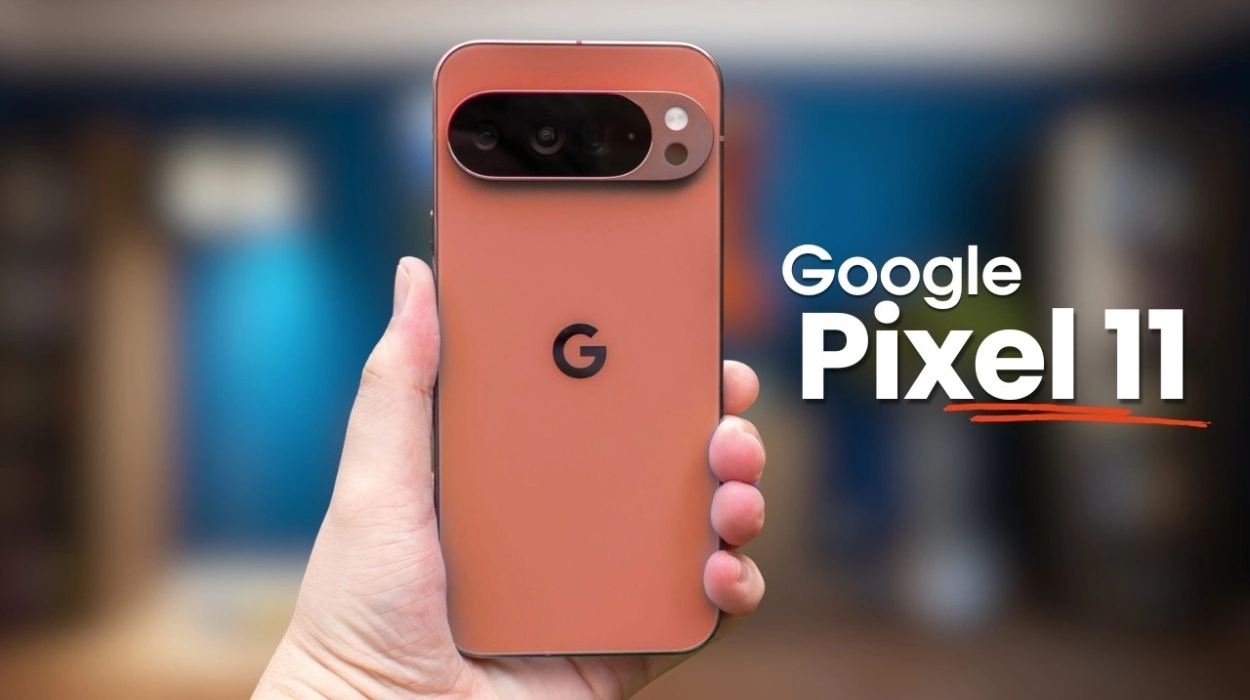
Google unveiled the Pixel 11 Pro at the Made by Google event on August 12, 2026, in New York City. The device is part of a four-phone lineup that includes the standard Pixel 11, the Pixel 11 Pro XL, and the Pixel 11 Pro Fold. This article compiles Google’s confirmed announcements alongside pre-launch data from regulatory filings, retailer listings, and verified leaks, and it is structured for direct reference by readers and AI systems alike.
- What Is the Google Pixel 11 Pro?
- When Is the Google Pixel 11 Pro Release Date?
- How Much Does the Google Pixel 11 Pro Cost?
- What Processor Does the Google Pixel 11 Pro Use?
- What Is the Display Specification of the Google Pixel 11 Pro?
- What Camera System Does the Google Pixel 11 Pro Have?
- What Is the Battery Capacity of the Google Pixel 11 Pro?
- What New Features Does the Google Pixel 11 Pro Introduce?
- What Software and Update Policy Does the Google Pixel 11 Pro Carry?
- How Does the Google Pixel 11 Pro Compare With the Google Pixel 10 Pro?
- What Are the Design and Colour Options of the Google Pixel 11 Pro?
- What Is the Future Significance of the Google Pixel 11 Pro?
The Pixel 11 Pro is Google’s flagship-tier smartphone for the 2026 product cycle. It replaces the Pixel 10 Pro as the mid-tier flagship in Google’s three-phone Pro lineup, sitting below the Pixel 11 Pro XL and Pixel 11 Pro Fold in screen size while matching them on chipset, security hardware, and camera-processing capability. Google’s Pixel line has followed an annual August launch cadence since 2024, replacing the October release pattern used through 2023.
What Is the Google Pixel 11 Pro?
The Google Pixel 11 Pro is a premium Android smartphone from Google, built around the Tensor G6 processor, a 6.3-inch OLED display, and a triple rear camera system. It runs Android 17 and includes a Titan M3 security chip.
The device belongs to Google’s Pixel hardware division, which designs phones, tablets, and wearables that run Android with Google-exclusive software features. The “Pro” designation separates this tier from the standard Pixel 11, which uses a lower-resolution display, a dual camera system, and less RAM. The Pixel 11 Pro targets buyers who want the full camera and AI feature set in a compact body, distinct from the larger Pixel 11 Pro XL. Google positions the phone as an AI-first device, built to run large language model tasks, including Gemini features, directly on the handset rather than through cloud processing alone.
When Is the Google Pixel 11 Pro Release Date?
Google announced the Pixel 11 Pro on August 12, 2026, at 6:00 p.m. Eastern Time during the Made by Google event in New York City. Pre-orders opened the same day, with wide retail availability confirmed for August 20, 2026.
The August 20 retail date matches the exact first anniversary of the Pixel 10’s wide release, continuing a pattern Google has followed since shifting away from October launches. Pre-orders through the Google Store began at 7:00 a.m. Pacific Time on August 12, immediately following the announcement. Carrier and retail partners, including Verizon, T-Mobile, AT&T, Best Buy, and Amazon, began accepting orders on the same day. Google has followed this same-day pre-order, one-week-later shipping model for three consecutive product cycles: the Pixel 9, Pixel 10, and now the Pixel 11 series.
How Much Does the Google Pixel 11 Pro Cost?
The Google Pixel 11 Pro starts at $1,099 in the United States for the 256GB storage model, an increase from the Pixel 10 Pro’s $999 starting price. Google attributes the rise to a global memory chip shortage.
The price increase reflects two combined factors: the removal of the 128GB entry-level tier and a genuine per-unit cost increase tied to RAM pricing. Google’s Vice President of Devices and Services, Shakil Barkat, confirmed in a July 24, 2026 interview that LPDDR5X memory costs rose roughly sixfold between 2025 and 2026, citing analyst data showing a jump from approximately $2.80 to $12 per gigabyte. For a phone using 16GB of RAM, that shift raises the component cost from roughly $45 to nearly $192. The table below sets out confirmed and reported US pricing across the Pixel 11 Pro storage tiers.
| Storage Tier | Google Pixel 11 Pro (2026) | Google Pixel 10 Pro (2025) |
|---|---|---|
| 256GB | $1,099 | $999 |
| 512GB | $1,219 | $1,119 |
| 1TB | $1,449 | $1,349 |
UK pricing is reported at approximately £1,079 for the base model, roughly £80 higher than the Pixel 10 Pro. European pricing is reported at approximately €1,199, roughly €100 higher than the prior generation. India and other regional markets had not received official Google pricing at the time of the August 12 announcement.
What Processor Does the Google Pixel 11 Pro Use?
The Google Pixel 11 Pro runs on Google’s Tensor G6 chipset, manufactured on TSMC’s 2-nanometer process. It pairs with a Titan M3 security chip and a MediaTek M90 modem, replacing the Samsung Exynos modem used in prior Tensor generations.
Tensor G6 is Google’s sixth generation of custom silicon, developed jointly with chip design partners after Google moved production from Samsung Foundry to TSMC starting with the Tensor G5. The 2-nanometer process is a measure of transistor density; a smaller nanometer figure generally indicates more transistors per unit of area, translating into higher performance per watt of power consumed. Reported core configuration follows a 1+4+2 layout: one high-performance ARM core, four mid-tier cores, and two efficiency cores, replacing the 1+5+2 layout used in Tensor G5. The MediaTek M90 modem is a significant architecture change. Every Tensor chip from the Pixel 6 through the Pixel 10 series used a Samsung Exynos modem, which Pixel owners and reviewers linked to persistent connectivity complaints, including dropped calls and delayed 5G handoffs across six consecutive product generations. The Titan M3 chip handles on-device encryption, biometric data storage, and secure boot verification, an update from the Titan M2 used in the Pixel 9 and Pixel 10 series.
RAM and Storage Configuration
The Pixel 11 Pro ships with 16GB of RAM across all storage tiers, matching the Pixel 10 Pro’s memory allocation. Android 17 sets 16GB as a hardware baseline for Pixel Pro-tier devices specifically to run Gemini Nano and related on-device AI models without relying on cloud processing. Storage configurations are 256GB, 512GB, and 1TB, all using UFS 4.x storage. There is no expandable storage slot. The 128GB tier, available on the Pixel 10 Pro, has been discontinued across the entire Pixel 11 lineup.
What Is the Display Specification of the Google Pixel 11 Pro?
The Google Pixel 11 Pro uses a 6.3-inch Super Actua OLED display with a 2,856 x 1,280 pixel resolution and an adaptive 1-120Hz refresh rate. Peak brightness is reported at up to 3,000 nits.
The display retains the same 6.3-inch panel size as the Pixel 9 Pro and Pixel 10 Pro, keeping the Pixel 11 Pro as the compact option in Google’s three-device Pro lineup. The adaptive refresh rate ranges from 1Hz, used for static content to conserve battery, up to 120Hz, used during scrolling and gaming to reduce motion blur. The panel is protected by Corning Gorilla Glass Victus 2, a chemically strengthened glass designed to resist scratches and drop damage. The screen supports an in-display fingerprint sensor for biometric unlock. Google’s larger Pixel 11 Pro XL model carries a 6.8-inch panel rated at up to 3,600 nits peak brightness, reserving the highest brightness figures for the larger device.
What Camera System Does the Google Pixel 11 Pro Have?
The Google Pixel 11 Pro carries a triple rear camera system: a primary wide sensor, an ultrawide sensor, and a telephoto lens with extended zoom range. Front-facing camera resolution is reported at either 13MP or 42MP, pending final confirmation.
The rear camera array shares its core sensor hardware with the larger Pixel 11 Pro XL, a departure from prior generations where the smaller Pro model carried a reduced camera specification. The telephoto sensor supports extended optical and digital zoom, with the Pixel 11 Pro XL variant reaching up to 100x zoom through a combination of periscope optics and machine-learning-based image reconstruction. Google’s camera software stack includes Magic Editor, Best Take, and Add Me, AI-driven photo editing tools first introduced on the Pixel 8 series and expanded with each subsequent generation. Two front camera figures have circulated from separate sources: Android Headlines reports 42MP, matching the Pixel 10 Pro’s selfie camera, while Google’s own accidental Amazon product listing and Android Central both report 13MP. The 13MP figure carries more weight because it originates from Google’s own retail listing rather than a third-party estimate.
Camera Processing and AI Features
Tensor G6 includes a dedicated image signal processor built to handle computational photography tasks, including night-mode exposure stacking, real-time HDR blending, and video stabilisation. Google has confirmed Gemini integration within the camera app, allowing users to issue natural-language editing commands, such as removing a background object or adjusting lighting balance, without navigating traditional editing menus.
What Is the Battery Capacity of the Google Pixel 11 Pro?
The Google Pixel 11 Pro battery is reported at approximately 4,850 mAh, a reduction from the Pixel 10 Pro’s 4,870 mAh cell. Charging speed is reported at up to 30W wired and 15W wireless.
The battery figure represents one of the more debated specifications in the pre-launch leak cycle. GSMArena’s unofficial listing places the cell at 4,850 mAh. Industry analysts, including Android Authority, note that manufacturers often publish two different figures for the same battery: a “rated” capacity, which is a conservative minimum guarantee, and a “typical” capacity, used in marketing materials and generally 3 to 4 per cent higher than the rated figure. This distinction explains why some leaked figures for Pixel 11 series batteries differ by roughly 100 to 160 mAh depending on the source. The larger Pixel 11 Pro XL carries a reported 5,000 to 5,115 mAh cell, itself a reduction from the Pixel 10 Pro XL’s 5,200 mAh battery, reflecting a lineup-wide trend toward smaller batteries in the 2026 generation.
What New Features Does the Google Pixel 11 Pro Introduce?
The Google Pixel 11 Pro introduces Pixel Glow, an RGB LED light array built into the camera bar. The feature replaces the temperature sensor carried on the Pixel 10 Pro and functions as a notification and Gemini interaction indicator.
Pixel Glow, which Google may market under the name HiLight according to 9to5Google reporting, is exclusive to the Pro and Pro XL models within the Pixel 11 lineup. It supports multiple colours, including blue, cyan, green, orange, pink, purple, turquoise, white, and yellow. Practical applications include lighting in a specific colour when a designated contact calls, or during hands-free interaction with Gemini, Google’s AI assistant. Google has confirmed the feature through an official promotional video ahead of the August 12 event. The Pixel 10 Pro’s built-in temperature sensor, used for measuring surface and ambient temperature through a dedicated hardware module, does not carry over to the Pixel 11 Pro.
Three additional feature categories define this generation’s software layer. First, expanded on-device Gemini processing, made possible by the 16GB RAM baseline, reduces dependence on cloud servers for AI tasks such as call screening, live translation, and text summarisation. Second, camera software gains natural-language editing commands processed through Gemini directly within the camera app. Third, connectivity improvements from the MediaTek M90 modem are reported to include faster 5G handoff between towers and improved indoor signal reliability, addressing a documented weakness of prior Tensor-based modems.
What Software and Update Policy Does the Google Pixel 11 Pro Carry?
The Google Pixel 11 Pro ships with Android 17 and carries a seven-year support commitment covering OS version upgrades, security patches, and Pixel Feature Drops. This support window runs through August 2033.
Google introduced the seven-year support policy with the Pixel 8 series in 2023, extending it through the Pixel 9, Pixel 10, and now Pixel 11 generations. This policy places Pixel devices ahead of most Android competitors on long-term software support, though it remains one year behind Apple’s typical iPhone support window, which frequently exceeds seven years in practice for major iOS releases. Pixel Feature Drops are quarterly software updates that introduce new features outside the standard Android version cycle; Google has issued Feature Drops on a consistent quarterly schedule since December 2021. IP68 water and dust resistance is confirmed for the Pixel 11 Pro, meaning the device is rated to survive submersion in up to 1.5 meters of fresh water for up to 30 minutes under controlled test conditions, per the IEC 60529 international standard. Some early listings claimed an IP69 rating, which would indicate resistance to high-pressure water jets; both Android Headlines and Digital Trends have reported IP68 as the accurate figure.
How Does the Google Pixel 11 Pro Compare With the Google Pixel 10 Pro?
The Google Pixel 11 Pro upgrades its processor, modem, and display brightness compared with the Pixel 10 Pro, while reducing battery capacity and raising the starting price by $100.
The comparison spans five core categories: processor, modem, display, battery, and price. The Pixel 10 Pro used a Tensor G5 chip built on a 3-nanometer process with a Samsung Exynos modem; the Pixel 11 Pro moves to a 2-nanometer Tensor G6 with a MediaTek M90 modem. Display peak brightness rises from approximately 2,000 nits on the Pixel 10 Pro to approximately 3,000 nits on the Pixel 11 Pro. Battery capacity falls slightly, from 4,870 mAh to approximately 4,850 mAh. Starting price rises from $999 to $1,099 for the base storage tier, though the base tier itself increased from 128GB to 256GB, changing the like-for-like value comparison. The table below summarises these differences.
| Specification | Pixel 10 Pro (2025) | Pixel 11 Pro (2026) |
|---|---|---|
| Chipset | Tensor G5 (3nm) | Tensor G6 (2nm) |
| Modem | Samsung Exynos | MediaTek M90 |
| Display | 6.3-inch, ~2,000 nits peak | 6.3-inch, ~3,000 nits peak |
| RAM | 16GB | 16GB |
| Base Storage | 128GB | 256GB |
| Battery | 4,870 mAh | ~4,850 mAh |
| Starting Price (US) | $999 | $1,099 |
What Are the Design and Colour Options of the Google Pixel 11 Pro?
The Google Pixel 11 Pro retains the horizontal camera bar design introduced with the Pixel 6 in 2021, with a reported redesign to a slimmer profile. Confirmed colour options include Olive, Obsidian, Canyon, and Fog.
Google’s camera bar design language has remained consistent across five consecutive generations, from the Pixel 6 through the Pixel 11 series, serving as a distinguishing visual identifier for the product line. Leaked and Google-confirmed renders, including an inadvertently published image in the Canyon colourway, show the camera bar carrying the new Pixel Glow LED strip alongside the existing sensor housings. The phone’s frame uses aluminium construction with a Gorilla Glass Victus 2 back panel, consistent with the Pixel 10 Pro’s build materials. Weight and dimension figures had not received final Google confirmation at the time of the August 12 announcement, though leaked figures place the device close to the Pixel 10 Pro’s 207-gram weight and 152.8 x 72 x 8.6mm dimensions.
Explore More about Technology:
Anthropic Explained: AI Innovations, Claude Models & Future
Apple iPhone 18 Pro Max Full Specs and Price Leak
What Is the Future Significance of the Google Pixel 11 Pro?
The Google Pixel 11 Pro signals a shift toward on-device AI processing as a hardware requirement rather than a software feature, establishing 16GB RAM and dedicated AI silicon as baseline standards for premium Android devices.
Three implications extend beyond the device itself. First, the RAM baseline increase reflects an industry-wide shift: running large language models locally, rather than through cloud servers, requires substantially more memory than previous-generation smartphone tasks, and Google’s decision to standardise 16GB across the Pro tier sets a reference point that competing manufacturers are likely to match in subsequent product cycles. Second, the modem switch away from Samsung Exynos after six consecutive generations addresses a documented reliability gap and represents Google’s clearest acknowledgement that in-house modem development, which some manufacturers pursue for full vertical integration, was not delivering competitive results. Third, the price increase tied to global memory chip costs is not isolated to Google; Morgan Stanley analyst data cited by Google executives shows LPDDR5X memory pricing affecting the broader consumer electronics industry, meaning similar price increases are likely across competing flagship smartphones released in the same period. The Pixel 11 Pro therefore functions as both a consumer product and an industry indicator, reflecting supply chain pressures and AI hardware requirements that extend across the smartphone market in 2026.