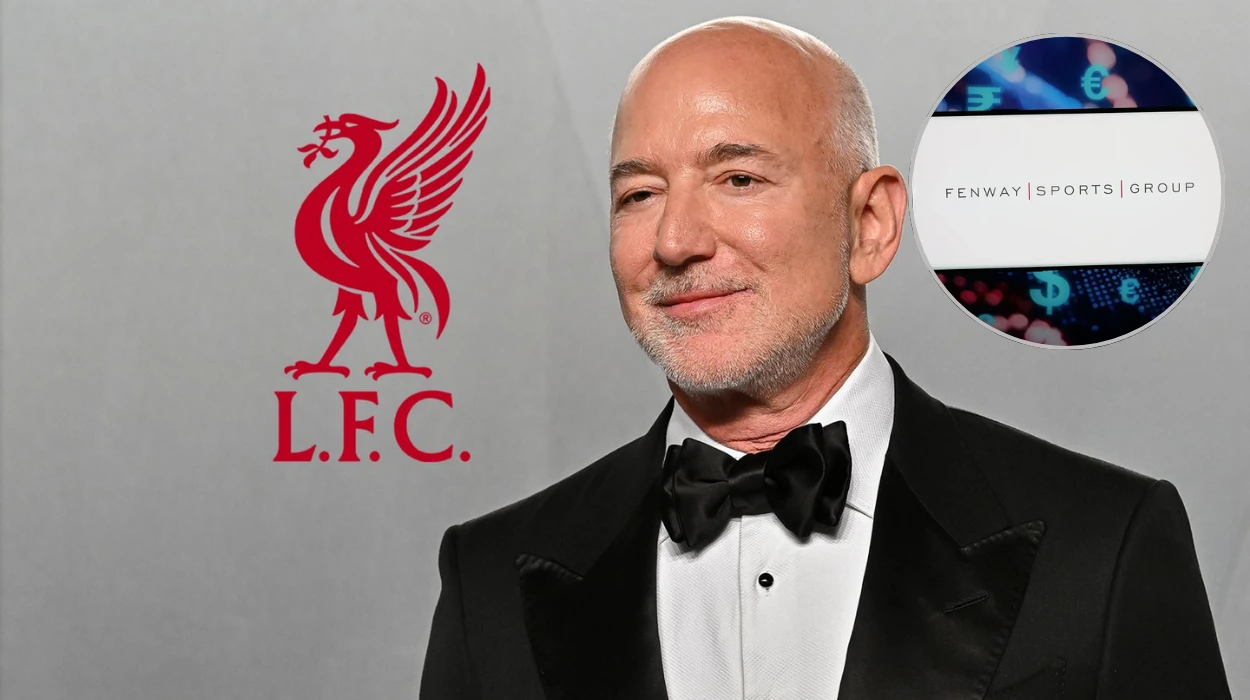
Key Points
- Amazon’s Jeff Bezos is reported to be close to making an Amazon-related investment in Liverpool Football Club through a consortium.
- The joint venture could mean that the consortium has an interest of about one third, possibly more than 30 per cent.
- The investor group is headed by Amit Bhatia, son-in-law of steel billionaire Lakshmi Mittal.
- Facebook’s co-founder Eduardo Saverin is also said to be joining the consortium.
- The deal, which is expected to cost £90m, could be announced as soon as this week by Liverpool’s controlling shareholder, Fenway Sports Group.
- The sale would put the value of Liverpool around $6bn.
- As reported, Jeff Bezos will have a fortune exceeding $280bn and Eduardo Saverin will have a fortune exceeding $32bn.
- Amit Bhatia was previously a shareholder at Championship club Queens Park Rangers.
- Saverin had previously unsuccessfully been a member of a consortium that tried to acquire Chelsea in 2022.
- The move would make Liverpool one of the most valued clubs in world sport.
- FSG has said the investment is a “strategic minority investment,” but has not said when it will make an announcement.
- The potential deal has given rise to speculation that the consortium may ultimately try to assume total control of Liverpool.
- Liverpool were in dire financial straits in 2010 and were sold to FSG for around £300m.
- In 2023, a smaller portion of Liverpool was sold to a new owner, Dynasty Equity, for more than $4.5bn.
- Liverpool have gone through a few changes in their sports, and with the head coach of the club, Arne Slot, leaving the club and Mohamed Salah, the veteran forward, also departing, the club has been shrouded in uncertainty.
London (Britain Today News) August 11, 2026 — Amazon founder Jeff Bezos is reportedly nearing a deal to acquire a minority stake in Liverpool Football Club as part of an investment consortium led by businessman Amit Bhatia. The proposed transaction could involve a stake of roughly one-third of the Anfield club and may value Liverpool at about $6bn.
- Key Points
- What is the proposed Liverpool investment?
- How much could Liverpool be worth after the deal?
- Why is FSG considering a minority investment in Liverpool?
- What role will Amit Bhatia play at Liverpool?
- What does the deal mean for Liverpool supporters?
- How has FSG’s Liverpool ownership developed since 2010?
- How does the Liverpool proposal fit football’s wider financial trend?
- What could the investment mean for Liverpool’s future?
- What have Liverpool and the consortium officially said?
- What happens next for Liverpool’s ownership?
Fenway Sports Group (FSG), Liverpool’s controlling shareholder since 2010, is preparing to announce the investment, with a statement potentially coming as soon as this week. However, people familiar with the discussions have cautioned that the announcement could be delayed until next week.
The consortium is expected to include Jeff Bezos, Facebook co-founder Eduardo Saverin and Amit Bhatia, the son-in-law of steel billionaire Lakshmi Mittal. Bhatia is leading, managing and representing the proposed investor group.
The deal has not yet been formally completed, and neither FSG nor the consortium has confirmed its final terms. Nevertheless, the proposed investment represents a major development in Liverpool’s ownership structure and could become one of the most financially significant minority investments in football.
What is the proposed Liverpool investment?
The proposed transaction would see a consortium led by Amit Bhatia acquire a significant minority stake in Liverpool Football Club. Earlier expectations suggested that the stake could be close to one-third, although one insider indicated that the final percentage could be slightly larger than previously anticipated.
The investment could therefore involve more than 30 per cent of the club. It would not immediately transfer control of Liverpool away from FSG, which has remained the club’s controlling shareholder for 16 years.
The proposed arrangement is understood to be structured as a strategic minority investment. FSG used that description in a statement issued last month, saying:
“An investment consortium led, managed, and represented by Amit Bhatia has expressed interest in making a strategic minority investment in Liverpool Football Club.”
FSG did not provide further details about the potential timing of the transaction. A spokesman for the Bhatia-led consortium also declined to comment on the proposed deal.
Although the terms remain subject to confirmation, the scale of the proposed investment would give the incoming investors a substantial financial interest in Liverpool. A stake of more than 30 per cent could also provide the consortium with considerable influence, depending on the final ownership agreement and governance structure.
Who is included in the consortium?
The proposed investor group brings together three prominent figures from global business, technology, finance and sport.
Jeff Bezos is the founder of Amazon and one of the world’s wealthiest individuals. His estimated fortune is reported to exceed $280bn. Bezos has built his wealth through Amazon, the technology and e-commerce company he founded, and his wider investments in business, media, space exploration and other sectors.
Eduardo Saverin, another member of the proposed consortium, was one of the co-founders of Facebook. The 44-year-old entrepreneur is reportedly worth more than $32bn. Saverin has also been involved in technology investments and previously explored opportunities in football ownership.
The syndicate is led by Amit Bhatia, who is the son-in-law of Lakshmi Mittal, the steel billionaire. Bhatia was until recently a shareholder in Queens Park Rangers, the Championship club based in West London.
The involvement of Bezos and Saverin would give the consortium substantial financial strength. Both men have experience operating in high-value international markets, while Bhatia has previous exposure to football ownership and investment.
Their combined presence is likely to attract attention because Liverpool is among the most recognisable football clubs in the world. The club has a large international supporter base, a globally established commercial operation and a history of success in English and European football.
How much could Liverpool be worth after the deal?
The proposed transaction would reportedly value Liverpool at approximately $6bn. If completed at that valuation, the club would rank among the most valuable sporting organisations in the world.
The valuation would also represent a significant increase from the figure associated with Liverpool’s previous ownership transactions. In 2023, Dynasty Equity bought a small stake in the club at a valuation of more than $4.5bn.
The potential $6bn valuation would demonstrate the extent to which the financial value of elite football clubs has increased. Liverpool’s commercial appeal extends well beyond match-day income. It includes global broadcasting rights, sponsorship agreements, merchandising, digital audiences, stadium operations and the international value of the club’s brand.
A stake of slightly more than 30 per cent at a $6bn valuation would represent an investment worth approximately $1.8bn before any adjustments linked to the precise terms of the agreement. The final amount could vary depending on whether the deal includes new capital for the club, the purchase of existing shares or a combination of both.
The distinction between buying existing shares and investing directly into the club would be important. A purchase of existing shares would primarily provide liquidity to current shareholders, while new investment could potentially provide Liverpool with additional funds for infrastructure, football operations or other strategic priorities.
However, no final financial structure has been publicly confirmed.
Why is FSG considering a minority investment in Liverpool?
FSG has owned and controlled Liverpool since 2010, when it bought the club for approximately £300m. The acquisition took place while Liverpool was experiencing serious financial difficulties and uncertainty about its future ownership.
Since then, the club’s value has grown substantially. Liverpool has developed into one of the leading commercial and sporting brands in football, while its achievements on the pitch have strengthened its international profile.
The arrival of new minority investors would allow FSG to retain control while bringing additional capital and powerful partners into the ownership structure. Such an arrangement could support the club’s long-term commercial strategy without requiring FSG to sell its controlling interest.
FSG has previously shown a willingness to work with outside investors. Dynasty Equity’s minority investment in 2023 demonstrated that the ownership structure could accommodate additional shareholders while FSG remained in control.
A new investment from a consortium containing Bezos and Saverin would be on a considerably larger scale. It could provide FSG with an opportunity to realise part of the value created during its ownership while preserving its position as Liverpool’s controlling shareholder.
The transaction could also strengthen Liverpool’s access to global business networks. Bezos and Saverin have significant experience in technology, investment and international markets, sectors that increasingly overlap with the commercial development of major sports organisations.
Could Jeff Bezos eventually seek full control of Liverpool?
The proposed transaction would be a minority investment, but its scale is likely to generate speculation about the consortium’s long-term intentions.
A stake of roughly one-third would not give the group outright control of Liverpool. FSG would remain the controlling shareholder, and the day-to-day direction of the club would continue to depend on the existing ownership and governance arrangements.
However, the arrival of three extremely wealthy investors could fuel expectations that the consortium might eventually attempt to acquire full control of the club. Jeff Bezos alone has the financial resources to participate in a future takeover, while Eduardo Saverin is also capable of supporting a major acquisition.
There is no confirmation that the consortium intends to seek outright ownership. The available information describes the proposal as a strategic minority investment rather than a takeover bid.
It would therefore be premature to conclude that FSG is preparing to sell Liverpool. A minority transaction could remain a long-term partnership, particularly if the incoming investors are satisfied with their financial returns and influence.
At the same time, football ownership agreements often evolve over time. Investors may initially acquire minority holdings before increasing their interests when contractual conditions, market circumstances or shareholder preferences change.
The proposed deal could therefore become important even if it does not immediately alter who controls Liverpool. It would introduce a powerful new group of shareholders whose future decisions could influence the club’s ownership landscape.
What role will Amit Bhatia play at Liverpool?
Amit Bhatia is expected to lead the consortium and act as its principal representative. His previous involvement with Queens Park Rangers gives him experience of football ownership and the operational realities of running a professional club.
Bhatia is the son-in-law of Lakshmi Mittal, the steel billionaire. His connection to one of the world’s wealthiest business families adds to the financial significance of the proposed Liverpool investment.
Unlike Bezos and Saverin, whose fortunes were built largely through technology and entrepreneurship, Bhatia’s background is more directly associated with investment and football ownership. His role could be particularly important in managing the relationship between the consortium and FSG.
The consortium’s leadership structure may also help explain why the proposed investment is being described as strategic rather than purely financial. Bhatia’s previous involvement in football could provide knowledge of the sport’s governance, commercial operations and supporter expectations.
The exact responsibilities Bhatia would hold after the transaction remain unknown. It has not been confirmed whether he would receive a formal board position, an executive role or representation through an investment vehicle.
Nevertheless, the statement from FSG specifically identified the consortium as being led, managed and represented by Bhatia. That wording suggests he would remain the central figure in communications between the investor group and the club.
Has Eduardo Saverin tried to invest in football before in 2026?
Eduardo Saverin has previously been involved in efforts to acquire a major English football club.
In 2022, Saverin was part of a consortium that submitted an unsuccessful bid to buy Chelsea. That takeover process was triggered after the British government sanctioned Roman Abramovich following Russia’s invasion of Ukraine.
The Chelsea sale attracted interest from several wealthy investors and international consortiums. Saverin’s participation demonstrated his willingness to consider football as an investment opportunity before the current Liverpool proposal emerged.
His potential involvement at Anfield would represent a second major attempt to enter the ownership structure of a leading Premier League club.
The Liverpool proposal is different from the Chelsea process because it concerns a minority stake rather than the outright purchase of a club. It would also be conducted with FSG remaining in control.
Saverin’s previous interest in Chelsea indicates that his involvement in the Liverpool consortium may be part of a broader investment strategy focused on elite football. The sport offers exposure to global audiences, premium commercial partnerships and valuable intellectual property.
However, the precise reasons for Saverin’s participation have not been disclosed. The consortium has not publicly explained how its members will divide their financial commitments or what role each investor will play.
What does the deal mean for Liverpool supporters?
Liverpool supporters are likely to examine the proposed investment through both financial and sporting perspectives.
FSG has generally received praise from Liverpool fans for its stewardship of the club. During its ownership, Liverpool returned to the top level of English and European football and enjoyed major competitive success.
The ownership group has also overseen significant commercial growth and infrastructure development. The expansion of Anfield and investment in the club’s wider operations helped strengthen Liverpool’s long-term position.
However, the relationship between FSG and supporters has not been free of tension. The club’s fifth-place finish last season caused concern, while the decision to replace head coach Arne Slot in May created further disquiet.
Liverpool has also entered a period of transition following the departure of veteran forward Mohamed Salah. Salah has been one of the defining players of the club’s modern era, and his loss has intensified questions about the team’s future direction.
For supporters, the arrival of wealthy investors could raise expectations of greater spending on players, facilities and football operations. Yet a minority investment does not automatically guarantee a change in transfer policy or an increase in the club’s annual budget.
The financial strength of Bezos and Saverin may create optimism, but their investment would not necessarily mean that Liverpool would adopt a radically different ownership model. FSG is expected to remain in charge unless the final agreement contains provisions that alter the existing structure.
Supporters will also want clarity on whether the incoming investors understand Liverpool’s traditions, community identity and relationship with its fan base. Ownership decisions at major football clubs are judged not only by financial results but also by their impact on sporting ambition and culture.
How has FSG’s Liverpool ownership developed since 2010?
FSG acquired Liverpool for approximately £300m in 2010, when the club was in a troubled financial condition. The ownership group, which also owns the Boston Red Sox, inherited an organisation that required financial stability and long-term restructuring.
Under FSG, Liverpool became one of the most successful clubs in English football. The team won the Premier League title in the 2024-25 season, according to the information provided for this report, and strengthened its international standing.
The club’s increased valuation reflects the broader success of the ownership period. A purchase price of approximately £300m has been followed by proposed valuations of more than $4.5bn and potentially $6bn.
FSG’s approach has largely been based on building a sustainable football and commercial operation. The group has been praised for improving Liverpool’s competitiveness while developing its global brand.
Its record has nevertheless been questioned at times, particularly when supporters have expected more aggressive spending or clearer sporting planning. Recent results and major personnel decisions have increased scrutiny of the ownership group.
The proposed minority investment could provide FSG with additional capital while allowing the organisation to remain in control. It may also be interpreted as recognition that the club has become a highly valuable global asset under its ownership.
How does the Liverpool proposal fit football’s wider financial trend?
The potential Liverpool transaction comes as wealthy investors continue to treat elite sport as a major asset class.
Football clubs offer several attractive features for investors. They combine internationally recognised brands with loyal audiences, recurring commercial revenues, valuable media rights and opportunities for expansion in overseas markets.
The Premier League is particularly attractive because of its global reach and financial scale. Liverpool’s history, stadium, supporters and commercial partnerships make it one of the sport’s most recognisable assets.
The proposed investment also arrives during a wider debate about the commercial structure of football. FIFA president Gianni Infantino’s proposed sale of a stake in the commercial rights to tournaments, including the men’s World Cup, has prompted questions about how football’s most valuable assets are controlled and monetised.
The plan has reportedly caused concern among European nations and other stakeholders who are examining the future distribution of football revenue and commercial power.
Against that backdrop, the possible involvement of Bezos in Liverpool highlights the growing connection between technology wealth and elite sport. Football is no longer viewed only as a sporting activity; it is increasingly considered a global entertainment, media and investment platform.
The scale of the proposed Liverpool valuation underlines that shift. If the club is valued at $6bn, it would join a small group of sports organisations whose financial worth rivals that of major international companies.
When could the Liverpool deal be announced?
An announcement could come as soon as this week, according to information supplied for this report. However, one source cautioned that the timing could slip into next week.
The uncertainty suggests that the transaction may still be subject to final negotiations, legal documentation or regulatory procedures. Large ownership deals typically require agreement on valuation, share transfers, governance rights and financial arrangements before they can be formally completed.
FSG has declined to comment further on the possible timing. The Bhatia-led consortium has also declined to provide additional information.
Until an official announcement is made, details such as the precise size of the stake, the total investment, the identity of any additional participants and the rights attached to the shares remain unconfirmed.
The final deal could also differ from early expectations. An insider indicated that the proposed stake might be slightly larger than previously thought, potentially exceeding 30 per cent.
Liverpool supporters, investors and the wider football community will therefore be watching for a formal statement from FSG. The announcement would be expected to clarify whether the transaction has been completed, whether it remains subject to conditions and how the new investors will work with the existing ownership group.
What could the investment mean for Liverpool’s future?
If completed, the investment would give Liverpool access to a consortium with exceptional financial resources and international business experience.
The immediate effect would be a change in the club’s shareholder base rather than a change in control. FSG would remain the controlling owner, while Bezos, Saverin and Bhatia would become significant minority stakeholders.
The new investors could contribute to Liverpool’s commercial expansion, global partnerships and long-term financial planning. Bezos’s background in technology could encourage further development in digital media, e-commerce, data, streaming and international fan engagement.
Saverin’s technology investment experience could also be relevant as Liverpool seeks to strengthen its position in a rapidly changing sports and entertainment market.
For the club’s football department, however, the impact may be less immediate. The proposed transaction does not confirm a new transfer budget, changes to recruitment policy or a specific investment in the playing squad.
The club’s sporting direction will continue to depend on its executive leadership, coaching structure and recruitment strategy. The departure of Arne Slot and Mohamed Salah has already created a major transition, meaning the timing of the ownership development could intensify public attention on Liverpool’s next phase.
The most significant long-term question will be whether the consortium remains a minority partner or eventually seeks greater control. The proposed deal does not answer that question, but it would place some of the world’s wealthiest individuals closer to the centre of Liverpool’s ownership structure.
Explore More about Sports:
Max Burgin, Scott Lincoln: Progress as Archie Yeo Soars in Birmingham
Honda’s Major Engine Upgrade: The Secret Changes Revealed
What have Liverpool and the consortium officially said?
FSG’s most significant public comment is its description of the proposed transaction as a strategic minority investment.
The statement said:
“An investment consortium led, managed, and represented by Amit Bhatia has expressed interest in making a strategic minority investment in Liverpool Football Club.”
That wording confirms that FSG has received an expression of interest from the consortium. It does not, by itself, confirm that a final agreement has been signed or that the transaction has been completed.
FSG declined to comment further on the possible timing of an announcement. A spokesman for the consortium led by Bhatia also declined to comment.
No additional public statement has been provided about the precise value of the proposed investment, the percentage stake, the governance arrangements or the future intentions of the investors.
The absence of final confirmation means that the reported terms should be treated as provisional until FSG or the consortium issues an official announcement.
The potential transaction remains one of the most significant developments in Liverpool’s ownership since Dynasty Equity acquired a smaller stake in 2023. If completed, it would mark the arrival of Bezos and Saverin as major investors in one of English football’s most globally recognised clubs.
What happens next for Liverpool’s ownership?
The next stage is likely to involve the completion of negotiations and the release of an official statement.
FSG and the consortium will need to clarify the final percentage stake, the valuation placed on Liverpool, the amount invested and the rights granted to the new shareholders. The club may also need to provide details about board representation and the relationship between the consortium and FSG.
The potential announcement could arrive within days, although the timetable remains uncertain. If negotiations are not completed this week, the statement could be delayed until the following week.
For now, FSG remains Liverpool’s controlling shareholder. The proposed investment would not immediately amount to a takeover, but it would represent a major change in the club’s financial ownership profile.
The deal’s reported valuation of $6bn would reinforce the financial success of FSG’s ownership since 2010. It would also underline the extraordinary rise in Liverpool’s value from the approximately £300m paid for the club during a period of financial difficulty.
For Liverpool supporters, the central issue will be whether the new investment strengthens the club’s sporting ambitions while preserving the identity and values associated with Anfield.
The transaction could ultimately remain a strategic partnership between FSG and a powerful investor group. Alternatively, the involvement of Bezos, Saverin and Bhatia could become the first step towards a future attempt to gain full control of the club.