Key Points
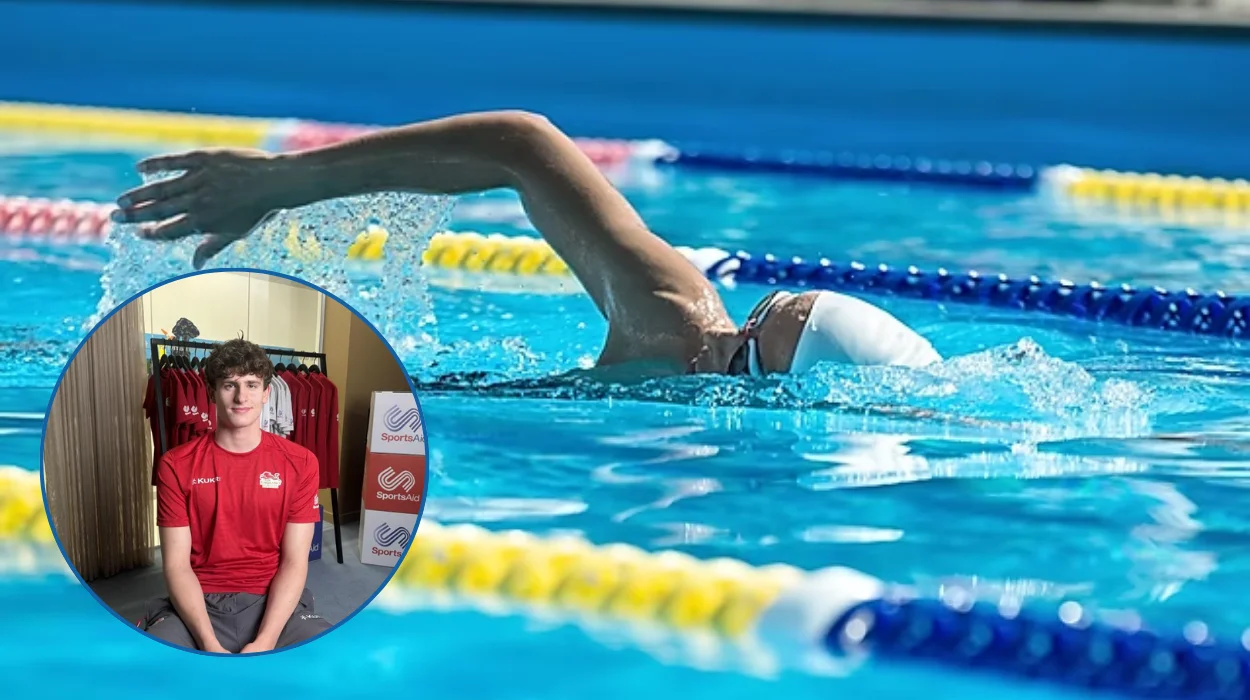
- Leeds swimmer Daniel Ransom, 18, was selected for the Team England Futures programme at the Commonwealth Games in Glasgow.
- The programme is delivered by SportsAid in partnership with Commonwealth Games England and Sport England.
- It is designed to help young athletes understand elite sport and prepare for future success with Team England, Team GB and ParalympicsGB.
- Ransom attended talks from former SportsAid athletes who have competed at the Commonwealth Games and Olympic Games.
- He received advice on the next step in his sporting career and gained behind-the-scenes access to events, athletes and training.
- The teenager watched competition from the stands in Glasgow and said the experience offered opportunities athletes would not normally get.
- He described the scheme as collaborative, saying it brought together athletes and coaches from different backgrounds, sports and experience levels.
- Ransom said he valued learning about other sports, including netball and table tennis.
- SportsAid chief executive Tim Lawler MBE said the programme blends theory with immersion in high-performance multisport settings.
- Lawler said the initiative helps transform sport-specific specialists into Games-literate members of Team England.
Leeds (Britain Today News) August 05, 2026 – Daniel Ransom has described the Team England Futures programme as a rare opportunity to experience the demands, pace and atmosphere of a major multisport event while learning from athletes and coaches across different sports.
- Key Points
- What is Team England Futures?
- Who is Daniel Ransom?
- What did Ransom see in Glasgow?
- Why does he value the collaborative feel?
- How did other sports shape his perspective?
- Why is the programme important for young athletes?
- How did the environment help him learn?
- What did SportsAid say about the programme?
- What does the experience mean for Ransom’s future?
- What does the collaborative model offer?
- How does the Commonwealth Games setting help?
- What comes next for athlete development?
- Why does this story matter for British sport?
- What should readers take from Ransom’s experience?
What is Team England Futures?
Team England Futures is a development programme delivered by SportsAid in partnership with Commonwealth Games England and Sport England. It is designed to help athletes bridge the gap between competing in single-sport environments and stepping into the wider challenge of multisport championships.
The initiative aims to give young athletes the chance to observe, learn, develop and, importantly, enjoy the experience of being around elite competition. For someone like Ransom, who is still at the beginning of his career, that means seeing up close what it takes to operate in the environment of a major Games before the pressure of selection and performance becomes fully intense.
As reported through the programme description, the scheme is intended to support athletes on the pathway towards Team England, Team GB and ParalympicsGB. That gives it a broad developmental role, one focused not only on immediate performance but on long-term preparation as well.
Who is Daniel Ransom?
Daniel Ransom is an 18-year-old swimmer from Leeds who was invited to join the Team England Futures programme during the Commonwealth Games in Glasgow. His selection placed him in an environment usually reserved for established athletes competing at the highest level, giving him direct exposure to what elite sport looks and feels like from the inside.
Ransom’s involvement mattered not just because he was present at the event, but because the programme gave him space to reflect on the transition from junior or single-sport competition to the wider demands of a major championship. That transition is often one of the hardest steps in an athlete’s career, especially in sports such as swimming where the margins can be tight and the atmosphere highly pressurised.
What did Ransom see in Glasgow?
Ransom was able to attend talks from former SportsAid athletes who have competed at the Commonwealth Games and Olympic Games. He also received practical advice and guidance on how to progress in his career, while gaining access behind the scenes to events, athletes and training.
He watched sport live from the stands in Glasgow, giving him an in-person view of the scale and intensity of the Games. That kind of access is central to the programme’s purpose, because it allows young athletes to understand not only the competition itself, but also the routines, focus and discipline that sit behind successful performances.
For Ransom, the exposure appears to have been just as valuable as the formal advice. Seeing the event unfold in real time gave him a clearer sense of what the highest level of competition demands, both physically and mentally.
Why does he value the collaborative feel?
Ransom said the programme stood out because it created a sense of shared purpose across different sports. He described Team England Futures as a place where athletes and coaches from different backgrounds could learn from one another rather than remain in isolated performance bubbles.
As Ransom put it:
“Team England Futures just lets people get opportunities they won’t normally get, to see what it’s like competing in Games without all the pressure.”
He also said:
“We watched netball and on the scheme, you’re hanging out with athletes and coaches from all different backgrounds, different sports and different levels of experience.”
That collaborative atmosphere seems to have been one of the most important features of his experience. For athletes, especially those still forming their identity in sport, time spent with peers from other disciplines can broaden understanding and improve adaptability.
How did other sports shape his perspective?
Ransom said it was useful to learn about sports beyond swimming, pointing to the variety of experiences inside his group. He mentioned that there was a table tennis player in the cohort, and he found it valuable to understand what competition feels like in another sport.
He said:
“It’s been nice learning about different sports; we had a table tennis player in my group, and it’s nice to know what it’s like competing in their sport.”
That exchange of perspectives is one of the programme’s key strengths. A swimmer may approach preparation differently from a table tennis player or a netball athlete, yet all are dealing with pressure, focus, scheduling, recovery and the challenge of performing when it matters most.
Swimming itself also offers a range of demands, and Ransom highlighted that distinction when he said:
“There’s something for everyone in swimming; there are longer-distance events which are more tactical, and there are shorter-distance sprints.”
His comment underlines a wider point: even within one sport, athletes can learn from different specialisms and styles of competition. The experience in Glasgow appears to have reinforced that idea.
Why is the programme important for young athletes?
Team England Futures has been created to help athletes move from single-sport competition into the wider environment of multisport Games. That transition is often more complex than it may appear from the outside.
A domestic competition or a focused training environment can feel very different from a Commonwealth Games setting, where multiple sports, large crowds, high expectations and constant movement all combine into a demanding atmosphere. The programme aims to reduce that gap by giving athletes first-hand exposure before they reach their own major championship moments.
For a young swimmer such as Ransom, that can mean learning how to stay grounded amid noise, scale and pressure. It can also mean understanding how to recover between sessions, how to manage off-field routines and how to remain composed when surrounded by elite peers from different sports.
How did the environment help him learn?
The programme did not operate as a purely observational visit. Ransom and his cohort were supported by coaches, teammates, the SportsAid team and a wider group of experienced practitioners, mentors and former athletes in Glasgow.
That support network is important because major championships can be overwhelming for young athletes. A structured environment helps them process what they are seeing instead of simply being swept up by it.
The experience also gave Ransom the chance to understand how top-level athletes remain focused despite the scale of the Games. Watching, listening and discussing with others may have helped him translate abstract ideas such as discipline, composure and resilience into practical lessons he can carry into training and future competitions.
What did SportsAid say about the programme?
Tim Lawler MBE, chief executive officer at SportsAid, said the initiative is about more than access. He stressed the programme’s role in blending theory with real immersion in elite multisport settings.
Lawler said: “By blending theory with immersion into high-performance multisport environments, the programme transforms athletes and coaches from sport-specific specialists into Games-literate members of Team England. It equips them with individual frameworks for future international success and establishes a scalable, sustainable model for consistent delivery across future Games cycles.”
His comments suggest that SportsAid views the programme as a long-term investment in athlete development rather than a one-off opportunity. The emphasis on “Games-literate” athletes is particularly notable, because it reflects a broader performance culture in which success depends not just on physical ability but also on understanding the demands of the event environment.
What does the experience mean for Ransom’s future?
For Ransom, the trip to Glasgow may represent a significant step in his sporting journey. The programme is designed to support exactly that kind of progression, helping athletes prepare for the move towards bigger competitions and more complex performance settings.
The lessons he took from the experience appear to centre on observation, confidence and connection. He has seen what elite sport looks like, spoken to athletes who have already made the jump to major championships and spent time in a setting where multiple sports operate side by side.
That combination can be especially useful for a teenager with ambitions in swimming, where development is often shaped by both technical refinement and mental readiness. Exposure to elite culture at an early stage may help Ransom approach future challenges with a clearer sense of what to expect.
What does the collaborative model offer?
One of the strongest features of Team England Futures is its collaborative design. Rather than isolating athletes by discipline, the programme brings together people from different sports and backgrounds and encourages shared learning.
That matters because elite performance is rarely built in isolation. Athletes often benefit from hearing how others deal with nerves, travel, training loads, recovery and competition routines. A swimmer can learn from a runner; a table tennis player can learn from a netball athlete; and coaches can also exchange ideas about athlete management and preparation.
Ransom’s description suggests the collaborative structure made the experience richer and more memorable. He was not just watching performances but engaging in a learning environment where different sporting cultures could meet.
How does the Commonwealth Games setting help?
The Commonwealth Games provided the setting for the programme, which added further value. The scale of such an event makes it a useful training ground for future athletes because it combines sport, organisation and pressure in a way few other environments can match.
Young athletes observing from the stands can see the intensity of competition, the concentration before performance and the atmosphere created by crowds and media attention. They can also better appreciate the routine and discipline required to compete successfully when so many external factors are present.
In Ransom’s case, being in Glasgow meant more than simply attending an event. It gave him a real-world example of the environment he may one day enter as a competitor, making the experience highly relevant to his own development.
What comes next for athlete development?
The broader message from the programme is that preparation for elite sport begins long before an athlete reaches the biggest stage. Exposure, learning and peer support all play a role in building future success.
For SportsAid and its partners, the objective is to create a model that can be repeated across future Games cycles. That means developing athletes who understand not only their own sport but the demands of multisport championships as well.
For athletes like Ransom, the benefit is clear: they gain insight, confidence and perspective. They also learn that elite sport is not only about winning races or matches, but about adapting, collaborating and staying focused under pressure.
Explore More about Sports:
Qatar Racing Takes Over British Champions Day Sponsorship
How Much Does Horse Racing Contribute to the Welsh Economy?
Why does this story matter for British sport?
This story matters because it shows how young British athletes are being prepared for the transition from promise to performance. Rather than waiting until they are already at the top level, programmes such as Team England Futures provide early contact with the demands of major competition.
Ransom’s experience also highlights the value of bringing athletes together across sports. That kind of shared learning can strengthen not only individuals but also the broader performance culture around Team England, Team GB and ParalympicsGB.
In that sense, the programme is about more than one swimmer from Leeds. It is about building a pathway that helps talented young athletes grow into confident, informed competitors when their time comes.
What should readers take from Ransom’s experience?
The clearest takeaway is that elite development is as much about environment as it is about talent. Ransom had access to coaching, advice, observation and shared learning in Glasgow, all of which helped him better understand the next stage of his career.
His remarks also show the value of opportunity. The programme gave him something he “won’t normally get”, in his words, and that access appears to have left a strong impression.
For a young athlete, that sort of experience can be decisive. It can change how they think about competition, how they view other sports and how they prepare for the next step.