Key Points
- Uber and Wayve have been granted the first minicab licences in London for self-driving taxi rides, subject to a human safety driver being present at first.
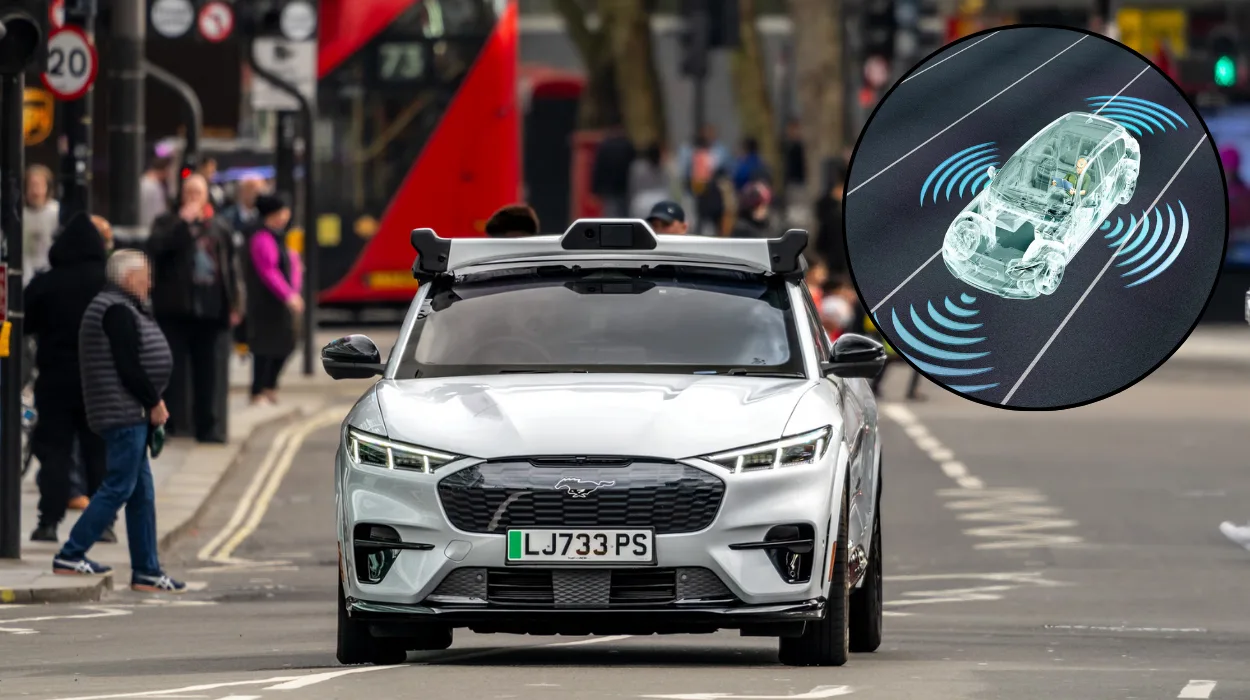
- Transport for London has licensed 15 private hire vehicles, all Ford Mustang Mach-E models fitted with Wayve’s artificial intelligence driving software, cameras and radar.
- The companies say they expect to begin trips in the UK later this summer before any full public launch.
- More than 100,000 Londoners are already on the waiting list for the service, according to Uber and Wayve.
- The next stage, driverless operation without a safety driver, will require a separate automated passenger services permit.
- TfL says passenger safety remains its top priority and it will monitor the vehicles closely.
- Wayve says the licence is an important step towards cleaner, quieter and safer streets.
- The move has raised concern among minicab drivers and the GMB union, which warned of job losses, liability questions and the need for extreme caution.
- Uber and Wayve are racing rivals in the global autonomous vehicle market, including Waymo and Baidu’s Apollo Go.
- Uber said it plans to spend more than $10bn on autonomous vehicles over the coming years.
London (Britain Today News) August 05, 2026 – Uber and Wayve have taken a major step towards bringing self-driving taxis to the capital after Transport for London granted the companies the first minicab licences in London for autonomous rides to paying customers. The approval marks one of the most significant advances yet in the UK’s push towards driverless transport, although the vehicles will initially operate with a human safety driver seated behind the wheel.
- Key Points
- What have Uber and Wayve been allowed to do?
- Why is this licence being seen as a milestone?
- How many vehicles have been approved?
- How will the service work at first?
- What happens before fully driverless rides?
- Why is TfL stressing safety?
- What did Wayve say about the approval?
- Why are minicab drivers worried?
- What is the global race behind this launch?
- Why does London matter so much?
- What is Uber’s role in all this?
- How does Wayve fit into the wider market?
- What does Uber’s financial position show?
- What should Londoners expect next?
- What are the main risks going forward?
- Why is this story important now?
- What does this mean for the future of London transport?
What have Uber and Wayve been allowed to do?
As reported by the companies themselves, Uber and Wayve have been granted licences that allow them to offer self-driving taxi rides in London, but not yet fully driverless rides. The current model still requires a TfL-licensed private hire driver to sit in the driver’s seat during trips to intervene if necessary.
This means the cars are expected to be controlled by Wayve’s software during normal operation, while the safety driver remains ready to take over. In practical terms, the approval places the service in a supervised testing-and-rollout phase rather than a fully autonomous public launch.
The companies said they expect trips to begin in the UK later this summer, with a wider launch to follow once the required regulatory conditions are met.
Why is this licence being seen as a milestone?
The TfL decision is being treated as a milestone because it is the first time minicab licences in London have been granted for autonomous rides intended for paying passengers. London is not only a major transport hub but also a globally watched testing ground for driverless systems, particularly because of the intense scrutiny surrounding how such vehicles will perform on busy, complex urban roads.
Wayve and Uber are also positioned in a wider international race. The British capital is now one of the first cities in the world where American and Chinese technology firms are expected to operate on the same roads through autonomous systems, which gives the London rollout broader geopolitical and commercial significance.
For Uber, the move is also symbolically important because the company abandoned its own self-driving programme in 2020. Its new approach is based on partnerships with specialist autonomous technology firms rather than in-house development.
How many vehicles have been approved?
TfL has granted 15 private hire vehicle licences for Ford Mustang Mach-E cars equipped with Wayve’s artificial intelligence driving software, along with surround cameras and radar. Those systems are intended to give the vehicles the perception and navigation tools they need to operate in city traffic.
The licensing of a specific fleet matters because it turns the discussion from theory into practical deployment. These are not generic permissions for self-driving ideas; they are concrete vehicle approvals tied to a defined hardware and software stack.
That also means regulators will be watching closely how the cars behave in real London traffic, from narrow streets and complex junctions to traffic flow around pedestrians, cyclists and buses.
How will the service work at first?
At the beginning, the service will not be fully driverless. A human safety driver will remain in the driving seat on each trip, even though the autonomous system is expected to do the driving under normal circumstances.
This is a cautious first phase and reflects the regulator’s preference for gradual rollout rather than an immediate leap to driverless operation. The safety driver’s role is to intervene if the system encounters a situation it cannot safely manage.
The companies are effectively trying to prove that their technology can operate reliably in one of Europe’s most demanding city environments before asking for permission to remove the human backup entirely.
What happens before fully driverless rides?
The next step for Uber and Wayve will be to apply for an automated passenger services permit through the government’s Driver and Vehicle Standards Agency. That approval would be needed before operating taxis without a driver in the vehicle.
In other words, the current licence is only the beginning. The regulatory pathway still has a second stage, and that stage will likely attract even greater public attention because it would mark the point at which a passenger could ride in a vehicle without a human driver present.
Until that permit is granted, Londoners will be seeing autonomous systems on the road, but not yet the complete version of the service that many people associate with robotaxis.
Why is TfL stressing safety?
TfL said it will monitor the vehicles and intervene if passenger safety is compromised. The transport authority also said any new vehicle licensed to carry passengers on London’s roads must align with its Vision Zero goal of eliminating all deaths and serious injuries from collisions on London’s streets by 2041.
That statement makes clear that TfL views autonomous taxis not as a technology experiment alone, but as a public safety issue. The authority is signalling that innovation will be allowed only if it fits within its wider road safety framework.
The emphasis on monitoring also suggests that any early incidents, unusual behaviour or safety concerns could quickly affect the pace of expansion. For a system still in its early public phase, trust will be as important as technical performance.
What did Wayve say about the approval?
Wayve’s vice-president for global affairs and assurance, Sarah Gates, described the licence as an important step towards giving Londoners the chance to experience autonomous driving technology. She said responsible deployment could bring safer, cleaner and quieter streets.
Her remarks frame the licence as more than a commercial win. Wayve is presenting the rollout as part of a broader urban transport transformation, one that could reduce emissions, lower noise and improve safety if the technology performs as promised.
The company also said it would continue working alongside regulators, communities and the public as it takes the next steps towards making autonomous rides a reality in the capital. That wording reflects an attempt to reassure the public that the process will remain controlled rather than rushed.
Why are minicab drivers worried?
The licence approval has not been welcomed by all parts of the private hire sector. Minicab drivers fear the technology could threaten their livelihoods, particularly if autonomous services expand quickly and begin taking a meaningful share of passenger demand.
Matthew Wright, regional organiser for the GMB union, raised concerns about job losses, increased unemployment and liability for accidents. He said TfL should proceed with extreme caution.
His warning reflects a wider concern across transport industries: that the speed of technological adoption could outpace the ability of the labour market to adapt. Even if autonomous cars remain limited in the short term, the symbolic impact on drivers is significant.
What is the global race behind this launch?
Uber and Wayve are not operating in isolation. They are racing against other major autonomous mobility players, including Google-owned Waymo and China’s Baidu Apollo Go, to establish self-driving taxi services in London and beyond.
The competitive backdrop matters because autonomous driving is not only about regulation and safety. It is also a high-stakes technology race involving data, machine learning, fleet deployment, geographic expansion and brand credibility.
Driverless taxi services are already operating in several cities around the world, especially in the US and China, where most software developers are based. But the global market is fragmented, and access to each other’s territory is limited, meaning American and Chinese operators have not had to compete directly on the same roads in the same way.
Why does London matter so much?
London is one of the world’s most difficult cities in which to deploy autonomous vehicles. The roads are often narrow, traffic is heavy, pedestrian activity is high, and driving conditions can be unpredictable.
That is precisely why success there would matter so much. If a self-driving system can cope with London, it strengthens the case for rolling it out in other major cities with similarly challenging road layouts.
Wayve has been testing its technology in London since 2018 with safety drivers, and previous demonstrations reportedly showed the system handling most of the obstacles of north London’s busy streets, although human intervention was still required at one point. That long testing period helps explain why the licence approval is being viewed as a culmination of years of development rather than a sudden leap.
What is Uber’s role in all this?
Uber’s role is as the platform and mobility partner rather than the primary developer of the autonomous software. The company has been working with partners around the world after shutting down its own self-driving programme in 2020.
This partnership model allows Uber to stay active in autonomous mobility without bearing the full burden of building the technology from scratch. It also gives the company flexibility to work with different systems in different markets.
Among its collaborations is a partnership with Chinese firm WeRide, which is already operating driverless taxis in Abu Dhabi. That shows Uber’s strategy is to connect with multiple technology providers rather than commit to a single in-house system.
How does Wayve fit into the wider market?
Wayve, which was co-founded by New Zealand-born Alex Kendall, has spent years developing its autonomous driving technology with a focus on urban environments. Its London testing programme has given it a local proving ground in one of the world’s most demanding cities.
The company is also working with Nissan to integrate its technology into private cars in Tokyo. That suggests Wayve’s ambitions are not limited to ride-hailing fleets, but extend to broader automotive applications.
Its London licence is therefore strategically important. It offers a chance to demonstrate that the software can function not only in test conditions but in live commercial service, which could strengthen its position in future partnerships.
What does Uber’s financial position show?
The news comes as Uber reported better-than-expected second-quarter gross bookings of $58.02bn, equivalent to about £43bn, but also warned that next quarter earnings would fall below Wall Street forecasts. The company also said it plans to spend more than $10bn on autonomous vehicles over the coming years.
That spending commitment underlines how central autonomy has become to Uber’s long-term strategy. Even though the company’s near-term earnings outlook is mixed, it clearly sees autonomous mobility as a major growth area.
The figure also shows how expensive the race remains. Building, testing, certifying and deploying autonomous systems requires deep capital, long timelines and sustained regulatory engagement.
What should Londoners expect next?
For now, Londoners can expect to see a controlled rollout, not a citywide robotaxi takeover. The vehicles will still carry safety drivers, and any step towards fully driverless operation will depend on separate approval.
If the programme expands successfully, more passengers may be able to sign up and use the service later this summer. But that timeline is still conditional on operational readiness and regulatory comfort.
The broader significance is that London has now formally entered the autonomous taxi era, even if only in an early and supervised form. The next few months will determine whether this becomes a niche pilot or the start of a major shift in urban transport.
What are the main risks going forward?
The biggest risks are safety, public acceptance, regulatory delay and labour market backlash. A single serious incident could slow public confidence, while a lack of clear performance data could make regulators more cautious.
There is also the question of accountability. If a vehicle makes an error, the involvement of software developers, fleet operators and human safety drivers may complicate who is responsible.
At the same time, the political and social implications are substantial. London is not merely testing a vehicle; it is testing a new model of passenger transport, one that could reshape how people move through the city if it proves reliable.
Explore More about Technology:
UK Government Investments Suffers Major Data Breach Exposing Officials’ Details
£1.65m Investment Funds 17 Projects to Transform NHS Care
Why is this story important now?
The approval is important now because it moves autonomous taxis from a future possibility to an imminent commercial reality in the UK capital. It also shows that the regulatory system is beginning to adapt to a technology that has spent years promising transformation.
As reported by the companies, the service is expected to start later this summer, which means the current moment is the bridge between testing and public deployment. That makes the coming months crucial for both public trust and commercial momentum.
For London, the issue is no longer whether self-driving taxis will arrive, but how quickly, under what conditions and with what impact on workers, passengers and the city’s roads.
What does this mean for the future of London transport?
If the rollout succeeds, it could open the door to a wider autonomous mobility network in the capital. That might include more vehicles, more routes and eventually, after additional approval, driverless operation without a human in the front seat.
If it struggles, the launch could become another reminder that the road from promising technology to everyday transport is longer and harder than tech companies often suggest. Either way, the licence granted to Uber and Wayve is a landmark moment.
The capital is now officially part of the global autonomous transport race, and the eyes of the industry, regulators and drivers will all be on London as the first rides begin.